
In the landscape of student financing, the name “Sallie Mae” frequently surfaces, often associated with a pivotal yet sometimes misunderstood role in paying for higher education. For many, a Sallie Mae loan is synonymous with private student lending, representing a critical financial tool for students who have exhausted federal aid options or require additional funds to bridge the gap in their educational costs. Understanding what a Sallie Mae loan entails today, its features, and its implications is crucial for any prospective borrower.
The Evolution of Sallie Mae: From Government-Sponsored to Private Lender
To fully grasp what a Sallie Mae loan is today, it’s essential to trace the company’s evolution. Originally established in 1972 as the Student Loan Marketing Association (SLMA), Sallie Mae was a government-sponsored enterprise (GSE). Its initial mission was to service federal education loans and purchase student loans from originating lenders, providing liquidity to the student loan market. For decades, many federal student loans were either originated or serviced by Sallie Mae, leading to widespread recognition of its name across the spectrum of student financing.

However, a significant transformation occurred in 2014. Sallie Mae underwent a strategic split, dividing its operations into two distinct, publicly traded companies: Sallie Mae and Navient. Post-split, Navient became the primary entity responsible for servicing the majority of the existing federal student loan portfolio that Sallie Mae had previously managed, as well as its own portfolio of private education loans. The “new” Sallie Mae, on the other hand, pivoted its focus almost entirely to originating and servicing private student loans. This distinction is paramount: when people refer to a “Sallie Mae loan” today, they are exclusively talking about a private student loan, distinct from federal student loans managed by the U.S. Department of Education or serviced by other companies like Navient.
Understanding Sallie Mae Private Student Loans
Sallie Mae now operates as a consumer bank specializing in private education loans, offering financing solutions for students at various stages of their academic journey, from K-12 to graduate and professional studies. These loans are designed to cover educational expenses not met by scholarships, grants, or federal student loans.
Who is Eligible for a Sallie Mae Loan?
Unlike federal student loans, which primarily focus on financial need and student status, eligibility for a Sallie Mae private student loan is largely determined by creditworthiness.
- Credit History: Applicants (and often their co-signers) must demonstrate a strong credit history and a solid financial standing. Students, particularly undergraduates, often have limited credit history, making a co-signer almost a necessity.
- Income: A stable income for the borrower or co-signer is generally required to show the capacity for repayment.
- Enrollment Status: Borrowers must be enrolled at least half-time in an eligible degree-granting program at an accredited institution.
- Citizenship/Residency: Typically, borrowers must be U.S. citizens or permanent residents. Some programs may offer options for international students with a creditworthy U.S. citizen or permanent resident co-signer.
Types of Sallie Mae Loans
Sallie Mae offers a diverse portfolio of private loans tailored to specific educational needs:
- Undergraduate Loans: Designed for students pursuing associate’s or bachelor’s degrees, covering tuition, housing, books, and other school-certified expenses.
- Graduate Loans: Specific loans for master’s, doctoral, and professional degrees (e.g., MBA, medical, law school), often with higher loan limits.
- Parent Loans: Similar to federal PLUS loans, these allow parents to borrow on behalf of their children.
- Bar Study & Residency and Relocation Loans: Specialized loans for law students preparing for the bar exam and medical students covering expenses during residencies and relocations.
- K-12 Loans: For private elementary or high school tuition.
Key Features and Terms
Sallie Mae loans come with various terms and features that borrowers must carefully consider:
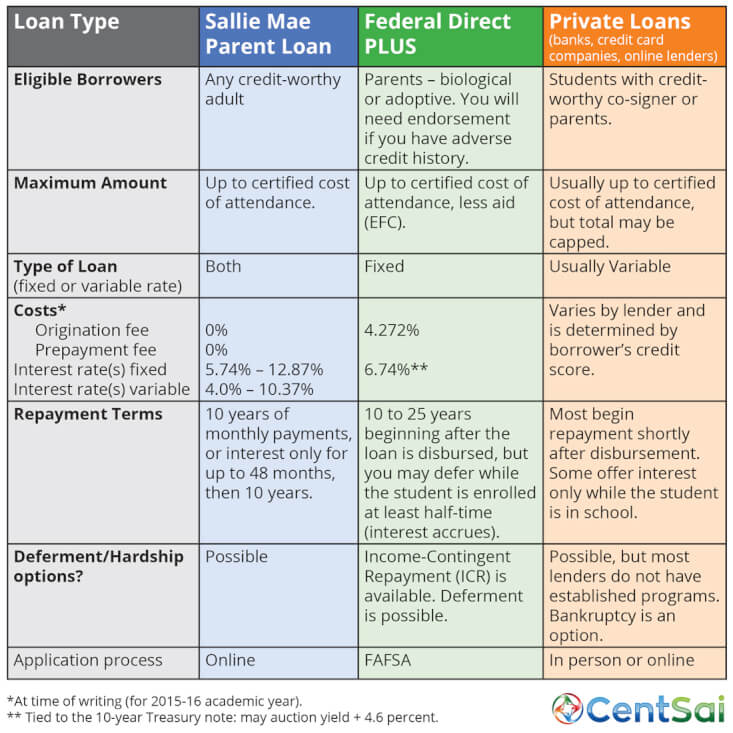
- Interest Rates: Borrowers can typically choose between a fixed interest rate, which remains constant throughout the life of the loan, or a variable interest rate, which can fluctuate based on market conditions. Fixed rates offer predictability, while variable rates may start lower but carry the risk of increasing over time. Rates are primarily determined by the borrower’s (and co-signer’s) credit score.
- Repayment Options: Sallie Mae offers several in-school repayment options:
- Deferred Repayment: Payments are fully deferred until after graduation or leaving school. Interest accrues during this period.
- Interest-Only Repayment: Borrowers make small, interest-only payments while in school, which helps reduce the total amount of interest paid over the life of the loan.
- Full Principal and Interest Repayment: Borrowers begin making full payments immediately, minimizing interest accrual and total cost.
- Loan Limits: Borrowers can typically borrow up to 100% of the school-certified cost of attendance, minus any other financial aid received.
- Fees: Sallie Mae generally does not charge application fees, origination fees, or prepayment penalties, which can be a significant advantage compared to some other private lenders. However, late payment fees may apply.
- Co-signer Release: Many Sallie Mae loans offer a co-signer release option, allowing the co-signer to be removed from the loan after the borrower meets specific eligibility criteria, such as making a certain number of consecutive on-time payments and demonstrating creditworthiness.
Comparing Sallie Mae to Federal Student Loans
A critical aspect of understanding Sallie Mae loans is recognizing how they differ from federal student loans, which are often the first port of call for students seeking financial aid.
Interest Rates
Federal student loans generally have fixed interest rates set by Congress, which tend to be relatively competitive and sometimes lower for undergraduate students. Sallie Mae, as a private lender, offers both fixed and variable rates. While a strong credit profile might secure a competitive rate, private loan rates can often be higher than federal rates, especially for borrowers with less robust credit.
Borrower Protections and Benefits

This is where federal loans typically offer significantly more safeguards. Federal loans come with robust protections such as:
- Income-Driven Repayment (IDR) Plans: Payments are adjusted based on the borrower’s income and family size.
- Generous Deferment and Forbearance Options: More widespread and often easier to obtain temporary payment suspensions during periods of economic hardship, unemployment, or military service.
- Public Service Loan Forgiveness (PSLF): A program that forgives remaining balances for borrowers in qualifying public service jobs after 120 eligible payments.
- Loan Discharge Options: More comprehensive discharge options in cases of total and permanent disability or school closure.
Sallie Mae loans, being private, offer fewer borrower protections. While they may have some deferment or forbearance options, these are typically more limited, often at the lender’s discretion, and not tied to income. There are no income-driven repayment plans or public service loan forgiveness programs for Sallie Mae private loans.
Co-signer Requirements
Most federal student loans, particularly Stafford loans for undergraduates, do not require a co-signer. Credit checks are minimal, and eligibility is not based on credit score. For Sallie Mae loans, a co-signer is often crucial, especially for students without an established credit history, to qualify for the loan and secure a favorable interest rate.
Application Process
Applying for federal aid involves completing the Free Application for Federal Student Aid (FAFSA). Private loans, including Sallie Mae loans, require a direct application to the lender, involving a credit check for the borrower and any co-signer.
Important Considerations Before Taking Out a Sallie Mae Loan
Given the differences, it’s vital to approach Sallie Mae loans with a strategic mindset.
Exhaust Federal Options First
Financial advisors universally recommend that students maximize all available federal student aid—including grants, scholarships, subsidized loans, and unsubsidized loans—before considering private loans. Federal loans offer greater flexibility, more borrower protections, and often lower, fixed interest rates.
Understand the Fine Print
Before committing to a Sallie Mae loan, thoroughly review all terms and conditions. Pay close attention to the interest rate (fixed vs. variable), repayment schedules, fees, and any provisions for deferment or forbearance. Understand how interest accrues, especially if you choose to defer payments while in school.
The Role of a Co-signer
If you need a co-signer, ensure they fully understand their responsibilities. A co-signer is equally responsible for the loan and their credit can be negatively impacted if payments are missed. Discuss the co-signer release option and its requirements with Sallie Mae.
Impact on Credit Score
Taking out a Sallie Mae loan, like any debt, will impact your credit score. Responsible repayment can build positive credit history, but missed payments can severely damage both the borrower’s and co-signer’s credit.
Refinancing Opportunities
Private student loans, including those from Sallie Mae, can be refinanced. If interest rates drop or your credit score improves after graduation, you might be able to refinance your loan with Sallie Mae or another private lender to secure a lower interest rate or different terms. This is a common strategy to reduce the overall cost of borrowing.
Managing and Repaying Your Sallie Mae Loan
Effective management of a Sallie Mae loan involves proactive steps. Always strive to make payments on time, or even ahead of schedule, to avoid late fees and minimize interest. Setting up automatic payments can help ensure consistency and may even qualify you for a small interest rate reduction. If you anticipate financial hardship, contact Sallie Mae immediately to explore any available (though limited) options. Understanding your responsibilities and the loan’s terms is the best defense against potential financial difficulties.
In essence, a Sallie Mae loan today is a private student loan, filling a crucial gap for many students needing additional financing for their education. While it offers flexibility and significant borrowing limits, it comes with fewer borrower protections than federal loans, making careful consideration and financial planning absolutely essential.
aViewFromTheCave is a participant in the Amazon Services LLC Associates Program, an affiliate advertising program designed to provide a means for sites to earn advertising fees by advertising and linking to Amazon.com. Amazon, the Amazon logo, AmazonSupply, and the AmazonSupply logo are trademarks of Amazon.com, Inc. or its affiliates. As an Amazon Associate we earn affiliate commissions from qualifying purchases.