
Every year, millions of taxpayers log into TurboTax with the expectation of filing their taxes for free, only to find themselves prompted to pay $60, $120, or even more before they can submit their returns to the IRS. This phenomenon has become a point of significant frustration in the world of personal finance. While the marketing suggests a seamless, cost-free experience, the reality of the American tax code—and the business model of financial software giants—often dictates a different outcome.
Understanding why your tax return is no longer free requires a deep dive into the intersection of financial regulations, the complexity of your personal income, and the monetization strategies employed by Intuit, the parent company of TurboTax. To navigate these costs effectively, taxpayers must understand the distinction between various filing tiers and the specific financial triggers that move a user from a “Free” tier into a “Paid” tier.
The Architecture of “Free”: Distinguishing Marketing from Regulation
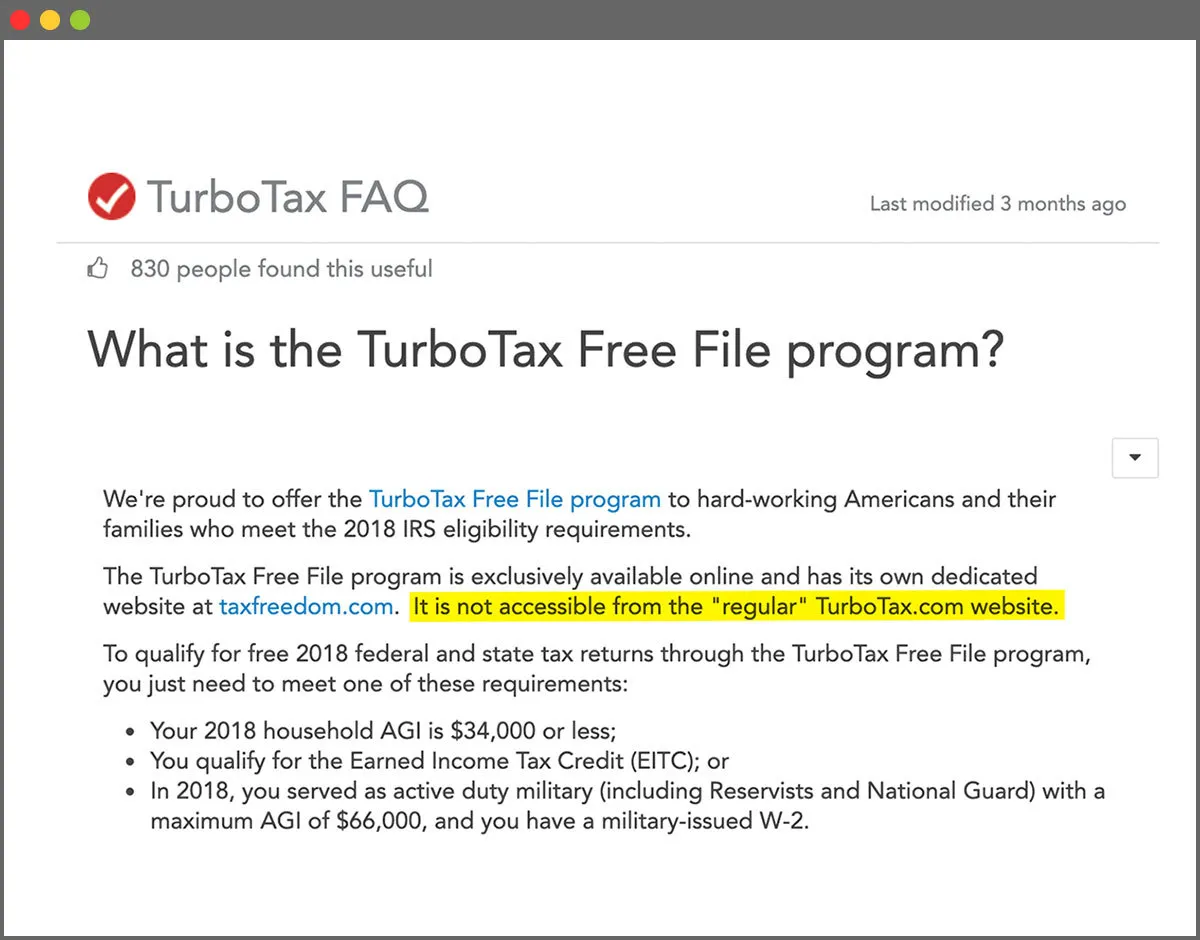
The primary reason most users find their “free” filing has vanished is a misunderstanding of the different types of free programs available. Historically, there have been two primary ways to file for free: the commercial “Free Edition” offered by the software company and the “IRS Free File” program.
The Marketing-Driven “Free Edition”
TurboTax’s standard Free Edition is a commercial product designed for what the company defines as “simple tax returns.” From a financial planning perspective, this is a very narrow definition. A simple return generally refers to a Form 1040 with no attached schedules. This means if your income comes exclusively from a W-2 and you take the standard deduction, you likely qualify. However, as soon as your financial life involves anything beyond a standard salary—such as student loan interest deductions, unemployment income, or dividend payments—the “simple” designation often disappears.
The IRS Free File Program vs. Commercial Offers
For years, the IRS Free File program was a partnership between the IRS and the Free File Alliance (a group of private tax software companies). This program was strictly based on income thresholds, usually capped at an Adjusted Gross Income (AGI) of $79,000 or less. However, in recent years, Intuit (TurboTax) withdrew from the IRS Free File program. This move fundamentally changed the financial landscape for low-to-mid-income filers. By leaving the program, TurboTax shifted many users away from a federally regulated free option toward their own commercial tiers, where upsells and add-on fees are more prevalent.
Common Financial Triggers That Void Free Filing
The moment you enter a specific type of financial transaction, the software often triggers an automatic upgrade. These upgrades are not arbitrary; they are linked to the complexity of the forms required by the IRS. For the consumer, these triggers represent a sudden increase in the “cost of compliance.”
Schedule C and the Independent Contractor
The rise of the gig economy has been a primary driver of paid tax software upgrades. If you earned even a small amount of money through freelancing, driving for a rideshare service, or selling items online, you are likely required to file a Schedule C to report business income or loss. In the eyes of tax software, this transitions you from a “simple” filer to a “Business” or “Premium” filer. The financial logic here is that the software must now calculate self-employment taxes (Social Security and Medicare), which requires more complex logic than a standard W-2 filing.
Investment Income and Capital Gains
If you traded stocks, sold cryptocurrency, or received dividends from an index fund in a brokerage account, you will receive a 1099-B or 1099-DIV. Entering this data usually necessitates an upgrade to a “Premier” tier. From a personal finance standpoint, this is often where taxpayers feel the most “trapped.” Even if your net gain was only $50, the software may charge you $90 to file the necessary forms, effectively negating your investment profit for the year.
Itemized Deductions and Mortgage Interest
While the 2017 Tax Cuts and Jobs Act significantly increased the standard deduction, many homeowners still find value in itemizing. If you choose to deduct mortgage interest, charitable contributions exceeding certain limits, or significant medical expenses, you must move beyond the standard 1040. This shift to Schedule A is a universal trigger for paid software tiers. For many middle-class families, the financial benefit of itemizing must be weighed against the increased cost of the software required to do so.

The Hidden Costs of Convenience and Add-on Fees
Even if you qualify for a free tier based on your income and forms, you may still encounter a variety of fees that are presented as “conveniences” but function as high-margin profit centers for the software provider.
State Filing Fees
One of the most common surprises for taxpayers is that “Free” often only applies to the federal return. Most states require their own tax filings, and TurboTax frequently charges a separate fee—often ranging from $40 to $60—to process a state return. When users see “Free Federal, Free State,” it is usually a limited-time marketing promotion. For the rest of the year, the state filing fee is a major revenue driver.
The “Refund Processing Service” Fee
Perhaps the most significant “hidden” financial cost is the fee associated with paying for the software using your tax refund. If you don’t want to pay the software fee upfront with a credit card, TurboTax offers to deduct the fee from your refund. However, this “service” often comes with an additional processing fee of $40 or more. From a wealth-management perspective, this is an incredibly expensive short-term loan. Paying $40 to delay a $100 payment for two weeks is the equivalent of an APR in the thousands of percent.
Audit Defense and “Plus” Benefits
During the checkout process, users are often funneled through several screens offering “Audit Defense,” “Identity Restoration,” or “Priority Support.” These are essentially insurance products. While they provide peace of mind, they add significant overhead to what was supposed to be a free service. For a taxpayer with a simple financial profile, the statistical likelihood of an audit is low, making these add-ons a questionable financial investment.
The Shifting Landscape: IRS Direct File and Alternatives
The frustration over the “not-so-free” nature of commercial tax software has led to significant shifts in the federal approach to tax administration. The IRS has recently launched the “Direct File” pilot program in selected states. This is a government-run, truly free filing system designed to compete directly with commercial software.
For the savvy consumer, several other financial tools exist that offer truly free filing without the aggressive upselling found in TurboTax:
-
FreeTaxUSA: This platform has gained a massive following in personal finance communities because it offers nearly all federal forms—including Schedule C and K-1s—for free, charging only a small, flat fee for state returns.
-
Cash App Taxes (formerly Credit Karma Tax): This remains one of the few truly free options for both federal and state returns, regardless of the complexity of the forms.
-
VITA (Volunteer Income Tax Assistance): For those earning below a certain threshold (typically around $64,000), IRS-certified volunteers provide free tax preparation, ensuring that the taxpayer pays $0 in software or processing fees.
Strategic Financial Planning for Tax Season
To avoid the “TurboTax trap,” taxpayers should adopt a more proactive approach to their annual filings. If your financial situation involves investments, self-employment, or itemized deductions, you should assume from the outset that the “Free Edition” will not apply to you.
Before you begin the data entry process, calculate your anticipated software costs. If you are a freelancer making $1,000 a year on the side, paying $120 for software represents a 12% “tax” on your gross income before the government even takes its share. In such cases, switching to a lower-cost competitor or using a manual filing method becomes a matter of essential financial prudence.
The reality is that “free” tax filing is a tiered ecosystem. The software is designed to act as a funnel, drawing in users with the promise of no cost and then identifying financial complexities that warrant a fee. By understanding your specific financial triggers—be it a 1099, a mortgage, or a student loan—you can make an informed decision about whether the convenience of the TurboTax interface is worth the premium, or if your financial goals would be better served by seeking out a truly free alternative. In the end, tax preparation is a necessary financial expense, but it is one that can be managed and minimized with the right knowledge.
aViewFromTheCave is a participant in the Amazon Services LLC Associates Program, an affiliate advertising program designed to provide a means for sites to earn advertising fees by advertising and linking to Amazon.com. Amazon, the Amazon logo, AmazonSupply, and the AmazonSupply logo are trademarks of Amazon.com, Inc. or its affiliates. As an Amazon Associate we earn affiliate commissions from qualifying purchases.