
In the rapidly evolving landscape of digital finance, Cash App has emerged as a dominant force, fundamentally changing how millions of people send, receive, and invest their money. However, a common point of confusion for many users remains: Is Cash App a bank? The short answer is no. Cash App is a financial services platform developed by Block, Inc. (formerly Square, Inc.). Because Cash App does not hold a formal banking charter, it must partner with established financial institutions to provide the banking services that users rely on.
Understanding which banks Cash App goes through is more than just a matter of curiosity; it is a critical component of financial literacy for anyone using the platform for direct deposits, tax refunds, or everyday spending. By peeling back the digital interface, we can see the robust network of traditional banks that provide the regulatory and operational backbone for this fintech giant.
The Dual-Bank Infrastructure: Sutton Bank and Lincoln Savings Bank
Cash App primarily utilizes two partner banks to facilitate its various services: Sutton Bank and Lincoln Savings Bank. These institutions are the “invisible” engines that power the platform’s most essential features, such as the Cash Card and direct deposit functionality.
Sutton Bank and the Cash Card
If you use the Cash App Visa Debit Card (commonly known as the Cash Card), your primary relationship is with Sutton Bank. Based in Attica, Ohio, Sutton Bank is a community bank that has carved out a significant niche as a leader in the “Banking as a Service” (BaaS) space.
When you order a Cash Card, Sutton Bank is the institution that issues the card. They manage the payment processing and ensure that the card complies with Visa’s regulatory standards. It is important to note that while the app interface is branded with Cash App’s signature green aesthetic, the underlying financial plumbing—the authorization of transactions and the issuance of the physical card—belongs to Sutton Bank.
Lincoln Savings Bank and Direct Deposits
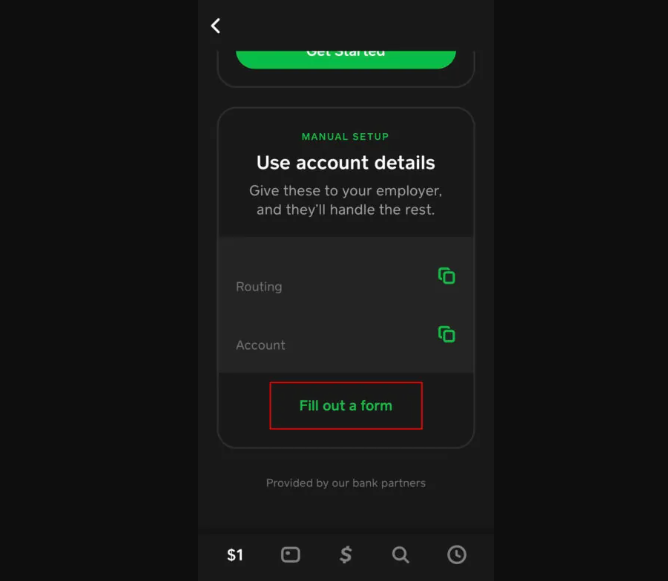
While Sutton Bank handles the debit card, Lincoln Savings Bank is often the institution responsible for the routing and account numbers used for direct deposits. Based in Iowa, Lincoln Savings Bank provides the infrastructure that allows Cash App to act like a traditional checking account.
When you provide an employer with your routing and account numbers to receive a paycheck via Cash App, those numbers are typically associated with Lincoln Savings Bank. This partnership allows Cash App to integrate into the Automated Clearing House (ACH) network, enabling users to receive government stimulus checks, tax refunds, and standard payroll deposits directly into their digital wallets.
How to Identify Your Specific Partner Bank
Because Cash App has scaled significantly, they occasionally rotate or add new banking partners to handle their massive user base. While Sutton and Lincoln remain the primary players, the specific bank assigned to your account can be found directly within the app. Knowing how to locate this information is essential for troubleshooting or setting up external financial links.
To find your partner bank, follow these steps:
-
Open Cash App and tap the “Money” tab (the icon that looks like a bank or a dollar amount) on the home screen.
-
Tap on the “Direct Deposit” section.
-
Under your routing and account numbers, the app will explicitly state the name of the bank associated with those numbers.
Typically, if your routing number starts with certain digits, it is a telltale sign of the institution. For example, routing numbers starting with “073” are frequently associated with Lincoln Savings Bank. Verifying this information ensures that when you are filling out financial paperwork, you are providing the correct institutional name to prevent payment delays.
The Role of FDIC Insurance and Financial Security
One of the most critical questions in personal finance is: “Is my money safe?” In a traditional bank, your deposits are insured by the Federal Deposit Insurance Corporation (IC) up to $250,000. Because Cash App is not a bank, the insurance situation is slightly more nuanced and depends heavily on how you use the platform.
Pass-Through FDIC Insurance
Cash App provides “pass-through” FDIC insurance for users who have a Cash Card. This means that while Cash App itself doesn’t provide the insurance, the funds are deposited into accounts at Sutton Bank or Lincoln Savings Bank, which are FDIC members.

In the event that the partner bank fails, your funds (up to $250,000) are protected by the federal government. However, it is vital to understand that this protection typically only applies if you have a verified account and a Cash Card. If you use Cash App merely for occasional peer-to-peer transfers and do not have a linked card or a verified identity, your balance may not carry the same level of federal protection.
Digital Security Layers
Beyond the institutional banking partners, Cash App employs several layers of security to protect user assets. This includes:
-
Encryption: All data is encrypted to prevent unauthorized access.
-
Security Locks: Users can enable PIN entry, Touch ID, or Face ID for every transaction.
-
Instant Notifications: Real-time alerts for every account movement allow users to spot fraudulent activity immediately.
-
The “Pause” Feature: Cash App allows users to instantly disable their Cash Card from within the app if it is lost or stolen, a feature that offers more agility than many traditional banks.
Cash App Investing and Bitcoin: Different Partners
The complexity of Cash App’s infrastructure increases when you move beyond simple cash balances and into the realm of investing. Cash App allows users to buy stocks and Bitcoin, but these assets are handled by entirely different entities than Sutton or Lincoln Savings Bank.
Cash App Investing LLC
When you buy fractional shares of a company, you are using Cash App Investing LLC. This entity is a registered broker-dealer and a member of the Financial Industry Regulatory Authority (FINRA) and the Securities Investor Protection Corporation (SIPC).
It is important to distinguish between FDIC and SIPC insurance. While the cash in your bank-linked account is protected by the FDIC against bank failure, your investments are protected by the SIPC against the failure of the brokerage firm (up to $500,000). SIPC insurance does not, however, protect you against the loss of value in the stock market.
Bitcoin and Block, Inc.
Bitcoin transactions on Cash App are facilitated by Block, Inc. Unlike stocks, Bitcoin is not currently covered by FDIC or SIPC insurance. The security of your Bitcoin relies on the internal custody solutions provided by Block. For serious investors, this highlights the importance of understanding the difference between “cash held in a bank” and “digital assets held in a ledger.”
The Strategic Advantage of the Fintech-Bank Partnership
The partnership model between fintech platforms like Cash App and traditional banks like Sutton Bank is a win-win for the modern consumer. This arrangement allows each entity to focus on its strengths, resulting in a superior financial tool for the end-user.
Agility Meets Stability
Cash App excels at user interface design, customer acquisition, and rapid feature deployment. By partnering with Sutton and Lincoln, they don’t have to navigate the incredibly high barrier to entry of obtaining a national banking charter, which involves rigorous regulatory oversight and massive capital requirements.
On the flip side, Sutton Bank and Lincoln Savings Bank benefit from a massive influx of deposits and transaction volume that they likely wouldn’t achieve as standalone community banks. They provide the stability, regulatory compliance, and access to the Federal Reserve’s payment rails, while Cash App provides the modern, mobile-first experience.
Financial Inclusion
This partnership model has been a major driver of financial inclusion. Many users who are “unbanked” or “underbanked”—those who may not have easy access to traditional brick-and-mortar branches—can open a Cash App account and gain access to a debit card and direct deposit capabilities within minutes. By removing the physical and often bureaucratic hurdles of traditional banking, the Cash App-Sutton-Lincoln triad has democratized access to the digital economy.
Best Practices for Managing Your Cash App Finances
Given that Cash App operates through these different banking partners, users should approach the platform with a specific set of financial best practices to maximize security and efficiency.
-
Keep Only Necessary Funds in the App: While the pass-through insurance provides a safety net, Cash App is best used as a transactional tool rather than a long-term savings vehicle. For large emergency funds or long-term savings, a traditional high-yield savings account at a dedicated bank may offer more robust customer service and higher interest rates.
-
Verify Your Identity: To ensure you are eligible for FDIC pass-through insurance and higher transaction limits, complete the full identity verification process within the app.
-
Monitor Your Bank Statements: If you link an external bank account to Cash App, regularly check both your Cash App history and your external bank statement to ensure all transfers are accounted for.
-
Understand the Routing Limits: If you are using Lincoln Savings Bank for your direct deposits, be aware of any limits on the size of transfers. While standard paychecks are rarely an issue, exceptionally large transfers might require additional verification.
By understanding that Cash App “goes through” Sutton Bank and Lincoln Savings Bank, you gain a clearer picture of where your money actually sits and who is responsible for its safety. This knowledge transforms the app from a simple “green screen” into a sophisticated financial tool backed by established American banking institutions. In the intersection of technology and finance, clarity is the best form of security.
aViewFromTheCave is a participant in the Amazon Services LLC Associates Program, an affiliate advertising program designed to provide a means for sites to earn advertising fees by advertising and linking to Amazon.com. Amazon, the Amazon logo, AmazonSupply, and the AmazonSupply logo are trademarks of Amazon.com, Inc. or its affiliates. As an Amazon Associate we earn affiliate commissions from qualifying purchases.