
The financial markets are a complex ecosystem, constantly reacting to a myriad of forces, from global macroeconomic shifts to subtle changes in investor sentiment. When the market experiences a downturn, often characterized by widespread selling and declining asset values, it can trigger anxiety and uncertainty among investors, economists, and the general public alike. The question, “Why is the market falling today?” is therefore not just a query about immediate events, but a deep dive into the underlying dynamics that govern wealth creation and destruction. Understanding these drivers is crucial for making informed decisions, tempering emotional responses, and navigating periods of volatility with greater confidence.
A market correction or bear market is rarely attributable to a single cause. Instead, it typically emerges from a confluence of factors, some long-term trends finally coming to a head, others immediate shocks that ripple through the global economy. From the tightening grip of central banks to geopolitical unrest and the speculative excesses of previous booms, dissecting the reasons behind a market decline requires a multi-faceted approach. This article will explore the primary drivers that often contribute to a falling market, offering insights into their interplay and how they impact various asset classes and investor psyches. By demystifying these forces, we aim to provide a clearer perspective on current market movements and equip readers with a framework for understanding future fluctuations.
Unpacking Macroeconomic Headwinds
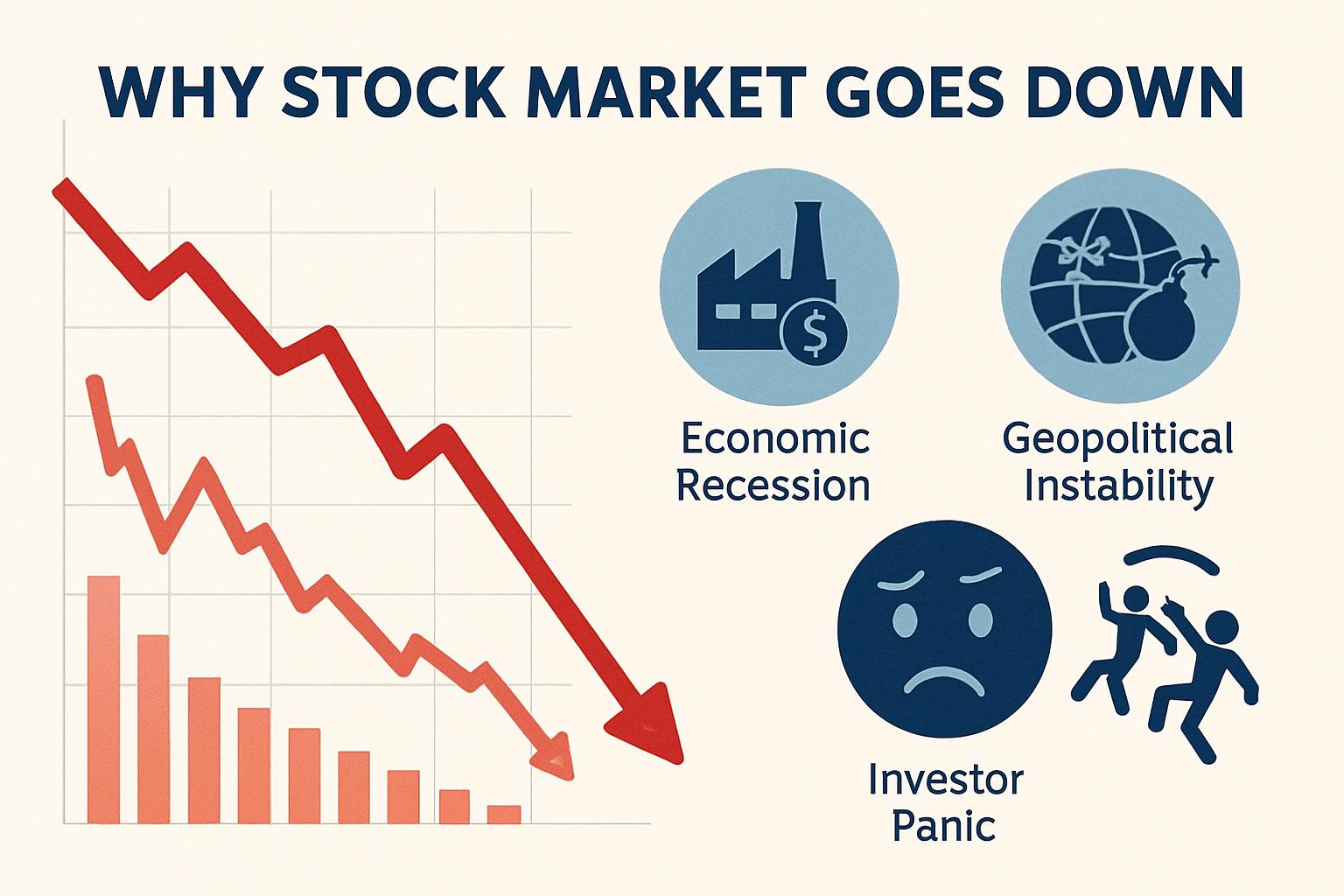
One of the most potent forces driving market downturns originates from the broader macroeconomic environment. These are large-scale economic trends and policies that affect entire nations and global commerce, often setting the stage for significant market shifts.
Inflationary Pressures and Interest Rate Hikes
A primary culprit behind recent market declines has often been the resurgence of inflation. After decades of relative price stability, various factors—including expansive monetary policies during crises, supply chain disruptions, and strong consumer demand—have pushed inflation rates to levels not seen in many years. When inflation becomes persistent and high, central banks, like the U.S. Federal Reserve, are compelled to act. Their primary tool is raising interest rates.
Higher interest rates serve multiple purposes: they increase the cost of borrowing for businesses and consumers, thereby dampening demand and cooling down an overheating economy. However, this has significant implications for financial markets. For companies, higher borrowing costs can squeeze profit margins and make it more expensive to finance expansion. For consumers, higher rates mean more expensive mortgages, car loans, and credit card debt, leading to reduced disposable income and decreased spending. In the stock market, higher interest rates make future earnings less valuable when discounted back to the present, putting downward pressure on equity valuations, particularly for growth stocks that rely heavily on future profitability. Furthermore, rising rates make safer assets like bonds more attractive, drawing capital away from riskier investments like stocks.
Geopolitical Tensions and Supply Chain Disruptions
The interconnectedness of the global economy means that conflicts and political instability in one region can have far-reaching effects on markets worldwide. Wars, trade disputes, and political crises introduce significant uncertainty, which investors inherently dislike. Such events can disrupt critical supply chains, leading to shortages of raw materials, components, and finished goods. This, in turn, exacerbates inflationary pressures and can lead to reduced corporate profits as businesses struggle with higher input costs and production delays.
For instance, conflicts in energy-producing regions can send oil and gas prices soaring, impacting everything from transportation costs to manufacturing expenses, ultimately affecting corporate bottom lines and consumer purchasing power. Trade wars can impose tariffs, making goods more expensive and hindering international commerce. The uncertainty generated by these events often leads investors to pull capital from riskier assets and seek refuge in safer havens, contributing to a broader market decline.
Recessionary Fears and Economic Slowdown
Perhaps the most significant macroeconomic fear driving market falls is the prospect of a recession. A recession is typically defined as a significant, widespread, and prolonged downturn in economic activity, characterized by declining GDP, rising unemployment, and reduced consumer spending. Markets are forward-looking mechanisms, meaning they often begin to price in the likelihood of a recession long before it officially begins.
When central banks aggressively raise interest rates to combat inflation, there’s always a risk they might overtighten, inadvertently pushing the economy into a slowdown or outright recession. Businesses begin to anticipate lower demand, leading them to cut back on investments, hiring, and even current production. This outlook translates into lower expected corporate earnings, which is a primary driver of stock valuations. Fear of recession can trigger a strong wave of selling as investors divest from assets they believe will underperform in a contracting economy, seeking to preserve capital rather than grow it.
Market Dynamics and Investor Behavior
Beyond the foundational macroeconomic factors, the internal dynamics of the market itself and the collective psychology of investors play a critical role in precipitating and accelerating market declines.
Profit-Taking and Valuation Corrections
After extended periods of robust growth, markets often reach points where asset valuations become stretched. When stock prices rise significantly faster than underlying corporate earnings, the market may enter a period where assets are considered overvalued. This can be fueled by speculative buying, low interest rates encouraging risk-taking, or a general sense of euphoria.
At some point, often triggered by a shift in economic outlook or a specific catalyst, investors who have realized substantial gains may decide to “take profits” by selling their holdings. This profit-taking can initiate a downward trend. Once selling begins, it can cascade as other investors, realizing that prices are declining, decide to sell to lock in their own profits or cut their losses. This process can lead to a healthy “valuation correction,” bringing asset prices back in line with their intrinsic worth, but it can be painful for those caught in the downdraft.
Investor Sentiment and Fear-Driven Selling
Financial markets are profoundly influenced by human psychology. Investor sentiment, which refers to the overall attitude of investors towards a particular market or asset, can shift rapidly from optimism and greed to pessimism and fear. During bull markets, positive sentiment can create a self-fulfilling prophecy, pushing prices higher. Conversely, during periods of uncertainty or negative news, fear can take hold.
Fear can lead to irrational decision-making and panic selling. As prices fall, some investors, particularly those with a shorter-term outlook or higher risk aversion, may succumb to the urge to sell immediately to avoid further losses. This fear-driven selling often creates a downward spiral: falling prices trigger more fear, leading to more selling, and so on. The herd mentality can be powerful, causing even fundamentally sound assets to decline sharply as emotional decisions override rational analysis. Media coverage, social media trends, and financial news can amplify these sentiments, contributing to greater volatility.
Technical Factors and Algorithmic Trading
Beyond fundamental economic data and human emotion, technical market factors also play a significant role. These include charting patterns, support and resistance levels, and various indicators used by technical analysts. When key technical levels are breached, it can trigger automatic selling orders or signal to traders that further declines are likely, prompting them to liquidate positions.
Moreover, the increasing prevalence of algorithmic and high-frequency trading (HFT) means that a significant portion of market activity is now driven by computer programs. These algorithms are designed to execute trades based on predefined rules, market data, and often, technical triggers. A sudden drop in prices, for example, might activate numerous stop-loss orders or initiate systematic selling by algorithms designed to reduce risk in a declining market. While these systems can provide liquidity, they can also exacerbate volatility, contributing to rapid and significant price swings as they react swiftly to market conditions, sometimes creating “flash crashes” or accelerating downward momentum.
Sector-Specific Weaknesses and Contagion
While macroeconomic factors paint a broad picture, market declines often originate or are particularly pronounced in specific sectors before potentially spreading to the wider market, a phenomenon known as contagion.
Impact on Growth Stocks and Tech Valuations
Technology and growth stocks often lead bull markets due to their high growth potential and disruptive innovations. However, they are also particularly vulnerable during market downturns, especially those driven by rising interest rates. Growth companies, by definition, often trade at high valuations based on projected future earnings rather than current profitability. Higher interest rates increase the discount rate applied to these future earnings, making them less valuable in present terms. This mathematical reality disproportionately impacts growth stocks, leading to sharper corrections in the tech sector.
Furthermore, many growth companies rely on accessible and affordable capital to fund their expansion. As interest rates rise and credit conditions tighten, this capital becomes more expensive or harder to acquire, slowing their growth trajectory. The recent history has shown that when the tech sector, a significant portion of many major indices, experiences a sharp downturn, it can drag the entire market with it due to its sheer weight and investor sentiment.
Commodity Price Volatility
Commodities, such as oil, gas, metals, and agricultural products, are fundamental inputs for almost every industry. Volatility in commodity prices can act as both a cause and an effect of market declines. Surging commodity prices (e.g., oil) can fuel inflation, prompting central banks to raise rates and contributing to recessionary fears. Conversely, a sharp fall in commodity prices can signal weakening global demand and an impending economic slowdown, further depressing market sentiment.
Industries heavily reliant on specific commodities, such as airlines (fuel), automotive (metals), or food producers (agricultural goods), are directly impacted by these price swings. Significant and sustained volatility in key commodities can disrupt supply chains, squeeze profit margins, and lead to reduced investment, all of which contribute to a broader market malaise.
Financial Sector Stability Concerns
The financial sector—banks, insurance companies, investment firms—is the backbone of the economy. When concerns about financial stability emerge, they can trigger widespread panic. Issues like rising loan defaults, declining asset values held by financial institutions, or liquidity crunches can create systemic risk. If banks are perceived to be vulnerable, it can freeze credit markets, making it harder for businesses to access capital and for consumers to get loans, thereby stifling economic activity.
A crisis of confidence in the financial sector, even if initially confined to a few institutions, can quickly spread through the interconnected global financial system, leading to a broader market sell-off as investors fear a contagion effect reminiscent of past financial crises. Regulatory changes, geopolitical events, or shifts in monetary policy can all introduce vulnerabilities that manifest in the financial sector, potentially catalyzing a larger market downturn.
Navigating a Falling Market: Strategies for Investors
While the reasons for a market fall can be complex and unsettling, understanding them is the first step toward effective portfolio management. A falling market, while challenging, also presents opportunities for long-term investors.
Maintaining a Long-Term Perspective
Perhaps the most crucial strategy during a market downturn is to maintain a long-term investment horizon. Historical data consistently shows that markets recover from every downturn, eventually reaching new highs. Panicking and selling during a fall often locks in losses and prevents investors from participating in the inevitable recovery. Instead, focus on your long-term financial goals and remember that market volatility is a normal part of the investment cycle.
Diversification and Asset Allocation
A well-diversified portfolio, spread across different asset classes (stocks, bonds, real estate, commodities), geographies, and sectors, is essential. When one asset class or sector is performing poorly, others might be more resilient or even performing well. A balanced asset allocation strategy, tailored to your risk tolerance and investment goals, can cushion the blow of market falls and reduce overall portfolio volatility. Periodically rebalancing your portfolio ensures that you maintain your desired risk profile.
Dollar-Cost Averaging and Rebalancing
Dollar-cost averaging involves investing a fixed amount of money at regular intervals, regardless of market prices. When the market is falling, this strategy means you’re buying more shares at lower prices. This reduces your average cost per share over time and can lead to significant returns when the market eventually recovers. Rebalancing, which means adjusting your portfolio back to its original asset allocation by selling assets that have performed well and buying those that have underperformed, can also be a disciplined way to sell high and buy low during volatile periods.
Focusing on Quality and Fundamentals
During market downturns, it becomes even more important to focus on the fundamentals of the companies you invest in. Look for businesses with strong balance sheets, consistent earnings, manageable debt, robust cash flow, and clear competitive advantages. High-quality companies are generally better positioned to weather economic storms and recover more quickly. A falling market can provide an opportunity to acquire shares in these fundamentally strong companies at more attractive valuations.
The Importance of Cash Reserves
Having a sufficient cash reserve, typically 3-6 months of living expenses, is vital. This liquidity provides a safety net, preventing you from being forced to sell investments at a loss to cover immediate expenses during a market downturn. Beyond emergency funds, strategic cash can also be deployed to take advantage of investment opportunities that arise when asset prices become significantly discounted.
Conclusion
The question “Why is the market falling today?” has no singular, simple answer. It is a confluence of complex macroeconomic forces, intricate market dynamics, and the powerful sway of human psychology. From the tightening grip of central bank policies in response to inflation, to the disruptive ripple effects of geopolitical tensions and the ever-present fear of recession, each factor contributes to the broader narrative of a declining market. Understanding these elements—whether it’s the impact of interest rate hikes on growth stocks, the role of investor sentiment in accelerating sell-offs, or the potential for contagion from sector-specific weaknesses—is paramount for any investor.
While market downturns can be unsettling and challenge even the most experienced investors, they are also an inherent and recurring feature of financial markets. Rather than succumbing to panic, a thorough understanding of the underlying causes empowers investors to act rationally. By adhering to time-tested strategies such as maintaining a long-term perspective, ensuring robust diversification, employing dollar-cost averaging, and focusing on the fundamentals of quality assets, individuals can not only mitigate losses but also position themselves to capitalize on the eventual recovery. A falling market, while a period of concern, is also a period of immense opportunity for those prepared to navigate its complexities with discipline, knowledge, and foresight.
aViewFromTheCave is a participant in the Amazon Services LLC Associates Program, an affiliate advertising program designed to provide a means for sites to earn advertising fees by advertising and linking to Amazon.com. Amazon, the Amazon logo, AmazonSupply, and the AmazonSupply logo are trademarks of Amazon.com, Inc. or its affiliates. As an Amazon Associate we earn affiliate commissions from qualifying purchases.