
Every day, thousands of aircraft ascend into the skies, traversing continents, connecting cultures, and fueling global commerce. The sheer volume of this daily aerial ballet is staggering, with an average of over 100,000 flights globally on any given day, carrying millions of passengers and tons of cargo. This incredible feat of logistics and engineering isn’t just a testament to human ingenuity; it’s a profound demonstration of an intricate, continuously evolving technological ecosystem that makes such a scale of operations not only possible but remarkably safe and efficient.

Beyond the visible spectacle of planes streaking across the firmament, there’s a sprawling network of advanced technology working tirelessly behind the scenes. From sophisticated air traffic control systems to real-time flight tracking software, from predictive analytics powered by AI to next-generation communication and navigation tools, technology is the invisible thread weaving together every aspect of modern aviation. Understanding “how many airplanes fly each day” isn’t merely about counting numbers; it’s about appreciating the complex digital infrastructure that monitors, guides, and optimizes every single one of those journeys.
The Digital Tapestry of Air Traffic Management
The precise tracking and management of tens of thousands of simultaneous flights are monumental tasks, made feasible only through the continuous development and deployment of cutting-edge technology. Air Traffic Management (ATM) is the nerve center of this operation, a global system designed to ensure the safe, orderly, and expeditious flow of air traffic.
The Evolution of Air Traffic Control (ATC) Systems
At the core of ATM lies Air Traffic Control (ATC), a discipline that has evolved dramatically since its rudimentary beginnings in the early 20th century. Initially, ATC relied on visual signals, flags, and basic radio communication. Today, it’s a highly automated, data-intensive operation. Modern ATC centers are equipped with vast arrays of interconnected computers, high-resolution displays, and sophisticated software that process colossal amounts of data in real-time. These systems integrate various data sources – from radar returns and flight plans to meteorological information – to provide controllers with a comprehensive picture of the airspace. This digital transformation has shifted ATC from a reactive, human-centric model to a proactive, technology-driven one, enabling controllers to manage increasingly crowded skies with enhanced precision and safety protocols.
Radar, Transponders, and GPS: Tracking Every Flight
The foundation of knowing where every aircraft is at any given moment rests on a combination of technologies. Primary radar bounces radio waves off aircraft, detecting their position and altitude. Secondary surveillance radar (SSR) is more advanced, querying an aircraft’s transponder. The transponder, a device on board every commercial and most private aircraft, automatically replies with a wealth of information, including the aircraft’s identity, speed, and altitude. This data is critical for ATC.
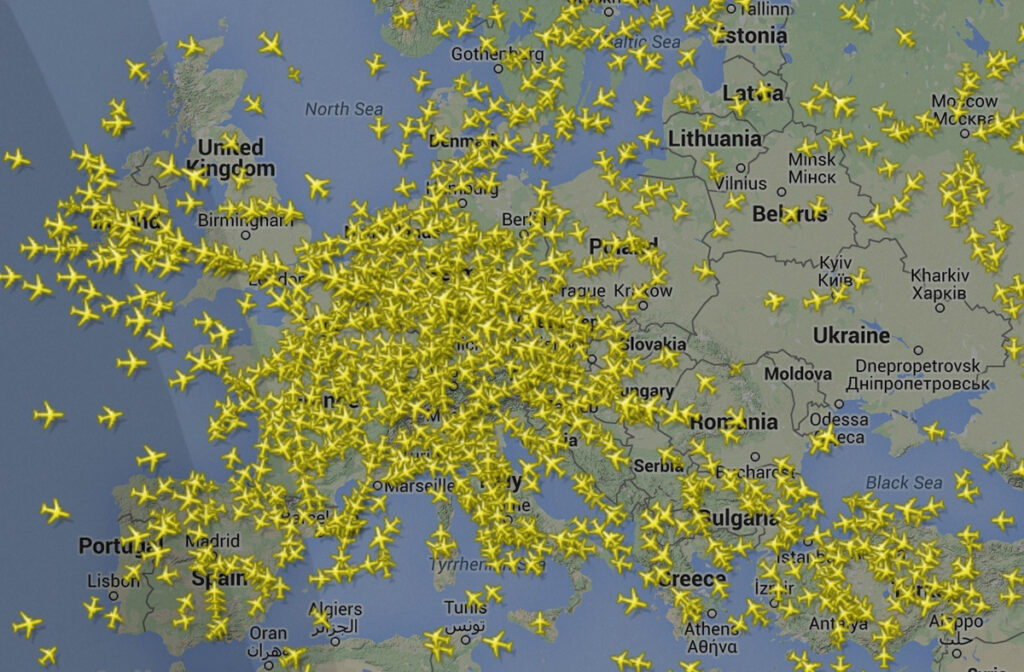
Complementing radar, the Global Positioning System (GPS) and its aviation-specific augmentations (like WAAS in North America or EGNOS in Europe) provide highly accurate navigational data directly to the aircraft and, increasingly, to ground systems. Technologies like Automatic Dependent Surveillance-Broadcast (ADS-B) further revolutionize tracking by allowing aircraft to broadcast their GPS position, altitude, speed, and other data directly to ground stations and other equipped aircraft. ADS-B offers more accurate and frequent updates than traditional radar, especially in remote areas or over oceans, significantly enhancing surveillance capabilities and reducing reliance on ground-based infrastructure. This real-time, high-fidelity data is what allows flight tracking apps to display planes moving across a map, and more importantly, allows ATC to maintain safe separation.
AI and Machine Learning in Predictive Flight Paths
The future of air traffic management is increasingly intertwined with Artificial Intelligence (AI) and Machine Learning (ML). These technologies are being leveraged to move beyond merely tracking current positions to predicting future movements and potential conflicts. AI algorithms can analyze vast datasets of historical flight patterns, weather conditions, and operational constraints to forecast congestion hotspots, optimize flight routes in real-time, and even suggest alternative strategies to mitigate delays.
For instance, ML models can predict the likelihood of a runway needing maintenance based on usage patterns, or anticipate the ripple effects of a single delayed flight across an entire network. This predictive capability allows controllers and airline operations centers to make more informed decisions, enhancing efficiency, reducing fuel consumption, and ultimately improving the passenger experience. By automating routine decision-making processes and flagging potential issues before they escalate, AI augments human capabilities, making the daily orchestration of global air traffic even more robust.
Data at Altitude: The Role of Software and Analytics
The operational scale of daily global aviation generates an unprecedented volume of data. Every flight, every system interaction, every weather report contributes to a massive data lake that, when harnessed correctly through sophisticated software and analytics, provides invaluable insights and drives operational excellence.
Flight Tracking Applications and Public Data Access
For the average person, the most visible manifestation of aviation technology is flight tracking applications. Services like FlightAware, FlightRadar24, and Plane Finder rely on the aforementioned ADS-B data, supplemented by satellite data and traditional radar feeds, to provide real-time updates on flight positions, speeds, altitudes, and estimated arrival times. These consumer-facing applications democratize access to aviation data, allowing enthusiasts, anxious family members, and business travelers to monitor the pulse of global air travel. Their very existence underscores the robust, interconnected digital infrastructure that collects, processes, and disseminates this information globally in near real-time.
Airline Operations Software: Optimizing Schedules and Routes
Behind the scenes, airlines themselves are heavily reliant on powerful operations software suites. These complex systems manage everything from crew scheduling and aircraft maintenance logs to fuel optimization and gate assignments. Route optimization software, for example, uses algorithms to calculate the most efficient flight paths considering wind speeds, restricted airspace, and air traffic congestion, directly impacting fuel burn and on-time performance. Furthermore, sophisticated revenue management systems dynamically adjust ticket prices based on demand and capacity, a complex interplay of data analytics and predictive modeling. The integration of real-time data from ATC and weather systems into these operational platforms allows airlines to react swiftly to disruptions, re-route aircraft, and minimize cascading delays, contributing significantly to the smooth flow of daily air traffic.
Cybersecurity in Aviation: Protecting Critical Flight Data
As aviation becomes increasingly digital and interconnected, the importance of cybersecurity has skyrocketed. The integrity of flight data, communication systems, and ground infrastructure is paramount. A cyberattack on ATC systems, airline operational networks, or even individual aircraft systems could have catastrophic consequences. Consequently, vast investments are being made in developing robust cybersecurity frameworks, encryption protocols, intrusion detection systems, and secure communication channels. Regular audits, penetration testing, and continuous threat intelligence monitoring are standard practices to protect the vast amount of critical data that underpins daily flight operations, ensuring the trust and reliability of the entire aviation ecosystem.
Enhancing Efficiency: Next-Gen Aviation Technology
The relentless pursuit of efficiency, safety, and capacity drives continuous innovation in aviation technology. As air travel demand continues to grow, next-generation technologies are being developed and deployed to manage an even greater number of daily flights while minimizing environmental impact.
Satellite-Based Navigation (CNS/ATM)
The shift towards Communication, Navigation, Surveillance / Air Traffic Management (CNS/ATM) systems represents a fundamental paradigm change. Moving away from ground-based radar and navigation aids, CNS/ATM leverages satellite technology for more precise navigation (GNSS), digital data links for communication (CPDLC), and ADS-B for surveillance. This allows for more flexible, direct flight paths (Performance-Based Navigation or PBN), reducing flight times and fuel consumption. It also expands surveillance capabilities into oceanic and remote regions where traditional radar coverage is nonexistent. This global, seamless system is crucial for enabling the future growth of air traffic and managing the daily surge of flights with greater accuracy and less human intervention.
Digital Tower Technology and Remote Operations
A remarkable advancement in ground operations is the emergence of digital tower technology. Instead of controllers being physically present in a control tower, they can manage airport traffic from a remote operations center. High-definition cameras, thermal cameras, and pan-tilt-zoom cameras provide a 360-degree panoramic view of the airport and its surroundings, often enhanced with augmented reality overlays that display flight data, runway information, and other critical alerts. This technology offers several benefits: it allows a single remote tower to manage multiple smaller airports, provides better visibility in adverse weather conditions, and creates more ergonomic working environments for controllers. This innovative approach to ground control further optimizes the coordination required for thousands of daily take-offs and landings.
Autonomous Systems and Future Air Mobility (UAM)
While fully autonomous commercial passenger flights are still a distant prospect, autonomous technologies are already being integrated into various aspects of aviation. Autopilots are highly sophisticated, managing most of a flight’s duration. In the near future, we will see increased automation in ground operations, potentially with autonomous baggage handling systems and remotely operated tugs. The emergence of Urban Air Mobility (UAM) concepts, involving electric Vertical Take-Off and Landing (eVTOL) aircraft for intra-city travel, will heavily rely on autonomous flight systems and dedicated Unmanned Traffic Management (UTM) networks. These innovations will add a new dimension to daily air movements, requiring an even more complex, AI-driven technological framework to manage the sheer density of vehicles in low-altitude urban airspace.
The Future Sky: Innovation Driving Aviation Forward
The story of “how many airplanes fly each day” is ultimately a story of continuous technological advancement. The numbers are staggering, but the systems that manage them are even more impressive, constantly evolving to meet new challenges and embrace new opportunities.
Sustainable Aviation Technology: Electric and Hydrogen Propulsion
A significant focus for future aviation technology is sustainability. The industry is heavily investing in electric and hydrogen propulsion systems to drastically reduce carbon emissions. Electric aircraft, both battery-powered and hybrid-electric, are already making inroads in smaller regional aviation, with larger designs on the drawing board. Hydrogen, whether burned directly or used in fuel cells, offers a zero-emission alternative for longer-range flights. Developing these new propulsion methods requires innovations not just in engine design, but also in battery technology, hydrogen storage, refueling infrastructure, and the regulatory frameworks to certify their safe operation. These advancements will reshape the fleet of aircraft flying daily, making each of those thousands of flights more environmentally responsible.
Drone Integration and Unmanned Traffic Management (UTM)
The proliferation of drones, from recreational quadcopters to large commercial Unmanned Aerial Vehicles (UAVs) for cargo delivery and surveillance, presents a new frontier for air traffic management. Integrating these unmanned systems safely into already complex airspace alongside traditional manned aircraft is a monumental technical challenge. Unmanned Traffic Management (UTM) systems are being developed – essentially a separate, highly automated air traffic control system specifically for drones. These systems rely on advanced digital communication, geofencing, real-time collision avoidance algorithms, and AI to manage flight paths, ensure separation, and enforce regulations for potentially millions of daily drone flights, which will eventually dwarf the number of manned aircraft movements.
Hyperconnectivity: IoT and 5G in the Aircraft Cabin and Beyond
The future aircraft will be hyperconnected, a true “Internet of Things” in the sky. 5G technology, both on the ground and potentially integrated into aircraft systems, promises unprecedented bandwidth and low latency. This will enable real-time data exchange between aircraft, ground control, and airline operations, enhancing safety features, predictive maintenance capabilities, and in-flight entertainment. Passengers can expect seamless connectivity, while aircraft systems will continuously transmit sensor data to ground engineers, allowing for proactive maintenance and reducing unforeseen delays. This ubiquitous connectivity will further weave every airplane into a vast, intelligent network, enhancing the efficiency and safety of every single flight that takes to the skies each day.
In conclusion, “how many airplanes fly each day” is a figure that fluctuates, but consistently remains in the tens of thousands. What truly enables this incredible daily feat is the unseen, intricate web of technology. From the foundational radar and transponder systems to the cutting-edge applications of AI, satellite navigation, and sustainable propulsion, technology is not just supporting aviation; it is defining its present and propelling its future. The sky is not merely an open expanse; it’s a meticulously managed, digitally orchestrated highway, a testament to humanity’s ongoing quest for faster, safer, and more efficient connections across the globe.
aViewFromTheCave is a participant in the Amazon Services LLC Associates Program, an affiliate advertising program designed to provide a means for sites to earn advertising fees by advertising and linking to Amazon.com. Amazon, the Amazon logo, AmazonSupply, and the AmazonSupply logo are trademarks of Amazon.com, Inc. or its affiliates. As an Amazon Associate we earn affiliate commissions from qualifying purchases.