
In the landscape of global commerce, few names carry as much weight, recognition, and symbolic power as “Amazon.” Today, the name is synonymous with the “Everything Store,” representing a logistical behemoth that has redefined consumer expectations. However, the origin of this brand name was not a moment of divine inspiration, but rather a calculated, strategic decision rooted in the fundamentals of brand positioning and market psychology. Understanding why it is called Amazon requires peeling back the layers of 1990s corporate strategy to reveal how a simple name became the foundation for a trillion-dollar identity.

From Cadabra to the Amazon: The Birth of a Corporate Identity
The story of Amazon’s name begins with what it wasn’t called. In 1994, when Jeff Bezos first incorporated his fledgling online bookstore, he initially chose the name “Cadabra,” short for “abracadabra.” The intent was to evoke the “magic” of finding a book online and having it delivered to your door. However, this first attempt at branding failed the most basic test of verbal identity: clarity.
The Reluctant Pivot from “Cadabra”
The decision to abandon “Cadabra” came after Bezos’s lawyer reportedly misheard the name over the phone as “Cadaver.” In the world of brand strategy, a name that evokes death and decay is the antithesis of a growth-oriented business. Bezos quickly realized that for a brand to scale globally, it needed to be phonetic, easily understood, and free of negative connotations. This pivot highlights a crucial lesson in branding: the first idea is rarely the best, and a brand must be resilient enough to shed its initial skin if that skin no longer fits the vision.
The Strategic Search Through the “A” Section
Once “Cadabra” was discarded, Bezos and his then-wife, MacKenzie Scott, began scouring the dictionary for inspiration. They looked for words that started with the letter “A.” In the mid-1990s, this was a brilliant tactical move. The digital world was governed by alphabetical directories; search engines like Yahoo! and AltaVista often listed companies in alphabetical order. By choosing a name starting with “A,” Bezos ensured that his company would appear at the top of the list, gaining a competitive advantage in visibility before the era of modern SEO (Search Engine Optimization).
The Symbolism of the World’s Largest River
In late 1994, Bezos came across the word “Amazon.” It was the name of the largest river in the world by volume, several times larger than the next ten largest rivers combined. This wasn’t just a catchy name; it was a metaphorical blueprint for the company’s future.
Scaling Beyond the Bookstore
At the time of its naming, Amazon was strictly a bookstore. However, Bezos’s vision was never limited to literature. He envisioned a marketplace that would eventually dwarf all competitors. By naming the company after the world’s most voluminous river, he was signaling to investors and consumers that his brand was built for scale. The Amazon River is vast, exotic, and overwhelming in its power—traits Bezos wanted his brand to embody. It suggested a “vastness” of selection that no physical bookstore could ever hope to match.
Flow, Velocity, and Market Domination
In branding, metaphors matter. The river imagery also evoked a sense of “flow” and “velocity.” For a company that would eventually base its entire value proposition on the speed of delivery and the seamless movement of goods across the globe, the river was an apt comparison. It represented a force of nature that couldn’t be stopped, carving its own path through the landscape. This brand positioning allowed Amazon to transition from books to electronics, apparel, and digital services without the name feeling restrictive. Unlike “BookCloud” or “eBooks.com,” “Amazon” was an empty vessel—a “brand bucket”—that could be filled with any product or service the company chose to offer.
Visual Identity: Decoding the Logo and the “A to Z” Promise
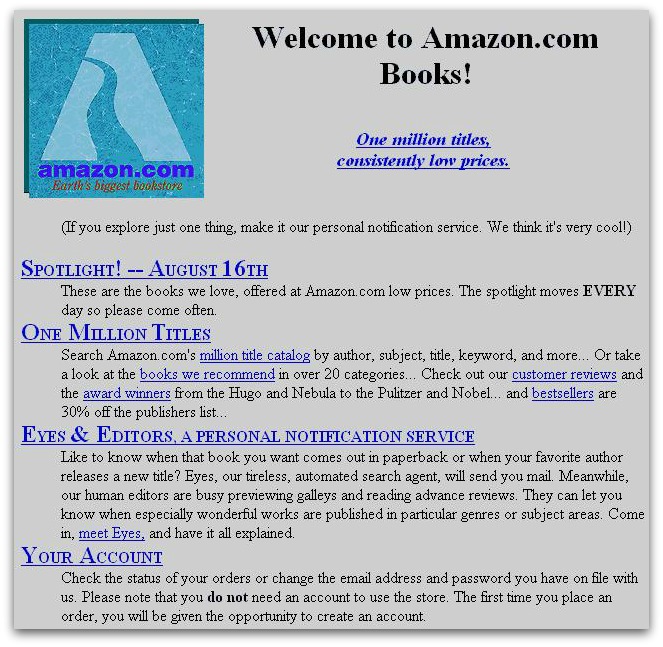
A name is only half of the brand equation; the other half is how that name is visualized. The Amazon brand identity underwent several iterations before landing on the iconic “smile” logo designed by the agency Turner Duckworth in 2000. This design choice cemented the brand’s promise and reinforced the meaning behind the name.
The Evolution of the Smile
The current Amazon logo features a yellow arrow that doubles as a smile. This is a masterclass in brand psychology. The “smile” communicates customer satisfaction—the ultimate goal of the company’s “customer obsession” philosophy. It humanizes a massive corporate entity, making the act of shopping feel friendly and rewarding. In an era where digital commerce can feel cold and transactional, the smile provides a subconscious layer of warmth and trust.
The “A to Z” Promise
Critically, the arrow in the logo starts at the letter “A” and points directly to the letter “Z.” This is a visual manifestation of the brand’s core strategy: the “Everything Store.” It tells the consumer, “We have everything you need, from A to Z.” This clever piece of graphic design links the name back to the original vision of the Amazon River’s vastness. It transforms the word “Amazon” from a geographical reference into a functional promise of variety and completeness. This consistency between the name, the logo, and the business model is what creates a “sticky” brand.
Brand Extension: How the Name Sustains Global Diversification
The strength of the “Amazon” name is its versatility. As the company expanded into cloud computing, hardware, and entertainment, the brand identity proved robust enough to house these disparate sectors without losing its core essence.
AWS and the Infrastructure of Reliability
When Amazon launched Amazon Web Services (AWS), it was moving into a purely B2B (Business to Business) tech space. One might think a name associated with retail would struggle in the high-stakes world of cloud infrastructure. However, the “Amazon” brand already carried associations of massive scale and reliability. The name “Amazon” suggested an infrastructure that was as vast and essential as the river itself. It gave the tech wing of the company an immediate sense of gravitas and stability, which is essential when asking companies to trust you with their data.
Prime: Building Ecosystem Loyalty
The creation of “Amazon Prime” represents one of the most successful brand extensions in history. By attaching the “Amazon” name to a membership service, the company moved from being a utility (a place where you buy things) to a lifestyle brand (a service you belong to). The name “Prime” implies being first, being the best, and being central. It perfectly complements the Amazon parent brand by suggesting that if Amazon is the world’s largest river, Prime is the fast lane that allows you to navigate it more efficiently than anyone else.

Conclusion: The Lasting Legacy of a Name
Why is it called Amazon? Because Jeff Bezos understood that a brand is not just a label; it is a declaration of intent. He rejected “Cadabra” because it was confusing and “Cadaverous,” and he chose “Amazon” because it represented a vision of unparalleled scale, a strategic alphabetical advantage, and a metaphorical promise of infinite variety.
The name has survived and thrived because it was chosen with the future in mind. It was never about what the company was in 1895 or 1994; it was about what the company could become. By anchoring the identity to the world’s largest river and reinforcing it with a logo that promises “A to Z” satisfaction, the company created a brand that is as much an ecosystem as it is a marketplace.
In the world of branding, “Amazon” stands as a testament to the power of foresight. It proves that a well-chosen name, backed by a consistent visual identity and an unwavering business strategy, can evolve from a simple word in a dictionary into a global icon of commerce. The name Amazon doesn’t just describe a company; it defines an era of consumer culture where the vastness of the river and the speed of its flow have become the standard for the entire world.
aViewFromTheCave is a participant in the Amazon Services LLC Associates Program, an affiliate advertising program designed to provide a means for sites to earn advertising fees by advertising and linking to Amazon.com. Amazon, the Amazon logo, AmazonSupply, and the AmazonSupply logo are trademarks of Amazon.com, Inc. or its affiliates. As an Amazon Associate we earn affiliate commissions from qualifying purchases.