
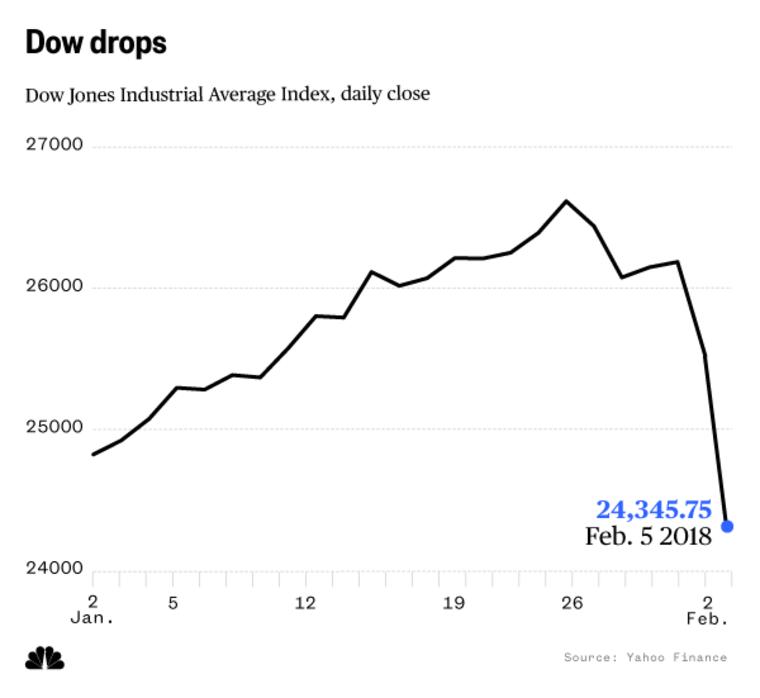
The Dow Jones Industrial Average (DJIA), often simply referred to as “the Dow,” is one of the most widely recognized stock market indices globally. Comprising 30 of America’s largest and most influential publicly traded companies, it serves as a critical barometer of the U.S. stock market’s health and, by extension, the broader economy. When the Dow drops, it signals more than just a reduction in stock prices; it often reflects a confluence of underlying economic, political, and psychological factors that are unsettling investors and potentially impacting the financial well-being of millions. Understanding these dynamics is crucial for both seasoned investors and curious observers alike.

A decline in the Dow is rarely attributable to a single cause. Instead, it typically emerges from a complex interplay of macroeconomic trends, global events, corporate performance, and shifts in investor sentiment. These factors can create a cascade effect, where one negative development amplifies others, leading to widespread sell-offs and increased market volatility. Delving into these interconnected drivers allows for a more nuanced comprehension of why the market’s titans might be losing ground.
Macroeconomic Headwinds and Monetary Policy Shifts
One of the most potent forces behind any significant market movement, including a Dow decline, emanates from the broader macroeconomic environment. Central bank policies, inflation, and the overall health of the economy play pivotal roles in shaping investor expectations and corporate profitability.
Inflationary Pressures and Interest Rate Hikes
Persistent and elevated inflation is a significant concern for financial markets. When the cost of goods and services rises steadily, it erodes the purchasing power of consumers and increases operational costs for businesses. This dynamic can compress corporate profit margins, making future earnings less certain and thus lowering company valuations. To combat inflation, central banks, most notably the U.S. Federal Reserve, typically resort to tightening monetary policy by raising interest rates.
Interest rate hikes are a double-edged sword for the stock market. On one hand, they aim to cool down an overheating economy and bring inflation under control. On the other hand, higher interest rates increase the cost of borrowing for companies, making it more expensive to finance expansion, invest in new projects, or even manage existing debt. This can stifle economic growth and reduce corporate spending, directly impacting earnings. Moreover, higher rates make fixed-income investments, like bonds, more attractive relative to equities, drawing capital away from the stock market and contributing to downward pressure on indices like the Dow.
Recession Fears and Economic Slowdown
Aggressive monetary tightening, while necessary to tame inflation, carries the inherent risk of slowing economic growth too much, potentially pushing the economy into a recession. A recession, characterized by a significant decline in economic activity across the economy, typically involves widespread job losses, reduced consumer spending, and a sharp drop in corporate profits.
The anticipation of a recession alone can trigger substantial market downturns. Investors begin to price in lower future earnings for companies, leading to a de-rating of stock valuations. Companies in the Dow, being large industrial and financial players, are particularly sensitive to economic cycles. A slowdown in manufacturing, reduced consumer demand for durable goods, or a contraction in lending can severely impact their bottom lines, causing their stock prices to fall and, by extension, dragging the entire index down. The fear of a “hard landing” versus a “soft landing” (where inflation is tamed without a recession) often dominates market narratives during periods of rising interest rates.
Geopolitical Instability and Global Disruptions
Beyond domestic economic factors, the global landscape exerts considerable influence over the Dow. Geopolitical tensions, international conflicts, and disruptions to global trade and supply chains can introduce significant uncertainty and risk, prompting investors to pull back from equities.
International Conflicts and Trade Wars
Major international conflicts, such as regional wars or prolonged geopolitical standoffs, can destabilize global markets. These events often lead to increased defense spending, disrupted trade routes, and a general sense of unease that discourages investment. For instance, conflicts can drive up commodity prices, particularly oil and natural gas, which in turn increases input costs for businesses across various sectors and consumer energy bills. This acts as another inflationary pressure point, further complicating the central banks’ efforts to manage the economy.
Trade wars and protectionist policies, characterized by tariffs and restrictions on imports, can similarly harm multinational corporations that rely on global supply chains and international markets for revenue. Companies within the Dow, many of which have significant international operations, are directly exposed to such risks. Tariffs increase production costs, reduce access to key markets, and can lead to retaliatory measures that hurt exports, ultimately impacting corporate earnings and investor confidence. The uncertainty surrounding trade relationships makes future earnings forecasts difficult, prompting a cautious, risk-averse stance among investors.
Energy Market Shocks and Supply Chain Fragility
The global energy market is highly susceptible to geopolitical events and supply-demand imbalances. A sudden spike in oil or gas prices, often triggered by political instability in major producing regions or unexpected supply cuts, can have immediate and far-reaching consequences. Higher energy costs translate into increased transportation expenses for goods, higher manufacturing costs, and reduced disposable income for consumers. This broad-based impact can slow economic activity and dampen corporate profits across the board.

Furthermore, the past few years have highlighted the fragility of global supply chains. Lockdowns, geopolitical tensions, and natural disasters can disrupt the flow of raw materials, components, and finished products. For Dow components that operate on a global scale, these disruptions can lead to production delays, increased costs, and missed sales opportunities. The inability to source critical components or deliver products to market efficiently directly impacts revenue and profitability, contributing to a negative outlook and driving stock prices down.
Corporate Performance and Investor Psychology
While macro factors set the stage, the individual performance of the companies within the Dow, coupled with prevailing investor sentiment, often dictates the immediate direction and magnitude of the index’s movements.
Disappointing Earnings Reports and Guidance
The Dow is an average of 30 large companies, so the collective health and profitability of these specific firms are paramount. When several key Dow components report earnings that fall short of analyst expectations, or when they issue cautious or reduced guidance for future quarters, it sends a strong negative signal to the market. Disappointing earnings indicate that a company’s business model might be struggling, or that the economic environment is proving more challenging than anticipated.
Investors tend to react sharply to such news, selling off shares of underperforming companies. Because the Dow is price-weighted, movements in higher-priced stocks have a greater impact on the index. Therefore, if major industrial or technology giants within the Dow deliver poor results, their individual stock drops can significantly pull the entire index down, even if other components are performing adequately. Reduced future guidance is particularly impactful as it suggests ongoing headwinds and lower profitability in the near term, leading to a re-evaluation of the company’s long-term value.
Investor Confidence and Risk Aversion
Financial markets are not purely rational; they are heavily influenced by human psychology. Investor confidence plays a critical role in market movements. During periods of economic uncertainty, rising inflation, or geopolitical instability, confidence can erode rapidly. This leads to increased risk aversion, where investors become less willing to hold “risky” assets like stocks and instead seek “safe-haven” assets such as government bonds, gold, or even cash.
A loss of confidence can trigger widespread panic selling, where investors sell their holdings quickly, often irrespective of underlying fundamentals, to avoid further losses. This herd mentality can accelerate market declines, turning a measured correction into a sharper downturn. News headlines, analyst downgrades, and social media trends can all amplify these psychological effects, leading to a self-fulfilling prophecy of market drops as fear feeds more selling. Conversely, a flight to safety reduces demand for equities, further depressing prices across the board.
Navigating Market Volatility: Investor Strategies
A dropping Dow, while concerning, is a normal and historically recurring feature of financial markets. Understanding its implications and adopting a disciplined approach is crucial for long-term financial success.
Implications for Retirement Accounts and Portfolios
For individual investors, a significant drop in the Dow translates directly into a decline in the value of their investment portfolios, particularly those heavily weighted towards U.S. large-cap equities. This impact is keenly felt in retirement accounts like 401(k)s and IRAs, which often hold broad market index funds or mutual funds that track the Dow or S&P 500. While unrealized losses are only “on paper,” they can cause anxiety and might delay retirement plans for those nearing their financial goals. For younger investors, market drops can represent buying opportunities, but they still test emotional resilience.
Furthermore, a declining market can affect consumer spending patterns. When people see their wealth decline, they often become more cautious with their expenditures, which can further dampen economic activity and corporate revenues, creating a negative feedback loop. Business confidence can also suffer, leading to reduced investment and hiring.
Strategies for Navigating Downturns
During periods when the Dow is dropping, a thoughtful and disciplined investment strategy is paramount. Panic selling is often counterproductive, as it locks in losses and removes the opportunity to benefit from an eventual market recovery. Instead, consider the following strategies:
-
Maintain a Long-Term Perspective: Historically, stock markets have recovered from every downturn and continued their upward trend over the long run. Focusing on long-term financial goals rather than short-term fluctuations can help investors ride out volatility.
-
Diversification: Ensure your portfolio is well-diversified across different asset classes (stocks, bonds, real estate), geographies, and sectors. This can help cushion the blow if one particular area of the market is underperforming.
-
Dollar-Cost Averaging: Continue investing a fixed amount of money regularly, regardless of market movements. This strategy means you buy more shares when prices are low and fewer when prices are high, potentially lowering your average cost per share over time.
-
Rebalancing: Periodically review and adjust your portfolio to maintain your desired asset allocation. A market drop might mean your equity allocation has shrunk, presenting an opportunity to buy more stocks at lower prices to restore your target allocation.
-
Review Your Financial Plan: Use market downturns as an opportunity to reassess your risk tolerance and financial goals. If necessary, consult with a qualified financial advisor to ensure your investment strategy remains aligned with your objectives.
-
Stay Informed, Not Obsessed: Keep abreast of economic news and market analysis, but avoid constant monitoring that can lead to emotional decision-making.
In conclusion, the reasons behind a dropping Dow are multifaceted, encompassing everything from central bank policies and inflationary pressures to global conflicts and shifts in investor psychology. While unsettling, market downturns are an inherent part of investing. By understanding the underlying causes and adopting a disciplined, long-term approach, investors can better navigate these challenging periods and position themselves for future recovery and growth.
aViewFromTheCave is a participant in the Amazon Services LLC Associates Program, an affiliate advertising program designed to provide a means for sites to earn advertising fees by advertising and linking to Amazon.com. Amazon, the Amazon logo, AmazonSupply, and the AmazonSupply logo are trademarks of Amazon.com, Inc. or its affiliates. As an Amazon Associate we earn affiliate commissions from qualifying purchases.