
In the world of finance, few assets command as much attention, skepticism, and fervor as Bitcoin. Often referred to as “digital gold,” Bitcoin has transitioned from an experimental cryptographic project into a cornerstone of the modern alternative investment landscape. When the price of Bitcoin begins a sustained upward trajectory, it is rarely the result of a single event. Instead, it is usually a “perfect storm” of macroeconomic shifts, structural supply changes, and a fundamental evolution in how the world’s largest financial institutions view digital scarcity.
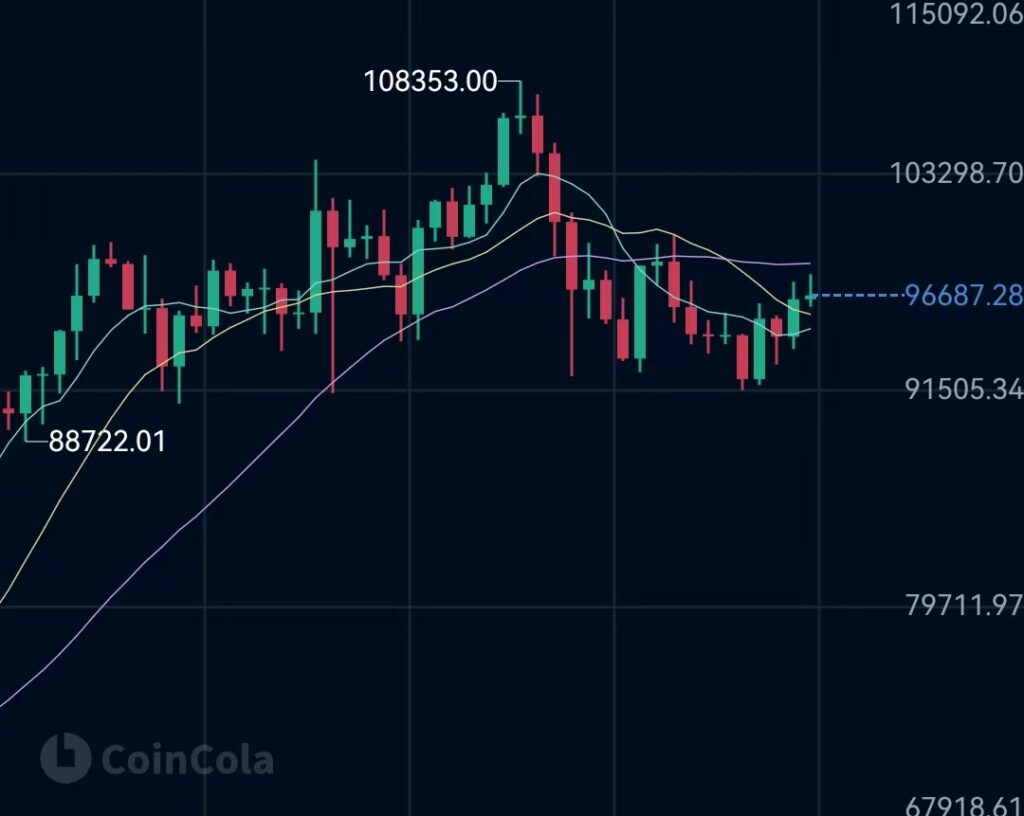
Understanding why Bitcoin is going up requires looking beyond the daily price tickers. To grasp the current momentum, we must analyze the convergence of institutional adoption, the mathematical certainty of its supply schedule, and the global economic backdrop that makes a decentralized, non-sovereign asset increasingly attractive to the pragmatic investor.
The Institutional Paradigm Shift: The Spot ETF Catalyst
For years, the primary barrier to entry for Bitcoin was “friction.” For a traditional institutional investor or a retail investor with a standard 401(k), buying Bitcoin meant navigating unregulated exchanges, managing private keys, and worrying about the security of digital wallets. The landscape changed permanently with the approval of Spot Bitcoin Exchange-Traded Funds (ETFs) in early 2024.
The Wall Street Pivot: BlackRock and Fidelity
The entry of BlackRock, the world’s largest asset manager, into the Bitcoin space served as a massive “seal of approval.” When firms like BlackRock and Fidelity launched their Spot ETFs, it signaled to the global financial community that Bitcoin was no longer a fringe asset; it was a legitimate financial product. These ETFs allow trillions of dollars in managed capital to flow into Bitcoin through traditional brokerage accounts. This “wall of money” creates consistent buy-side pressure that was previously non-existent, providing a baseline of demand that supports higher price floors.
Market Liquidity and Accessibility
The Spot ETFs do more than just provide a way to buy; they provide deep liquidity. By trading on major stock exchanges like the NYSE and NASDAQ, Bitcoin has become as accessible as shares of Apple or gold bullion. This ease of access has invited a new demographic of “sticky” capital—long-term investors, pension funds, and sovereign wealth funds—who are less likely to engage in the panic selling that characterized previous Bitcoin cycles. As these institutions allocate even 1% to 3% of their portfolios to Bitcoin, the sheer scale of the inflow naturally drives the price upward.
The Halving and the Economics of Scarcity
While demand is surging due to institutional interest, the supply side of the Bitcoin equation is governed by an immutable code. Unlike fiat currencies, which can be printed at the discretion of central banks, Bitcoin’s supply is capped at 21 million coins. This scarcity is reinforced by an event known as “The Halving.”
The Quadrennial Halving Event
Every four years (or every 210,000 blocks), the reward given to Bitcoin miners for securing the network is cut in half. This effectively reduces the “inflation rate” of new Bitcoin entering the market. Historically, the Halving serves as a precursor to significant price appreciation. It is a simple matter of supply and demand: if the rate of new supply is cut by 50% while demand remains constant or increases, the price must adjust upward to find a new equilibrium. We are currently navigating the supply-shock aftermath of the most recent Halving, which has historically been the most bullish phase of the four-year cycle.
Supply vs. Demand: The Exchange Reserves Crunch
An often-overlooked metric in the “why is it going up” conversation is the “Exchange Reserve” data. Currently, the amount of Bitcoin available for purchase on centralized exchanges is at multi-year lows. Investors are increasingly moving their Bitcoin into “cold storage” (long-term private wallets), indicating a lack of desire to sell. When a supply shock (the Halving) meets a liquidity crunch (low exchange reserves) and is met with a demand spike (ETFs), the result is an aggressive upward price movement. The market is essentially experiencing a “supply squeeze” on a global scale.

Macroeconomic Factors and the Search for a Hedge
Bitcoin does not exist in a vacuum; its price is deeply influenced by the global macroeconomic environment. As central banks navigate the precarious balance between fighting inflation and preventing recession, Bitcoin’s role as a decentralized store of value becomes more prominent.
Inflation Hedging in a Volatile Global Economy
In an era of high government debt and persistent inflationary pressures, investors are looking for assets that cannot be debased. While traditional currencies lose purchasing power over time, Bitcoin’s fixed supply offers a hedge against the devaluation of fiat money. When the US Dollar Index (DXY) shows signs of weakness or when government spending reaches record highs, Bitcoin often rallies. Investors view it as an “insurance policy” against the mismanagement of traditional monetary systems.
Interest Rates and the “Risk-On” Sentiment
Bitcoin is often categorized as a “risk-on” asset, meaning it tends to perform well when investors are optimistic and liquidity is high. As expectations grow that central banks, such as the Federal Reserve, will eventually pivot toward lower interest rates, the cost of borrowing decreases, and more capital flows into growth assets. Lower interest rates typically weaken the dollar and drive investors toward higher-yielding or scarcer assets. The anticipation of a more favorable monetary environment creates a speculative tailwind that pushes Bitcoin’s price higher in anticipation of future liquidity.
The Maturation of Crypto as a Financial Asset Class
Beyond the technicals and the macroeconomics, there is a psychological shift occurring. Bitcoin is maturing. It is transitioning from a speculative vehicle for “get-rich-quick” traders into a strategic asset for sophisticated wealth management.
From Speculation to Store of Value
In previous cycles, Bitcoin’s price was largely driven by retail hype and “FOMO” (fear of missing out). Today, the narrative has shifted toward Bitcoin as a “Store of Value” (SoV). This puts it in direct competition with the $14 trillion gold market. As the younger, “digital-native” generations (Millennials and Gen Z) begin to inherit wealth and take over investment decisions, they are significantly more likely to choose Bitcoin over gold. This generational wealth transfer acts as a long-term structural tailwind for the price.
Corporate Treasury Integration and Regulatory Clarity
The path to higher prices is also being paved by corporate adoption. Led by companies like MicroStrategy and, more recently, various tech firms, the idea of holding Bitcoin on a corporate balance sheet is gaining traction. This trend is bolstered by increasing regulatory clarity in major economies. While regulations were once feared, the “legalization” of Bitcoin through structured frameworks gives corporations and fiduciaries the legal comfort they need to invest. When companies treat Bitcoin as a reserve asset rather than a speculative gamble, it removes a significant amount of “sell pressure” from the market, allowing the price to climb as more of the total supply is “locked up” by corporate treasuries.

Conclusion: The Convergence of Factors
Bitcoin’s upward movement is not a fluke or a simple speculative bubble. It is the result of three powerful forces working in tandem: Massive Demand from the traditional financial sector via ETFs, Diminishing Supply due to the Halving and exchange outflows, and a Macroeconomic Climate that necessitates a non-sovereign, hard-money alternative.
For the modern investor, Bitcoin represents a unique intersection of technology and finance. As long as the global debt continues to rise and the digital economy continues to expand, the fundamental “why” behind Bitcoin’s growth remains intact. While volatility will always be a hallmark of this asset class, the structural drivers suggesting a long-term upward trend have never been more robust. Bitcoin is going up because the world is finally pricing in its scarcity, its utility, and its inevitability as a global financial pillar.
aViewFromTheCave is a participant in the Amazon Services LLC Associates Program, an affiliate advertising program designed to provide a means for sites to earn advertising fees by advertising and linking to Amazon.com. Amazon, the Amazon logo, AmazonSupply, and the AmazonSupply logo are trademarks of Amazon.com, Inc. or its affiliates. As an Amazon Associate we earn affiliate commissions from qualifying purchases.