
For much of the last decade, Amazon (AMZN) was considered an unstoppable juggernaut, a “forever stock” that defied traditional valuation metrics while consistently delivering outsized returns. However, recent market cycles have introduced a level of volatility that has left many investors questioning the long-term trajectory of the e-commerce and cloud computing giant. When a blue-chip stock like Amazon experiences a significant drawdown or prolonged stagnation, it is rarely due to a single factor. Instead, it is typically the result of a complex interplay between macroeconomic shifts, internal operational friction, and changing investor sentiment regarding growth expectations.
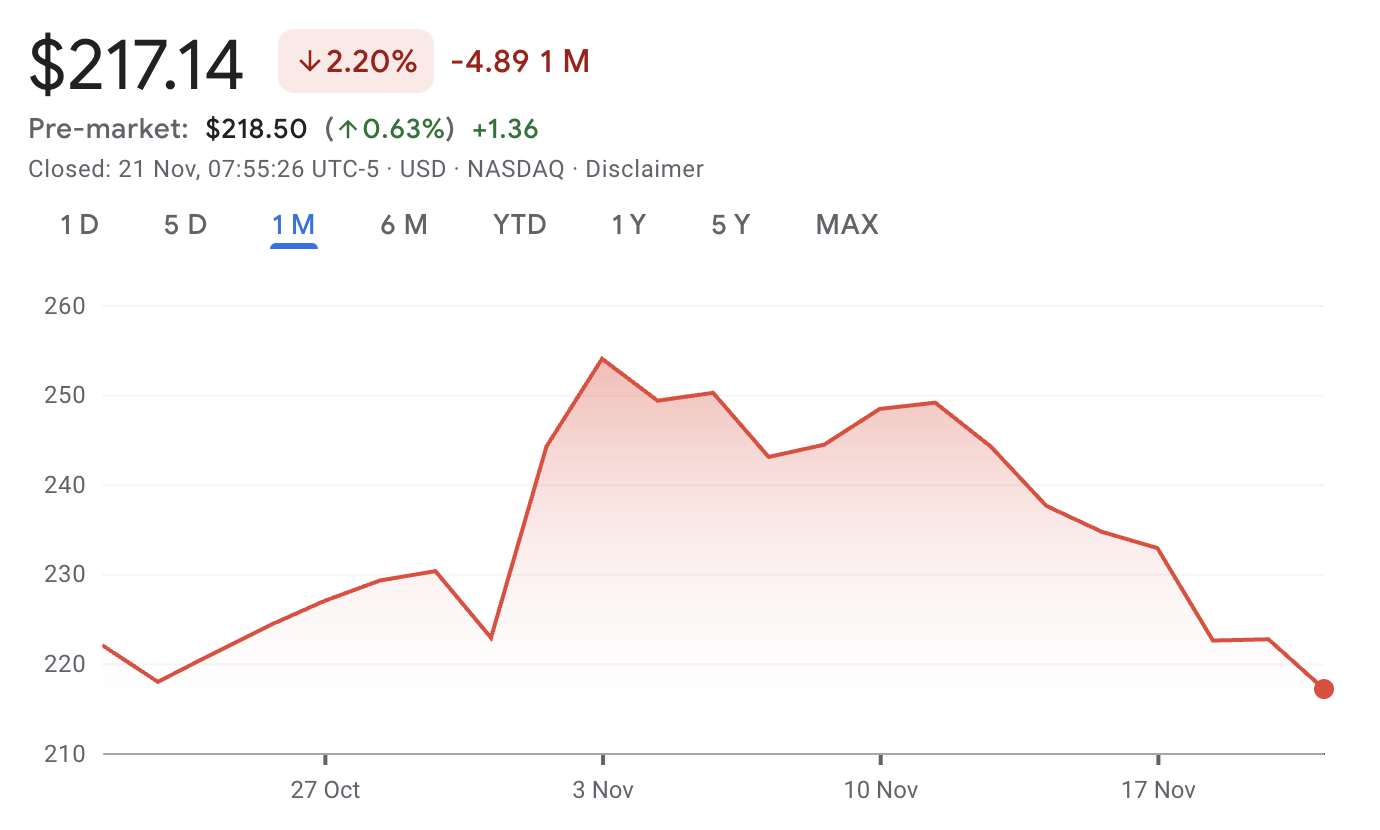
Understanding why Amazon stock is falling—or struggling to maintain its previous momentum—requires a granular look at its primary profit engines, its capital expenditure (CapEx) strategy, and the broader environment in which it operates. For the disciplined investor, these periods of decline offer a critical window into the company’s fundamental health and whether the current price action represents a temporary setback or a structural shift in the business model.
Macroeconomic Headwinds and the Cost of Capital
The most immediate pressure on Amazon’s stock price often stems from factors outside the company’s direct control. As a massive global entity, Amazon is sensitive to the machinations of the Federal Reserve, inflation rates, and the overall strength of the global economy.
The Impact of “Higher for Longer” Interest Rates
Growth stocks, particularly those in the technology and consumer discretionary sectors, are highly sensitive to interest rates. When the Federal Reserve maintains high interest rates to combat inflation, the “discount rate” applied to future cash flows increases. Since much of Amazon’s valuation is predicated on the cash it will generate five, ten, or twenty years from now, higher rates mathematically lower the present value of the stock.
Furthermore, high rates increase the cost of borrowing. While Amazon has a robust balance sheet, it frequently utilizes debt markets to fund massive infrastructure projects, such as fulfillment centers and data centers. As the cost of servicing debt rises, it can put a slight but noticeable squeeze on net margins, leading institutional investors to rotate their capital out of growth-oriented tech and into safer, yield-bearing assets like Treasury bonds.
Inflation and Consumer Spending Power
Amazon’s core retail business is a volume-based game with thin margins. When inflation remains sticky, it hits the company from two sides. First, the cost of goods, labor, and logistics (fuel and shipping) rises, eating into operating margins. Second, inflation erodes the purchasing power of the average consumer.
While Amazon is often seen as a “value” destination for shoppers, a significant portion of its revenue comes from discretionary spending—items that people want but do not necessarily need. In a tightening economy, consumers prioritize essentials like groceries and utilities over the electronics, home goods, and apparel that drive Amazon’s high-volume retail sales. When quarterly earnings reports hint at a slowdown in consumer demand, the stock market reacts swiftly and often harshly.
The Deceleration of AWS and the AI Arms Race
For years, Amazon Web Services (AWS) has been the crown jewel of the company’s portfolio. While the retail division often operates at a loss or near-breakeven, AWS provides the massive operating income that funds the rest of the company’s innovations. Any sign of weakness in AWS is perhaps the single most significant reason for a drop in AMZN stock.
Growth Normalization in Cloud Computing
The era of 30% to 40% year-over-year growth for AWS appears to be transitioning into a more mature phase. As the cloud market becomes saturated, maintaining those astronomical growth rates becomes mathematically difficult. Investors who priced the stock based on perpetual hyper-growth are often disappointed when growth figures dip into the high teens or low twenties.
Additionally, enterprise customers have become more cost-conscious. Following the pandemic-era digital transformation surge, many corporations are now looking to optimize their cloud spending rather than expanding it. This “cloud optimization” trend means that even if customers stay with AWS, they are finding ways to do more with less, which temporarily stunts Amazon’s revenue growth in its most profitable segment.
The High Cost of Generative AI
The rise of Generative AI has forced a shift in Amazon’s capital allocation. To compete with Microsoft’s partnership with OpenAI and Google’s proprietary models, Amazon must invest billions into specialized chips (like its Trainium and Inferentia lines) and massive server farms.
While AI represents a long-term opportunity, it is currently a “CapEx heavy” endeavor. Investors are often wary of periods where capital expenditures rise sharply before the resulting revenue becomes clear. The market is currently in a “show me” phase, where it wants to see how these multi-billion-dollar investments in AI will translate into actual earnings per share (EPS). Until that correlation is proven, the stock may face downward pressure from those concerned about margin compression.
Operational Friction and Margin Compression
Amazon is a logistical marvel, but maintaining that scale comes with inherent financial risks. The company’s transition from a pure online marketplace to a vertically integrated logistics provider has increased its fixed costs significantly.
Labor Costs and Logistics Efficiency
Amazon is one of the largest private employers in the world. As labor markets tighten and the push for higher wages continues, Amazon’s payroll expenses grow. Unlike a pure software company, Amazon cannot scale without a massive physical workforce. Wage inflation, combined with the complexities of managing a global supply chain, means that the “cost to serve” each customer is rising.
Furthermore, the company has spent the last several years regionalizing its shipping network to enable faster delivery (Same-Day and Next-Day). While this increases customer loyalty, the initial build-out is incredibly expensive. If the efficiency gains from this regionalization do not materialize as fast as expected, or if shipping volumes don’t meet forecasts, the underutilized infrastructure becomes a drag on the bottom line.
Regulatory Scrutiny and Antitrust Concerns
From a business finance perspective, the threat of regulatory intervention is a “hidden” cost that weighs on the stock’s valuation multiple. Ongoing investigations by the FTC and international regulatory bodies into Amazon’s treatment of third-party sellers and its dominant market position create an “uncertainty discount.” Markets hate uncertainty. The possibility of future fines, forced divestitures, or changes to the highly profitable “Buy Box” algorithm makes some institutional investors hesitant to hold a full position in the stock, leading to selling pressure.
Valuation and Technical Market Dynamics
Sometimes, Amazon stock falls not because the company is failing, but because it simply became too expensive. Valuation is a measurement of expectations, and when expectations outpace reality, a correction is inevitable.
The P/E Ratio Trap
Amazon has historically traded at a very high Price-to-Earnings (P/E) ratio because investors valued its cash flow and market share over net income. However, in a more disciplined financial environment, analysts are looking more closely at “GAAP” earnings. If Amazon’s net income doesn’t grow at a pace that justifies a P/E of 40, 50, or 60, the stock price must fall to bring the valuation back in line with its peers.
We often see a “multiple contraction” where, even if the company’s earnings stay the same, the price falls because investors are no longer willing to pay a premium for that growth. This is common during market rotations where money moves from “expensive” tech names into “undervalued” sectors like energy or financials.
Institutional Rebalancing and Technical Support
On a shorter timeframe, Amazon stock can fall due to technical market factors. As one of the largest components of the S&P 500 and the Nasdaq-100, Amazon is frequently sold off by index funds and ETFs when there is a general market downturn. If a major hedge fund decides to reduce its exposure to “Big Tech,” the sheer volume of shares hitting the market can drive the price down, regardless of the company’s individual performance.
Technical analysts also look at “support levels”—price points where the stock has historically stopped falling. If Amazon breaks below a key moving average (like the 200-day moving average), it can trigger automated selling programs, accelerating a decline that began for fundamental reasons.

Summary: A Confluence of Factors
The falling price of Amazon stock is rarely the result of a single catastrophic event. Instead, it is the product of a more challenging macroeconomic environment, the inevitable slowing of its most profitable business unit (AWS), and the massive capital requirements needed to stay competitive in the AI era.
For the long-term investor, the question is whether these pressures are permanent or whether they are part of a standard business cycle. Amazon’s history is defined by periods of massive investment followed by periods of massive harvesting. Currently, the company appears to be back in an investment phase—spending heavily on AI and logistics to secure its dominance for the next decade. While this creates short-term pain for the stock price, it is often the prerequisite for the next leg of growth. Understanding this cycle is key to navigating the volatility of one of the world’s most influential financial entities.
aViewFromTheCave is a participant in the Amazon Services LLC Associates Program, an affiliate advertising program designed to provide a means for sites to earn advertising fees by advertising and linking to Amazon.com. Amazon, the Amazon logo, AmazonSupply, and the AmazonSupply logo are trademarks of Amazon.com, Inc. or its affiliates. As an Amazon Associate we earn affiliate commissions from qualifying purchases.