
In the modern economic landscape, the word “budget” often carries a negative connotation. For many, it evokes images of deprivation, restricted spending, and the tedious tracking of every cent spent on a cup of coffee. However, this perspective fundamentally misunderstands the purpose of financial planning. A budget is not a cage; it is a roadmap. Whether applied to personal finances or a multi-million dollar corporate entity, a budget serves as the most critical tool for transforming abstract financial goals into tangible reality.
Understanding why a budget is important requires a shift in mindset from passive spending to active allocation. It is the process of giving every dollar a job before it leaves your hand. Without this strategic oversight, individuals and businesses alike are prone to “financial drift”—a state where income is earned and spent without ever building lasting value or security.
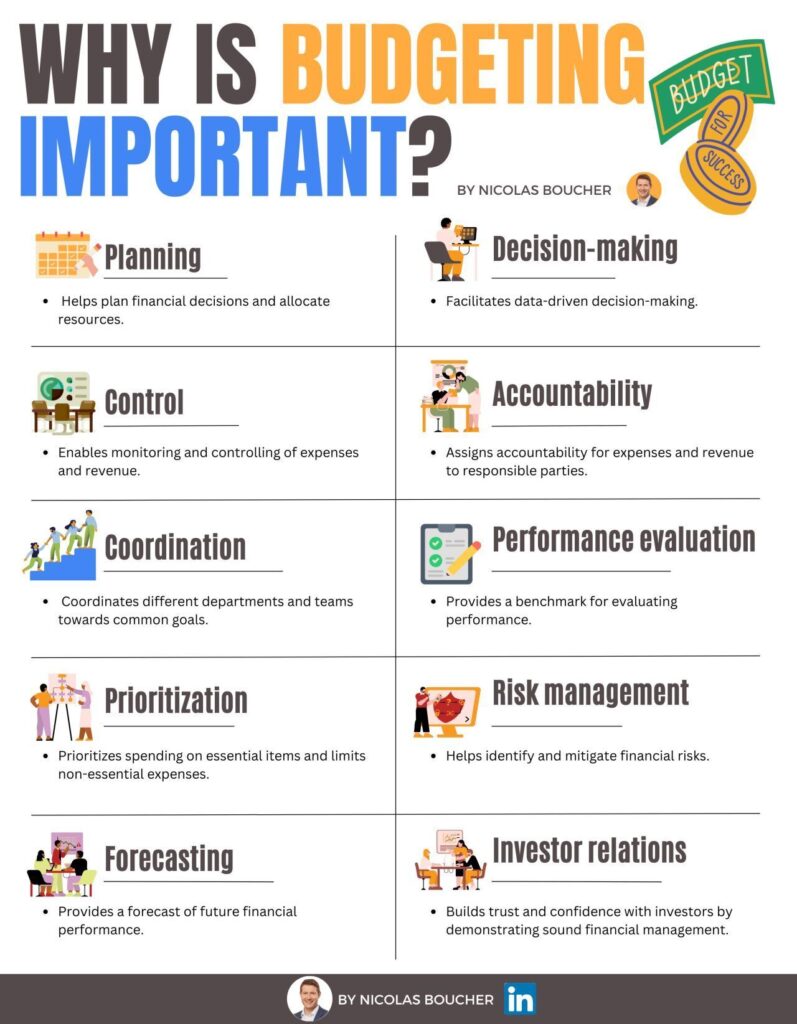
The Foundation of Financial Clarity and Control
The primary reason a budget is indispensable is that it provides an objective view of one’s financial health. Most people overestimate their awareness of their spending habits. Without a documented plan, small, recurring expenses often go unnoticed, creating “leaks” that can sink even a high-earning household or a profitable business.
Shifting from Scarcity to Intentionality
A well-constructed budget shifts the focus from what you cannot do to what you can do. When you decide in advance how much money will be spent on housing, entertainment, and investments, you remove the guilt and anxiety often associated with spending. If your budget includes $200 for dining out, you can enjoy those meals knowing that the money is not being diverted from your rent or your retirement fund. This intentionality is the cornerstone of financial peace of mind.
The Myth of Restriction vs. the Reality of Control
Many resist budgeting because they fear it will limit their lifestyle. In reality, the opposite is true. A budget provides the freedom to spend. By identifying and eliminating waste—such as unused subscriptions or inefficient service providers—you reclaim capital that can be redirected toward things that truly matter to you. In this sense, a budget does not tell you that you cannot spend; it ensures that you spend in a way that aligns with your highest priorities.
Personal Finance: Building Your Wealth Engine
On a personal level, a budget is the primary mechanism for wealth creation. It is impossible to build a significant investment portfolio or achieve early retirement if your expenses consistently rise to meet your income. This phenomenon, known as lifestyle creep, is the primary reason why many high-earners still live paycheck to paycheck.
Debt Management and Interest Mitigation
For those carrying high-interest debt, such as credit card balances or personal loans, a budget is an emergency survival tool. It allows you to identify the maximum possible amount that can be directed toward debt principal each month. By visualizing the “debt snowball” or “debt avalanche” methods within a budget framework, individuals can see exactly when they will be debt-free. This clarity provides the motivation necessary to maintain the discipline required for long-term financial recovery.
Emergency Funds and Financial Resilience
Life is inherently unpredictable. Medical emergencies, home repairs, or sudden job losses are not “if” scenarios, but “when” scenarios. A budget prioritizes the creation of an emergency fund—typically three to six months of expenses—which acts as a financial shock absorber. Without a budget, saving for such a fund often becomes an afterthought, leaving the individual vulnerable to taking on high-interest debt when a crisis inevitably occurs.
Long-term Wealth Building and Compounding
The most powerful force in finance is compound interest, but it requires two things: capital and time. A budget ensures a consistent flow of capital into investment vehicles. By automating “paying yourself first”—the practice of directing money to savings and investments before paying bills—you ensure that your wealth-building engine is always running. Over decades, the difference between someone who budgets to invest $500 a month and someone who only invests “whatever is left over” can amount to millions of dollars.

Strategic Business Budgeting: Scaling with Precision
In a professional or entrepreneurial context, a budget is much more than a spreadsheet; it is a strategic document that reflects the company’s priorities and growth trajectory. Business budgeting is the process of allocating limited resources to the areas that will generate the highest return on investment (ROI).
Resource Allocation and Operational Efficiency
Every business, from a solo freelance operation to a global corporation, has limited resources. A budget forces leadership to make hard choices about where those resources should go. Should the company invest in a new marketing campaign, hire additional staff, or upgrade its technology stack? A budget provides the data necessary to make these decisions based on projected revenue and historical performance, rather than intuition alone.
Measuring ROI and Identifying Waste
A budget creates a benchmark for performance. By comparing “actual” spending against “budgeted” figures (a process known as variance analysis), business owners can identify inefficiencies. For example, if the marketing spend is 20% over budget but lead generation has remained stagnant, the budget flags this as a critical area for investigation. This level of granular oversight is what allows businesses to trim the fat and remain lean and competitive in crowded markets.
Preparing for Market Volatility and Cash Flow Management
Cash flow is the lifeblood of any business. Many profitable companies fail not because they lack customers, but because they run out of cash at a critical moment. A budget allows for cash flow forecasting, helping businesses anticipate lean months and plan for major capital expenditures. It ensures that there is always enough liquidity to meet payroll, pay suppliers, and capitalize on unexpected opportunities.
Modern Methodologies and Financial Tools
As we move further into the digital age, the tools available for budgeting have evolved significantly. The days of balancing a physical checkbook have been replaced by sophisticated software and streamlined methodologies that make financial tracking easier than ever.
The 50/30/20 Rule and Zero-Based Budgeting
There is no one-size-fits-all approach to budgeting, and different strategies suit different temperaments.
- The 50/30/20 Rule: This is a popular, high-level approach where 50% of income goes to needs, 30% to wants, and 20% to savings and debt repayment. It is excellent for beginners who want a simple framework.
- Zero-Based Budgeting: This is a more rigorous method where every single dollar of income is assigned to a specific category until the remaining balance is zero. This ensures maximum efficiency and is highly effective for those looking to accelerate debt payoff or aggressive investment goals.
Leveraging FinTech for Real-Time Analytics
The rise of Financial Technology (FinTech) has revolutionized how we interact with our budgets. Modern apps can sync directly with bank accounts and credit cards, categorizing transactions in real-time. These tools provide visual dashboards, trend lines, and automated alerts that keep the user informed without the need for manual data entry. For businesses, cloud-based accounting software allows for real-time collaboration between departments, ensuring that the entire organization stays aligned with the fiscal plan.

Conclusion: The Lifelong Value of Fiscal Discipline
The importance of a budget cannot be overstated. It is the fundamental difference between financial chaos and financial order. By providing a clear view of where money comes from and where it goes, a budget empowers individuals to take control of their future and enables businesses to scale sustainably.
Ultimately, a budget is a reflection of your values. If you value security, your budget will reflect a robust emergency fund. If you value growth, it will show significant investment in education or assets. If you value freedom, it will prioritize the elimination of debt. By mastering the art of the budget, you are not just managing money; you are managing your life’s potential. Whether you are just starting your financial journey or looking to optimize a complex business entity, the discipline of budgeting remains the most reliable path to achieving your long-term objectives.
aViewFromTheCave is a participant in the Amazon Services LLC Associates Program, an affiliate advertising program designed to provide a means for sites to earn advertising fees by advertising and linking to Amazon.com. Amazon, the Amazon logo, AmazonSupply, and the AmazonSupply logo are trademarks of Amazon.com, Inc. or its affiliates. As an Amazon Associate we earn affiliate commissions from qualifying purchases.