
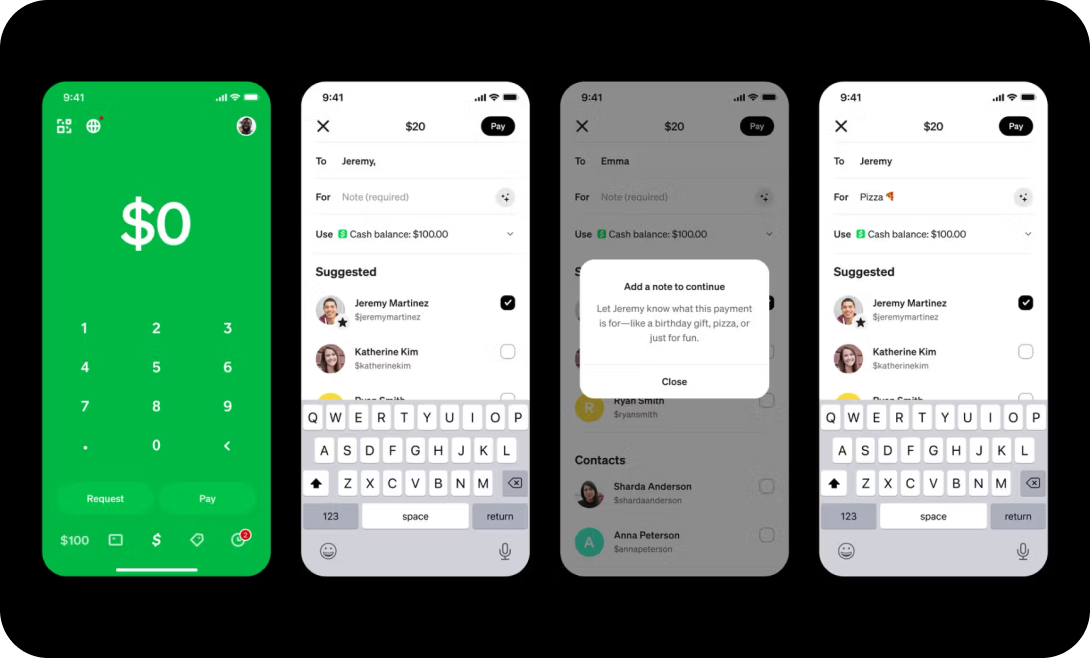
In the bustling landscape of digital finance, applications like Cash App have revolutionized how we send, receive, and manage money. Their intuitive interfaces and instantaneous transactions have made them indispensable tools for millions. Yet, many users routinely encounter a subtle, often overlooked, requirement: adding a “note” or “memo” to their transactions. While it might seem like a minor detail, a momentary pause in the rapid flow of digital cash, this seemingly simple field serves a sophisticated array of purposes deeply rooted in the technical, security, and regulatory frameworks that underpin modern financial technology. For an app designed for speed and simplicity, the mandatory note is a deliberate feature, a silent sentinel safeguarding the integrity of the digital payment ecosystem. Understanding its necessity unveils a fascinating interplay of data management, fraud prevention, regulatory compliance, and user experience design within the fintech space.
The Technical Underpinnings of Transaction Data
At its core, Cash App is a complex piece of software managing vast quantities of financial data. Every transaction, no matter how small, adds to a colossal digital ledger. The “note” field, from a technical perspective, is not just a polite request but a critical element in maintaining order, efficiency, and intelligence within this intricate system.
Data Integrity and System Efficiency
Imagine a database of billions of transactions without any accompanying context. It would be a chaotic sea of numbers, making retrieval, analysis, and management incredibly difficult. The note acts as vital metadata, categorizing and contextualizing each entry. For Cash App’s backend systems, this structured text data is invaluable. It enables efficient indexing, search capabilities, and filtering, allowing the platform to process, reconcile, and store transactions effectively. Without notes, the system would struggle to differentiate between similar numerical values, leading to slower processing times, increased data redundancy, and a higher potential for errors. Furthermore, for automated systems that flag certain types of transactions, a descriptive note can significantly improve accuracy, reducing false positives and streamlining operational workflows.
Enhancing User Experience and Record-Keeping
While the technical benefits are profound for the platform, the note also directly enhances the user’s experience and financial management capabilities. For individual users, a well-placed note transforms a cryptic number into a meaningful record. “Sent $50” becomes “Sent $50 for dinner last night,” providing immediate context for budgeting and recall. This aids in:
- Personal Financial Tracking: Users can quickly review their transaction history and understand the purpose of each payment, making personal budgeting and expense tracking much simpler, even if they don’t explicitly use the app’s budgeting features.
- Dispute Resolution: In instances of disagreement over a payment or an accidental transfer, the note provides an immediate, verifiable record of the transaction’s intent, simplifying the process of clarification or dispute resolution with the recipient or Cash App support.
- Memory Aid: We all forget the specifics of past transactions. A note serves as a reliable memory aid, ensuring that financial records remain clear and comprehensible over time.
A Bulwark Against Fraud and Scams
In the digital realm, where speed and anonymity can sometimes be exploited, robust security measures are paramount. The note requirement, far from being an arbitrary field, plays a significant role in Cash App’s comprehensive strategy for combating fraud, scams, and illicit activities.
Deterring Illicit Activities
The very act of requiring a note can serve as a subtle deterrent to fraudsters. Scammers often rely on speed and minimal traceable information to execute their schemes. Forcing them to provide a description, however brief or misleading, creates an additional step and a potential point of vulnerability. For sophisticated fraud detection systems, the keywords, phrasing, and even the absence of a meaningful note can be critical indicators. If a scammer attempts to rush through numerous transactions, repeatedly entering vague or identical notes might trigger an alert faster than if no note were required at all. This “friction” adds a layer of security, making it marginally harder for illicit actors to operate freely and at scale.
Providing Audit Trails for Security Teams
Perhaps one of the most critical functions of the transaction note, from a security perspective, is its contribution to an robust audit trail. When a fraudulent transaction is reported or suspected, Cash App’s security teams embark on a digital forensics investigation. The note provides immediate, crucial context:
- Investigative Data: It helps investigators understand the alleged purpose of the payment, which can be cross-referenced with other data points (sender/recipient history, IP addresses, device information) to reconstruct the event.
- Identifying Patterns: If multiple users report scams involving similar types of transactions or notes (e.g., “IRS payment fee,” “crypto investment,” “urgent family help”), this allows Cash App to identify common scam tactics and target the associated accounts or patterns more effectively.
- Evidence for Law Enforcement: In cases where law enforcement agencies get involved, these notes, along with other transaction details, become critical pieces of evidence to trace funds and prosecute perpetrators. They offer a narrative to the cold data, making investigations more efficient and actionable.
Navigating the Regulatory Landscape of Digital Payments
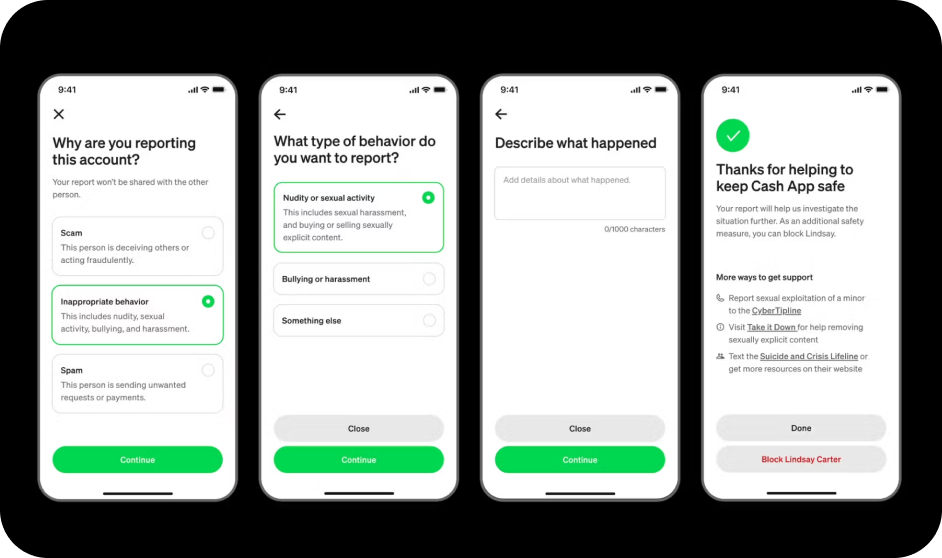
Fintech companies like Cash App operate under strict financial regulations designed to prevent illicit financial activities and ensure transparency. These mandates are complex, far-reaching, and necessitate proactive measures within the application’s design, including the seemingly simple requirement for a transaction note.
Anti-Money Laundering (AML) and Know Your Customer (KYC) Compliance
One of the primary drivers behind the note requirement is compliance with Anti-Money Laundering (AML) and Know Your Customer (KYC) regulations. Globally, financial institutions are obligated to monitor transactions for suspicious activity that could indicate money laundering, terrorist financing, or other financial crimes.
- Risk Assessment: Transaction notes contribute to the overall risk assessment of an account. A note describing a payment as “loan repayment” or “rent” is inherently less suspicious than one that is vague, overly generic, or uses keywords associated with illicit activities.
- Suspicious Activity Reports (SARs): If a pattern of transactions triggers an internal alert, the notes provide critical information for the compliance team when deciding whether to file a Suspicious Activity Report (SAR) with financial authorities. These reports require detailed explanations, and transaction notes help build that narrative.
- Due Diligence: For high-value transactions or unusual patterns, the context provided by a note can be vital for Cash App to conduct enhanced due diligence and ensure the legitimacy of the funds and their purpose.
Facilitating Tax Reporting and Legal Processes
Beyond AML/KYC, transaction notes also play a role in ensuring compliance with tax laws and supporting various legal processes, making them invaluable for both the user and the broader financial system.
- Tax Documentation: For users who utilize Cash App for business transactions, independent contractor payments, or even splitting bills that have tax implications, descriptive notes are crucial. They facilitate the accurate categorization of income and expenses, simplifying tax preparation and ensuring compliance with IRS regulations. Without clear notes, differentiating between personal gifts and business revenue becomes a significant challenge.
- Legal Evidence: In civil disputes, divorce proceedings, or small claims court, digital transaction records often serve as concrete evidence of financial flows. A note such as “child support payment,” “shared utility bill,” or “repayment for car repair” can be legally significant, providing an indisputable record of the payment’s purpose and helping to resolve disagreements efficiently.
- Government Requests: In response to legal warrants or government inquiries, Cash App is often required to provide detailed transaction information. The notes become an integral part of this data, offering invaluable context that helps investigators understand the financial activities under scrutiny.
The Future of Transaction Context and Fintech Innovation
The humble transaction note is not a stagnant feature; its utility continues to evolve alongside advancements in fintech and digital intelligence. Its role will likely become even more central as financial technology pushes the boundaries of personalized services and enhanced security.
Evolving Role in AI-Powered Financial Intelligence
The future of fintech lies in harnessing the power of artificial intelligence and machine learning. Transaction notes, as a form of unstructured or semi-structured text data, are ripe for analysis by these advanced algorithms.
- Enhanced Fraud Detection: AI can analyze vast numbers of notes, identifying nuanced patterns and linguistic cues that might indicate emerging fraud schemes long before human analysts could. This proactive detection can significantly bolster security.
- Personalized Financial Insights: Beyond security, AI could use note data to offer users more personalized financial insights, automatically categorizing spending, suggesting budgeting strategies based on spending habits described in notes, or even predicting future financial needs.
- Natural Language Processing (NLP): As NLP capabilities improve, machines will be able to extract deeper meanings and intents from transaction notes, transforming them from simple labels into rich data points for a myriad of applications, from customer service to market trend analysis.
Balancing User Convenience with Robust Security
Fintech developers constantly grapple with the challenge of balancing seamless user experience with ironclad security and compliance. Every additional step, like requiring a note, introduces a tiny bit of friction. However, the decision to maintain this requirement highlights its critical value. It’s a testament to the fact that some “friction” is a necessary and beneficial component of a trustworthy digital financial service. The note is a highly effective, low-impact method of achieving significant security and compliance benefits without overly encumbering the user. It represents a pragmatic compromise where a minor inconvenience yields substantial systemic advantages.
Broader Implications for Digital Transaction Transparency
The practice of requiring transaction notes also aligns with a broader societal shift towards greater transparency in digital financial interactions. As more aspects of our lives move online, the expectation of accountability and clarity in digital transactions grows. The note contributes to this transparency by providing an immutable record of intent and context for every digital dollar moved. It underscores the principle that in the digital age, financial activity should be understandable, traceable, and ultimately, accountable. This fosters trust not just between users and the app, but within the broader digital economy.

Conclusion
What might appear as a minor, even tedious, field in the Cash App interface – the requirement for a transaction note – is in fact a sophisticated and multifaceted pillar supporting the robust architecture of modern digital finance. From the technical necessity of structured data for system efficiency and enhanced user experience to its pivotal role in combating fraud and ensuring regulatory compliance, the note serves an indispensable purpose. It stands as a subtle yet powerful testament to the intricate design considerations that underpin secure and reliable fintech applications. In an era where digital financial transactions are becoming increasingly ubiquitous, understanding the “why” behind such features not only demystifies our interactions with technology but also reinforces the comprehensive efforts undertaken by platforms like Cash App to build a secure, transparent, and compliant digital payment ecosystem for everyone.
aViewFromTheCave is a participant in the Amazon Services LLC Associates Program, an affiliate advertising program designed to provide a means for sites to earn advertising fees by advertising and linking to Amazon.com. Amazon, the Amazon logo, AmazonSupply, and the AmazonSupply logo are trademarks of Amazon.com, Inc. or its affiliates. As an Amazon Associate we earn affiliate commissions from qualifying purchases.