
The stock market is often viewed as the heartbeat of the global economy. For some, it represents a complex labyrinth of numbers and flashing red and green lights; for others, it is the most effective vehicle for wealth creation ever devised. At its core, the decision to buy stocks is a calculated move toward financial optimization. Whether it is a retail investor setting aside a few hundred dollars a month or a multi-billion dollar hedge fund moving massive blocks of shares, the underlying motivations remain remarkably consistent. People buy stocks to participate in the growth of the economy, to protect their purchasing power against inflation, and to secure a financial future that labor alone cannot provide.
The Engine of Wealth Accumulation and Compound Interest
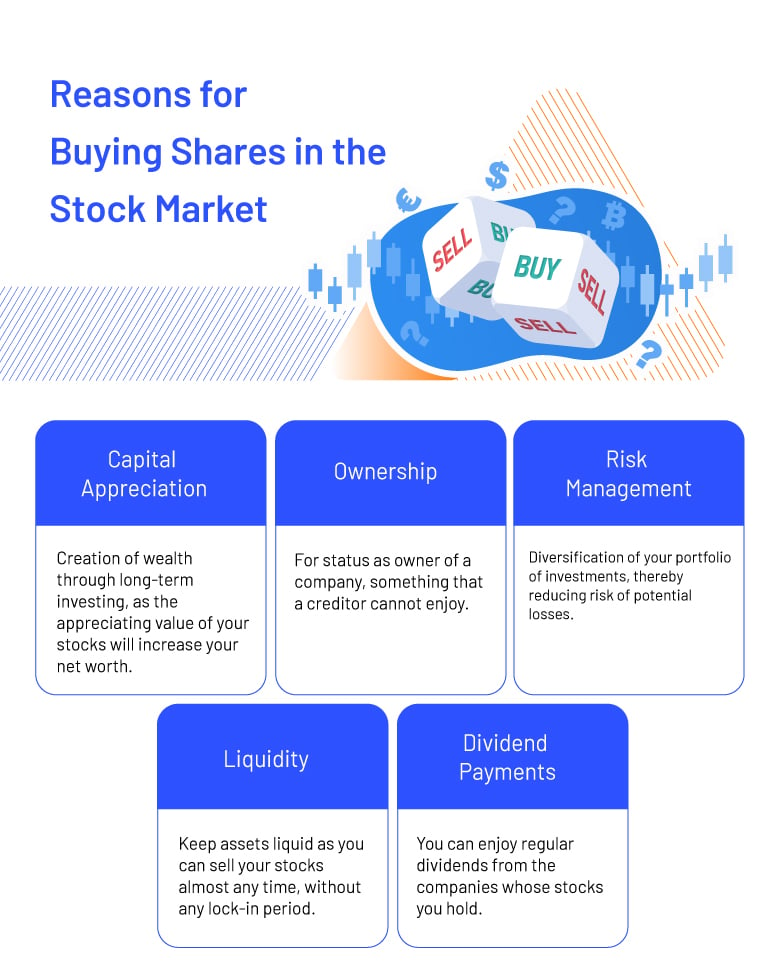
The primary driver behind stock market participation is the pursuit of long-term wealth. Unlike a traditional savings account, which offers security but often fails to keep pace with the cost of living, the stock market provides a mechanism for capital to grow exponentially. This growth is fueled by two main factors: capital appreciation and the profound mathematical advantage of compounding.
The Power of Compounding
Albert Einstein famously referred to compound interest as the “eighth wonder of the world,” and nowhere is this more evident than in the equity markets. When an investor buys stocks, they are not just looking for a one-time gain. They are looking for the cumulative effect of growth over years and decades. As companies grow and their share prices increase, the value of the investor’s initial “seed” grows. If those stocks pay dividends and the investor reinvests them to buy more shares, they begin to earn returns on their returns. Over a 30-year horizon, this creates a parabolic growth curve that can turn modest, consistent contributions into a substantial nest egg.
Beating Inflation
One of the most insidious threats to personal finance is inflation—the gradual erosion of purchasing power. If the cost of goods and services rises by 3% per year, any money sitting in a zero-interest environment is effectively losing value. People buy stocks because equities have historically outpaced inflation. Since companies can raise prices for their products and services to match rising costs, their earnings—and by extension, their stock prices—tend to rise in tandem with or above the inflation rate. This makes stocks a vital tool for anyone looking to preserve the “real” value of their wealth over time.
Ownership and Participation in Corporate Success
Buying a stock is more than just a digital transaction; it is an act of ownership. When you purchase a share, you are buying a fractional piece of a business. This sense of ownership brings with it specific financial rights and the ability to profit from the ingenuity and hard work of others.
Capital Appreciation
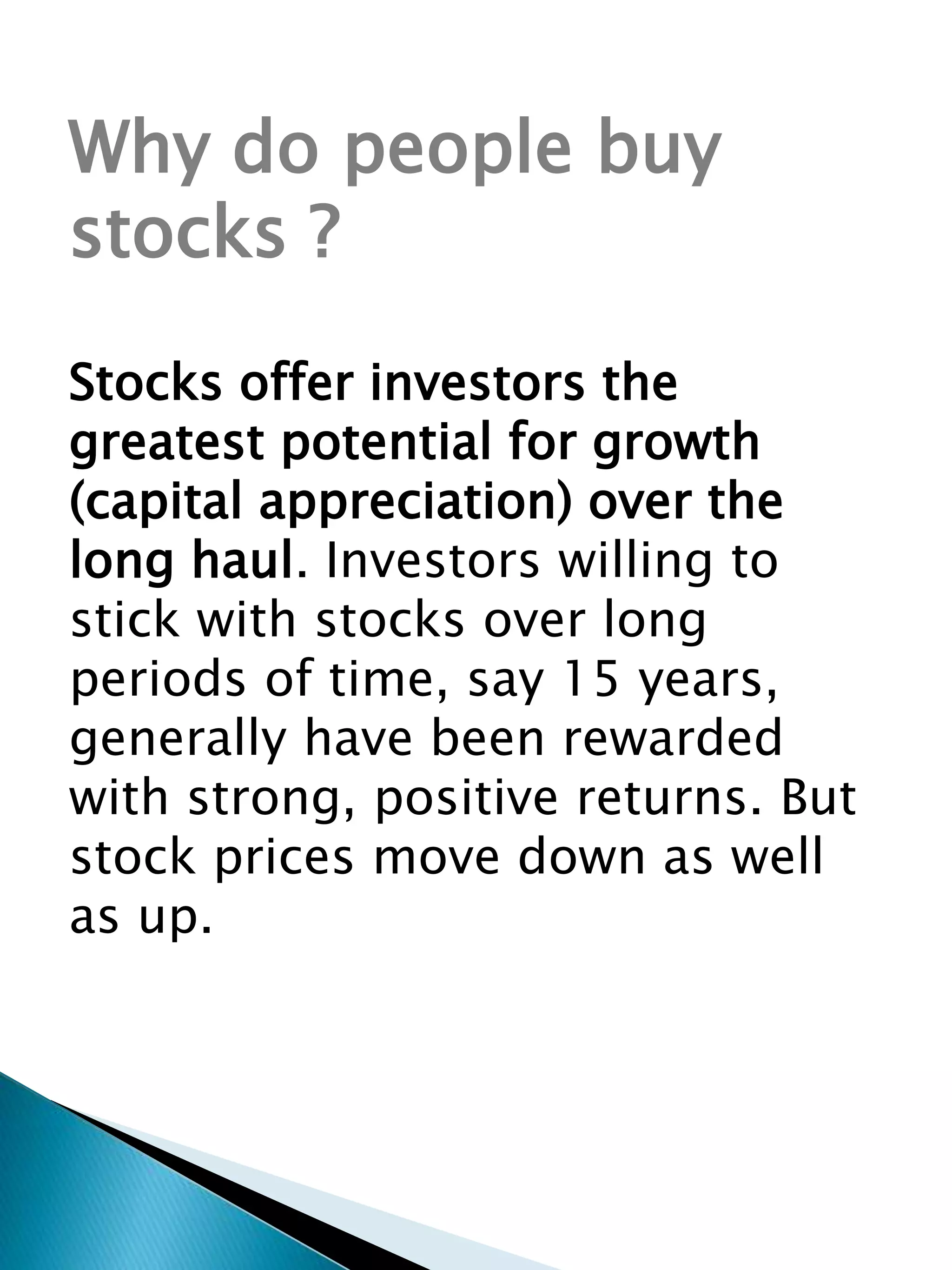
The most visible reason people buy stocks is the hope that the price will go up. This is known as capital appreciation. When a company innovates, expands into new markets, or improves its operational efficiency, its intrinsic value increases. As the market recognizes this value, the demand for its shares rises, driving the price higher. For the investor, this means the asset they hold is now worth more than what they paid for it. This potential for “upside” is what draws millions of people to the market, as it allows them to profit from the success of global giants like Apple, Amazon, or Microsoft without having to manage the companies themselves.
Dividend Income
Not all stock market returns come from price increases. Many established, profitable companies distribute a portion of their earnings back to shareholders in the form of dividends. For many investors, particularly those nearing retirement or seeking passive income, dividends are the primary reason to buy stocks. A robust portfolio of dividend-paying stocks can provide a steady stream of cash flow that functions much like a private pension. This income can be used to cover living expenses or can be reinvested to accelerate the compounding process.
The Democratization of Business Ownership
Historically, owning a business required significant capital, specialized knowledge, and immense personal risk. The stock market changes this dynamic. It allows an individual to own a piece of the world’s most profitable enterprises for the price of a single share. This democratization means that a teacher, a nurse, or a small business owner can benefit from the same corporate profits as the world’s wealthiest individuals. By buying stocks, people are essentially outsourcing their wealth creation to the world’s most talented CEOs and workforces.
Portfolio Diversification and Risk Management

While stocks are often associated with risk, they are also an essential component of a balanced financial strategy. Savvy investors buy stocks to diversify their assets, ensuring that their entire financial well-being isn’t tied to a single source, such as a salary or a local real estate market.
Asset Allocation and the Risk-Reward Trade-off
In the world of finance, there is a direct relationship between risk and reward. While bonds and savings accounts are “safer,” they offer lower returns. Stocks are more volatile, but they offer the high-end growth necessary to reach ambitious financial goals. By including stocks in a diversified portfolio, investors can balance the stability of fixed-income assets with the growth potential of equities. This “asset allocation” is the cornerstone of modern financial planning, allowing individuals to tailor their exposure to the market based on their age, goals, and tolerance for volatility.
Liquidity and Accessibility
Compared to other investment vehicles like real estate or private business equity, stocks are highly liquid. This means they can be converted into cash almost instantly. If an investor needs funds for an emergency or a major life event, they can sell their shares during market hours and have access to the capital within days. This liquidity makes stocks an attractive option for those who want their money to work for them but still want the flexibility to pivot if their financial situation changes.
Fractional Shares and Ease of Entry
In recent years, the barrier to entry for the stock market has vanished. The rise of financial technology and zero-commission trading has made it possible for anyone to buy stocks with as little as one dollar through fractional shares. This has fundamentally changed “why” people buy stocks; it is no longer an elite activity for the wealthy, but a standard tool for anyone with a smartphone. This ease of entry encourages a culture of micro-investing, where people buy small amounts of stock regularly, treating the market as a high-yield alternative to a traditional savings account.
Psychological and Strategic Motivations
Beyond the spreadsheets and mathematical formulas, there are deep psychological and strategic reasons why people flock to the stock market. These motivations are often rooted in the human desire for security, autonomy, and a sense of progress.
Financial Independence and Retirement
The most common strategic reason for buying stocks is retirement planning. In an era where defined-benefit pensions are becoming rare, the responsibility for funding one’s senior years has shifted to the individual. Stocks are the primary engine for 401(k) plans, IRAs, and other retirement vehicles. The goal is “Financial Independence”—the point at which an individual’s investment portfolio generates enough income to cover their living expenses, allowing them to work because they want to, not because they have to. Buying stocks is the path to buying back one’s time.
Supporting Brands and Innovation
There is also a psychological satisfaction in owning shares of companies that an individual believes in or uses daily. This “invest in what you know” philosophy, popularized by legendary investors like Peter Lynch, allows people to feel a connection to the products and services that shape their lives. Whether it’s a tech enthusiast buying shares in a cutting-edge AI company or a consumer buying shares in a favorite retail brand, stock ownership allows people to put their money where their values are.
Speculation and the Pursuit of “The Big Win”
While professional investing is about long-term growth, there is a segment of the population that buys stocks for the thrill of speculation. The stock market is a venue where, occasionally, a small investment in a nascent company can turn into a life-changing windfall. While this approach carries significantly more risk, the desire to find the “next big thing” is a powerful psychological motivator. This speculative interest often drives innovation by providing capital to young, high-risk companies that might not yet qualify for traditional bank loans.
Conclusion: The Ultimate Tool for Financial Agency
Ultimately, people buy stocks because it represents the most accessible and proven path to financial agency. In a global economy where the gap between labor income and capital income continues to widen, owning “capital”—in the form of stocks—is the only way for the average person to benefit from the broader growth of productivity and technology.
By buying stocks, individuals transition from being mere consumers of the economy to being owners of it. They gain the ability to grow their wealth faster than inflation, generate passive income through dividends, and participate in the success of the most innovative companies on the planet. Whether driven by the cold logic of compound interest or the aspirational goal of early retirement, the act of buying stocks is a vote of confidence in the future and a fundamental step toward long-term financial freedom.
aViewFromTheCave is a participant in the Amazon Services LLC Associates Program, an affiliate advertising program designed to provide a means for sites to earn advertising fees by advertising and linking to Amazon.com. Amazon, the Amazon logo, AmazonSupply, and the AmazonSupply logo are trademarks of Amazon.com, Inc. or its affiliates. As an Amazon Associate we earn affiliate commissions from qualifying purchases.