
For most individuals, purchasing a home represents the largest financial commitment they will ever make. At the heart of this monumental decision lies the mortgage loan rate – a seemingly simple percentage that, in reality, is a complex reflection of economic forces, individual financial health, and lender strategies. Understanding “what is the mortgage loan rate” is not just about knowing a number; it’s about comprehending its profound impact on your monthly budget, your overall financial stability, and the total cost of homeownership over decades. This article delves into the intricacies of mortgage rates, exploring what they are, what influences them, and how you can navigate the market to secure the most favorable terms for your financial future.

Deconstructing the Mortgage Rate: Key Components and Definitions
Before diving into the factors that move mortgage rates, it’s crucial to establish a foundational understanding of what this rate actually represents and the various forms it can take. It’s more than just a single number; it’s a multi-faceted concept with significant implications.
The Interest Rate vs. APR
Often confused, the interest rate and the Annual Percentage Rate (APR) are distinct figures that convey different aspects of a loan’s cost.
-
The Interest Rate: This is the core percentage charged by the lender on the principal loan amount. It directly determines the interest portion of your monthly mortgage payment. If you borrow $300,000 at a 5% interest rate, your monthly interest calculation is based purely on that 5%. This is the rate most people refer to when discussing mortgage rates.
-
The Annual Percentage Rate (APR): The APR provides a more comprehensive measure of the total cost of borrowing, reflecting not only the interest rate but also other upfront costs and fees associated with the loan. These can include origination fees, discount points, mortgage broker fees, and certain closing costs. Because it encompasses these additional expenses, the APR is almost always higher than the simple interest rate. The APR is designed to give consumers a standardized way to compare the true cost of different loan offers, making it a critical metric for informed decision-making. While the interest rate tells you how much you pay for the money itself, the APR tells you the full cost of getting that money.
Fixed-Rate vs. Adjustable-Rate Mortgages (ARMs)
Mortgages primarily come in two broad categories, each with distinct implications for your interest rate over time:
-
Fixed-Rate Mortgages: As the name suggests, a fixed-rate mortgage locks in your interest rate for the entire duration of the loan, typically 15 or 30 years. This means your principal and interest payment remains constant throughout the life of the loan, providing unparalleled predictability and stability. For homeowners who value budget certainty and protection against rising interest rates, a fixed-rate mortgage is often the preferred choice. It offers peace of mind, allowing for long-term financial planning without the worry of fluctuating payments.
-
Adjustable-Rate Mortgages (ARMs): ARMs offer an initial period during which the interest rate is fixed, often for 3, 5, 7, or 10 years (e.g., a 5/1 ARM has a fixed rate for the first five years). After this initial period, the rate adjusts periodically, usually once a year, based on a predetermined index (like the Secured Overnight Financing Rate – SOFR) plus a margin set by the lender. ARMs typically start with a lower interest rate than comparable fixed-rate mortgages, making them attractive to borrowers who plan to sell or refinance before the fixed period ends, or those who expect their income to rise significantly. However, they carry the risk that interest rates could increase after the initial fixed period, leading to higher monthly payments and greater financial strain. Most ARMs have caps that limit how much the interest rate can change in a single adjustment period and over the life of the loan, offering some degree of protection.
Principal and Interest (P&I)
The bedrock of your monthly mortgage payment is comprised of principal and interest.
-
Principal: This is the actual amount of money you borrowed to purchase your home. Each payment reduces the outstanding loan balance, known as the principal.
-
Interest: This is the cost of borrowing the principal, calculated based on your interest rate.
The interplay between principal and interest is governed by an amortization schedule. Early in the loan term, a larger portion of your monthly payment goes towards interest. As you continue to make payments, more of your payment is allocated to paying down the principal, slowly reducing the amount of interest you’ll pay over the remaining life of the loan. This front-loading of interest means that it takes many years to build significant equity in your home through principal payments alone.
Factors Influencing Mortgage Loan Rates
Mortgage rates are dynamic, fluctuating in response to a complex interplay of macroeconomic forces, lender-specific policies, and individual borrower characteristics. Understanding these influences is key to deciphering why rates are at a certain level at any given time.
Economic Indicators and Federal Policy
The broader economic environment plays a colossal role in shaping mortgage rates.
-
Federal Reserve Actions: The Federal Reserve (the “Fed”) doesn’t directly set mortgage rates, but its monetary policy decisions have a profound indirect impact. When the Fed raises or lowers the federal funds rate – the target rate for overnight lending between banks – it influences interest rates across the economy, including those for mortgages. A hawkish stance (raising rates to combat inflation) generally leads to higher mortgage rates, while a dovish stance (lowering rates to stimulate the economy) tends to push them down.
-
Inflation: Inflation is the general increase in prices and fall in the purchasing value of money. Lenders factor inflation into mortgage rates because it erodes the future value of the money they will be repaid. If inflation is expected to rise, lenders will demand higher interest rates to compensate for the diminished purchasing power of their future returns. Conversely, low inflation can allow for lower rates.
-
Economic Growth and Stability: A strong economy with low unemployment typically suggests less risk for lenders, but it can also signal potential inflation, pushing rates up. A weaker economy might lead the Fed to lower rates to stimulate activity, which can translate to lower mortgage rates.
-
Treasury Bond Yields: Long-term bond yields, particularly the 10-year Treasury note, are a key benchmark for mortgage rates. Mortgage-backed securities (MBS), which fund the majority of U.S. mortgages, often track the movement of these bond yields. When Treasury yields rise, mortgage rates generally follow suit, and vice-versa.
Lender-Specific Factors
Beyond the broader economy, individual lenders also contribute to rate setting.
-
Lender’s Overhead and Profit Margins: Banks and mortgage companies have operating costs, including salaries, technology, and marketing. These overheads are built into the rates and fees they charge. Lenders also aim for a profit margin, which can vary based on their business model and competitiveness.
-
Competition Among Lenders: A highly competitive mortgage market, with many lenders vying for business, can drive rates down as institutions try to attract borrowers. Conversely, a less competitive market might allow lenders to maintain higher rates.
-
Loan Type: The type of loan you choose also impacts the rate. Conventional loans, backed by private lenders, typically offer market-driven rates. Government-backed loans like FHA (Federal Housing Administration), VA (Department of Veterans Affairs), and USDA (U.S. Department of Agriculture) loans have specific eligibility requirements but can sometimes offer more favorable rates or terms due to government guarantees that reduce lender risk.
Borrower-Specific Factors
Crucially, your individual financial profile plays a significant role in the rate you are offered.
-
Credit Score: This is perhaps the most influential borrower-specific factor. A higher credit score (generally FICO scores above 740-760) signals to lenders that you are a low-risk borrower, reliable in repaying debts. As a result, lenders are more willing to offer you lower interest rates. Conversely, a lower credit score indicates higher risk, leading to higher rates to compensate the lender.
-
Down Payment: The amount of money you put down upfront for your home, expressed as a percentage of the home’s purchase price, significantly impacts your rate. A larger down payment (e.g., 20% or more) reduces the lender’s risk exposure, as you have more equity in the property from the start. This often translates to lower interest rates and can help you avoid private mortgage insurance (PMI) on conventional loans.
-
Debt-to-Income (DTI) Ratio: Your DTI ratio compares your total monthly debt payments to your gross monthly income. A lower DTI ratio indicates that you have more disposable income available to comfortably cover your mortgage payments, making you a less risky borrower in the eyes of lenders and potentially qualifying you for better rates. Lenders typically look for a DTI below 43%, though lower is always better.
-
Loan-to-Value (LTV) Ratio: The LTV ratio is the inverse of your down payment. It’s the loan amount divided by the home’s appraised value. A lower LTV (meaning a larger down payment) is preferable to lenders.
-
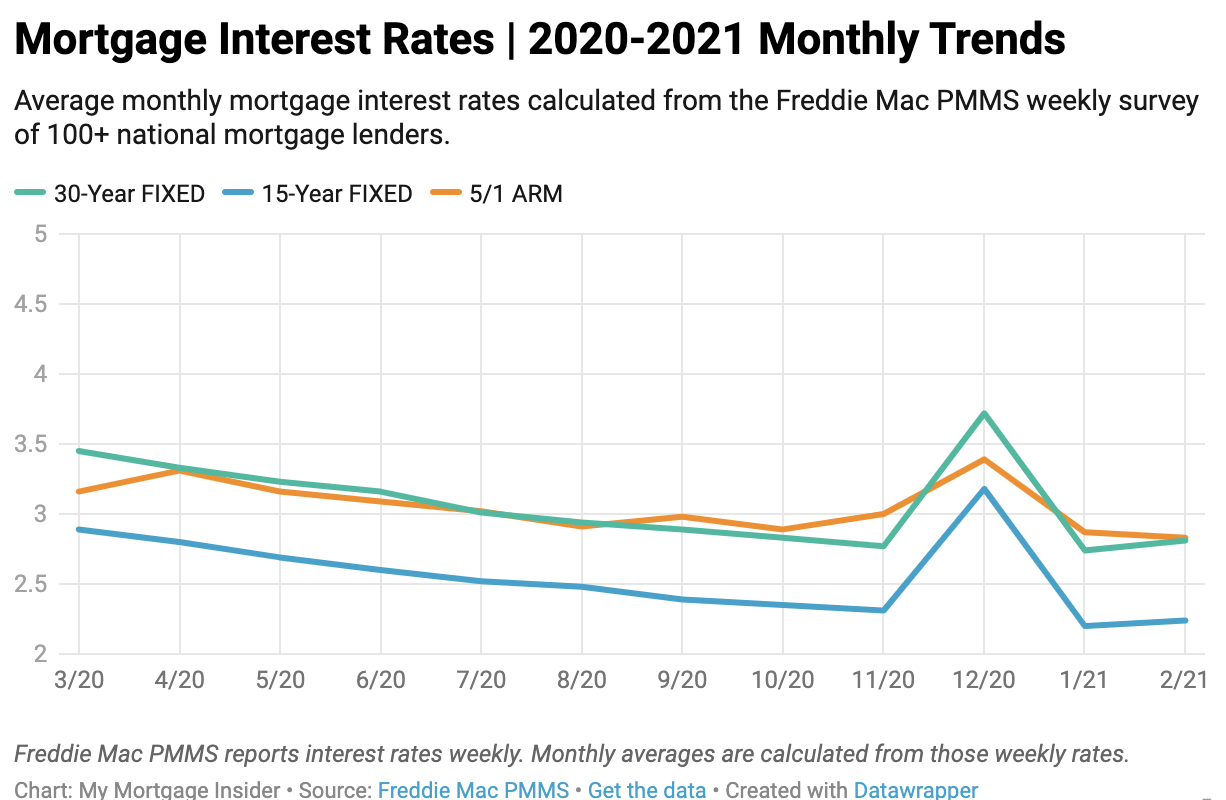
Loan Term: The length of your mortgage loan (e.g., 15-year vs. 30-year) also affects the rate. Shorter-term loans (like a 15-year fixed mortgage) typically come with lower interest rates than longer-term loans (like a 30-year fixed). This is because lenders are exposed to interest rate risk for a shorter period, and there’s a lower probability of default over a shorter term. While the monthly payments are higher on a 15-year loan, the total interest paid over the life of the loan is significantly less.
-
Points and Fees: Borrowers can sometimes pay “discount points” upfront to “buy down” their interest rate. Each point typically costs 1% of the loan amount and can reduce the interest rate by a fraction of a percentage. While this adds to closing costs, it can result in significant long-term savings, especially if you plan to stay in the home for many years.
Navigating the Mortgage Market: How to Secure the Best Rate
Given the myriad factors influencing mortgage rates, being a proactive and informed borrower is essential for securing the most favorable terms. A diligent approach can save you tens of thousands of dollars over the life of your loan.
Improve Your Financial Health
Before even approaching lenders, take steps to optimize your financial profile.
-
Boost Credit Score: Review your credit report for errors and dispute any inaccuracies. Pay all bills on time, keep credit card balances low, and avoid opening new lines of credit just before applying for a mortgage. A higher score directly correlates with lower rates.
-
Save for a Larger Down Payment: Aim for at least 20% if possible to avoid private mortgage insurance (PMI) and qualify for better rates. Even an extra few percentage points can make a difference.
-
Lower Your DTI: Pay down existing debts, especially high-interest credit cards or personal loans, to reduce your monthly obligations relative to your income. This demonstrates greater financial capacity to lenders.
Shop Around and Compare Lenders
This is one of the most impactful steps you can take.
-
Get Multiple Quotes: Don’t settle for the first offer. Contact at least three to five different lenders – including large banks, credit unions, and mortgage brokers – to get competitive quotes. Rates can vary significantly between institutions for the same borrower profile.
-
Understand Loan Estimates: Once you apply for a loan, lenders are required to provide a “Loan Estimate” form. This standardized document details the interest rate, APR, monthly payment, and all associated closing costs. Compare these forms side-by-side to get an apples-to-apples comparison of total costs and identify the best deal. Pay close attention to the APR, as it reflects the true cost.
Consider Rate Locks
Once you’ve found a favorable rate, you might want to “lock” it in.
-
What They Are: A rate lock guarantees that the interest rate offered to you will not change between the time you apply for the loan and when your loan closes, provided the closing occurs within a specified period (e.g., 30, 45, or 60 days).
-
When to Use Them: If interest rates appear to be on an upward trend, a rate lock can protect you from paying more. However, if rates are falling, you might miss out on a lower rate unless your lender offers a “float down” option (which often comes with a fee). Discuss the terms of the rate lock, including its duration and any associated costs, with your lender.
Understanding Mortgage Points
Mortgage points are an upfront fee paid to the lender in exchange for a lower interest rate.
-
Discount Points vs. Origination Points: Discount points are paid to reduce the interest rate. Origination points are fees charged by the lender for processing the loan. When people talk about “buying down” the rate, they’re referring to discount points.
-
When It Makes Sense: Paying points can be beneficial if you plan to stay in your home for a long time, as the long-term savings from a lower interest rate will eventually outweigh the upfront cost of the points. Calculate the “break-even point” – how long it takes for the savings from the lower rate to cover the cost of the points – to determine if it’s a worthwhile investment for your situation.
The Long-Term Impact of Your Mortgage Rate
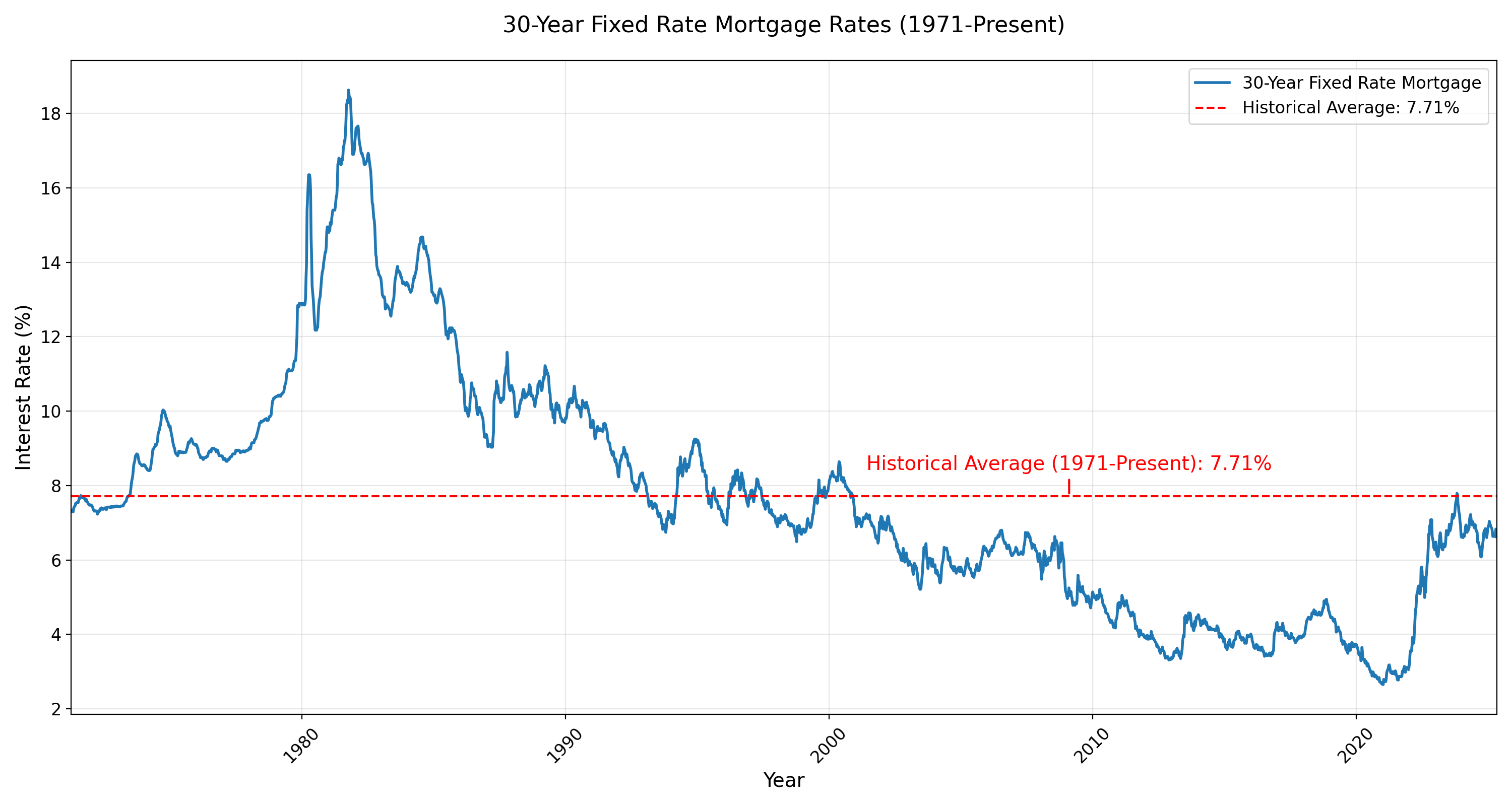
The mortgage loan rate you secure isn’t just a number on a document; it’s a financial lever that will influence your personal finances for years, even decades. Its long-term impact extends far beyond your monthly payment, affecting your total cost of ownership and your overall wealth-building potential.
Total Cost of Ownership
Even a seemingly small difference in the interest rate can translate into tens of thousands of dollars over the life of a 30-year mortgage. For example, on a $300,000 loan, the difference between a 6.0% and a 6.5% interest rate can mean an extra $100-$150 per month in payments, totaling over $36,000 to $54,000 more in interest paid over 30 years. This substantial difference underscores the critical importance of actively seeking the lowest possible rate. It affects not only the direct cost of the loan but also your ability to save, invest, and meet other financial goals.
Refinancing Opportunities
Your initial mortgage rate isn’t necessarily fixed forever, especially if you chose an ARM or if market rates drop significantly.
-
When to Consider Refinancing: Refinancing involves replacing your existing mortgage with a new one, ideally with a lower interest rate, shorter loan term, or different loan type. It can be a smart move if prevailing interest rates have fallen significantly since you originated your loan, if your credit score has improved substantially, or if you want to switch from an ARM to a fixed-rate mortgage for more stability.
-
Cash-Out Refinancing: Some homeowners refinance to tap into their home equity, receiving cash at closing. This can be used for home improvements, debt consolidation, or other significant expenses, though it adds to the loan principal and restarts the amortization schedule.
-
Costs Associated with Refinancing: Be aware that refinancing comes with its own set of closing costs, similar to your original mortgage. It’s crucial to calculate whether the long-term savings from a lower rate or a shorter term will outweigh these upfront expenses.
Wealth Building and Financial Planning
Your mortgage, and the rate attached to it, forms a foundational element of your financial plan.
-
Impact on Discretionary Income: A lower mortgage payment, secured through a favorable rate, frees up more discretionary income each month. This extra cash can be channeled into savings, investments, retirement accounts, or other wealth-building strategies. Conversely, a higher-than-necessary rate can constrain your budget, limiting your ability to save and invest for the future.
-
Strategic Debt Management: A mortgage is often considered “good debt” because it’s typically tied to an appreciating asset and offers tax benefits (for some). Strategically managing your mortgage, by securing a good rate and potentially paying extra principal when feasible, can accelerate equity build-up and improve your overall net worth. It’s a key piece in the puzzle of achieving long-term financial security and building intergenerational wealth.
In conclusion, the mortgage loan rate is far more than just a number; it is a critical determinant of your financial well-being as a homeowner. From understanding the nuances between interest rate and APR to recognizing the interplay of global economics, lender policies, and your personal financial health, a comprehensive grasp of mortgage rates empowers you to make informed decisions. By diligently improving your financial standing, shopping wisely, and considering the long-term implications, you can secure a mortgage rate that not only facilitates your homeownership dreams but also strengthens your overall financial future.
aViewFromTheCave is a participant in the Amazon Services LLC Associates Program, an affiliate advertising program designed to provide a means for sites to earn advertising fees by advertising and linking to Amazon.com. Amazon, the Amazon logo, AmazonSupply, and the AmazonSupply logo are trademarks of Amazon.com, Inc. or its affiliates. As an Amazon Associate we earn affiliate commissions from qualifying purchases.