
In the landscape of modern fiscal policy, few proposals have captured public attention as rapidly as the “No Tax on Tips” initiative. On its surface, the concept appears to be a straightforward win for service industry professionals, many of whom rely on gratuities to supplement modest base wages. However, the legislative resistance from Democratic lawmakers is rooted in a complex web of economic theory, tax law integrity, and long-term financial security for low-income earners. To understand why this proposal has met such significant pushback, one must look beyond the populist appeal and examine the underlying financial mechanics that govern the American tax system and its impact on the service economy.

The Financial Mechanics of Tipping and Taxation
To analyze the opposition to “No Tax on Tips,” it is first necessary to understand how the Internal Revenue Service (IRS) currently treats gratuities. Under current law, tips are considered taxable income, subject to both federal income tax and payroll taxes, which include Social Security and Medicare contributions (FICA).
How Tips Are Currently Taxed
For the average server, bartender, or hair stylist, tips represent a significant portion of their total compensation. Employers are required to ensure that the combination of base hourly wages and reported tips meets the federal or state minimum wage requirements. From a personal finance perspective, this means that every dollar earned in tips is theoretically treated the same as a dollar earned in salary.
The primary argument for the status quo is neutrality. Tax neutrality is a core principle of sound financial policy, suggesting that the tax code should not favor one type of income over another. When certain types of income are exempted from taxation, it creates a “tax preference” that can distort market behavior. Critics of the “No Tax on Tips” proposal argue that it violates this principle by giving a preferential rate to service workers while leaving retail clerks, warehouse workers, and manual laborers—who may earn the same total income but receive no tips—to bear a higher tax burden.
The “Tip Credit” and the Minimum Wage Connection
Many Democrats argue that the focus on tax-free tips is a distraction from the structural financial issue of the “subminimum wage.” In many states, the “tip credit” allows employers to pay workers as little as $2.13 per hour, provided their tips make up the difference to reach the standard minimum wage.
From a business finance perspective, the “No Tax on Tips” proposal does little to change the liability of the employer. Opponents argue that instead of reducing the tax burden on these workers, the more effective financial lever would be the elimination of the tip credit and a raise in the base federal minimum wage. By voting “no” on tax-free tips, many legislators are signaling a preference for a higher guaranteed wage floor rather than a tax-code-based solution that remains dependent on the fluctuating generosity of customers.
Fiscal Impacts: The Cost to the Treasury and Public Programs
One of the most significant hurdles for the “No Tax on Tips” legislation is its price tag. The nonpartisan Committee for a Responsible Federal Budget (CRFB) and other financial analysts have estimated that exempting tips from federal taxes could reduce tax revenue by $150 billion to $250 billion over a decade.
Lost Tax Revenue and National Debt
In an era of rising national debt and concern over the solvency of public programs, a multi-billion dollar revenue hole is a significant financial concern. For lawmakers focused on fiscal responsibility, the question becomes: how will this revenue be replaced? Without a corresponding spending cut or a tax increase elsewhere, the “No Tax on Tips” policy would essentially be funded through deficit spending.
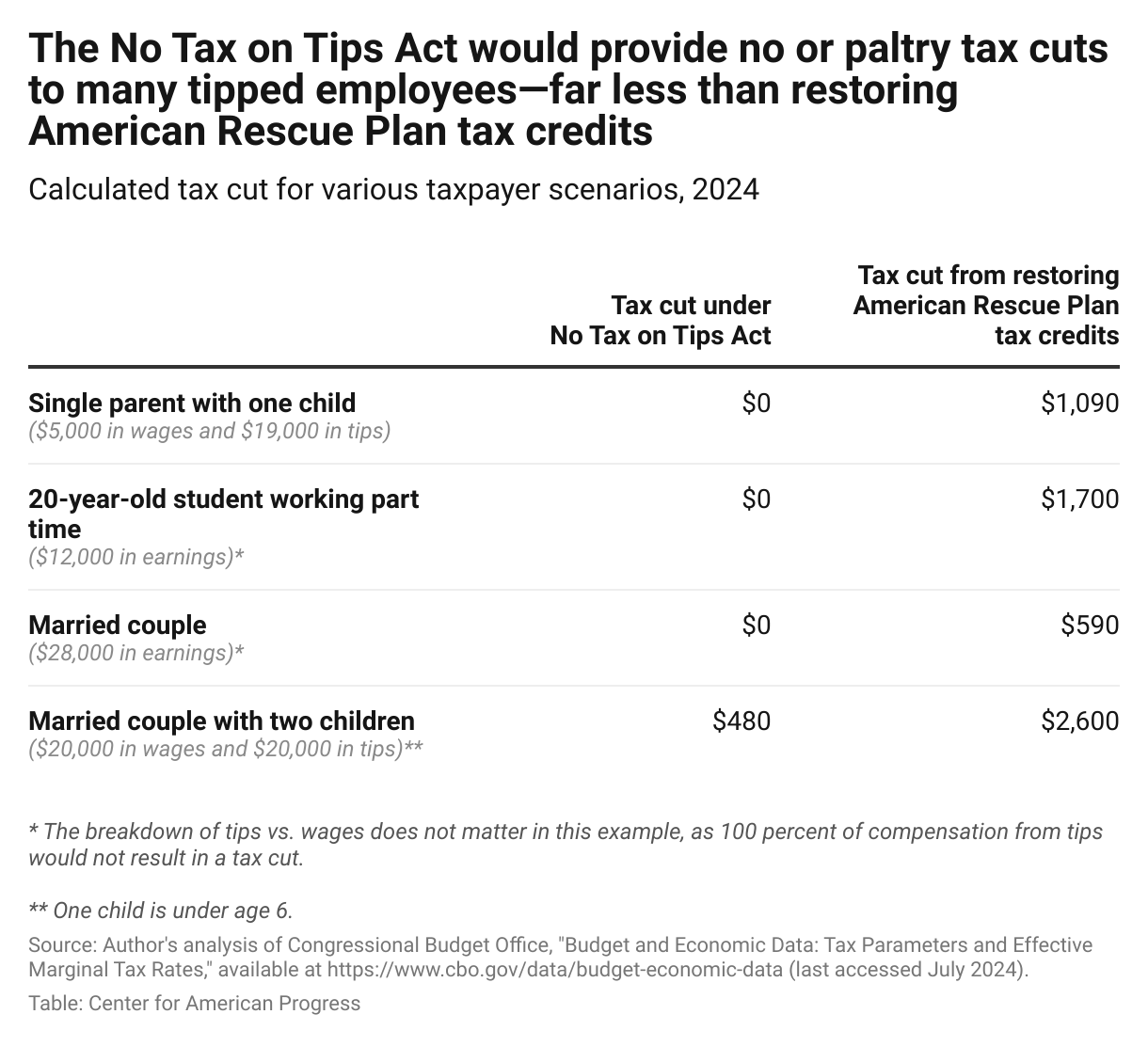
Furthermore, the tax benefits of this proposal are not distributed evenly across the income spectrum. According to the Yale Budget Lab, a significant portion of tip-earners already fall into the lowest income tax brackets, meaning many already owe little to no federal income tax. Consequently, the actual “take-home” increase for the lowest-earning service workers might be negligible, while the cost to the federal treasury remains high.
Implications for Social Security and Medicare
Perhaps the most overlooked financial risk of “No Tax on Tips” involves the long-term retirement security of the workers it claims to help. Social Security benefits are calculated based on a worker’s lifetime earnings that were subject to payroll taxes. If tips are no longer considered taxable income, they would likely be excluded from the “covered earnings” used to determine future Social Security payments.
For a service worker who earns 60% of their income through tips, exempting those tips from taxation would drastically reduce their reported earnings to the Social Security Administration. Over a thirty-year career, this could result in a significantly lower monthly benefit during retirement. Democratic opposition often highlights this “hidden cost,” arguing that the short-term gain of a slightly larger paycheck today is not worth the long-term financial instability of a diminished retirement safety net.
Economic Arguments Against the Proposal: Distortion and Equity
Beyond the immediate fiscal impact, economists warn of secondary effects that could destabilize the broader labor market and create massive loopholes for tax avoidance.
The Risk of “Wage Reclassification”
One of the primary fears of tax experts is the “reclassification” loophole. If tips become tax-free while wages remain taxable, there is a massive financial incentive for both employers and high-earning professionals to restructure their compensation. We could see a shift where industries that have never historically used a tipping model begin to adopt one.
Imagine a scenario where law firms, accounting practices, or even technology consultants begin charging a nominal fee for their services while suggesting a “recommended tip” for the completion of the work. If the tax code does not have airtight definitions of what constitutes a “tip,” high-income earners could shield hundreds of thousands of dollars from taxation. This would lead to a further erosion of the tax base and increase the tax gap—the difference between taxes owed and taxes paid.
Tax Inequality Across Different Sectors
Financial equity is a cornerstone of the Democratic platform. Legislators argue that “No Tax on Tips” creates an unfair hierarchy of labor. Why should a waitress at a high-end steakhouse receive her income tax-free, while a childcare provider or a home health aide—who may perform more grueling work for similar pay—must pay full taxes on every dollar?
From a personal finance and budgeting perspective, this creates an un-level playing field. It incentivizes workers to leave essential but non-tipped sectors (like caregiving or education) to move into tipped sectors purely for the tax advantage. This labor market distortion could lead to shortages in critical infrastructure roles, ultimately harming the overall economy.
Alternative Financial Strategies for Low-Income Workers
Rather than exempting tips from taxation, many who voted against the measure advocate for a different set of financial tools designed to support the working class more holistically.
Expanding Earned Income Tax Credits (EITC)
The Earned Income Tax Credit (EITC) is widely considered by economists to be one of the most effective anti-poverty tools in the U.S. tax code. Unlike a tip exemption, which only helps those in specific industries, an expansion of the EITC provides a financial cushion to all low-to-moderate-income workers. Because it is a refundable credit, it puts money back into the pockets of those who may not even owe income tax in the first place—something a “tax-free tip” policy cannot do.
Improving Financial Literacy and Access to Benefits
Another argument against the proposal is that it does not address the volatility of tipped income. Financial planning for service workers is notoriously difficult due to the seasonal and daily fluctuations in tips. Opponents of the tax-free tip plan argue that the focus should instead be on providing these workers with more stable financial foundations, such as portable benefits, subsidized healthcare, and access to employer-sponsored retirement accounts that are not tied to a specific “tipped” status.
The Future of Service Industry Compensation
The debate over “No Tax on Tips” highlights a growing tension in American financial policy: the struggle between simple, populist tax cuts and the need for a balanced, sustainable fiscal system. While the idea of tax-free tips is a powerful political slogan, the financial reality is that it presents significant risks to the national treasury, the integrity of the tax code, and the long-term retirement security of service workers.
Democratic opposition is fundamentally based on the belief that the tax code should be used to provide broad-based relief rather than industry-specific carve-outs. As the conversation around service industry compensation continues to evolve, the focus may shift from tax exemptions toward more comprehensive reforms, such as the elimination of the tipped minimum wage and the strengthening of the social safety net.
Ultimately, the “no” votes represent a preference for a financial system where income is treated equally, where the tax base is protected from exploitation by high-earners, and where the long-term benefits of Social Security and Medicare are preserved for the very people the “No Tax on Tips” policy claims to champion. For the service worker navigating their own personal finances, the goal remains the same: a stable, livable income that provides for today while securing the future—a goal that many believe requires more than just a change in how tips are taxed.
aViewFromTheCave is a participant in the Amazon Services LLC Associates Program, an affiliate advertising program designed to provide a means for sites to earn advertising fees by advertising and linking to Amazon.com. Amazon, the Amazon logo, AmazonSupply, and the AmazonSupply logo are trademarks of Amazon.com, Inc. or its affiliates. As an Amazon Associate we earn affiliate commissions from qualifying purchases.