
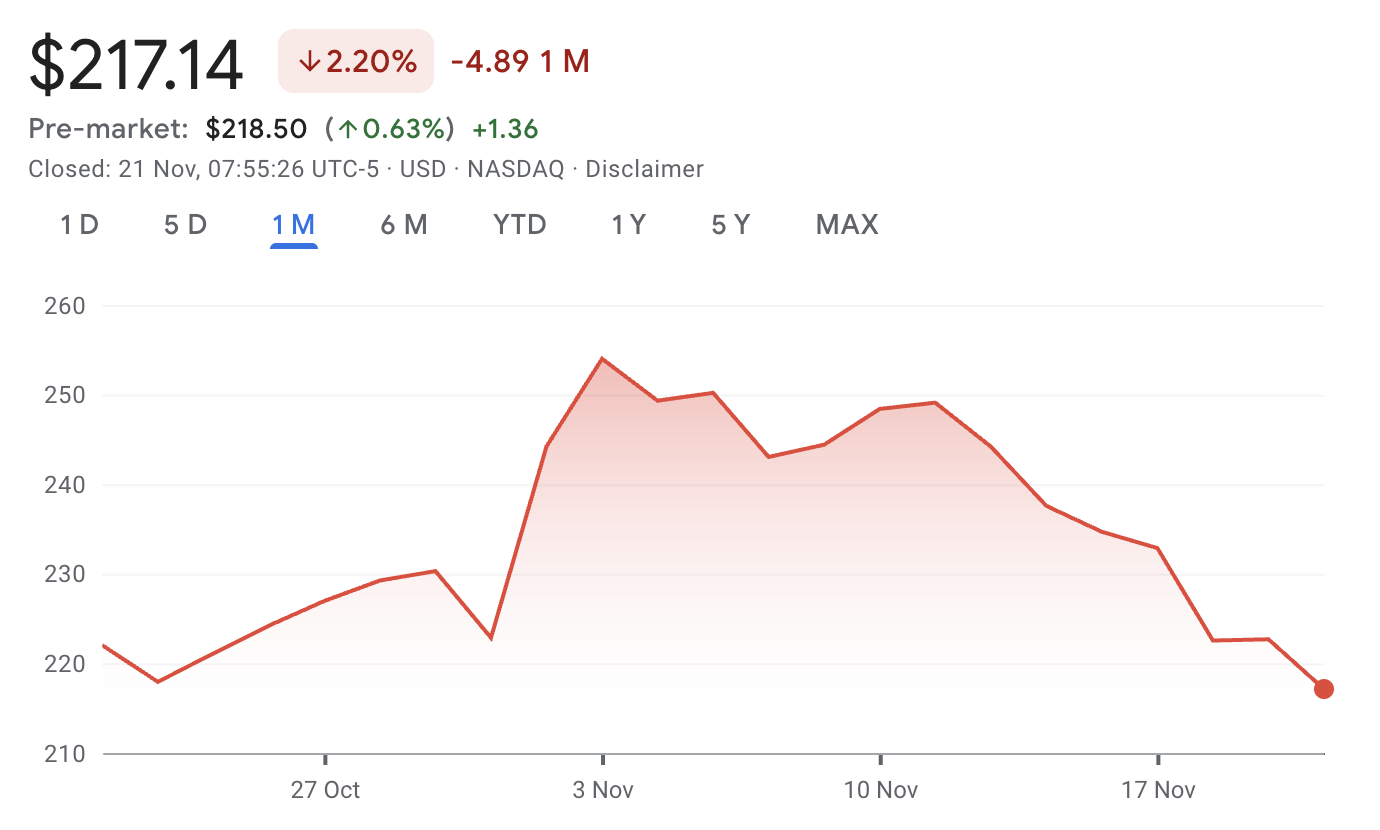
Amazon, once an unassailable growth stock seemingly immune to broader market downturns, has experienced significant periods of stock volatility and declines, leaving investors and market observers questioning the underlying causes. While the e-commerce giant boasts a formidable presence across multiple sectors – from online retail and cloud computing to digital advertising and entertainment – its stock performance is not insulated from economic realities, operational challenges, and shifts in investor sentiment. Understanding why Amazon’s stock might drop requires a comprehensive look into macro-economic factors, the company’s specific financial performance, operational hurdles, and the ever-evolving competitive landscape, all viewed through a financial lens.

The Broader Economic Landscape: A Macro View
Stock prices, particularly for large-cap companies like Amazon, rarely move in a vacuum. They are heavily influenced by the prevailing macroeconomic environment, which dictates everything from consumer spending power to corporate borrowing costs. Recent periods of Amazon stock decline have often coincided with significant shifts in the global economic climate.
Inflationary Pressures and Interest Rate Hikes
One of the most potent macroeconomic forces impacting Amazon’s stock has been the resurgence of inflation. Elevated inflation directly erodes consumer purchasing power, making non-essential spending, a significant portion of Amazon’s e-commerce revenue, less attractive. Furthermore, inflationary pressures increase Amazon’s own operational costs, from fuel for its vast logistics network to packaging materials and labor wages.
In response to inflation, central banks globally, including the U.S. Federal Reserve, have aggressively raised interest rates. Higher interest rates increase the cost of borrowing for companies, potentially slowing down investment and expansion plans. More critically for growth stocks like Amazon, higher interest rates make future earnings less valuable in present-day terms, leading to a de-rating of their stock multiples. Investors tend to discount future cash flows more heavily when the “risk-free” rate of return (e.g., U.S. Treasury yields) is higher, making richly valued growth stocks less appealing.
Shifting Consumer Spending Habits
The pandemic era saw an unprecedented surge in e-commerce, directly benefiting Amazon as consumers stayed home and shifted their spending online. As economies reopened, however, consumer spending began to normalize, with a notable pivot back towards in-person experiences, travel, and services. This shift has meant a deceleration in e-commerce growth rates, a key driver for Amazon’s retail segment. While Amazon’s market share remains dominant, a slower-growing pie naturally impacts its financial outlook and, consequently, its stock valuation. Discretionary spending, in particular, becomes vulnerable during economic uncertainties, directly affecting product categories where Amazon is a major player.
Global Economic Slowdown Fears
Recessionary fears have also loomed large over the market, contributing to a cautious sentiment among investors. A global economic slowdown or recession typically translates to reduced corporate advertising budgets (impacting Amazon’s burgeoning advertising business), lower enterprise IT spending (affecting Amazon Web Services, or AWS, albeit with some resilience), and a general contraction in consumer demand. Given Amazon’s sheer scale and diversification, it is deeply intertwined with the global economy. Any significant projection of reduced economic activity worldwide inevitably casts a shadow on its revenue and earnings forecasts, prompting investors to re-evaluate their positions and leading to potential stock price depreciation.
Amazon’s Financial Performance Under Scrutiny
Beyond the broad economic currents, the specifics of Amazon’s financial reports and future guidance play a pivotal role in determining investor confidence and stock movement. Even a company as robust as Amazon can face scrutiny over its financial health and growth trajectory.
Disappointing Earnings Reports and Revenue Deceleration
Periods of Amazon stock drops often coincide with earnings reports that miss analyst expectations or show significant deceleration in revenue growth, particularly from its core e-commerce segment. While Amazon has historically prioritized long-term growth and market share over short-term profitability, investors still demand a compelling growth narrative. When revenue growth slows down more than anticipated, especially in its dominant retail business, it signals potential market saturation, increased competition, or simply a return to more normalized growth rates post-pandemic boom.
The deceleration is particularly impactful because Amazon’s previous lofty valuations were predicated on sustained, rapid expansion. Any indication that this trajectory is faltering can lead to a sharp re-evaluation of its stock price, as the market adjusts its future earnings models downwards.
Profitability Challenges Amid Rising Costs
For a long time, investors were content with Amazon’s razor-thin retail margins as long as the top line grew aggressively and AWS delivered robust profits. However, recent periods have seen mounting pressure on profitability, even from its profitable segments. Rising input costs (shipping, labor, energy, materials) dueved by inflation have squeezed margins across the board. The company’s massive logistics network, designed to deliver speed and convenience, becomes incredibly expensive to run when fuel prices surge and labor costs increase.
Moreover, Amazon’s strategy often involves heavy upfront investments in new technologies, infrastructure, and geographical expansion. While these are critical for long-term dominance, they can depress short-term profitability metrics, such as operating income and net income. If investors perceive these investments as not yielding immediate or clear returns, or if they contribute to a significant earnings miss, the stock can suffer.
Conservative Guidance and Future Outlook
Perhaps even more impactful than past performance is a company’s guidance for future quarters. When Amazon issues a conservative outlook, projecting lower-than-expected revenue or profit growth for upcoming periods, it can trigger a significant stock sell-off. This is because market valuations are forward-looking, heavily relying on future earnings potential. Conservative guidance often signals management’s apprehension about future economic conditions, competitive pressures, or internal operational hurdles.
Such guidance can lead to widespread analyst downgrades and a recalibration of financial models, pushing the stock price downwards. It indicates that the company itself foresees challenges that will impact its financial results, prompting investors to adjust their expectations accordingly.
Operational Hurdles and Strategic Realignments
Amazon’s colossal operational scale is both its strength and, at times, its Achilles’ heel. Managing such an expansive and complex global enterprise comes with inherent challenges that can directly impact its financial performance and, by extension, its stock price.
Post-Pandemic Overcapacity and Inventory Management
During the initial phases of the pandemic, Amazon aggressively expanded its fulfillment network, warehousing capacity, and logistics personnel to meet unprecedented demand. However, as consumer spending patterns normalized and demand for e-commerce cooled, the company found itself with significant overcapacity. Maintaining these excess warehouses, sorting centers, and a larger-than-needed workforce proved incredibly expensive, contributing to higher fixed costs and lower operational efficiency.
The challenge of “right-sizing” its operational footprint after a period of hyper-growth is substantial. This involves optimizing inventory levels, potentially closing or scaling back less efficient facilities, and managing a workforce transition, all of which incur costs and can temporarily depress profitability. The market views these adjustments as necessary but often punishes the stock in the short term for the associated expenses and inefficiency.
Significant Investments Weighing on Margins
Amazon is known for its “Day 1” philosophy, continually innovating and investing in new ventures. While this long-term vision has yielded successes like AWS, the sheer scale of current investments in emerging areas—such as healthcare (One Medical, Amazon Pharmacy), satellite internet (Project Kuiper), and advanced robotics—can place a significant burden on current period margins. These initiatives require billions in capital expenditure and operational costs with no guarantee of immediate returns.
Investors are often willing to tolerate these investments if they see a clear path to future market dominance and profitability. However, if the market perceives these investments as too speculative, too slow to yield results, or simply too large relative to current cash flow, it can lead to concerns about diluted earnings and pressure on the stock price. The sheer volume of concurrent, large-scale projects can stretch financial resources and management attention, impacting efficiency elsewhere.
Labor Market Dynamics and Wage Pressures
As one of the world’s largest employers, Amazon is highly sensitive to labor market dynamics. Tight labor markets, increasing minimum wage regulations, and unionization efforts across various regions have led to significant wage pressures for the company. Recruiting and retaining a vast workforce, particularly in fulfillment and delivery, has become more expensive. These increased labor costs directly impact Amazon’s operating expenses and profitability, especially in its lower-margin retail segment.
Labor disruptions, strikes, or widespread unionization could also pose operational risks and potentially further increase costs. While Amazon continually invests in automation to mitigate some of these pressures, the human element remains critical to its logistics and customer service, making it vulnerable to shifts in labor market dynamics.
Competitive Headwinds and Market Maturation
Amazon operates in highly competitive arenas, and while it holds dominant positions, the landscape is constantly evolving, presenting new challenges that can impact its market share and financial outlook.
Intensifying Competition Across Core Segments
Amazon faces robust competition across all its core businesses. In e-commerce, it contends with traditional retailers enhancing their online presence (e.g., Walmart, Target), niche online stores, and international players. The retail sector is becoming increasingly fragmented, and maintaining market share requires constant innovation and competitive pricing, which can squeeze margins.
In cloud computing, AWS, while still the market leader, faces fierce competition from Microsoft Azure and Google Cloud, which are aggressively expanding their offerings and customer base. The cloud market is still growing, but the pace of new customer acquisition and margin potential can be affected by this intense rivalry. Similarly, in digital advertising, Amazon is up against Google and Meta, fighting for advertiser spend in a maturing market. Even in streaming, Prime Video competes with a crowded field of content providers. Intensifying competition can limit pricing power, necessitate higher marketing spend, and potentially slow growth rates across segments.
Regulatory Scrutiny and Antitrust Concerns
As Amazon has grown into a corporate behemoth, it has naturally attracted significant regulatory scrutiny globally. Concerns about antitrust practices, market dominance, and treatment of third-party sellers on its platform have led to investigations and potential litigation in the U.S. and Europe. While outright fines or forced divestitures are not always immediate, the ongoing threat of regulatory action creates uncertainty for investors.
The costs associated with defending against these actions, potential changes to business practices mandated by regulators (which could impact profitability or competitive advantages), and the broader negative public perception can all weigh on investor sentiment. This “regulatory overhang” can depress a company’s valuation, as investors price in the risk of future adverse outcomes that could impact long-term financial stability and operational flexibility.
Evolving Investor Sentiment and Valuation Rethink
Amazon’s valuation has historically been among the highest in the market, reflecting its robust growth, market leadership, and perceived long-term potential. However, periods of stock decline often signify a re-evaluation of this premium by investors. Factors such as a slowing growth trajectory, persistent profitability challenges, or a tougher macroeconomic environment can lead to a shift in investor sentiment.
Growth stocks, in particular, are susceptible to shifts from “growth at any cost” to a greater emphasis on profitability and free cash flow generation. When the market narrative changes, investors might become less tolerant of heavy investments that delay profitability or lower short-term earnings. This can result in a de-rating of the stock’s price-to-earnings (P/E) or enterprise value-to-sales (EV/Sales) multiples, bringing them more in line with slower-growing, more mature companies. Analysts might issue downgrades, and institutional investors might rebalance their portfolios, leading to significant downward pressure on the stock.
Navigating Volatility: Investor Perspectives
For investors, understanding why Amazon’s stock might drop is crucial for making informed decisions. Market volatility, even for a blue-chip company like Amazon, is a given, but distinguishing between temporary headwinds and fundamental shifts is key.
Short-Term Pain vs. Long-Term Potential
Many of the factors contributing to Amazon’s stock drops, such as macroeconomic headwinds, post-pandemic operational adjustments, and even increased investment, can be viewed as short-term challenges. Amazon has a proven track record of innovation, strategic adaptation, and long-term value creation. Investors with a long-term horizon might view dips as buying opportunities, believing that the company’s fundamental strengths – its market position in cloud computing, its vast e-commerce infrastructure, and its strong customer loyalty – will ultimately prevail.
However, distinguishing between temporary setbacks and more permanent shifts in the competitive landscape or market fundamentals requires thorough due diligence and a deep understanding of the company’s financial health and strategic direction.
The Role of Diversification and Risk Assessment
Amazon stock, while a significant component of many growth portfolios, is not immune to risk. Periods of decline underscore the importance of diversification in an investment portfolio. Over-reliance on any single stock, no matter how dominant, can expose an investor to substantial losses during market corrections or company-specific downturns. Financial advisors often recommend a balanced portfolio that includes a mix of asset classes, sectors, and company sizes to mitigate risk.
For individual investors considering Amazon, a careful assessment of their personal risk tolerance, investment horizon, and financial goals is paramount. Understanding the company’s financial metrics, debt levels, cash flow generation, and valuation multiples relative to its peers and historical averages can inform a more robust investment decision.

What to Watch: Key Indicators for Recovery
Investors looking for signs of Amazon’s stock recovery or sustained growth should monitor several key financial and operational indicators:
- AWS Growth and Profitability: Continued robust growth and improving margins from its highly profitable cloud segment are critical.
- E-commerce Profitability: Signs that the retail segment is improving its operating margins through cost efficiencies and optimized logistics.
- Free Cash Flow: Amazon’s ability to generate significant free cash flow, which indicates its financial health and capacity for future investments or shareholder returns.
- Guidance: Future guidance from management, particularly improvements in outlook, can signal confidence in a turnaround or sustained growth.
- Macroeconomic Stability: A more stable economic environment, with moderating inflation and interest rates, would provide a more favorable backdrop for growth stocks.
Ultimately, while Amazon’s stock drops can be unsettling, they are often a complex interplay of macroeconomic forces, company-specific financial performance, operational adaptations, and evolving investor perceptions. A professional, insightful understanding of these drivers is essential for any investor navigating the dynamic world of equity markets.
aViewFromTheCave is a participant in the Amazon Services LLC Associates Program, an affiliate advertising program designed to provide a means for sites to earn advertising fees by advertising and linking to Amazon.com. Amazon, the Amazon logo, AmazonSupply, and the AmazonSupply logo are trademarks of Amazon.com, Inc. or its affiliates. As an Amazon Associate we earn affiliate commissions from qualifying purchases.