
In the modern landscape of digital entertainment, brand identity is often the only tether between a corporation and its consumer base. When a consumer hears the name “Paramount,” their brain immediately populates images of mountain peaks, cinematic grandeur, and, increasingly, the rugged landscapes of the Dutton ranch. However, millions of subscribers have encountered a jarring disconnect: the most successful show associated with the Paramount brand, Yellowstone, is famously absent from the Paramount+ streaming service.
This phenomenon is more than a simple licensing hiccup; it is a profound case study in brand strategy, corporate identity, and the long-term consequences of short-term content distribution deals. To understand why you can’t find Yellowstone on Paramount+, we must look past the user interface and into the strategic maneuvers that defined the “Streaming Wars.”

The Fragmentation of Corporate Identity
The primary reason for the Yellowstone absence lies in a historical misalignment between content creation and platform branding. Before Paramount+ was a household name, the parent company (then ViacomCBS) operated under a different strategic playbook.
When the Platform Name Outshines the Content
The confusion stems from a fundamental rule of branding: clarity is king. When ViacomCBS rebranded as Paramount Global in 2022, they unified their diverse portfolio—including CBS, MTV, and Nickelodeon—under the prestigious “Paramount” banner. By naming their flagship streaming service Paramount+, they created a powerful brand association. Consumers naturally assumed that the “Paramount” brand would be the exclusive home for all “Paramount” content.
However, Yellowstone originally aired on the Paramount Network (a linear cable channel). In the branding world, the distinction between “Paramount Network” (cable) and “Paramount+” (streaming) is clear to executives but invisible to consumers. This overlap created a “brand promise” that the platform ultimately could not fulfill.
The Historical Licensing Trap
In 2020, prior to the launch of Paramount+, the company’s leadership made a strategic decision that would haunt their branding efforts for years. At the time, they did not believe their own nascent streaming service (then called CBS All Access) was the right vehicle for a high-budget western. Consequently, they auctioned off the streaming rights to the highest bidder.
NBCUniversal’s Peacock stepped in, securing an exclusive multi-year licensing deal. This created a fractured brand identity where the broadcast home of the show and the streaming home of the show were owned by fierce competitors. From a brand strategy perspective, this is akin to a luxury car manufacturer designing a flagship engine but allowing a rival company to sell the only chassis that can house it.
Strategy vs. Short-Term Gains: A Case Study in Brand Dilution
In brand management, there is a constant tension between immediate revenue and long-term brand equity. The Yellowstone situation is a quintessential example of how prioritizing licensing revenue can lead to significant brand dilution.
The Peacock Deal: A Legacy Decision in a Modern Market
At the time the deal with Peacock was signed, the “Streaming Wars” were in their infancy. Corporations were still viewing streaming as a secondary revenue stream—a place to dump “library content” for extra cash. The brand strategy was focused on the “arms dealer” model: producing great content and selling it to whoever would pay the most.
As the market shifted toward “vertical integration”—where a company owns the entire chain from production to distribution—Paramount Global found itself in a branding quagmire. They had the most recognizable “prestige TV” brand in the world, but they had effectively rented out its “front door” to a competitor. This move diluted the Paramount+ brand before it even had a chance to establish itself as the definitive home for its own intellectual property.
Consumer Frustration as a Brand Liability
A brand is essentially a promise made to a customer. When a user searches for Yellowstone on Paramount+ and finds nothing, that promise is broken. This friction creates “negative brand equity.” Instead of the service being associated with premium content, it becomes associated with the frustration of the “missing” show.
Industry data suggests that a significant portion of churn (subscribers canceling their service) in the streaming industry is driven by “content confusion.” When the brand architecture is too complex for the average consumer to navigate, they often opt out entirely. Paramount Global has had to spend millions in marketing to explain why the show isn’t there, which is a defensive branding posture rather than an offensive one.
The “Yellowstone” Ecosystem: Leveraging Spin-offs to Reclaim the Brand
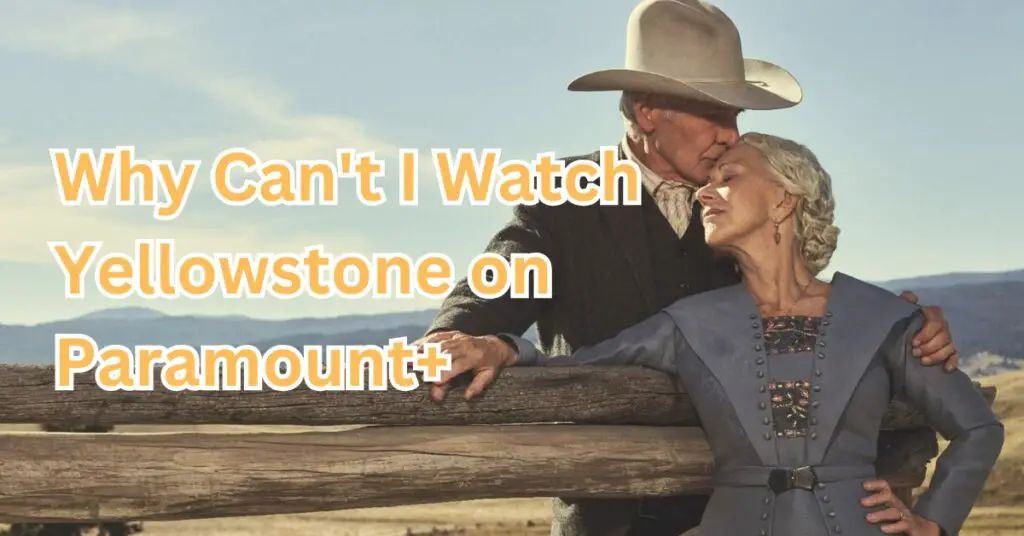
Faced with a branding crisis, Paramount Global executed a brilliant “brand pivot.” Unable to reclaim the original Yellowstone series until the Peacock deal expires, they decided to build an entire “Yellowstone Universe” that could live exclusively on Paramount+.
Using 1883 and 1923 to Anchor the Paramount+ Identity
The strategy shifted from reclaiming the “Parent Brand” to dominating the “Sub-Brands.” By launching prequels like 1883 and 1923, Paramount Global successfully signaled to the market that while the “present” of the Dutton family was tied up in legal contracts, the “past” and “future” belonged to Paramount+.
This is a masterclass in brand extension. They leveraged the high brand equity of the original series to drive subscribers to the new platform. For the consumer, the distinction became: “Go to Peacock for the show you know, but come to Paramount+ for the world you want to explore.”
Building the “Taylor Sheridan” Sub-Brand
Central to this recovery was the elevation of creator Taylor Sheridan as a brand in his own right. Paramount+ isn’t just the home of Yellowstone prequels; it is marketed as the “Home of Taylor Sheridan.” By tying the platform to a specific creative visionary (similar to how Disney+ ties itself to Kevin Feige or George Lucas), they created a new brand pillar. Shows like Tulsa King, Mayor of Kingstown, and Lioness serve to reinforce the idea that the “vibe” of Yellowstone lives on Paramount+, even if the flagship show does not.
Lessons in Strategic Content Licensing for Modern Brands
The Yellowstone / Paramount+ saga offers several vital lessons for brand strategists and corporate leaders in the digital age.
Owning the Vertical: Why Exclusivity is the New Premium
In the 2010s, “reach” was the most important metric for a brand. In the 2020s, “exclusivity” has taken its place. For a brand to maintain a premium status, it must control its distribution points. When a brand’s most valuable asset is available everywhere, it becomes a commodity. When it is available only through one specific portal, it becomes a destination.
Paramount’s mistake was treating its most valuable asset as a commodity. Modern brand strategy dictates that your “Hero Product” should never be used to build a competitor’s platform.
Navigating the Multi-Platform Brand Experience
We live in an era of “Omnichannel Branding,” where consumers interact with a brand across multiple touchpoints—social media, apps, cable TV, and physical merchandise. If the experience across these touchpoints is inconsistent, the brand suffers.
The Yellowstone situation created a fragmented user journey. A fan follows the brand on social media (Paramount Network), watches the new episodes on cable (Paramount Network), but must switch to a rival app (Peacock) to see the back catalog. This fragmentation is the antithesis of modern, seamless brand strategy. The lesson for other brands is clear: ensure your distribution map aligns with your brand’s visual and emotional identity.
Future-Proofing the Brand Architecture
As we look toward the future, Paramount Global is clearly working to reconcile its brand identity. The goal is a unified ecosystem where the “Paramount” name is synonymous with every piece of content the company produces.
Consolidation Trends and Brand Reconciliation
The industry is currently moving toward “re-aggregation.” We are seeing companies pull back their licensed content to keep it “in-house.” The Yellowstone deal will eventually expire, and when it does, the brand reconciliation will be a massive marketing event. Paramount+ will likely be rebranded or heavily promoted as “Finally Whole.”
This move toward consolidation is a recognition that a brand cannot survive if its identity is split across different corporate entities. For Paramount, the “Yellowstone” lesson has been an expensive one, but it has informed their strategy for every subsequent hit, ensuring that future “power brands” are locked within their own ecosystem from day one.

Final Thoughts: The High Price of Brand Disconnection
The mystery of why Yellowstone isn’t on Paramount+ is a cautionary tale for the digital era. It proves that a great product is not enough; if the brand strategy behind the product is flawed, you risk confusing your customers and strengthening your rivals.
In the end, branding is about trust and expectation. When a customer pays for a service named after a brand, they expect the essence of that brand to be present. Paramount+ has had to work twice as hard to build its subscriber base because it lacked its primary “Brand Ambassador.” As the streaming landscape continues to evolve, the brands that win will be the ones that prioritize a clear, unified, and exclusive relationship with their audience. Until then, the Dutton family remains a house divided—a ranch split between two digital kingdoms.
aViewFromTheCave is a participant in the Amazon Services LLC Associates Program, an affiliate advertising program designed to provide a means for sites to earn advertising fees by advertising and linking to Amazon.com. Amazon, the Amazon logo, AmazonSupply, and the AmazonSupply logo are trademarks of Amazon.com, Inc. or its affiliates. As an Amazon Associate we earn affiliate commissions from qualifying purchases.