
The phrase “markets crashing” often evokes a sense of panic, conjuring images of swift, irreversible declines that erode wealth and destabilize economies. While market corrections and bear markets are a natural, albeit painful, part of the economic cycle, understanding the underlying drivers is crucial for investors and businesses alike. Currently, a confluence of macroeconomic forces, shifting investor sentiment, and sector-specific challenges are contributing to significant market volatility and a broader downward trend. This period demands a deep dive into the interconnected factors that are shaking the foundations of global financial stability.
Macroeconomic Headwinds Driving the Downturn
The primary catalysts for the current market downturn are deeply rooted in pervasive macroeconomic shifts that have reshaped the global economic landscape over the past few years. These broad forces exert immense pressure on corporate earnings, consumer spending, and the cost of capital, collectively creating an environment ripe for market contraction.
Persistent Inflationary Pressures
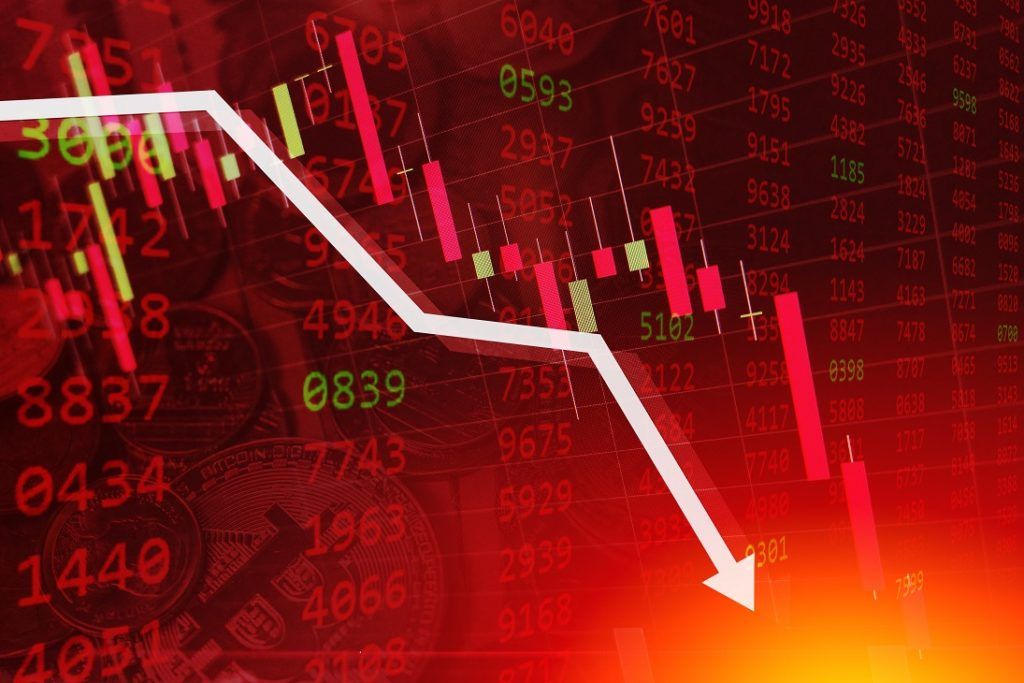
Perhaps the most significant factor is the stubborn persistence of high inflation across major economies. After decades of relative price stability, the post-pandemic recovery, coupled with aggressive fiscal and monetary stimulus, unleashed a wave of demand that supply chains, already fractured by lockdowns and geopolitical events, struggled to meet. This imbalance has led to soaring prices for everything from energy and food to raw materials and labor.
High inflation erodes the purchasing power of consumers, forcing them to prioritize essential spending and cut back on discretionary purchases. For businesses, it translates into higher input costs, squeezing profit margins unless they can pass these costs onto consumers – a strategy that often meets resistance and further fuels inflation. The persistent uncertainty surrounding inflation’s trajectory makes long-term financial planning and investment decisions exceedingly difficult, prompting investors to pull back from riskier assets.
Aggressive Interest Rate Hikes by Central Banks
In response to runaway inflation, central banks worldwide, led by the U.S. Federal Reserve, have embarked on an aggressive campaign of interest rate hikes. The goal is to cool down economic activity by making borrowing more expensive, thereby reducing demand and bringing inflation back down to target levels. While necessary, this policy has significant repercussions for financial markets.
Higher interest rates increase the cost of capital for businesses, impacting their ability to fund expansion, undertake new projects, or even service existing debt. For consumers, mortgage rates climb, credit card interest accrues faster, and loans become more expensive, dampening consumer spending and investment. Furthermore, higher interest rates make fixed-income investments, such as bonds, more attractive relative to equities, drawing capital away from the stock market. Growth stocks, in particular, are hit hard because their valuations often rely on future earnings, which are discounted more heavily in a high-interest rate environment.
Geopolitical Instability and Supply Chain Disruptions
Ongoing geopolitical tensions, most notably the war in Ukraine, have added another layer of complexity and uncertainty. The conflict has exacerbated existing supply chain issues, particularly in energy and agricultural commodities, leading to sharp price spikes. Russia’s role as a major energy producer and Ukraine’s as a significant grain exporter means the war has had a ripple effect across global markets, contributing to inflation and increasing the risk of energy shortages in certain regions.
Beyond the immediate conflict, broader geopolitical rivalries and trade protectionism contribute to fragmentation in global supply chains. This shift away from highly optimized, just-in-time global networks towards more resilient, but often more expensive, localized or diversified supply chains increases production costs and introduces further uncertainties for multinational corporations, impacting their profitability and market valuations.
Valuation Concerns and Shifting Investor Sentiment
Beyond the foundational macroeconomic pressures, the current market dynamics are also heavily influenced by how investors perceive current valuations and their collective sentiment towards future economic prospects.
Overheated Valuations and the Normalization Cycle
For many years leading up to the current downturn, particularly during the pandemic-era bull run, significant portions of the market, especially in technology and high-growth sectors, reached historically high valuations. Fueled by ultra-low interest rates and abundant liquidity, investors often prioritized growth potential over immediate profitability, pushing stock prices to levels that were difficult to justify based on traditional metrics like earnings or book value.
The current environment represents a normalization cycle. As interest rates rise, the discount rate applied to future earnings increases, making those distant profits less valuable today. This fundamental shift forces a re-evaluation of asset prices, particularly for companies whose valuations were heavily predicated on aggressive growth forecasts far into the future. The result is often a sharp correction as markets recalibrate to more sustainable valuation multiples.
Escalating Recession Fears
A significant driver of current market fear is the growing probability of a global recession. Central bank efforts to tame inflation through rate hikes inherently carry the risk of over-tightening, slowing economic activity too much and tipping economies into a contraction. Surveys of economists and business leaders increasingly point towards an impending downturn, leading investors to preemptively de-risk their portfolios.
Recession fears translate into expectations of declining corporate earnings, increased unemployment, and reduced consumer spending. During such periods, investors tend to favor defensive stocks or cash, shunning riskier assets that are more sensitive to economic cycles. This collective move away from risk amplifies market declines as selling pressure mounts.
The Psychology of Fear and Panic Selling
Market crashes are often characterized by a strong psychological component. Once a downward trend establishes itself, fear can become a self-fulfilling prophecy. Negative headlines, rapid daily declines, and the sight of shrinking portfolio values can trigger panic among investors, leading to irrational decisions. Many investors, particularly those with less experience or a lower risk tolerance, may sell their holdings to cut losses, even if it means crystallizing those losses.
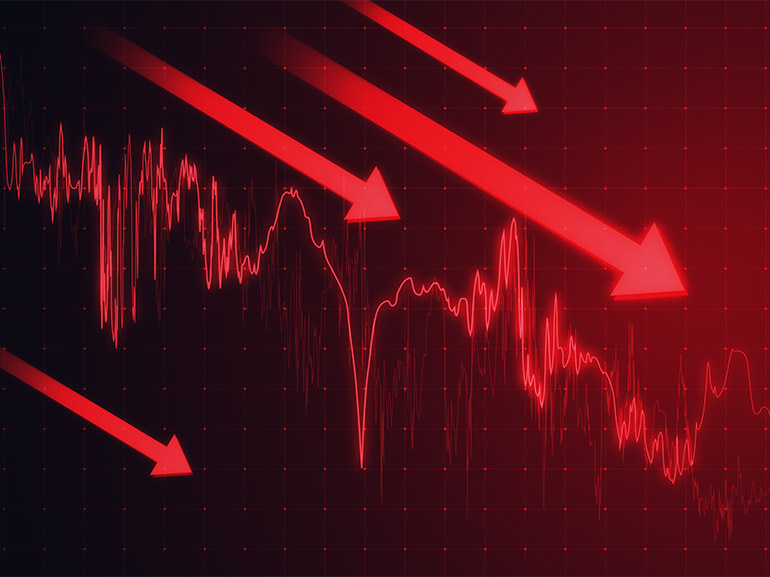
This “herd mentality” can accelerate market declines, pushing prices below their intrinsic value as selling begets more selling. The challenge for individual investors during such times is to resist emotional decision-making and stick to a disciplined, long-term investment strategy.
Sector-Specific Challenges and Opportunities
While the broader market experiences a downturn, the impact is rarely uniform. Certain sectors face more significant headwinds, while others may demonstrate relative resilience or even present unique opportunities.
Re-evaluation of the Technology Sector
The technology sector, a dominant force in the previous bull market, has been particularly vulnerable in the current environment. Many high-growth tech companies, especially those that are not yet profitable, thrived on the promise of future innovation and market disruption. Their valuations were often based on revenue multiples or subscriber growth rather than immediate earnings, making them highly sensitive to rising interest rates and a re-focus on profitability.
As the cost of capital increases, funding for unprofitable ventures becomes scarcer and more expensive. Investors are now demanding a clearer path to profitability and sustainable cash flow, rather than simply growth at all costs. This shift has led to significant declines in the stock prices of many tech firms, particularly those without strong balance sheets or robust free cash flow.
Slowdown in Consumer Spending and Discretionary Sectors
Inflationary pressures and rising interest rates directly impact consumer wallets. As the cost of essentials like food, fuel, and housing increases, disposable income for discretionary items diminishes. This directly impacts sectors such as retail, leisure, travel, and luxury goods. Companies in these areas may see reduced demand, leading to lower sales and thinner profit margins.
While some consumers might “trade down” to cheaper alternatives, overall spending on non-essentials is likely to contract during economic uncertainty. This makes companies reliant on strong consumer demand more susceptible to market downturns and contributes to broader market weakness.
Cooling of the Housing Market
Another significant sector experiencing a shift is real estate. The rapid increase in interest rates has directly translated into higher mortgage rates, significantly impacting housing affordability and demand. What was a red-hot housing market in many regions is now showing signs of cooling, with fewer sales, longer listing times, and, in some areas, declining prices.
While a complete crash is not universally predicted, a sustained slowdown in the housing market can have broader economic implications. It affects related industries like construction, home improvement, and furniture, and can also impact consumer confidence as homeowners see the value of their largest asset potentially decline.
Navigating Volatility: Implications for Your Investments
In a market characterized by crashes and corrections, understanding the ‘why’ is only the first step. For personal finance and investing, the crucial next step is to understand the implications and how to navigate such periods.
The Enduring Importance of Diversification
During volatile times, the wisdom of diversification becomes profoundly evident. Spreading investments across various asset classes (equities, bonds, real estate, commodities), geographies, and sectors can help mitigate risk. While a broad market downturn may affect most assets, diversification ensures that no single poor performer can decimate an entire portfolio. A well-diversified portfolio might include defensive stocks, inflation-protected securities, and short-term bonds, which can offer some stability when growth stocks falter.
Rebalancing and Strategic Allocation
Market crashes present opportunities for strategic rebalancing. As some assets decline more than others, your original asset allocation may become skewed. Rebalancing involves selling some assets that have performed well (or relatively better) and buying more of those that have significantly underperformed to bring your portfolio back to its target allocation. This disciplined approach allows investors to “buy low” during downturns, taking advantage of discounted prices in potentially undervalued assets. This requires a strong understanding of your risk tolerance and long-term financial goals, potentially necessitating the use of financial tools or consulting a financial advisor.
Focusing on Long-Term Goals and Dollar-Cost Averaging
Impulsive selling during a market crash is often detrimental to long-term wealth accumulation. Historical data shows that markets eventually recover, and those who remain invested through downturns are often rewarded. Focusing on long-term financial goals – retirement, education, business expansion – helps to anchor investment decisions and avoid being swayed by short-term market noise.
Dollar-cost averaging, which involves investing a fixed amount of money at regular intervals regardless of market fluctuations, is a powerful strategy during volatile periods. When prices are low, your fixed investment buys more shares, effectively lowering your average cost per share over time. This systematic approach removes emotional bias from investing and can be highly effective in building wealth over the long haul.
Opportunities Amidst the Turmoil
While market crashes are undoubtedly challenging, they also present unique opportunities for astute investors. Companies with strong fundamentals, healthy balance sheets, and sustainable business models that have been unfairly penalized by the broader market sell-off can become attractive investments. Value investors often thrive in such environments, identifying quality assets trading below their intrinsic value. For those with a long-term horizon and capital available, market downturns can be prime opportunities to acquire assets at significant discounts, setting the stage for substantial returns during the subsequent recovery.
The current market environment, characterized by inflation, rising interest rates, and geopolitical instability, is a complex tapestry of challenges. Yet, by understanding these underlying forces and maintaining a disciplined, long-term perspective on personal finance and investing, individuals can navigate the volatility and position themselves for future growth.
aViewFromTheCave is a participant in the Amazon Services LLC Associates Program, an affiliate advertising program designed to provide a means for sites to earn advertising fees by advertising and linking to Amazon.com. Amazon, the Amazon logo, AmazonSupply, and the AmazonSupply logo are trademarks of Amazon.com, Inc. or its affiliates. As an Amazon Associate we earn affiliate commissions from qualifying purchases.