
Nikola Tesla, a name synonymous with unparalleled innovation and a mind that seemingly operated decades, if not centuries, ahead of its time, continues to captivate the collective imagination. From his groundbreaking work on alternating current (AC) to his visionary concepts for wireless power transmission and remote control, Tesla’s contributions laid the fundamental groundwork for much of our modern technological landscape. Amidst the reverence for his genius, a common question often arises: what was Nikola Tesla’s IQ? While the allure of quantifying such extraordinary intellect with a simple number is strong, the reality is far more complex and, frankly, more insightful when viewed through the lens of technological history and the very nature of genius itself.
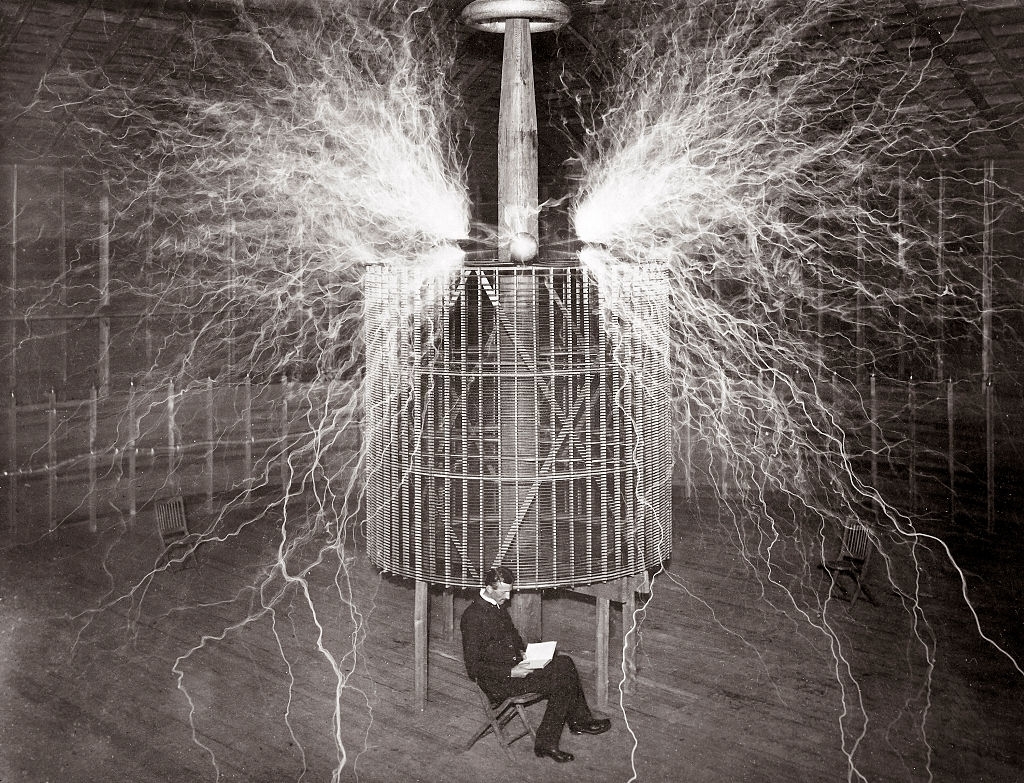
The Elusive Nature of Historical IQ Assessment
Assigning a definitive IQ score to a historical figure like Nikola Tesla presents significant challenges, primarily because standardized IQ tests, as we know them today, did not exist in his time. The concept of intelligence quotient (IQ) was formalized much later, with early tests designed for specific purposes, often in educational or military contexts, and certainly not with the intention of retrospectively evaluating the minds of past inventors and scientists.
Challenges in Retrospective Evaluation
Modern IQ tests are culturally and temporally sensitive. They are designed for contemporary populations and often contain questions that rely on current knowledge, educational systems, and even specific problem-solving paradigms that might not have been prevalent in the late 19th and early 20th centuries. Attempting to apply a modern scoring rubric to Tesla’s era would be anachronistic and largely speculative. There are no records of Tesla ever taking a standardized IQ test. Any number assigned to him, often seen online, is a result of estimations by biographers, psychologists, or enthusiasts attempting to extrapolate from his known achievements, writings, and anecdotes. These estimates, while well-intentioned, lack empirical backing and are essentially educated guesses, sometimes placing him in the range of 195-200+, a score reserved for the most extraordinary intellects. However, these figures are more indicative of the perception of his genius rather than a scientifically verifiable metric.
Beyond Standardized Tests: A Holistic View of Genius
Instead of striving for an unprovable numerical score, a more fruitful approach, particularly for understanding his impact on technology, is to examine the manifestations of Tesla’s intelligence. What cognitive traits did he exhibit that enabled his revolutionary work? How did his mind process information, conceive ideas, and solve problems in ways that propelled technological progress? This qualitative assessment provides a deeper understanding of his intellectual prowess than any single number ever could. It allows us to appreciate the specific mental faculties that contributed to his legendary status as a technological visionary.
Tesla’s Mind: A Deep Dive into His Cognitive Abilities
While we may never have an exact IQ score for Nikola Tesla, his life, journals, and the testimonies of those who knew him paint a vivid picture of a mind operating at an exceptionally high level. His intellectual toolkit was remarkably diverse and profoundly impactful on his technological endeavors.
Photographic Memory and Visualization Skills
One of Tesla’s most frequently cited intellectual attributes was his extraordinary eidetic memory, often described as photographic. He could reportedly recall entire books and images with perfect clarity. More remarkably, he possessed an almost unparalleled ability to visualize inventions in his mind with astonishing detail, down to their minutest components and operational intricacies, without needing physical models or drawings. He claimed he could perform entire tests and simulations of his inventions purely in his head, identifying flaws and refining designs before ever stepping into a workshop. This “method of visualization,” as he called it, was a revolutionary approach to engineering and design. For a modern tech context, imagine a software engineer coding an entire complex application mentally, debugging it, and running it through all test cases before writing a single line of actual code. This capability dramatically accelerated his inventive process and allowed him to rapidly iterate on ideas, a skill invaluable in any technological field.
The Power of Conceptualization and Inventive Problem-Solving
Tesla’s genius wasn’t just about memory; it was about the profound ability to conceptualize entirely new principles and apply them to solve existing problems, or even problems that humanity hadn’t yet fully recognized. His invention of the AC motor and his development of the polyphase system were not mere improvements on existing technology; they were radical departures from the direct current (DC) systems prevalent at the time. He envisioned an entirely new way to generate, transmit, and utilize electrical power, fundamentally changing the course of the Second Industrial Revolution. This required an immense capacity for abstract thought, systemic understanding, and the courage to challenge established paradigms – traits that are hallmarks of true innovation in any technological era. He saw beyond immediate limitations and grasped the underlying physics and engineering principles necessary to unlock unprecedented capabilities.
Multilingualism and Broad Intellectual Pursuits
Beyond his engineering prowess, Tesla was a polyglot, reportedly fluent in eight languages: Serbo-Croatian, Czech, English, French, German, Hungarian, Italian, and Latin. This linguistic aptitude is often correlated with higher cognitive abilities, including enhanced problem-solving skills, creativity, and memory. His broad intellectual curiosity extended beyond science and engineering into philosophy, literature, and art, providing him with a holistic perspective that likely informed his inventive processes. In the tech world, multidisciplinary thinking is increasingly recognized as a key driver of innovation, allowing individuals to draw connections and insights from disparate fields, leading to truly novel solutions. Tesla’s wide-ranging intellect exemplifies this approach, enabling him to view technological challenges from multiple angles.
The Impact of Tesla’s Intellect on Technological Advancement
Tesla’s intelligence was not merely an impressive personal trait; it was the engine that powered a wave of technological advancements that continue to shape our world. His mental gifts translated directly into tangible, transformative technologies.
Alternating Current and the Second Industrial Revolution
Perhaps Tesla’s most profound technological contribution, born directly from his unique conceptual abilities, was his development of the alternating current (AC) electrical system. In contrast to Edison’s DC system, which suffered from significant power loss over distance and required numerous generating stations, Tesla’s AC system allowed for efficient, long-distance power transmission. His polyphase motor and transformer designs were central to this revolution. This was not a minor tweak; it was a wholesale paradigm shift that electrified cities, powered factories, and literally illuminated the modern age. The ability to envision and engineer a comprehensive system of such scale and complexity demonstrates an intellectual capacity that transcends conventional definitions of intelligence, impacting virtually every aspect of modern life and technological development.
Radio, Remote Control, and Futuristic Visions
Beyond AC, Tesla’s mind conceived and pioneered numerous other technologies. He demonstrated remote control using radio waves in 1898, a precursor to everything from garage door openers to drones. His work laid foundational elements for radio communication, challenging Marconi’s initial claims. He also envisioned technologies that remain aspirational even today, such as wireless energy transmission on a global scale (the Wardenclyffe Tower project), and even concepts akin to modern smartphones or internet communication. His capacity for foresight, to project current scientific principles into future practical applications, underscores a level of predictive intelligence crucial for any true technological pioneer. He was not just solving present problems but designing the future.
The Legacy of a Visionary Mind in Modern Tech
Tesla’s intellectual legacy continues to inspire and inform modern technology. His emphasis on efficiency, his holistic approach to system design, and his belief in the transformative power of electricity resonate deeply within today’s tech landscape, from sustainable energy solutions to advanced robotics and AI. The quest for wireless power, once dismissed as Tesla’s eccentric dream, is now a burgeoning field of research. His thinking style — meticulous visualization, daring conceptualization, and relentless pursuit of innovation — serves as a blueprint for success in Silicon Valley and tech hubs worldwide. His story highlights that true technological advancement often comes from minds capable of fundamental rethinking, not just incremental improvement.
IQ as a Metric: Understanding Genius in the Tech Context
While the question of Tesla’s IQ remains fascinating, it also prompts a broader reflection on how we define and measure genius, particularly within the dynamic and ever-evolving field of technology. Is a single score truly sufficient to capture the multifaceted nature of an innovative mind?
The Limitations of a Single Score
In the context of technology and innovation, a high IQ score alone is rarely a guarantee of success. While strong analytical and problem-solving abilities are undoubtedly beneficial, the tech world demands much more. Creativity, resilience, collaborative spirit, communication skills, and the ability to adapt to rapid change are equally, if not more, critical. Tesla himself, despite his towering intellect, faced significant personal and financial challenges. His inability to effectively commercialize many of his inventions and his frequent clashes with business partners highlight that intelligence, particularly highly specialized intelligence, needs to be complemented by other aptitudes to achieve widespread societal impact.
The Role of Creativity, Persistence, and Vision
What Tesla’s life truly underscores is the power of creativity, persistence, and a clear vision. His relentless pursuit of AC technology despite fierce opposition, his unwavering belief in the potential of wireless power, and his imaginative leap into technologies that were unimaginable to his contemporaries are testaments to these qualities. In tech, the ability to generate novel ideas (creativity), to see them through myriad failures (persistence), and to articulate a compelling future state (vision) are often more determinative of impact than raw processing power alone. These are the soft skills, often overlooked in IQ assessments, that bring hard science and engineering to life.
Nurturing Innovation in the Modern Tech Ecosystem
Understanding Tesla’s genius prompts us to consider how we nurture innovation today. Rather than solely focusing on metrics that measure a narrow band of cognitive skills, a more holistic approach recognizes and fosters diverse forms of intelligence. This includes promoting interdisciplinary education, encouraging experimental failure, celebrating unconventional thinking, and providing environments where visionary ideas can be explored without immediate commercial pressure. The legacy of Tesla reminds us that the most impactful technological advancements often stem from minds that dare to think differently, unfettered by conventional wisdom or the limitations of contemporary measurement tools.

Conclusion: Tesla’s Enduring Genius in the Age of AI
In conclusion, while we cannot definitively answer “what is Nikola Tesla’s IQ” with a scientifically valid number, the inquiry itself serves as a gateway to understanding the incredible depth and breadth of his intellect. His estimated IQs, however speculative, merely attempt to quantify a genius that was self-evident in his revolutionary work. Tesla’s mind was characterized by unparalleled visualization, conceptual originality, and an expansive intellectual curiosity—qualities that profoundly shaped the technological world.
His contributions to AC power, radio, and remote control were not just inventions; they were the foundational elements of the modern electrical grid and communication systems, all born from a mind that operated on a different plane. As we navigate the complexities of the 21st century, with its rapid advancements in AI, quantum computing, and sustainable energy, Tesla’s story remains a powerful testament to the limitless potential of human ingenuity. His legacy encourages us to look beyond simple metrics and to appreciate the multifaceted nature of genius, inspiring future innovators to dream bigger, think more broadly, and persist in the face of daunting challenges, much like the visionary maestro himself.
aViewFromTheCave is a participant in the Amazon Services LLC Associates Program, an affiliate advertising program designed to provide a means for sites to earn advertising fees by advertising and linking to Amazon.com. Amazon, the Amazon logo, AmazonSupply, and the AmazonSupply logo are trademarks of Amazon.com, Inc. or its affiliates. As an Amazon Associate we earn affiliate commissions from qualifying purchases.