
Navigating the landscape of federal student loans has become increasingly complex over the last few years. If you have logged into your MOHELA (Higher Education Loan Authority of the State of Missouri) account recently only to find your loans in “forbearance” without you specifically requesting it, you are not alone. Millions of borrowers across the United States are currently experiencing unexpected pauses in their repayment schedules.
While the word “forbearance” traditionally suggests a temporary reprieve for those in financial hardship, the current wave of forbearances under MOHELA is largely driven by systemic transitions, legal battles, and administrative adjustments. Understanding the financial implications of these pauses is crucial for maintaining your long-term fiscal health and ensuring your path to loan forgiveness remains on track.

The Primary Drivers of MOHELA Administrative Forbearance
In the world of personal finance, unexpected changes to debt obligations can be jarring. For MOHELA borrowers, most current forbearances fall under the category of “administrative forbearance.” This is a tool used by loan servicers and the Department of Education to pause payments while logistical or legal changes are processed.
The Transition to the New Servicing Platform
One of the most common reasons for a sudden status change is MOHELA’s massive technological overhaul. The servicer has been transitioning borrower accounts to a new, updated servicing platform (mohela.studentaid.gov). During this migration, accounts are often placed in a temporary administrative forbearance to ensure that no payments are missed or misapplied while data is being transferred between the old and new systems. This transition is part of a broader Department of Education initiative to streamline the borrower experience, but it has resulted in temporary “blackout” periods for many users.
Litigation and the SAVE Plan
The Saving on a Valuable Education (SAVE) plan, the Biden administration’s signature income-driven repayment (IDR) program, has faced significant legal challenges from various state attorneys general. As these cases move through the court system, injunctions have been placed on certain aspects of the plan. To comply with these court orders, the Department of Education directed servicers like MOHELA to place borrowers enrolled in the SAVE plan into a special administrative forbearance. This ensures that borrowers aren’t overcharged—or undercharged—while the legal definition of their monthly obligation is being debated in federal court.
Processing Delays for Income-Driven Repayment (IDR) Applications
If you recently applied for a new IDR plan or attempted to consolidate your loans, your account may be in forbearance while MOHELA processes the paperwork. Due to the high volume of applications and the complexity of new regulations, the processing time for these requests has lengthened significantly. Servicers are required to place borrowers in administrative forbearance if they cannot process an application before the next payment is due, preventing the borrower from falling into delinquency through no fault of their own.
The Financial Implications: Interest, Credits, and Capitalization
From a personal finance perspective, a pause in payments is rarely “free.” Every borrower must understand how this specific period of forbearance affects their principal balance and their progress toward debt elimination.
Interest Accrual During Forbearance
The most critical question for any borrower is: “Is interest still growing?” In a standard forbearance, interest typically continues to accrue and is later “capitalized” (added to the principal balance), which can lead to a significant increase in the total cost of the loan. However, for the current SAVE-related administrative forbearances, the Department of Education has clarified that interest will be set at 0% for the duration of the pause. Conversely, if your forbearance is due to a simple processing delay or an account transition, interest may still be accruing at your standard rate. Borrowers must check their specific account disclosures to determine which rule applies to them.
Impact on Public Service Loan Forgiveness (PSLF)
For many MOHELA borrowers, the primary goal is achieving Public Service Loan Forgiveness. Historically, months spent in forbearance did not count toward the 120 required payments for PSLF. However, the rules have become more flexible recently. Under current administrative guidelines, months spent in certain types of administrative forbearance (such as those caused by servicer errors or the SAVE plan legal stay) may still count toward PSLF and IDR forgiveness. This is a vital distinction, as it allows borrowers to progress toward total debt discharge without having to make a cash payment.

The Risk of Interest Capitalization
Interest capitalization occurs when unpaid interest is added to your principal balance, meaning you will eventually pay interest on your interest. While the Department of Education has eliminated many “trigger events” for capitalization, it can still happen when exiting certain types of forbearance. Understanding whether your current MOHELA status will result in capitalization is essential for accurately forecasting your future debt-to-income ratio and overall net worth.
Strategic Management of Your Student Loan Portfolio
When your loans are in an involuntary forbearance, the worst thing you can do is “set it and forget it.” Proactive management is required to ensure that your financial strategy remains sound.
Verifying Account Accuracy and Documentation
During periods of administrative change, errors are common. You should regularly download your payment history and keep a record of your current “qualifying payment” count for PSLF. If MOHELA places you in forbearance, ensure you receive a formal notice (either via mail or your digital inbox) that explains the reason and the expected end date. If the forbearance is ended prematurely or extended indefinitely, having a paper trail is your best defense against servicer errors.
To Pay or Not to Pay?
If your loans are in a 0% interest forbearance, there is a strong financial argument for redirecting your student loan payment into a high-yield savings account (HYSA) or a money market fund. By doing this, you earn interest on that money while your debt remains static. Once the forbearance ends, you can choose to make a large lump-sum payment or keep the liquidity for your emergency fund. However, if your forbearance is still accruing interest, you might consider making “voluntary payments” to cover the interest and prevent the balance from growing, provided your budget allows for it.
Recalculating Your Repayment Strategy
Use the time provided by the forbearance to re-evaluate which repayment plan is best for you. With the legal status of the SAVE plan in flux, it may be worth investigating the Pay As You Earn (PAYE) or Income-Based Repayment (IBR) plans as alternatives. Financial tools like the Federal Student Aid (FSA) Loan Simulator can help you compare the total interest paid over the life of the loan across different plans, allowing you to pivot your strategy once the forbearance period concludes.
Navigating the Future of Federal Servicing
The current state of MOHELA accounts is a reflection of a broader shift in the federal student loan ecosystem. The Department of Education is moving toward a more centralized system, and the current friction is a byproduct of that transition.
The Unified Servicing Goal
The Department of Education’s “Next Gen” initiative aims to create a single point of entry for all borrowers, regardless of who their specific servicer is. This explains why MOHELA is moving to a “.gov” web address. In the long run, this should provide more transparency and fewer “lost” payments between servicers. For now, however, it requires borrowers to be vigilant as the system undergoes these “growing pains.”
Preparing for the “Return to Repayment”
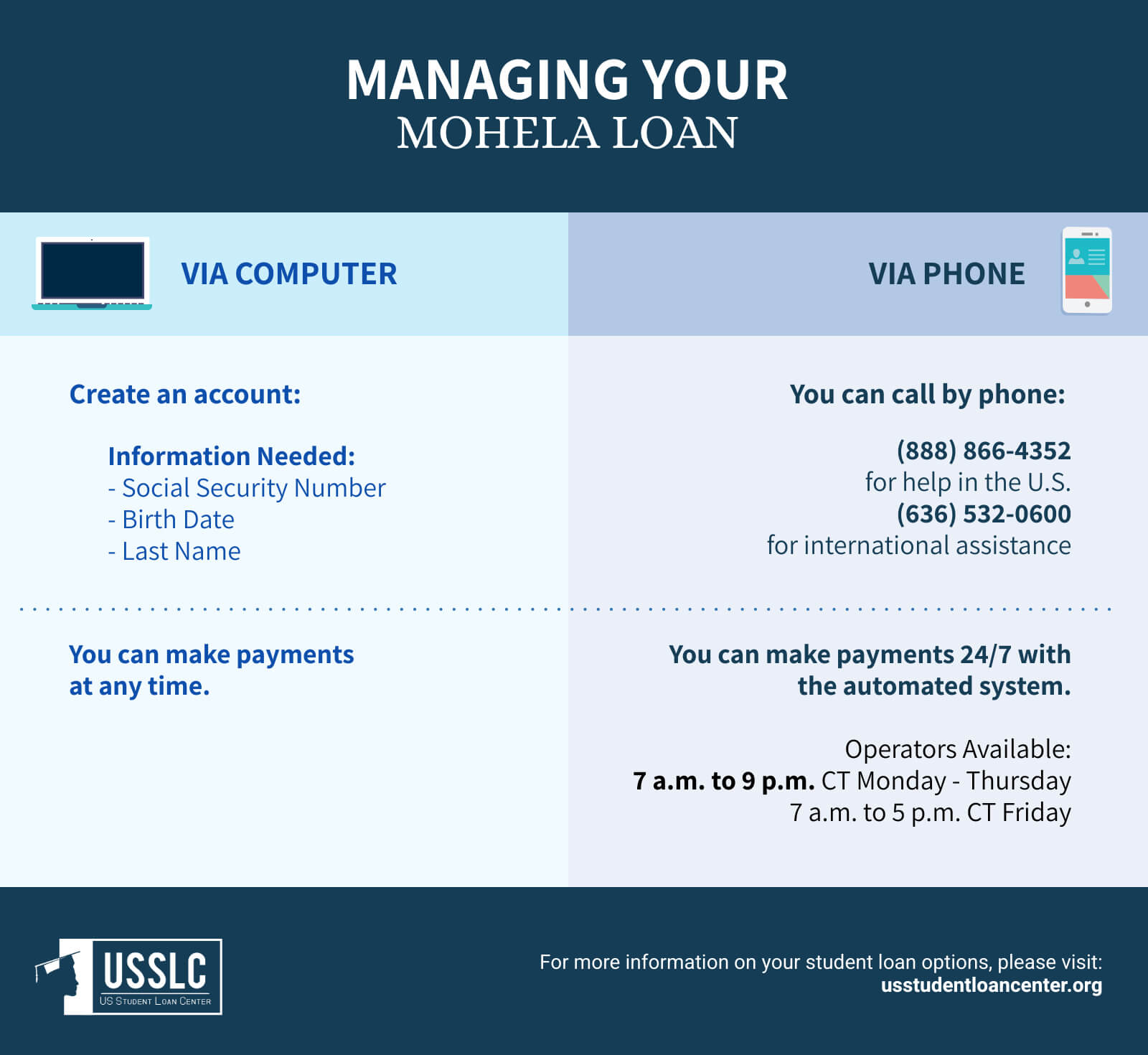
Forbearances are, by definition, temporary. Eventually, the legal stays will be lifted, the platform migrations will be complete, and the administrative backlogs will be cleared. When this happens, MOHELA is required to provide you with at least 21 days’ notice before your first payment is due. It is essential to ensure your contact information—specifically your email and physical address—is updated on both the MOHELA portal and the StudentAid.gov website to avoid missing these critical notifications.
Seeking Recourse for Servicer Errors
If you believe your account has been placed in forbearance incorrectly, or if you are being charged interest when you should not be, you have rights as a consumer. You can file a formal dispute with the MOHELA ombudsman or escalate the issue to the Federal Student Aid Ombudsman Group. Additionally, the Consumer Financial Protection Bureau (CFPB) monitors student loan servicers and can intervene if a servicer fails to follow federal guidelines.
In conclusion, while a MOHELA forbearance can feel like a source of uncertainty, it is often a strategic pause mandated by federal policy or technical necessity. By understanding the underlying reasons—whether it be the SAVE plan litigation or a platform migration—and monitoring the impact on interest and forgiveness credits, you can turn a period of administrative limbo into an opportunity to strengthen your personal financial position. Stay informed, keep meticulous records, and remain flexible as the landscape of student debt continues to evolve.
aViewFromTheCave is a participant in the Amazon Services LLC Associates Program, an affiliate advertising program designed to provide a means for sites to earn advertising fees by advertising and linking to Amazon.com. Amazon, the Amazon logo, AmazonSupply, and the AmazonSupply logo are trademarks of Amazon.com, Inc. or its affiliates. As an Amazon Associate we earn affiliate commissions from qualifying purchases.