
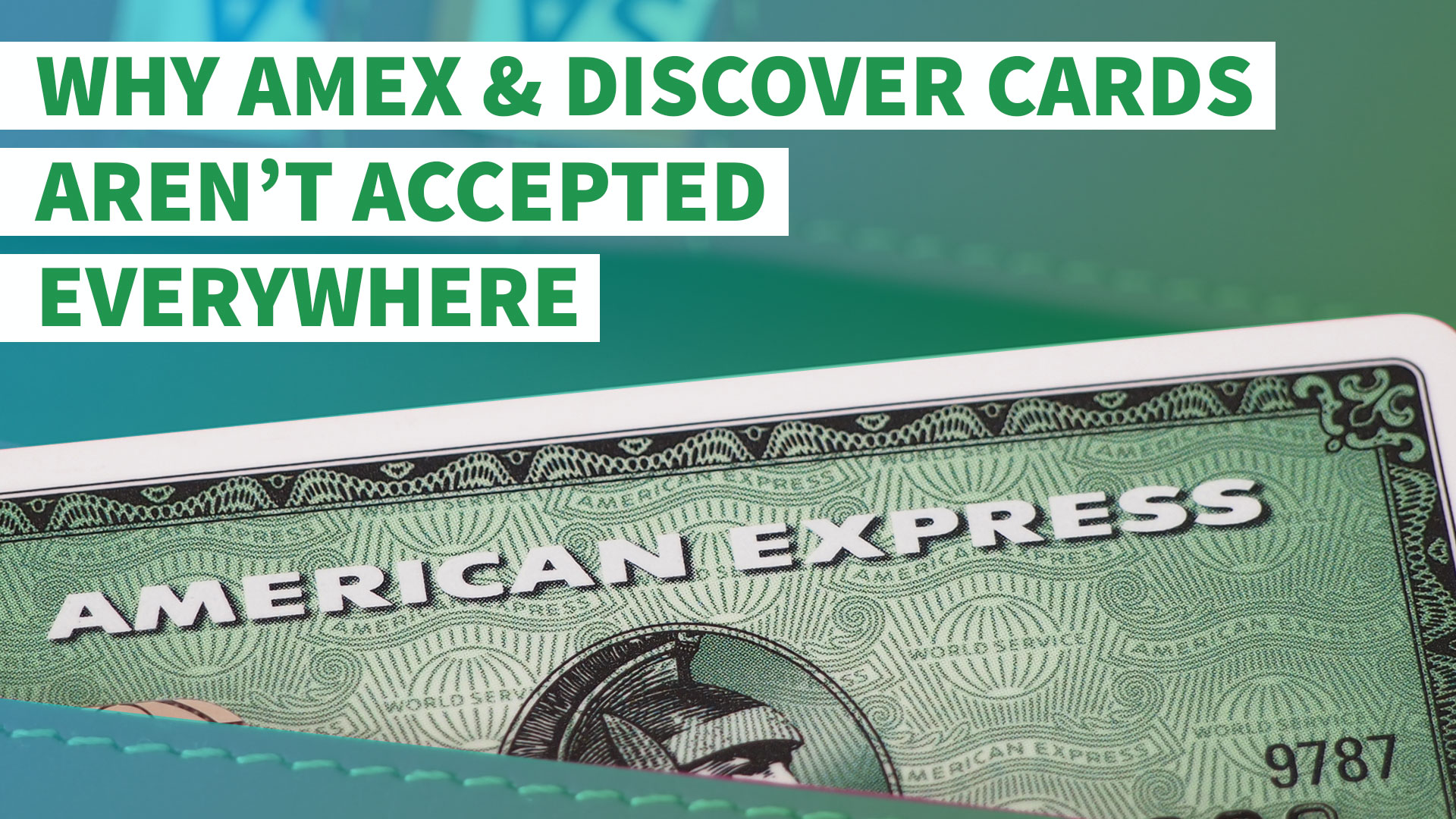
American Express, a name synonymous with prestige, premium rewards, and exceptional customer service, holds a unique position in the global financial landscape. Its distinctive charge cards and credit products are coveted by many for their unparalleled benefits, from extensive travel perks to generous cashback programs. Yet, a common frustration for cardholders worldwide is encountering a merchant display that reads, “We do not accept American Express.” This seemingly simple statement belies a complex interplay of financial decisions, business models, and strategic positioning within the intricate world of payment processing.

Understanding why American Express isn’t universally accepted requires a thorough examination of the financial mechanics underpinning the payment ecosystem. It’s not a slight against the brand itself, but rather a cold, hard calculation made by businesses weighing the costs and benefits of processing various forms of payment. This article will delve into the core financial reasons behind this phenomenon, exploring the merchant’s perspective, Amex’s unique value proposition, and the broader implications for both personal and business finance.
The Merchant’s Financial Calculus: Understanding the Higher Costs
At the heart of the limited acceptance issue are the costs associated with processing American Express transactions. For any business, accepting credit or debit card payments incurs fees, typically a percentage of the transaction value, charged by the payment processor and the card network. These fees are a significant line item in a merchant’s budget and are constantly scrutinized for profitability.
Interchange Fees and Processing Rates: A Core Barrier
The primary reason many merchants opt out of accepting American Express is the higher processing fees compared to Visa, Mastercard, and even some debit networks. When a customer uses a credit card, the merchant pays a fee to their acquiring bank (the bank that processes the transaction). This fee is comprised of several components, but the largest and most significant is the “interchange fee.” This fee is paid by the acquiring bank to the issuing bank (the bank that issued the card) as a reimbursement for costs like fraud protection, payment guarantees, and the rewards programs offered to cardholders.
American Express operates a slightly different model. Unlike Visa and Mastercard, which are primarily payment networks facilitating transactions between separate issuing and acquiring banks, American Express often acts as both the issuer and the network. This “closed-loop” system allows Amex greater control over its fees but also means it charges merchants directly, often at a higher rate.
These higher rates, known as “discount rates” in Amex’s terminology, can be anywhere from 0.5% to 1.5% higher than those for Visa or Mastercard. For a business with thin margins, or one processing a high volume of transactions, these seemingly small percentage differences can translate into thousands, if not tens of thousands, of dollars in additional expenses annually. For example, a restaurant operating on a 5-10% profit margin might find an extra 1% fee on every Amex transaction to be a substantial erosion of its profitability.
Fixed Costs and Minimums: Impact on Small Businesses
Beyond the percentage rates, some payment processors and even Amex itself have historically imposed additional fees or minimums on merchants. While less common today with the rise of Square, Stripe, and other modern payment facilitators, legacy contracts or specific merchant agreements could include fixed monthly fees for Amex acceptance, or require a certain volume of Amex transactions to justify the setup.
For small businesses, startups, or those with infrequent card transactions, these additional fixed costs or higher variable rates can be particularly prohibitive. A small boutique selling artisanal goods, for instance, might find that the incremental revenue from accepting Amex does not offset the higher processing costs, especially if their target demographic predominantly uses other card networks. Making a decision to accept a payment method involves a careful calculation of whether the potential increase in sales from accommodating Amex cardholders outweighs the direct financial outlay in processing fees.
The Cost-Benefit Analysis: When Does Acceptance Pay Off?
Ultimately, a merchant’s decision to accept or decline American Express boils down to a comprehensive cost-benefit analysis. Businesses must weigh the higher processing fees against the potential for increased sales and customer satisfaction.
-
Potential for Increased Sales: Accepting Amex means not turning away potential customers who exclusively use the card or prefer to use it for its rewards. This can be significant in certain industries or for businesses targeting a more affluent clientele.
-
Customer Loyalty and Satisfaction: Offering customers their preferred payment method can enhance their shopping experience and foster loyalty. For businesses striving for premium service, this can be a crucial differentiator.
-
Target Market Alignment: If a business primarily serves high-spending customers who are likely to carry Amex cards (e.g., luxury retailers, high-end restaurants, travel agencies), the benefits of acceptance often outweigh the higher costs. The average transaction value for Amex cardholders is frequently higher than that of other networks, which can help absorb the higher processing percentage.
Conversely, for businesses operating on razor-thin margins, catering to a broad customer base, or experiencing low average transaction values, the financial burden of Amex’s fees often tips the scales against acceptance. This is particularly true for convenience stores, fast-food outlets, or smaller local shops where every fraction of a percentage point impacts the bottom line.
The American Express Value Proposition: For Cardholders and Merchants
While the higher fees are a significant hurdle, American Express maintains its position in the market by offering a compelling value proposition to both its cardholders and, indirectly, to the merchants who choose to accept it. This financial ecosystem thrives on exclusivity and perceived value.
Premium Rewards and Customer Service: Attracting Affluent Spenders
American Express has historically targeted a more affluent demographic, offering a suite of premium rewards, benefits, and unparalleled customer service. These include extensive travel rewards programs (like Membership Rewards points), luxury concierge services, exclusive event access, robust purchase protection, and often, no pre-set spending limits. These offerings come at a cost, reflected in higher annual fees for many Amex products, but they attract a segment of consumers who value these benefits and tend to be higher spenders.
For cardholders, the financial incentive to use their Amex card whenever possible is clear: maximizing rewards, leveraging benefits, and experiencing superior service. This creates a powerful loyalty loop, where cardholders actively seek out merchants that accept their preferred payment method.
Targeted Spending and Higher Transaction Values
The demographic attracted by Amex’s premium offerings often translates into higher average transaction values. Amex cardholders are frequently business travelers, affluent consumers, or individuals with significant disposable income. When these cardholders shop, dine, or travel, they often spend more per transaction than the average consumer using a general-purpose credit card.
From a merchant’s perspective, while the percentage fee is higher, the absolute revenue generated from an Amex transaction can also be substantially higher. For instance, accepting a single Amex transaction for a $500 purchase, even with a 3% fee ($15), might be more financially appealing than processing ten $25 transactions on a different network with a 2% fee ($5 total). Merchants in certain sectors, such as luxury retail, fine dining, or B2B services, recognize that the higher average spend of Amex cardholders can help offset the processing costs.
Merchant Benefits: Access to a Specific Customer Segment
Despite the higher fees, many businesses strategically choose to accept American Express because it provides access to this specific, valuable customer segment. For a merchant whose business model relies on attracting high-net-worth individuals or corporate clients, the decision to accept Amex becomes an investment in their customer acquisition and retention strategy.
Amex also offers various programs and marketing support to its accepting merchants. These can include inclusion in Amex’s online merchant directory, participation in promotional campaigns (like “Small Business Saturday”), and data insights to help merchants understand their Amex customer base. While these benefits are often less tangible than direct financial savings, they contribute to the overall value proposition for merchants, especially those looking to cultivate a premium brand image themselves.
Navigating the Payment Ecosystem: Strategic Acceptance and Consumer Behavior
The landscape of payment acceptance is not monolithic; it varies significantly across different industries, geographic regions, and even types of businesses. This variability influences both merchants’ decisions and consumers’ payment habits.
Industry-Specific Acceptance Patterns
The acceptance of American Express is notably higher in certain industries. For instance:
-
Travel and Entertainment: Airlines, hotels, car rental agencies, and higher-end restaurants often readily accept Amex. These sectors align well with Amex’s core cardholder benefits and demographic. The average transaction size is also typically larger, making the higher processing fees more palatable.
-
Luxury Retail: Boutiques, high-end department stores, and specialty shops targeting affluent customers are more likely to accept Amex to cater to their clientele.
-
Online Businesses (Larger): Many major e-commerce platforms and online service providers accept Amex due to their global reach and sophisticated payment processing infrastructure.
Conversely, Amex acceptance is often lower in:
-
Small Businesses and Local Shops: As discussed, independent coffee shops, local eateries, and small retailers often operate on tighter margins and may find the higher fees prohibitive.
-
Grocery Stores and Supermarkets: These businesses typically have high transaction volumes but low individual transaction values and razor-thin margins, making them highly sensitive to processing fees.
-
Discount Retailers and Convenience Stores: These segments prioritize speed and cost efficiency, often opting for the lowest-cost payment processing options.
These industry patterns illustrate a strategic segmentation driven by financial considerations. Businesses weigh the value of serving the Amex customer base against the direct financial impact on their operations.
Consumer Habits and Payment Preferences
Consumer behavior plays a dual role in this dynamic. On one hand, Amex cardholders are often fiercely loyal and actively seek out establishments that accept their card to maximize rewards. On the other hand, most consumers carry multiple payment options. If a business doesn’t accept Amex, a cardholder might simply use a Visa or Mastercard instead, meaning the merchant doesn’t necessarily lose the sale, only the Amex-specific revenue.
This flexibility of consumers to switch payment methods provides a safety net for merchants who choose not to accept Amex. If a significant portion of their clientele are “Amex-only” users, then declining the card would be a major financial blow. However, if most Amex users also carry other cards, the impact of non-acceptance on overall sales might be negligible, further strengthening the financial argument against Amex for cost-sensitive businesses.
Technological Advancements and Point-of-Sale Systems
Modern payment technology, including advanced point-of-sale (POS) systems and mobile payment solutions, has made it easier and often cheaper for businesses to accept a wider range of payment methods. Platforms like Square, Shopify Payments, and Stripe offer simplified fee structures and integrated solutions, potentially lowering the barrier to entry for Amex acceptance, especially for smaller businesses that once struggled with complex contracts.
However, even with technological advancements, the fundamental financial differences in processing costs for Amex versus other networks persist. While the administrative burden of accepting Amex has decreased, the monetary cost per transaction largely remains higher. Businesses still need to configure their POS systems to handle Amex transactions and ensure their accounting systems can track the different fee structures, adding another layer of financial management.
Beyond Acceptance: The Future of Payment Networks and Financial Inclusion
The ongoing evolution of payment technologies and consumer expectations continues to shape the financial landscape, prompting American Express and other payment networks to adapt their business models.
Adapting Business Models: Amex’s Response to Market Dynamics
Recognizing the challenge of broader acceptance, American Express has made strategic moves to expand its merchant network. Initiatives like “OptBlue” for small businesses in the U.S. allow third-party processors to offer Amex acceptance with competitive rates, making it more akin to Visa and Mastercard’s processing models. This aims to reduce the financial burden on smaller merchants and increase Amex’s presence where it has traditionally been weaker.
Additionally, Amex has explored partnerships and technological integrations to simplify acceptance. However, these efforts often represent a delicate balance for Amex: expanding acceptance while maintaining its premium brand image and the profitability of its unique closed-loop model. The financial incentives that underpin its premium rewards structure are tied to the fees it charges, so any significant reduction in merchant fees must be carefully managed to avoid eroding its core business.
Emerging Payment Technologies and Competition
The rise of new payment technologies, such as peer-to-peer payment apps, cryptocurrency, and national real-time payment systems, introduces new competitive pressures. These technologies often aim to bypass traditional card networks, offering potentially lower transaction costs or instant settlement. While still nascent in broad retail acceptance, they represent a long-term challenge to the established financial models of all card networks, including Amex.
For businesses, the array of payment options continues to grow, demanding greater flexibility and potentially more complex financial management. The decision to accept Amex (or any payment method) will increasingly be weighed against these alternative, sometimes more cost-effective, solutions.

The Broader Implications for Financial Inclusivity and Choice
The varying acceptance of payment methods also has broader implications for financial inclusivity and consumer choice. For cardholders, the inability to use their preferred card can be an inconvenience, but for merchants, the decision about which cards to accept directly impacts their potential customer base and operational costs.
A truly inclusive financial system would ideally allow consumers to pay with their preferred method wherever they shop, without imposing undue financial burdens on businesses. As the financial world evolves, the balance between premium services, merchant profitability, and universal acceptance will remain a critical area of focus for payment networks, businesses, and consumers alike. American Express’s journey in expanding its reach while maintaining its distinct financial model serves as a compelling case study in this ongoing financial negotiation.
aViewFromTheCave is a participant in the Amazon Services LLC Associates Program, an affiliate advertising program designed to provide a means for sites to earn advertising fees by advertising and linking to Amazon.com. Amazon, the Amazon logo, AmazonSupply, and the AmazonSupply logo are trademarks of Amazon.com, Inc. or its affiliates. As an Amazon Associate we earn affiliate commissions from qualifying purchases.