
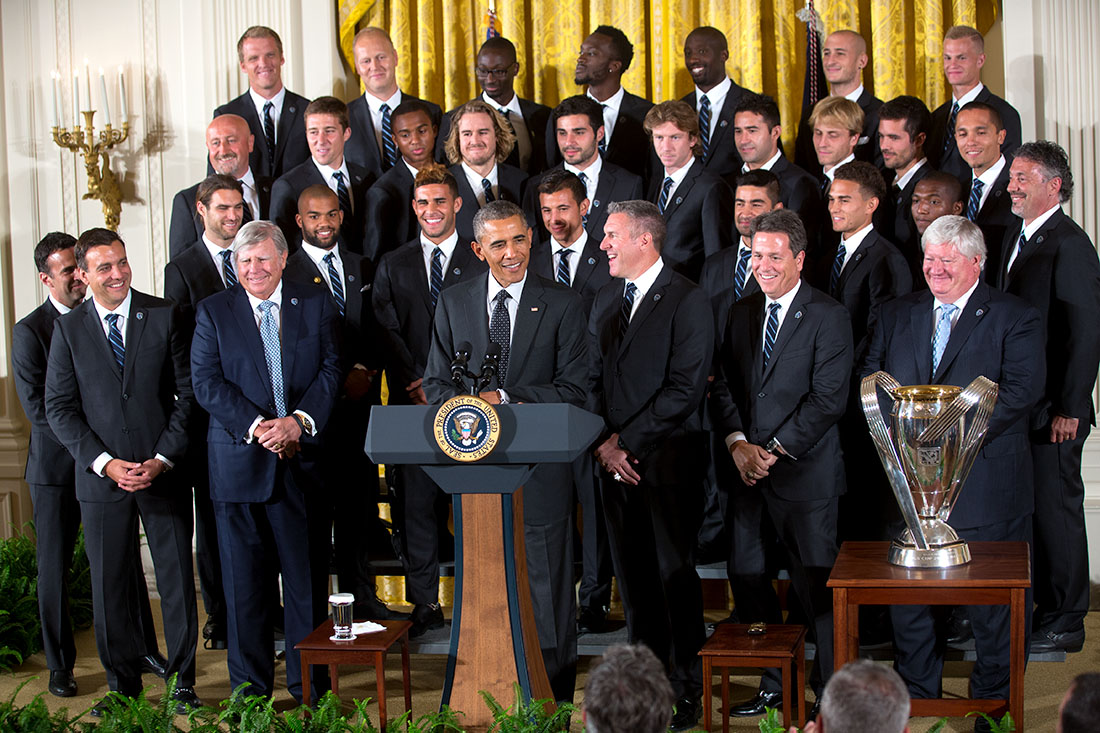
For decades, the question of “who won MLS” was answered strictly on the pitch, decided by a singular goal in a chilly November or December final. However, in the modern era of professional sports as a high-stakes asset class, the true winners of Major League Soccer (MLS) are not just the players holding a silver trophy, but the investors, media giants, and stakeholders who have engineered one of the most significant financial turnarounds in North American sports history.
To understand who truly won MLS, one must look past the final score and into the balance sheets. The league has transitioned from a struggling entity that nearly collapsed in 2001 to a financial powerhouse defined by soaring valuations, a revolutionary media rights deal, and a global branding strategy that has attracted the greatest individual talent in the history of the sport.
The Valuation Revolution: From Survival to Billion-Dollar Assets
The most quantifiable way to determine who won MLS is to examine the equity growth of the league’s original and expansion franchises. In the early 2000s, MLS was a consolidated entity struggling to find owners willing to take on the risk of a niche sport. Today, the league is a playground for venture capitalists, tech moguls, and institutional investors.
The Escalation of Expansion Fees
The trajectory of expansion fees serves as the ultimate benchmark for the league’s financial success. In 2005, Real Salt Lake entered the league for a fee of approximately $7.5 million. By the time Toronto FC joined in 2007, the price had risen to $10 million. While these figures were respectable for the time, they pale in comparison to the current market.
The entry of San Diego FC, scheduled to begin play in 2025, involved a staggering expansion fee of $500 million. This 6,500% increase over two decades represents a level of capital appreciation rarely seen in traditional investment vehicles. The “winners” here are the early-mover owners—families like the Hunts and Krafts—and later strategic investors who bought in during the $100 million to $200 million window. They have seen their initial outlays transform into billion-dollar valuations, outperforming the S&P 500 and most real estate portfolios over the same period.
Capital Appreciation and Equity Growth
According to financial analysts, the average MLS team is now valued at over $600 million, with top-tier clubs like Los Angeles FC (LAFC) and Inter Miami CF crossing the $1 billion threshold. This appreciation is driven by the league’s “single-entity” structure, which mitigates individual club risk and ensures that as the league’s brand grows, every owner’s equity rises in tandem. For the private equity firms now allowed to take minority stakes in these clubs, MLS has become a premier “growth” asset—a way to diversify portfolios with a sports property that has a younger demographic and more international upside than the aging viewership of traditional “Big Four” leagues.
The Media Rights Shift: How the Apple Deal Rewrote the Playbook
In the world of sports finance, content is the ultimate currency. For years, MLS was hindered by a fragmented media landscape, with games spread across various cable networks and local regional sports networks (RSNs) that often utilized “blackout” restrictions. In 2022, the league made a gamble that changed the financial landscape of the sport: a 10-year, $2.5 billion partnership with Apple.
Eliminating Blackouts and Centralizing Revenue
The Apple TV deal represents a shift from a traditional linear television model to a direct-to-consumer (DTC) streaming model. By moving all matches to the “MLS Season Pass” on the Apple TV app, the league effectively eliminated the logistical headache of local blackouts. From a business perspective, this centralizes revenue and allows the league to control its data.
The winners in this scenario are twofold. First, Apple has secured a decade of exclusive, high-quality live content to drive its services revenue. Second, the league has secured a guaranteed floor of $250 million per year, plus a revenue-sharing component once certain subscription thresholds are met. This move decoupled MLS from the collapsing RSN model that is currently threatening the balance sheets of MLB and NBA franchises.
The Subscription-Based Model as a Recurring Revenue Stream
Unlike traditional ad-supported broadcasts, the subscription model provides a predictable, recurring revenue stream. This financial stability is highly attractive to lenders and institutional investors. It allows clubs to project long-term budgets with greater accuracy, funding everything from youth academies to high-profile “Designated Player” signings. The Apple deal essentially turned MLS from a “television show” into a “software service,” matching the league’s tech-forward identity with its primary revenue engine.
The Messi Dividend: Measuring the Impact of a Global Asset
While league-wide structures provide the foundation, the arrival of Lionel Messi at Inter Miami CF in 2023 acted as a massive financial accelerant. The “Messi Effect” is not just a marketing phenomenon; it is a case study in how a single human asset can pivot the economics of an entire industry.

Ticket Yields and Secondary Market Dynamics
Immediately following Messi’s signing, ticket prices for both home and away matches surged by over 400% in many markets. This created a windfall not just for Inter Miami, but for every club in the league. When Inter Miami travels, the host team often sees a single-match revenue total that can exceed several other home games combined.
For the “Money” niche, the fascinating aspect of the Messi deal was its structure. Reports indicate that Messi’s compensation includes not just a salary, but a share of the revenue generated from new international subscriptions to MLS Season Pass and a share of Adidas’s profit increases. This performance-based, equity-adjacent compensation model is more akin to a corporate merger than a standard athlete contract.
Global Brand Expansion and Jersey Sales
The financial “win” also extends to the league’s commercial partners. Adidas, the league-wide kit sponsor, saw an unprecedented global demand for MLS merchandise. For the first time, MLS jerseys became a common sight in London, Tokyo, and Buenos Aires. This global reach increases the “terminal value” of the league. If MLS can convert even a fraction of Messi’s global followers into permanent league consumers, the long-term ROI on his signing will be measured in the billions, not millions.
Real Estate and Infrastructure: Winning the Land Game
A hidden but vital component of “who won MLS” is found in the dirt. One of the league’s most successful financial strategies has been the mandate for “soccer-specific stadiums.” By moving out of cavernous NFL venues and into purpose-built, downtown stadiums, MLS clubs have transformed themselves into real estate developers.
Soccer-Specific Stadiums as Economic Anchors
Stadiums like LAFC’s BMO Stadium or the planned New York City FC stadium in Willets Point serve as anchors for broader mixed-use developments. These projects often include retail, residential, and office spaces that generate year-round revenue, independent of the 17-19 home games played each season.
The winners here are the ownership groups who have secured long-term ground leases and tax incentives in rapidly gentrifying urban corridors. These stadiums aren’t just places to play sports; they are appreciating real estate assets that provide collateral for further business expansion. As urban land values in major US cities continue to climb, the real estate portfolio of MLS may eventually rival the value of the teams themselves.
Tax Incentives and Public-Private Partnerships
Many MLS clubs have successfully navigated the complexities of public-private partnerships. By positioning soccer as a community-building tool for a diverse, younger population, owners have secured favorable financing and infrastructure support from municipal governments. While controversial in some circles, from a purely financial standpoint, these deals represent a significant win for the private capital behind the clubs, shifting a portion of the infrastructure cost to the public while retaining the majority of the upside.
The Future Outlook: Is MLS a Sustainable Financial Asset Class?
As the league looks toward the 2026 FIFA World Cup, the question remains whether this financial trajectory is sustainable or if the league is in a valuation bubble.
Managing the Wage-to-Revenue Ratio
One of the primary risks in professional sports is “wage sprawl”—the tendency for player salaries to outpace revenue growth. MLS has historically managed this through a strict salary cap and the “Designated Player” rule, which allows for top-end talent without bankrupting the middle of the roster. To remain a financial winner, the league must continue to balance the need for world-class stars with the fiscal discipline that ensures all 30 (and eventually more) teams remain solvent.

The Potential for Institutional Investment and Private Equity
The final evolution of the MLS “Money” story is the entry of institutional capital. In recent years, the league changed its rules to allow private equity firms, such as Ares Management and Silver Lake, to invest in clubs. This institutional validation suggests that the “smart money” views MLS not as a hobbyist’s pursuit, but as a legitimate institutional asset class.
The true winners of MLS are those who recognized early on that American soccer was not just a game, but an undervalued media and real estate play. As the league approaches the 2026 World Cup on home soil, the financial foundation laid over the last two decades suggests that the biggest “wins” are still to come on the balance sheets of those who dared to invest when the league was at its lowest. In the end, MLS didn’t just win a place in the American sports landscape; it won the confidence of the global financial market.
aViewFromTheCave is a participant in the Amazon Services LLC Associates Program, an affiliate advertising program designed to provide a means for sites to earn advertising fees by advertising and linking to Amazon.com. Amazon, the Amazon logo, AmazonSupply, and the AmazonSupply logo are trademarks of Amazon.com, Inc. or its affiliates. As an Amazon Associate we earn affiliate commissions from qualifying purchases.