
The story of Costco, a global retail behemoth, is not merely about business operations; it is a profound case study in brand building, corporate identity, and the enduring vision of its founders. Understanding who initiated this warehouse club concept provides crucial insights into the brand’s core values, its unique market positioning, and the strategic decisions that shaped its trajectory from a disruptive newcomer to an iconic household name. While often simplified, the founding of Costco involves a dual narrative, merging two distinct yet philosophically aligned entities: Price Club and Costco Wholesale.
The Dual Genesis of a Retail Giant: Price Club and Costco Wholesale
Costco’s lineage is a tale of two pioneering companies that eventually merged to form the modern entity we know today. Each predecessor was founded by visionary leaders who independently identified the potential for a new retail model focused on bulk value and membership. Their combined philosophies laid the groundwork for a corporate identity rooted in efficiency, member loyalty, and a relentless pursuit of value.

Sol Price: The Pioneer of Warehouse Retail
The true godfather of the warehouse club concept was Solomon “Sol” Price. In 1976, Price, a seasoned retailer with a history of innovation (he founded FedMart, an early discount department store), launched Price Club in San Diego, California. Price’s genius lay in recognizing an underserved niche: small businesses looking to purchase goods in bulk at wholesale prices, directly from a no-frills warehouse environment. This model cut out traditional distributors, significantly reducing costs and allowing for lower prices.
Price Club was revolutionary in several ways that would later define the modern Costco brand. It introduced the concept of a membership fee, which not only provided a recurring revenue stream but also cultivated a sense of exclusivity and commitment from its customers. The warehouses themselves were spartan, designed for efficiency rather than aesthetics, reinforcing the brand’s commitment to value over frills. Sol Price’s philosophy was simple yet profound: keep costs low, markups minimal, and pass the savings directly to the customer. This direct, transparent approach to value became a foundational pillar of the brand identity that would eventually carry Costco to global prominence. His focus on high volume and low margins was a radical departure from conventional retail, establishing a distinct brand strategy that prioritized long-term customer relationships over immediate profit maximization. Price’s influence extended beyond mere business mechanics; he instilled a culture of frugality, fairness, and a deep understanding of customer needs, which were critical components of Price Club’s nascent corporate identity.
James Sinegal and Jeffrey Brotman: Forging the Costco Vision
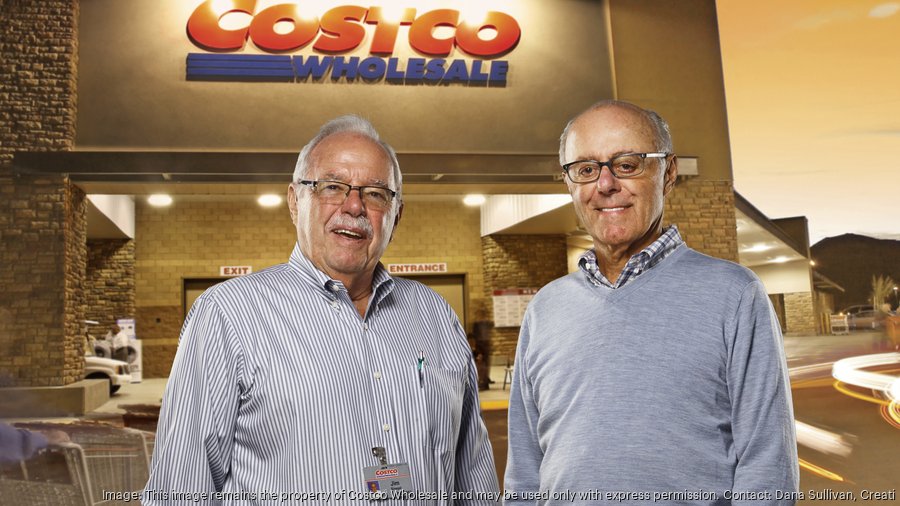
While Sol Price was innovating in Southern California, two other astute businessmen were observing the retail landscape and envisioning their own take on the warehouse model. James “Jim” Sinegal, a protégé of Sol Price who had worked with him at FedMart and Price Club, along with Seattle attorney Jeffrey Brotman, co-founded Costco Wholesale Corporation in Seattle, Washington, in 1983.
Sinegal brought an invaluable operational expertise and a deep understanding of Price’s successful model, having seen it work firsthand. Brotman, on the other hand, contributed vital legal, financial, and strategic acumen, particularly in securing initial funding and navigating the complexities of establishing a new venture. Their vision for Costco Wholesale was distinct yet complementary to Price Club’s. They aimed to broaden the appeal beyond just small businesses to include a wider range of qualified members, including individuals. This expansion of the target demographic was a key strategic move in shaping the Costco brand for a broader consumer base.
From its inception, Costco’s brand strategy emphasized quality products at competitive prices, a focus on member satisfaction, and a lean operational structure. Sinegal, in particular, was a staunch advocate for fair wages and benefits for employees, believing that a well-compensated workforce was more productive and contributed positively to the overall brand experience. This commitment to employee welfare became another cornerstone of Costco’s corporate identity, differentiating it from many other retailers and fostering a strong internal culture that translated into excellent customer service. The independent establishment of Costco Wholesale in the same vein as Price Club underscores the potency of the warehouse concept, attracting visionary leaders capable of building enduring brands around a compelling value proposition.
Crafting a Disruptive Corporate Identity: The Core Philosophy
The success of both Price Club and Costco Wholesale was not accidental; it was the result of deliberately crafted corporate identities built on revolutionary retail philosophies. These philosophies challenged conventional wisdom and established a unique brand positioning that prioritized efficiency, member value, and operational excellence over traditional retail aesthetics and high-margin strategies.
Price Club’s Innovation: Membership and Bulk Value
Price Club’s brand identity was forged around its foundational innovations: the membership model and the bulk-value proposition. The membership fee, typically an annual charge, served as a psychological barrier, ensuring that only committed customers entered. This commitment, in turn, allowed Price Club to offer incredibly low prices, fostering a strong sense of value and exclusivity among its members. The brand promised an “insider” advantage, where members gained access to wholesale prices traditionally reserved for businesses.
The physical design of Price Club warehouses—large, unadorned, and functional—was a direct manifestation of its brand strategy. By eschewing expensive fixtures and elaborate displays, the company communicated its focus on the product and its price, not on the shopping experience itself. This “no-frills” approach became a powerful brand differentiator, clearly signaling to consumers that Price Club’s value proposition was about substantive savings, not superficial appeal. This deliberate minimalism reinforced trust and transparency, key elements in building a brand based on cost-efficiency. It was an anti-marketing strategy that ironically became a powerful marketing tool, drawing in customers who appreciated the straightforward, honest approach to commerce.
Costco’s Focus: Quality, Efficiency, and Employee Welfare
Costco Wholesale, under Sinegal and Brotman, refined and expanded upon these principles, building a brand identity that added layers of quality and a strong ethical dimension. While maintaining the core tenets of membership and bulk value, Costco placed a significant emphasis on product curation, ensuring that the limited selection of items met high standards of quality. This focus helped mitigate the perception that “cheap” meant “low quality,” a common challenge for discount retailers. Costco’s brand messaging implicitly communicated that members were getting premium products at exceptional value.
Furthermore, Sinegal’s commitment to employee welfare became an intrinsic part of Costco’s corporate identity. By offering industry-leading wages and benefits, Costco cultivated a highly motivated and loyal workforce. This internal brand strength translated externally into excellent customer service and a positive brand image. Employees, feeling valued, became brand ambassadors, contributing to a consistently pleasant and efficient shopping experience. This commitment to people – both customers and employees – underpinned Costco’s brand positioning as a responsible and trustworthy enterprise, enhancing its brand equity far beyond mere price points. The brand implicitly told a story of mutual benefit, where smart shopping supported a fair business, a powerful message in an increasingly conscious consumer market.
Merging Philosophies: A Synergistic Brand Evolution

The culmination of these separate but parallel journeys occurred in 1993 with the merger of Price Club and Costco Wholesale, forming Price/Costco. This was a pivotal moment for both companies and for the future of the warehouse club industry. The merger was not just a business transaction; it was a strategic alignment of two strong brands with complementary strengths. Sol Price’s pioneering spirit and established model met Sinegal and Brotman’s innovative refinement and broader market appeal.
The merged entity had to carefully integrate two corporate cultures and brand identities. Ultimately, the Price/Costco name was streamlined to simply Costco Wholesale Corporation in 1997, signifying a unified brand vision. The enduring brand strategy post-merger skillfully blended the best practices from both progenitors: Price’s unwavering commitment to ultra-low markups and operational frugality, combined with Costco’s emphasis on broader membership, curated quality, and a strong employee culture. This synergistic brand evolution allowed Costco to consolidate its market leadership, leverage economies of scale, and project a unified, powerful brand image of unmatched value and trust. The successful integration served as a powerful case study in managing brand consolidation and creating a stronger, more resonant corporate identity from a combined heritage.
The Founders’ Enduring Legacy: Shaping Costco’s Brand Strategy
The vision and philosophies of Sol Price, James Sinegal, and Jeffrey Brotman continue to profoundly influence Costco’s brand strategy and corporate identity even today. Their foundational principles are not just historical footnotes; they are active components of the company’s operational model, marketing approach, and member relationship management.
The “Treasure Hunt” Experience and Member Loyalty
One of the most distinctive elements of Costco’s brand strategy, directly traceable to its founders’ approach, is the “treasure hunt” shopping experience. Unlike traditional retailers with fixed inventory, Costco deliberately limits its stock-keeping units (SKUs) and frequently rotates non-staple items. This creates a sense of urgency and excitement, encouraging members to visit often and purchase items they might not have initially planned to buy. This strategy directly reinforces member loyalty, making each visit a potentially unique discovery. The founders understood that the experience of finding a great deal was as important as the deal itself in building long-term member engagement.
This experience is intrinsically linked to the membership model. By paying an annual fee, members feel invested in the Costco ecosystem, and the “treasure hunt” provides an additional perceived return on that investment. It’s a subtle yet powerful psychological tool that strengthens the brand’s bond with its clientele, transforming mere customers into loyal community members. This approach positions Costco not just as a store, but as a destination offering exclusive benefits, a key aspect of its overall brand narrative.
Private Label Power: The Kirkland Signature Success Story
The creation and massive success of the Kirkland Signature private label brand is another direct legacy of the founders’ focus on value and quality. Launched in 1995, Kirkland Signature was born from the imperative to offer members high-quality alternatives at even lower prices, while simultaneously bolstering Costco’s brand equity. The founders’ initial commitment to curation and value meant that any private label had to meet incredibly high standards, rivaling or even surpassing national brands.
Kirkland Signature has evolved into a brand powerhouse in its own right, synonymous with quality and value. It serves as a powerful testament to Costco’s brand promise. When members purchase a Kirkland Signature product, they are implicitly trusting Costco’s judgment on quality and price, reinforcing their loyalty to the parent brand. This strategic move not only increased profitability but also deepened the relationship with members, positioning Costco as a curator and guarantor of excellence. The development of such a strong private label is a masterclass in brand extension, demonstrating how a retail brand can leverage its trust and reputation to create its own successful product lines. It’s a testament to the founders’ vision of controlling the value chain to maximize member benefit and build brand differentiation.
A Culture of Value: Operational Excellence as a Brand Pillar
The founders ingrained a culture of operational excellence and value-centricity throughout Costco. This isn’t just about low prices; it’s about a systematic approach to business that minimizes waste, maximizes efficiency, and translates those savings into tangible benefits for members. From the sparse warehouse aesthetic to the efficient inventory management and limited product selection, every operational decision reinforces Costco’s brand promise of superior value.
This operational philosophy serves as a critical pillar of Costco’s corporate identity. It’s how the brand lives its values internally and externally. The relentless focus on cost control, ethical sourcing, and employee satisfaction are all part of a cohesive brand strategy that prioritizes long-term sustainability over short-term gains. This enduring culture ensures that Costco consistently delivers on its brand promise, fostering trust and predictability—two invaluable assets in building a resilient brand in the competitive retail landscape. The founders understood that a strong brand is not just about advertising, but about consistent, reliable delivery of core values through every facet of the business.
Costco Today: A Testament to Foundational Branding Principles
Today, Costco stands as a global testament to the foresight and strategic branding acumen of its founders. With hundreds of warehouses worldwide and millions of loyal members, its continued success is deeply rooted in the foundational principles established by Sol Price, James Sinegal, and Jeffrey Brotman.
Sustaining the Core Identity in a Dynamic Market
In an era of rapid technological change and shifting consumer behaviors, Costco has managed to sustain its core brand identity by remaining steadfast to its original value proposition. While other retailers have struggled to adapt, Costco’s emphasis on in-person “treasure hunts,” bulk purchases, and membership exclusivity has retained its appeal. The brand has selectively integrated e-commerce, but its primary identity remains firmly anchored in the physical warehouse experience, which is a direct legacy of its founders’ brick-and-mortar vision. This commitment to its original brand essence, while cautiously embracing new channels, has allowed Costco to maintain a distinct and competitive position in the market.
Its unwavering commitment to its employee-friendly culture and fair wages, another cornerstone of the founders’ vision, continues to differentiate it as an employer and positively reinforces its external brand image. In a world where corporate social responsibility is increasingly important to consumers, Costco’s long-standing ethical approach to business, stemming from its origins, positions it favorably.
The Founder’s Imprint on Modern Brand Management
The story of Costco’s founding serves as an invaluable case study for modern brand management. It illustrates that a compelling corporate identity isn’t just about logos or marketing campaigns, but about a deeply ingrained philosophy that guides every aspect of the business. The founders understood that true brand strength comes from delivering consistent value, fostering loyalty through unique experiences, and maintaining an authentic connection with both employees and customers.
From Sol Price’s pioneering warehouse concept to James Sinegal and Jeffrey Brotman’s refinements and leadership, the blueprint for Costco’s enduring brand was meticulously crafted through strategic vision, operational discipline, and a human-centric approach to business. Their legacy is not just a company that sells goods in bulk; it is a brand built on trust, value, and a unique retail experience that continues to resonate with millions worldwide. The founders of Costco, through their innovative spirit and unwavering principles, created not just a business, but an indelible brand that continues to thrive by staying true to its origins.
aViewFromTheCave is a participant in the Amazon Services LLC Associates Program, an affiliate advertising program designed to provide a means for sites to earn advertising fees by advertising and linking to Amazon.com. Amazon, the Amazon logo, AmazonSupply, and the AmazonSupply logo are trademarks of Amazon.com, Inc. or its affiliates. As an Amazon Associate we earn affiliate commissions from qualifying purchases.