
The identity of the creator of Bitcoin is perhaps the greatest mystery of the digital age. In October 2008, a paper titled “Bitcoin: A Peer-to-Peer Electronic Cash System” was posted to a cryptography mailing list by an individual or group using the pseudonym Satoshi Nakamoto. While the world often focuses on the financial implications of this invention, the story of who started Bitcoin is fundamentally a narrative of technological evolution, cryptographic breakthroughs, and the culmination of decades of computer science research.
The Cypherpunk Genesis: Theoretical Foundations of Peer-to-Peer Cash
Bitcoin did not emerge from a vacuum. To understand who started Bitcoin, one must first understand the technical landscape of the 1990s and early 2000s. The “Cypherpunk” movement—a group of technologists and activists advocating for widespread use of strong cryptography and privacy-enhancing technologies—provided the intellectual and technical fertile ground for Nakamoto’s work.

The Double-Spending Dilemma and Previous Failures
Before Bitcoin, the primary obstacle to creating a digital currency was the “double-spending” problem. In a digital environment, a file can be easily copied. If a digital token represents value, what prevents a user from sending the same token to two different recipients simultaneously? Early attempts at digital cash, such as David Chaum’s DigiCash in the 1990s, relied on a central authority to verify transactions and prevent fraud. However, these centralized systems were vulnerable to shut-downs and censorship. The technical challenge Nakamoto faced was creating a distributed system where no single entity held the ledger, yet everyone could agree on the order of transactions.
Hashcash and the Proof-of-Work Breakthrough
Nakamoto stood on the shoulders of giants. One of the most critical components of Bitcoin’s architecture is “Proof-of-Work” (PoW). This concept was originally proposed by Adam Back in 1997 through a system called Hashcash. Hashcash was designed to limit email spam and denial-of-service attacks by requiring a small amount of computational work from the sender. Nakamoto adapted this technical mechanism to secure the Bitcoin ledger. By requiring miners to solve complex mathematical puzzles, the network ensures that altering the transaction history would require an astronomical amount of computing power, making the system practically immutable.
Satoshi Nakamoto: The Pseudonymous Visionary and the Whitepaper
While we do not know the real name behind Satoshi Nakamoto, their technical contribution is codified in the nine-page whitepaper that changed the course of software history. This document was not a business plan; it was a technical specification for a decentralized protocol.
The 2008 Whitepaper: A Technical Blueprint
The Bitcoin whitepaper addressed the “Byzantine Generals Problem”—a classic dilemma in computer science where multiple parties must agree on a single strategy without a trusted central party, even if some participants are unreliable or malicious. Nakamoto’s solution was the blockchain: a time-stamped chain of blocks containing transaction data, linked by cryptographic hashes. This structure ensured that the data was transparent and chronological. The whitepaper outlined the incentive structure, the scarcity of the 21 million supply limit, and the difficulty adjustment algorithm that keeps the network stable regardless of how much hardware is dedicated to it.
The Genesis Block and the Times Headline
On January 3, 2009, Nakamoto launched the network by mining the “Genesis Block” (Block 0). Embedded in the coinbase parameter of this first block was the text: “The Times 03/Jan/2009 Chancellor on brink of second bailout for banks.” While often interpreted as a political statement, from a technical perspective, it served as a timestamp to prove that the block was not pre-mined before that date. This launch marked the transition from a theoretical whitepaper to a living, breathing software ecosystem.
The Evolution of the Bitcoin Core Software
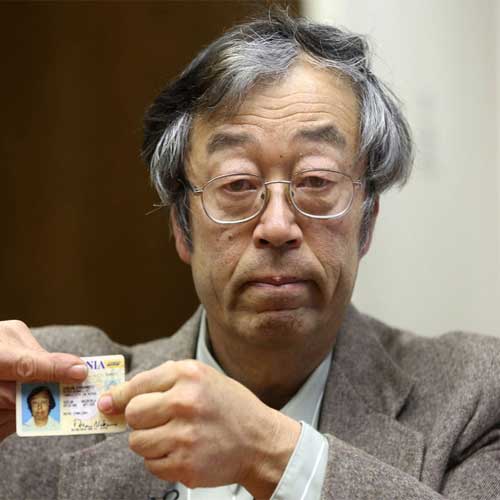
Who started Bitcoin is a question that extends beyond Nakamoto. Once the initial code was released, it became an open-source project. Nakamoto was the primary developer for the first two years, but they did not work alone. The development of the software, now known as Bitcoin Core, involved a collaborative effort that refined the original code’s efficiency and security.
SourceForge, Mailing Lists, and Early Code Contributions
In the early days, Nakamoto communicated through the Bitcointalk forum and a SourceForge repository. One of the earliest and most significant contributors was Hal Finney, a legendary programmer and cryptographic pioneer. Finney was the recipient of the first-ever Bitcoin transaction from Nakamoto and played a vital role in debugging the early software. Other early developers like Mike Hearn, Gavin Andresen, and Martti Malmi helped Nakamoto refine the protocol, adding features like the UI and improving the underlying peer-to-peer networking code. This period demonstrated that while Nakamoto provided the seed, the “who” of Bitcoin’s start quickly expanded to include a community of elite software engineers.
The Transition to Community-Driven Development
In late 2010, Satoshi Nakamoto famously stepped away from the project, sending a final email stating they had “moved on to other things.” They handed over the source code repository and the alert key (a system to broadcast messages to the network) to Gavin Andresen. This transition was a pivotal moment in tech history. It proved that the software was truly decentralized; the departure of its creator did not cause the system to fail. Instead, it empowered a global team of “Maintainers” and “Contributors” who continue to update the code today via the GitHub repository, ensuring compatibility and security through a rigorous process of peer review.
Cryptographic Security and the Network’s Resilience
The technical genius of the person who started Bitcoin lies in the specific choice of cryptographic primitives. These choices have allowed the network to remain unhacked for over fifteen years, a feat virtually unheard of in the software world.
SHA-256 and the Security of the Ledger
Nakamoto selected the SHA-256 (Secure Hash Algorithm 256-bit) as the primary hashing function. Developed by the NSA, SHA-256 is a one-way cryptographic function that is computationally easy to perform in one direction but impossible to reverse. This algorithm is used for everything from creating addresses to securing the blocks. The technical robustness of this choice means that as of 2024, the total computing power of the Bitcoin network (hashrate) is so immense that it exceeds the combined power of the world’s top supercomputers, making the ledger the most secure database in existence.
The Significance of Open Source Transparency
Unlike proprietary financial software, Bitcoin’s code is entirely transparent. Anyone with an internet connection can inspect the source code, verify the transaction history, and run their own node. This transparency was a deliberate technical choice by Nakamoto. By making the project open-source, the creator ensured that the security of the network did not rely on secrecy but on the mathematical certainty of the code itself. This shifted the paradigm of trust from human institutions to algorithmic proofs.
The Legacy of a Disappearing Founder
The mystery of who started Bitcoin is perhaps its greatest technical feature. By remaining anonymous and eventually disappearing, Satoshi Nakamoto solved a problem that plagues almost every other technology: the “founder effect.”
Why Anonymity Was a Technical Necessity
If the creator of Bitcoin were a known individual or a corporation, the project would have a single point of failure. Governments could pressure the founder to change the code, or the founder’s personal flaws could undermine the software’s integrity. By stepping away, Nakamoto ensured that Bitcoin became “neutral protocol” rather than a “product.” The lack of a central figurehead forced the network to rely on consensus-based upgrades, such as the SegWit (Segregated Witness) update in 2017 and the Taproot upgrade in 2021. These technical milestones were achieved through community agreement, proving the viability of decentralized governance.

From Individual Code to Global Protocol
Ultimately, the question of “who started Bitcoin” has two answers. The first is Satoshi Nakamoto, the individual or group who wrote the original C++ code and solved the double-spending problem using Proof-of-Work. The second answer is the global community of developers, node operators, and miners who have maintained, secured, and expanded that code over the last decade.
Today, Bitcoin exists as a robust piece of software infrastructure that operates 24/7 without a CEO, a marketing department, or a central server. It is the first successful implementation of a decentralized autonomous system, and its technical origins continue to inspire the next generation of innovations in distributed ledger technology and artificial intelligence security. The creator’s departure was not an abandonment, but the final, essential step in launching a truly autonomous technology.
aViewFromTheCave is a participant in the Amazon Services LLC Associates Program, an affiliate advertising program designed to provide a means for sites to earn advertising fees by advertising and linking to Amazon.com. Amazon, the Amazon logo, AmazonSupply, and the AmazonSupply logo are trademarks of Amazon.com, Inc. or its affiliates. As an Amazon Associate we earn affiliate commissions from qualifying purchases.