
The question “who owns the stock market?” is more nuanced than it initially appears, often conjuring images of powerful moguls or shadowy institutions pulling the strings. In reality, the ownership of the stock market is a sprawling, multi-faceted tapestry woven from countless individual and institutional threads. It’s not a single entity or a centralized power structure; rather, it’s a dynamic ecosystem of diverse participants, each holding a fractional stake in the world’s corporations. Understanding this complex web of ownership is crucial for anyone seeking to grasp the fundamentals of modern finance, investing, and economic power. Far from being owned by one singular force, the stock market is a vibrant marketplace where ownership is constantly shifting, reflecting global economic trends, investment strategies, and the collective decisions of millions.
The Decentralized Nature of Corporate Ownership
At its core, the stock market represents a collection of publicly traded companies, and owning a share of stock means owning a small piece of one of these companies. This fundamental concept underpins the decentralized nature of market ownership. There is no single “owner” of the entire stock market, just as there is no single owner of all real estate in a country. Instead, ownership is distributed among a vast array of shareholders, from individual retail investors to massive institutional behemoths.
Dispelling Common Misconceptions
One common misconception is that a handful of ultra-wealthy individuals or a select group of investment banks control the entire market. While these entities certainly wield significant influence due to the sheer volume of their assets, their ownership is still a fraction of the whole. They are major players, but they are not the sole proprietors. Another misconception is that “the government” owns the stock market. While governments can and do participate in markets through sovereign wealth funds or state-owned enterprises, and they regulate financial markets, they do not own the market itself in any direct sense. The stock market is primarily a private-sector phenomenon, driven by supply and demand and governed by regulatory frameworks designed to ensure fairness and transparency, not central ownership.
What Constitutes Ownership in Publicly Traded Companies
When you buy a share of stock, you become a part-owner of the company that issued that stock. This ownership comes with certain rights, most notably the right to a portion of the company’s profits (dividends, if paid) and the right to vote on certain corporate matters, such as electing the board of directors. These rights, however small per share, collectively empower shareholders to influence corporate governance and strategic direction. The aggregate of all outstanding shares for all publicly traded companies forms the “stock market,” and thus, the owners of these shares are the owners of the stock market. This distributed ownership model is a cornerstone of capitalism, allowing for the broad participation in economic growth and wealth creation.
The Principal Players: Who Holds the Reins?
While ownership is distributed, it’s far from evenly spread. Certain categories of investors hold significantly larger portions of the market, giving them substantial influence over corporate policies and market trends. These principal players can be broadly categorized into institutional investors, retail investors, corporate insiders, and foreign investors.
Institutional Investors: The Giants of the Market
Institutional investors are the behemoths of the stock market, collectively owning the largest share of public companies. These are professional organizations that manage large pools of money on behalf of others. Their sheer scale means their investment decisions can significantly move market prices and influence corporate behavior.
Pension Funds
Pension funds manage retirement savings for millions of employees. Their long-term investment horizon and need for stable returns lead them to invest heavily in a diversified portfolio of stocks. They are often passive investors, holding large blocks of shares in thousands of companies, but their cumulative voting power is immense.
Mutual Funds and Exchange-Traded Funds (ETFs)
These funds pool money from numerous investors to purchase a diversified portfolio of securities. Mutual funds are actively managed by fund managers who make investment decisions, while ETFs often track a specific index (like the S&P 500), offering passive exposure to broad market segments. Both represent significant institutional ownership, allowing individual investors to indirectly own small pieces of thousands of companies. The rise of passive ETFs, in particular, has shifted a considerable portion of market ownership towards broad index tracking.
Hedge Funds
Hedge funds are privately managed investment funds that employ a variety of complex strategies to generate high returns, often taking on greater risks than traditional funds. While typically less transparent than mutual funds, they hold significant capital and can be active, sometimes aggressive, shareholders, pushing for corporate changes.
Sovereign Wealth Funds
Owned by national governments, these funds invest a country’s surplus reserves for long-term growth. Countries like Norway, Singapore, and Abu Dhabi have some of the largest sovereign wealth funds, holding vast stakes in global corporations, often with a strategic national interest in mind.
Retail Investors: The Power of the Crowd
Retail investors are individual investors who buy and sell securities for their own accounts, typically through brokerage firms. While each individual’s stake is usually small compared to institutional investors, their collective buying and selling power can significantly impact market dynamics, especially in times of high volatility or specific market trends (e.g., meme stocks). The advent of online brokerage platforms and commission-free trading has democratized access to the stock market, empowering more individuals to become direct owners of public companies.
Corporate Insiders and Founders: Skin in the Game
Corporate insiders include executives, directors, and major shareholders (typically owning more than 10% of a company’s stock). Founders often retain significant ownership, particularly in newer companies. These individuals have a direct interest in the company’s success, as their personal wealth is tied to its stock performance. Insider ownership can signal confidence in the company’s future, though their trading activities are highly regulated to prevent unfair advantages.
Foreign Investors: A Global Perspective
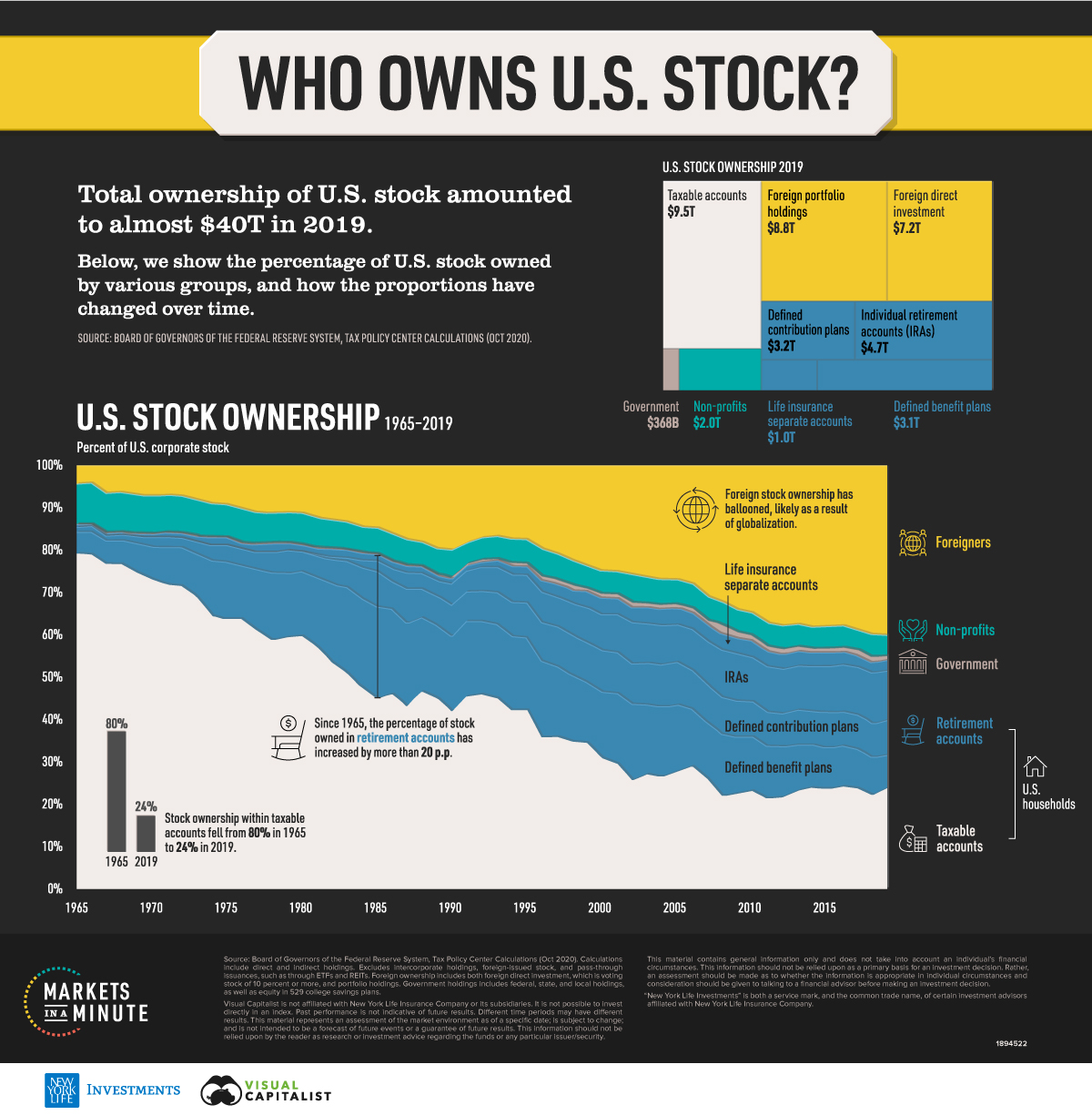
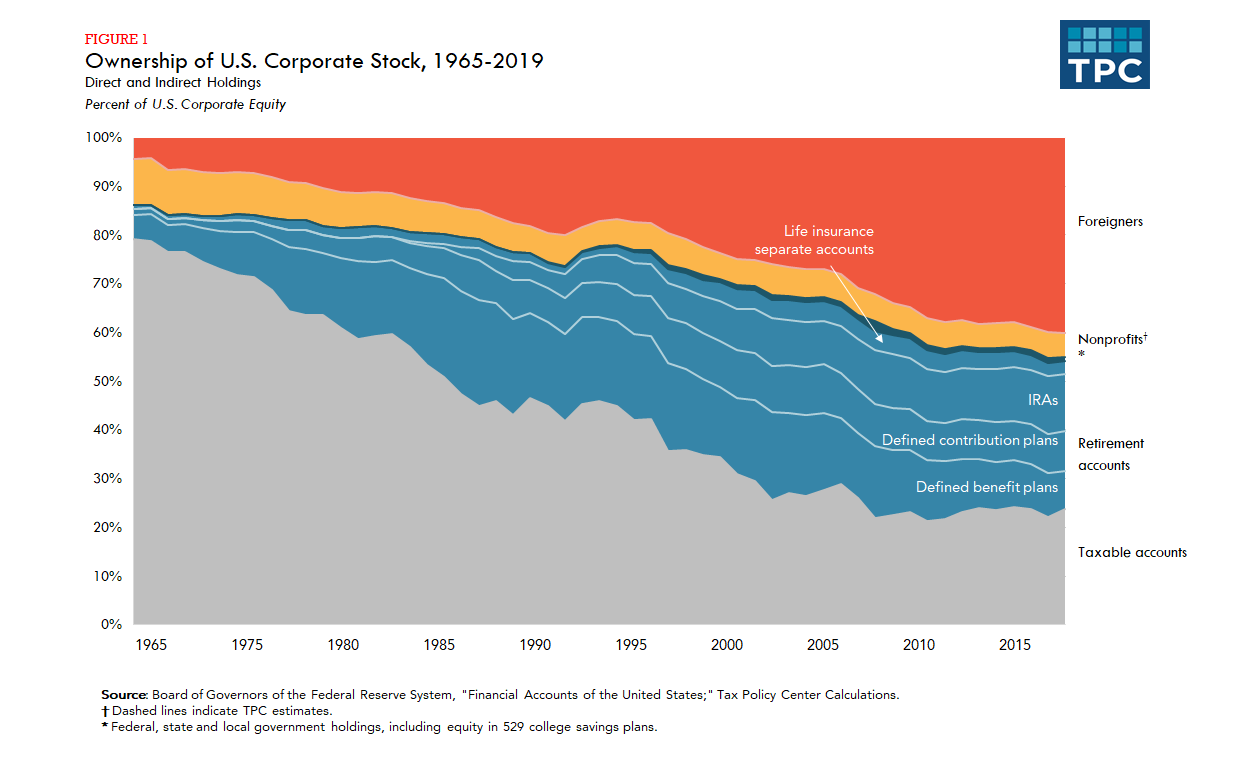
The ownership of the stock market is not confined by national borders. Foreign individuals, institutions, and governments invest heavily in markets outside their home countries, seeking diversification, higher returns, or strategic influence. This global capital flow integrates markets worldwide, making stock market ownership a truly international affair. A significant portion of major stock markets, like the US market, is owned by non-domestic entities.
Understanding Ownership Structures and Their Impact
The way ownership is structured and exercised has profound implications for corporate governance, market stability, and economic development. Different types of ownership manifest different levels of engagement and influence.
Passive vs. Active Ownership: Different Strategies, Different Influences
Passive ownership, prevalent among index funds and many pension funds, involves holding a diversified portfolio of stocks simply to track a market index. These investors typically don’t actively engage with management or push for corporate changes, relying on the overall market’s growth. Their primary influence comes from their continuous demand for shares, which helps maintain market liquidity and valuation.
Active ownership, on the other hand, involves investors who research, select, and often closely monitor their holdings. Active institutional investors (like some hedge funds or activist funds) and large individual shareholders may engage with company management, propose resolutions, or even launch proxy battles to effect strategic changes, improve governance, or unlock shareholder value. Their influence is direct and often geared towards specific corporate outcomes.
The Role of Proxy Voting and Shareholder Activism
Shareholders, regardless of their size, have the right to vote on key company matters. For large institutional investors, proxy voting—voting their shares on company proposals—is a significant mechanism for exerting influence. This can range from electing board members to approving mergers or executive compensation. Shareholder activism involves investors taking an active role to influence corporate policy or strategy, often through public campaigns, shareholder proposals, or even attempts to replace management. This dynamic demonstrates that ownership is not just about financial returns but also about governance and accountability.
Concentrated vs. Diversified Ownership: Risks and Rewards
The degree to which ownership is concentrated also plays a role. In companies with concentrated ownership, where a few individuals or institutions hold a majority of shares, these owners can exert significant control, potentially streamlining decision-making but also raising concerns about minority shareholder rights. Conversely, diversified ownership, typical of large, mature public companies, spreads control among many shareholders, often leading to more balanced governance structures but potentially slower decision-making due to differing interests. Both structures have unique risks and rewards for investors and the companies themselves.
The Evolving Landscape of Market Ownership
The landscape of stock market ownership is not static; it is constantly evolving, shaped by technological advancements, regulatory changes, and shifts in investment philosophy. Recent decades have witnessed significant transformations, particularly with the rise of passive investing and the democratization of access to financial markets.
The Rise of Passive Investing and Index Funds
One of the most profound shifts has been the explosive growth of passive investing, primarily through index funds and ETFs. These funds aim to replicate the performance of a market index rather than trying to beat it. As more capital flows into these vehicles, a larger percentage of public companies’ shares are effectively owned by a diverse pool of investors through these collective funds. This shift has implications for corporate governance, as passive investors typically don’t actively engage with management but vote their proxies, often following recommendations from proxy advisory firms. It also concentrates significant voting power in the hands of a few large asset managers who operate these funds.
Democratization of Investing: Accessibility for All
Technological innovation, particularly online brokerage platforms and mobile trading apps, has dramatically lowered the barriers to entry for retail investors. Commission-free trading, fractional share investing, and user-friendly interfaces have made it easier and more affordable for individuals to directly participate in the stock market. This democratization means that a broader segment of the population can become direct owners of corporate America (or global corporations), contributing to a more diversified ownership base and potentially fostering greater financial literacy and wealth creation among ordinary citizens.
Technological Advancements and Trading Platforms
Beyond facilitating retail access, technology has transformed market infrastructure itself. High-frequency trading firms, leveraging advanced algorithms and powerful computing, execute millions of trades per second, contributing significantly to market liquidity and pricing efficiency. Blockchain technology and tokenization are emerging innovations that could potentially redefine how ownership is recorded and transferred in the future, offering new paradigms for fractional ownership and transparency, though their widespread adoption in traditional stock markets is still nascent.
Implications of Stock Market Ownership
The intricate web of stock market ownership has far-reaching implications, influencing everything from national economies to corporate ethics and the distribution of wealth.
Economic Growth and Capital Allocation
The stock market serves as a vital mechanism for capital allocation, directing savings towards productive investments in companies. When investors buy shares, they provide capital to businesses, enabling them to expand, innovate, create jobs, and ultimately drive economic growth. The collective decisions of stock market owners, through their investment choices, determine which industries and companies receive funding, thereby shaping the future direction of the economy. A healthy and dynamic stock market, broadly owned, can be a powerful engine for prosperity.
Corporate Governance and Accountability
The structure of ownership directly impacts corporate governance. When shareholders hold voting rights, they become a crucial check on corporate management. Large institutional owners, in particular, have the power to hold executives accountable for performance, ethical conduct, and strategic decisions. Shareholder activism, enabled by ownership, can force companies to adopt more sustainable practices, improve diversity, or divest from controversial operations. This accountability mechanism is essential for ensuring that corporations operate not just for profit, but also with an eye towards long-term value creation and stakeholder interests.

Wealth Distribution and Inequality
The question of who owns the stock market is inextricably linked to discussions about wealth distribution and economic inequality. As a primary driver of wealth creation in modern economies, stock ownership plays a significant role in how wealth accumulates and is distributed. While direct stock ownership might be concentrated among wealthier households, indirect ownership through pension funds and retirement accounts means that a broader segment of the population has a stake, albeit often unseen. Understanding this distribution is critical for policymakers addressing issues of economic fairness and striving to create opportunities for wealth building across all demographics.
In conclusion, “who owns the stock market?” is a question best answered by understanding that it is a vast, ever-changing collective owned by millions of individuals and thousands of institutions across the globe. From the small retail investor holding a handful of shares to the multi-trillion-dollar pension fund, each participant holds a piece of the global economic pie. This distributed, yet influential, ownership structure is a defining characteristic of modern financial markets, shaping corporate behavior, driving economic progress, and reflecting the diverse interests of investors worldwide.
aViewFromTheCave is a participant in the Amazon Services LLC Associates Program, an affiliate advertising program designed to provide a means for sites to earn advertising fees by advertising and linking to Amazon.com. Amazon, the Amazon logo, AmazonSupply, and the AmazonSupply logo are trademarks of Amazon.com, Inc. or its affiliates. As an Amazon Associate we earn affiliate commissions from qualifying purchases.