
Apple Inc. (AAPL) stands as a colossus in the global economy, not just in technology but as a financial powerhouse. Its market capitalization frequently makes it one of the most valuable companies in the world, a testament to its innovative products, strong brand, and formidable financial performance. Consequently, the ownership of its stock is a matter of significant interest to investors, market analysts, and anyone keen on understanding the mechanics of modern finance. While the question “who owns the most Apple stock” might conjure images of a single individual billionaire, the reality is far more intricate, reflecting the complex, interconnected nature of today’s global financial markets. The lion’s share of Apple’s ownership resides not with individuals, but with vast institutional investors whose holdings collectively represent billions of dollars and millions of shares, shaping not just Apple’s future but influencing broader market trends. This deep dive will unravel the sophisticated tapestry of Apple’s ownership, exploring the major players, their motivations, and the profound financial implications of holding such a significant stake in a titan like Apple.
Understanding Apple’s Ownership Structure
To truly grasp who owns the most Apple stock, one must first comprehend the fundamental structure of a publicly traded company. Apple, like thousands of other corporations, allows its shares to be bought and sold on stock exchanges, making it accessible to a wide array of investors. This public accessibility dictates a diversified ownership landscape, far removed from the private, concentrated ownership models of earlier eras.
The Publicly Traded Entity: Shares and Market Capitalization
When Apple went public, it issued shares to investors, effectively selling fractional ownership stakes in the company. Each share represents a claim on a portion of Apple’s assets and earnings. The total value of all these outstanding shares, calculated by multiplying the current share price by the total number of shares, constitutes Apple’s market capitalization. As of various points, Apple has consistently ranked among the top companies by market cap, often exceeding trillions of dollars. This immense valuation means that even a small percentage of ownership translates into a significant financial holding. For instance, owning just 1% of Apple when its market cap is $3 trillion means a holding worth $30 billion. This scale attracts the largest institutional capital.
Shareholder Categories: Institutional, Individual, and Insider Ownership
Apple’s ownership can broadly be categorized into three main groups, each with distinct characteristics and motivations. Institutional investors are by far the dominant force. This category includes mutual funds, hedge funds, pension funds, insurance companies, and sovereign wealth funds. These entities manage colossal sums of money on behalf of their clients or beneficiaries and typically hold diversified portfolios that include blue-chip stocks like Apple. Individual investors, also known as retail investors, are everyday people who buy shares directly through brokerage accounts. While individually they might hold smaller stakes, their collective activity can still influence market dynamics. Lastly, insider ownership refers to shares held by the company’s executives, board members, and sometimes employees through stock options or restricted stock units. This category is significant because it aligns the interests of the company’s leadership with those of its shareholders. Understanding the interplay between these categories is crucial to identifying the primary holders of Apple stock.
Why Diversified Ownership Matters for Financial Stability
The broad and diversified ownership of Apple’s stock is not merely an academic point; it has profound financial implications. A wide shareholder base, particularly one dominated by large, long-term institutional investors, contributes significantly to market stability and liquidity. When ownership is concentrated in too few hands, a single large seller can trigger significant price volatility. Conversely, with millions of shares distributed among thousands of institutional portfolios and millions of individual investors, the market for Apple stock is highly liquid, meaning shares can be bought and sold easily without dramatically impacting the price. This liquidity and stability make Apple an attractive investment for large funds looking to deploy capital reliably, further cementing the institutional dominance in its ownership structure.
The Major Players: Institutional Investors Dominance
The answer to “who owns the most Apple stock” unequivocally points to institutional investors. These are not single individuals but rather investment firms managing trillions of dollars in assets. Their holdings of Apple stock are staggering, dwarfing the combined stakes of all individual investors. This section delves into the specific types of institutions that hold the largest positions and the financial strategies that lead them to accumulate such massive amounts of Apple shares.
The Big Three Asset Managers: Vanguard, BlackRock, and State Street
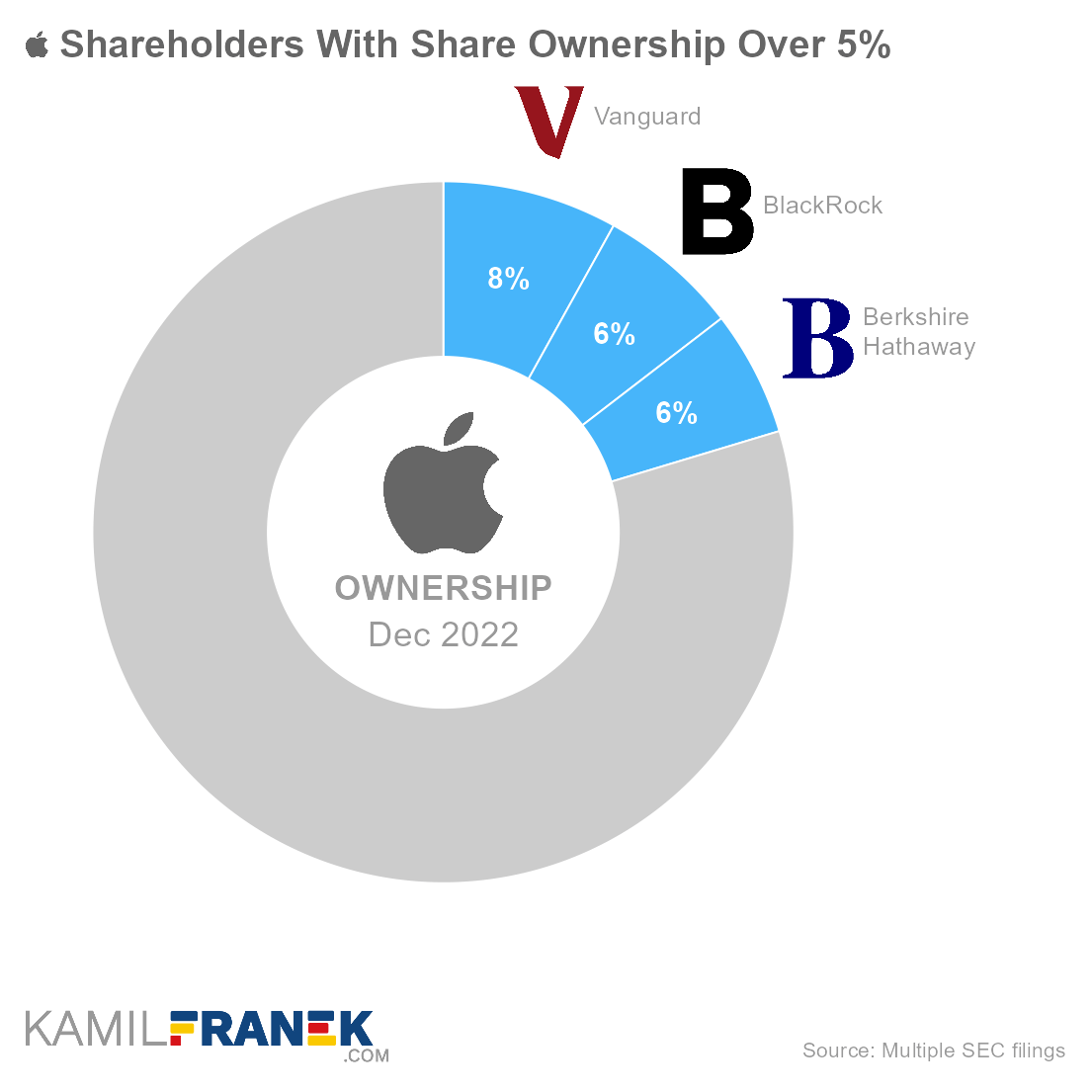
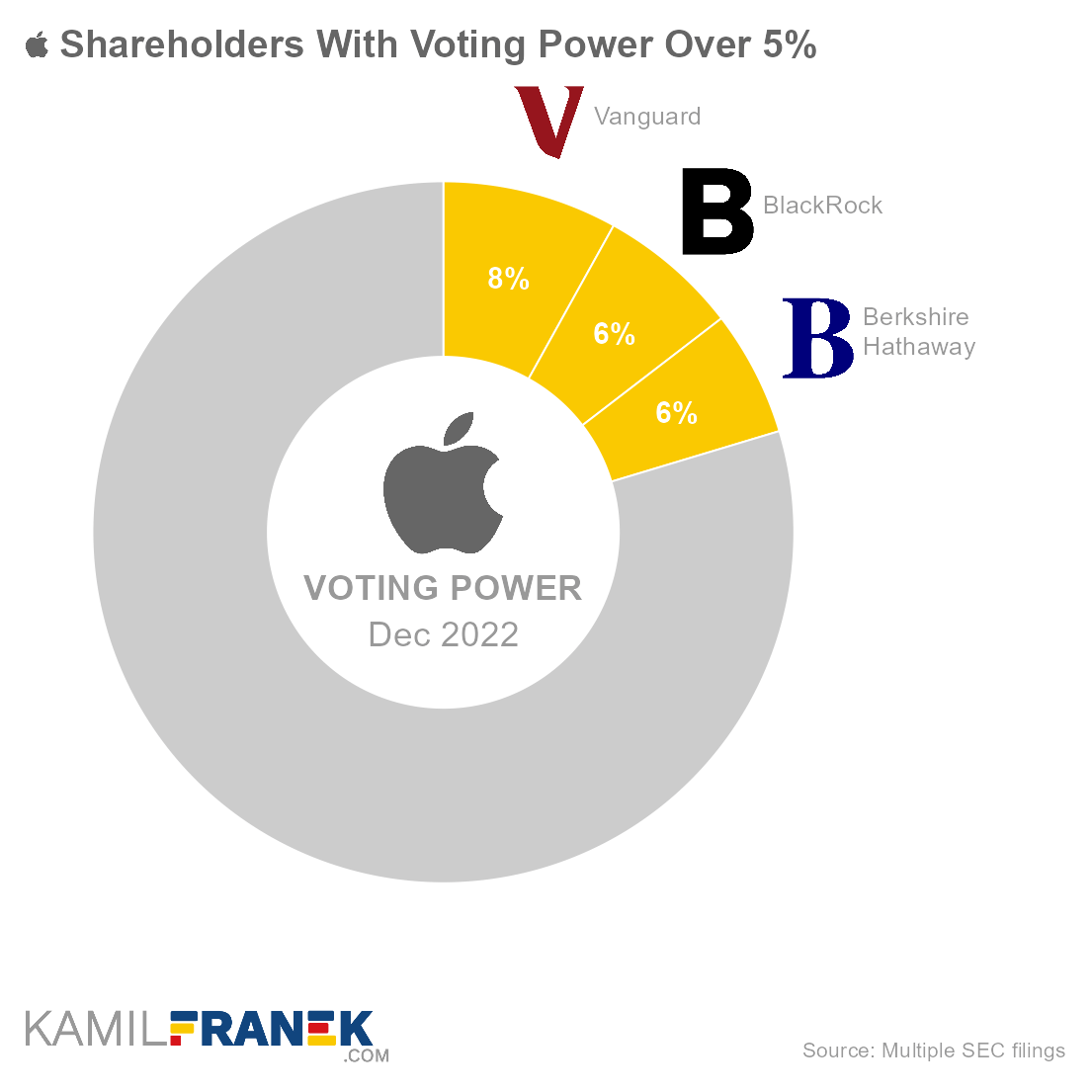
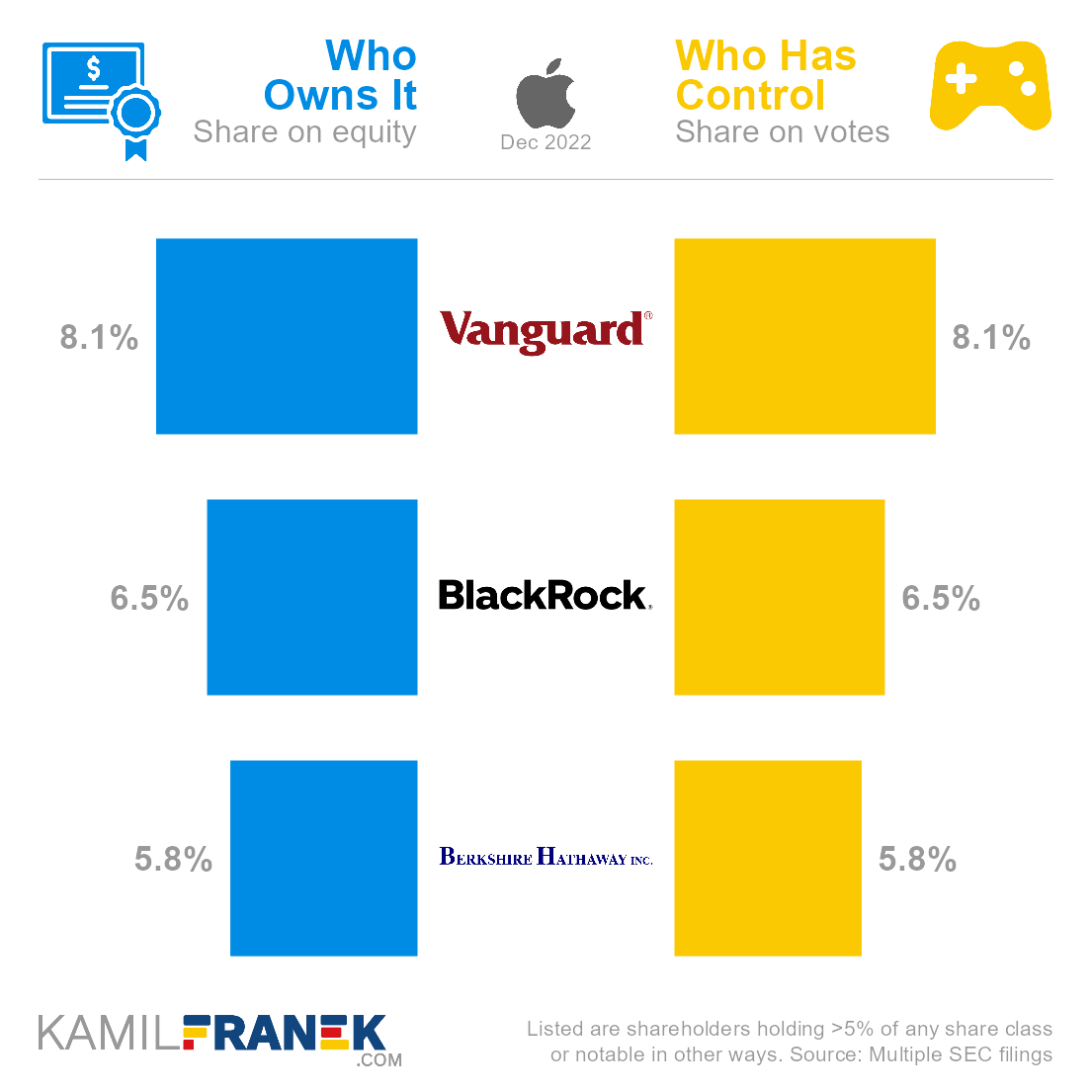
At the forefront of institutional ownership are the world’s largest asset managers, often dubbed the “Big Three”: Vanguard Group, BlackRock Inc., and State Street Corp. These firms collectively manage assets exceeding tens of trillions of dollars and are perennial top shareholders in virtually every major publicly traded company, including Apple. Their immense holdings stem primarily from their vast array of passive investment vehicles, such as index funds and exchange-traded funds (ETFs), which track broad market indices like the S&P 500 or the Nasdaq 100. Since Apple is a top component of these indices, these funds are mandated to hold a proportionate amount of Apple stock.
For example, a BlackRock S&P 500 ETF must own Apple shares in proportion to Apple’s weighting within the S&P 500 index. Given Apple’s consistently high market capitalization, its weighting is substantial, often being the largest or second-largest component. This passive investment strategy means these firms become massive shareholders by default, not necessarily because of an active bullish bet on Apple alone, but as a consequence of their mandate to mirror the market. Beyond passive funds, these firms also manage active mutual funds and institutional accounts that may specifically invest in Apple based on fundamental analysis, further adding to their colossal stakes. These firms, through their various funds, often account for 20-25% or more of Apple’s outstanding shares.
Hedge Funds and Sovereign Wealth Funds: Strategic and Long-Term Capital
While the Big Three dominate passive investing, other institutional players contribute significantly to Apple’s ownership landscape with more active and strategic approaches. Hedge funds, though generally more agile and concentrated in their bets, also hold substantial positions in Apple. Their interest often lies in Apple’s growth prospects, market position, and potential for appreciation, sometimes engaging in activism to influence corporate strategy. Their holdings might fluctuate more based on their investment theses and market conditions.
Sovereign wealth funds (SWFs), managed by governments to invest national savings, are another powerful category. Funds from countries like Norway, Singapore, and Abu Dhabi often make long-term, strategic investments in stable, profitable global companies. Apple, with its consistent performance and strong financial health, is an ideal candidate for these funds seeking stable returns over decades. Their patient capital provides a bedrock of support for Apple’s stock, acting as significant, less volatile shareholders compared to some hedge funds.
The Scale of Institutional Holdings: Financial Implications
The sheer scale of institutional ownership in Apple is staggering. Collectively, institutional investors typically own anywhere from 55% to over 60% of Apple’s outstanding shares. This concentration of ownership has several critical financial implications. Firstly, it means Apple’s stock price and long-term financial stability are heavily influenced by the investment decisions of these large funds. Major buying or selling by a few of the largest institutions can create significant price movements. Secondly, it empowers these institutions with considerable voting power on corporate governance issues, ranging from executive compensation and board appointments to environmental policies and capital allocation strategies. Their collective voice can hold management accountable and influence Apple’s strategic direction, ultimately impacting its financial performance and shareholder value.
Beyond Institutions: Individual and Insider Holdings
While institutional investors undeniably hold the largest aggregate share of Apple stock, it’s crucial not to overlook the contributions of other shareholder categories. The collective power of individual investors and the strategic importance of insider holdings add distinct layers to Apple’s ownership profile, each with its own financial motivations and impacts.
Retail Investors: The Collective Power of Millions
Millions of individual, or retail, investors around the globe own Apple stock. These are everyday people who invest their personal savings, often for long-term growth, retirement planning, or as part of a diversified portfolio. While no single retail investor can claim to own “the most” Apple stock, their collective holdings are substantial. The accessibility of brokerage platforms and the widespread appeal of Apple’s brand make it a popular choice for individual investors. Many are drawn to Apple’s strong financial performance, consistent innovation, and the familiarity of its products.
The financial impact of retail investors, while not as dramatic as a single institutional buy or sell order, is significant in aggregate. Their consistent buying over time adds to demand, and their widespread ownership provides a broad base of support for the stock. Furthermore, in periods of heightened market interest (e.g., during significant product launches or market rallies), the collective enthusiasm of retail investors can contribute to increased trading volume and upward price momentum. Conversely, widespread panic selling by retail investors during market downturns can exacerbate volatility, though institutional holders often provide a stabilizing counterweight due to their long-term mandates.
Insider Ownership: Executives and Founders’ Legacy
Insider ownership refers to the shares held by Apple’s current and former executives, board members, and occasionally founders’ estates. These holdings are particularly important because they align the financial interests of the company’s leadership directly with those of its shareholders. When executives own substantial shares, they have a personal financial stake in the company’s success, which is believed to motivate decisions that enhance long-term shareholder value.
Prominent figures like CEO Tim Cook hold significant Apple stock, often accumulated through compensation packages that include restricted stock units (RSUs) and stock options. These holdings typically vest over time, tying an executive’s long-term financial gain to the company’s sustained performance. Historically, the estate of co-founder Steve Jobs also held a substantial stake in Apple, though much of that was transferred to Disney following the Pixar acquisition. While current insider holdings are a relatively small percentage compared to institutional ownership, their strategic importance in fostering good corporate governance and aligning management incentives cannot be overstated.
Employee Stock Ownership Plans (ESOPs) and Stock Options
Beyond top executives, Apple also uses various mechanisms to allow a broader base of its employees to own shares, primarily through restricted stock units (RSUs) and employee stock purchase plans (ESPPs). RSUs are a common form of compensation in tech companies, granting employees shares that vest over a period, incentivizing them to stay with the company and contribute to its long-term success. ESPPs allow employees to purchase company stock, often at a discount, further fostering a sense of ownership and aligning individual financial well-being with corporate performance. While individual employee holdings are typically modest, the cumulative effect of thousands of employees owning shares contributes to a broader internal ownership base, enhancing employee loyalty and dedication, which ultimately supports the company’s financial health and innovation capacity.
Why Invest in Apple? The Financial Lure
The colossal ownership by institutional and individual investors is not accidental; it is a direct consequence of Apple’s compelling financial profile and strategic market position. For investors, Apple represents a unique blend of growth, stability, and innovation, translating into significant financial appeal. Understanding these underlying factors is key to comprehending why so much capital is consistently deployed into AAPL stock.
A History of Consistent Growth and Financial Performance
Apple boasts an unparalleled track record of consistent revenue growth, robust profit margins, and formidable free cash flow generation. Over decades, it has transformed from a computer company into a consumer electronics giant, a software and services leader, and a content distribution platform. Each successive product category, from the iPod to the iPhone, iPad, Apple Watch, and its expanding services ecosystem, has contributed to an ever-increasing revenue stream. Investors are drawn to this predictable, albeit sometimes slowing, growth trajectory, which underscores the company’s ability to innovate and capture market share across various segments. Its strong balance sheet, often holding vast reserves of cash, provides financial resilience and flexibility for future investments, acquisitions, or shareholder returns. This financial strength acts as a significant magnet for institutional capital seeking reliable long-term returns.
Brand Strength and Ecosystem Lock-in: A Financial Moat
While often discussed in brand strategy, Apple’s brand strength, customer loyalty, and deep ecosystem integration have profound financial implications. The ability to command premium pricing for its hardware, coupled with high customer retention rates and a seamless user experience across its devices and services, creates a powerful “financial moat.” This moat makes it incredibly difficult for competitors to lure customers away and ensures a stable, recurring revenue base. The subscription revenue from services like Apple Music, iCloud, and the App Store provides a high-margin, predictable income stream that diversifies Apple’s reliance on hardware sales. For investors, this translates into reliable earnings, strong pricing power, and a durable competitive advantage, all of which are critical factors in long-term financial valuation and investment decisions.
Capital Allocation Strategies: Dividends and Buybacks
Apple has demonstrated a shareholder-friendly approach to capital allocation, which significantly enhances its attractiveness to investors. After accumulating vast amounts of cash, Apple initiated a dividend payment in 2012, providing investors with a consistent income stream. While the dividend yield might not be the highest, its regular payments signal financial strength and a commitment to returning value to shareholders.
More significantly, Apple has engaged in massive share buyback programs, repurchasing hundreds of billions of dollars worth of its own stock over the past decade. Share buybacks reduce the number of outstanding shares, which typically boosts earnings per share (EPS) and can support the stock price. For institutional investors, especially those with passive mandates or long-term growth objectives, these buybacks represent an efficient way for Apple to return capital to shareholders while simultaneously enhancing the value of their existing holdings. This disciplined approach to capital management is a key factor in attracting and retaining large institutional investments.
Market Leadership and Future Prospects
Apple’s dominant market position in premium smartphones, tablets, and wearables, coupled with its rapid expansion in services, positions it as a market leader with significant future growth potential. Investors are constantly evaluating Apple’s pipeline for new innovations, its strategy for emerging markets, and its foray into new technologies like augmented/virtual reality. The company’s ability to consistently deliver category-defining products and experiences, coupled with its strong financial foundation, makes it a compelling long-term investment. Fund managers and individual investors alike are betting on Apple’s continued capacity to innovate, maintain market leadership, and generate substantial financial returns well into the future, underpinning the persistent demand for its stock.
The Impact of Major Shareholders on Apple’s Trajectory
The concentration of Apple stock in the hands of major institutional investors is not merely a statistical curiosity; it represents a significant power dynamic within the corporate landscape. These large shareholders exert substantial influence over Apple’s strategic direction, corporate governance, and ultimately, its financial performance. Understanding this influence is crucial for anyone studying the financial forces shaping one of the world’s most valuable companies.
Shareholder Activism and Corporate Governance
Major institutional shareholders, particularly the largest asset managers and activist hedge funds, play a critical role in corporate governance. While passive funds like those from BlackRock and Vanguard typically don’t engage in aggressive activism, they wield immense voting power on matters ranging from board elections and executive compensation to environmental and social policies. Their votes can shape the composition of Apple’s board of directors, influence the allocation of capital for initiatives like research and development or dividends, and even weigh in on major strategic shifts or mergers and acquisitions. Active hedge funds, on the other hand, might take substantial positions with the explicit aim of forcing management to adopt specific financial strategies, such as increased share buybacks, divestitures of underperforming assets, or changes in leadership, all with the goal of unlocking greater shareholder value. Apple, like any public company, must be responsive to the concerns and proposals of its largest financial backers.
Market Stability and Volatility
The presence of large, long-term institutional investors provides a significant degree of stability to Apple’s stock price. Funds that track indices or sovereign wealth funds with decades-long investment horizons are less likely to engage in rapid buying or selling based on short-term market fluctuations. Their consistent holdings create a foundational demand for the stock, absorbing smaller sell-offs and mitigating extreme volatility. However, the sheer size of their holdings also means that any significant shift in their investment theses or mandates can have a profound impact. A decision by one of the “Big Three” to slightly rebalance its portfolio, for instance, could involve billions of dollars worth of Apple shares, potentially causing noticeable short-term price movements. Therefore, while providing stability, these large holders also represent concentrated points of potential market impact if their strategies change.
Long-Term vs. Short-Term Investment Horizons
The diverse nature of major shareholders also means different investment horizons influence Apple’s trajectory. Passive index funds and sovereign wealth funds typically adopt a long-term perspective, holding Apple stock indefinitely as long as it remains a constituent of their benchmark or a stable investment. This long-term capital encourages Apple’s management to focus on sustainable growth, strategic innovation, and robust financial health, rather than succumbing to short-term pressures.
Conversely, some hedge funds or more active institutional managers might have shorter investment horizons, looking to capitalize on specific catalysts, quarterly earnings, or tactical market moves. Their actions, driven by a desire for quick financial gains, can inject a degree of short-term volatility into Apple’s stock. Apple’s leadership must balance the demands and expectations of these varied shareholder groups, navigating between delivering consistent long-term value for its patient investors and meeting quarterly financial targets to satisfy more immediate-focused capital. This balancing act is a continuous challenge that profoundly shapes Apple’s financial decision-making and market perception.
In conclusion, while the allure of Apple’s products captivates billions, it is the financial might and strategic acumen of institutional investors that largely dictate “who owns the most Apple stock.” These entities, driven by mandates ranging from passive index tracking to active strategic bets, hold the vast majority of Apple’s shares, forming a powerful network of financial interests that deeply influence the company’s trajectory, market valuation, and long-term shareholder value. Understanding this complex web of ownership is indispensable for comprehending the financial dynamics of one of the world’s most influential corporations.
aViewFromTheCave is a participant in the Amazon Services LLC Associates Program, an affiliate advertising program designed to provide a means for sites to earn advertising fees by advertising and linking to Amazon.com. Amazon, the Amazon logo, AmazonSupply, and the AmazonSupply logo are trademarks of Amazon.com, Inc. or its affiliates. As an Amazon Associate we earn affiliate commissions from qualifying purchases.