
Tesla, Inc. is more than just a pioneer in electric vehicles; it is a financial phenomenon that has rewritten the rules of market capitalization and investor sentiment. For many, the answer to “who owns Tesla” begins and ends with Elon Musk. However, the reality of Tesla’s equity structure is a complex tapestry of institutional power, retail fervor, and strategic corporate governance. To understand who truly owns Tesla is to understand the shifting landscape of modern finance, where individual visionary leadership intersects with the trillion-dollar influence of passive index funds.
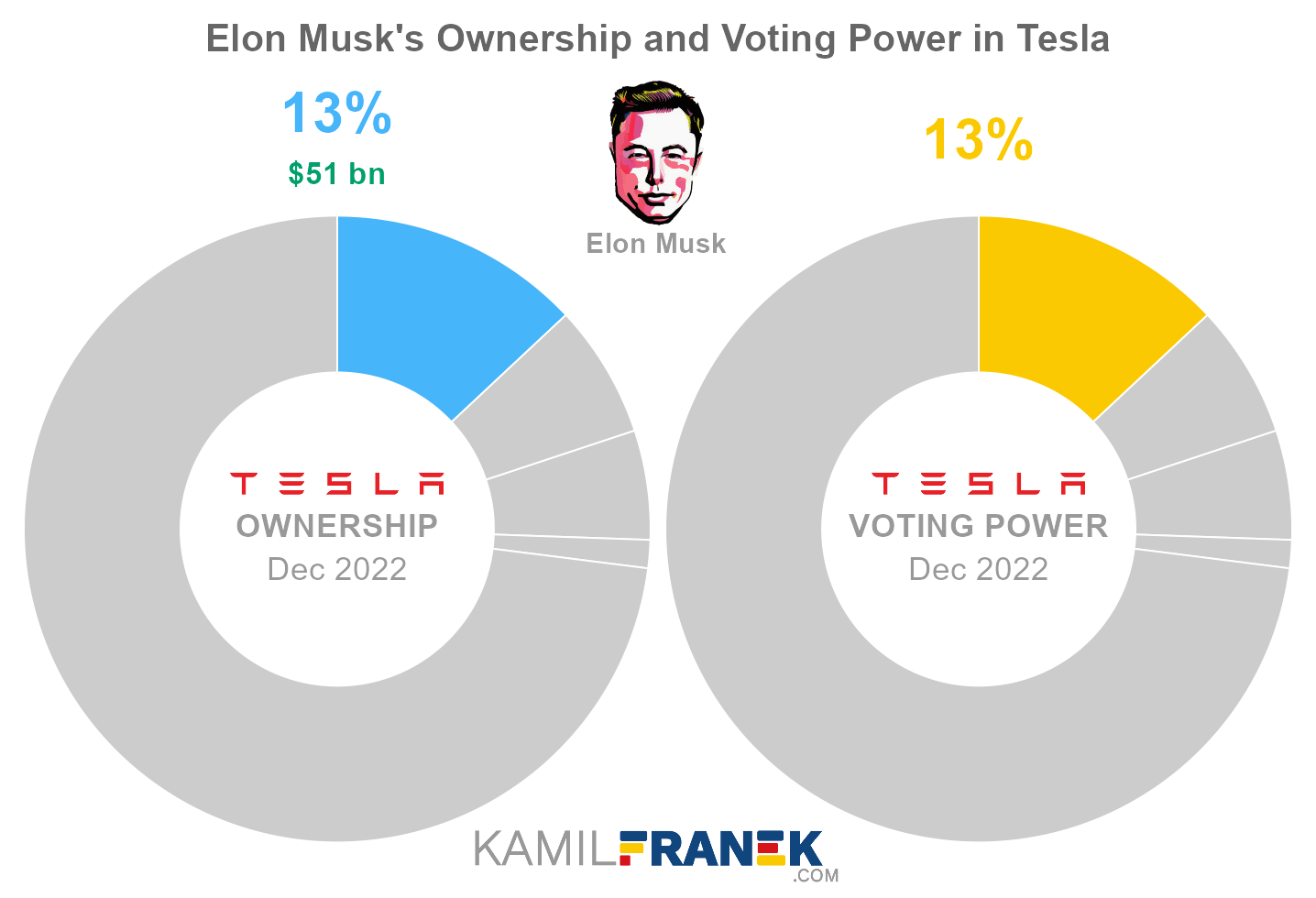
As of 2024, Tesla’s ownership is divided among three primary tranches: the CEO and insiders, large institutional investment firms, and a massive, highly vocal contingent of retail investors. Each group plays a distinct role in the company’s valuation and its long-term strategic direction.
Elon Musk: The Principal Architect and Individual Powerhouse
While Tesla was technically founded by Martin Eberhard and Marc Tarpenning, Elon Musk has been the face and the primary financial driver of the company since its Series A funding round in 2004. Today, he remains the largest individual shareholder, though his exact percentage of ownership is a subject of constant fluctuation and legal scrutiny.
The Dynamics of Musk’s Equity Stake
Elon Musk typically owns between 12% and 13% of Tesla’s outstanding common stock. However, this figure is often a point of contention. Following a 2024 legal battle in Delaware regarding his multi-billion dollar compensation package, the question of Musk’s “control” over the company became a central theme for investors. Musk has publicly stated his desire to own roughly 25% of the company to ensure he has enough voting power to steer Tesla toward its goals in Artificial Intelligence and robotics without being easily overridden by activist investors.
From a financial perspective, Musk’s ownership is unique because he does not take a traditional salary. His wealth is almost entirely tied to the performance of Tesla stock. This aligns his personal net worth with shareholder value, but it also introduces “key man risk.” If Musk were to sell large portions of his stake—as he did to finance the acquisition of X (formerly Twitter)—it can create downward pressure on the stock price and trigger volatility across the broader market.
Insiders and the Board of Directors
Beyond Musk, other insiders hold significant stakes that influence corporate policy. Figures such as Kimbal Musk and various board members hold millions of dollars in equity. While their combined percentage is small compared to the institutional giants, their alignment with Musk’s vision is a critical component of Tesla’s governance. For investors, insider ownership is often viewed as a sign of confidence; when those closest to the company’s daily operations hold onto their shares, it signals a belief in long-term growth over short-term gains.
The 25% Ambition and Voting Power
The debate over Musk’s ownership percentage is not just about wealth; it is about “Money” as a tool for control. In the world of corporate finance, a 25% stake provides a formidable defense against hostile takeovers and allows a founder to maintain a “dual-class-like” control even in a single-class share structure. For Tesla investors, the financial implication of Musk reaching this threshold would likely mean a more stable, albeit more centralized, leadership path, potentially reducing the “governance discount” some analysts apply to the stock.
Institutional Giants: The Silent Owners of the Tesla Empire
While Elon Musk captures the headlines, the backbone of Tesla’s ownership resides in the skyscraper offices of Malvern, Pennsylvania, and New York City. Institutional investors—pension funds, mutual funds, and insurance companies—own a massive portion of Tesla, often exceeding 40% of the total shares outstanding.
The Role of Passive Indexing: Vanguard and BlackRock
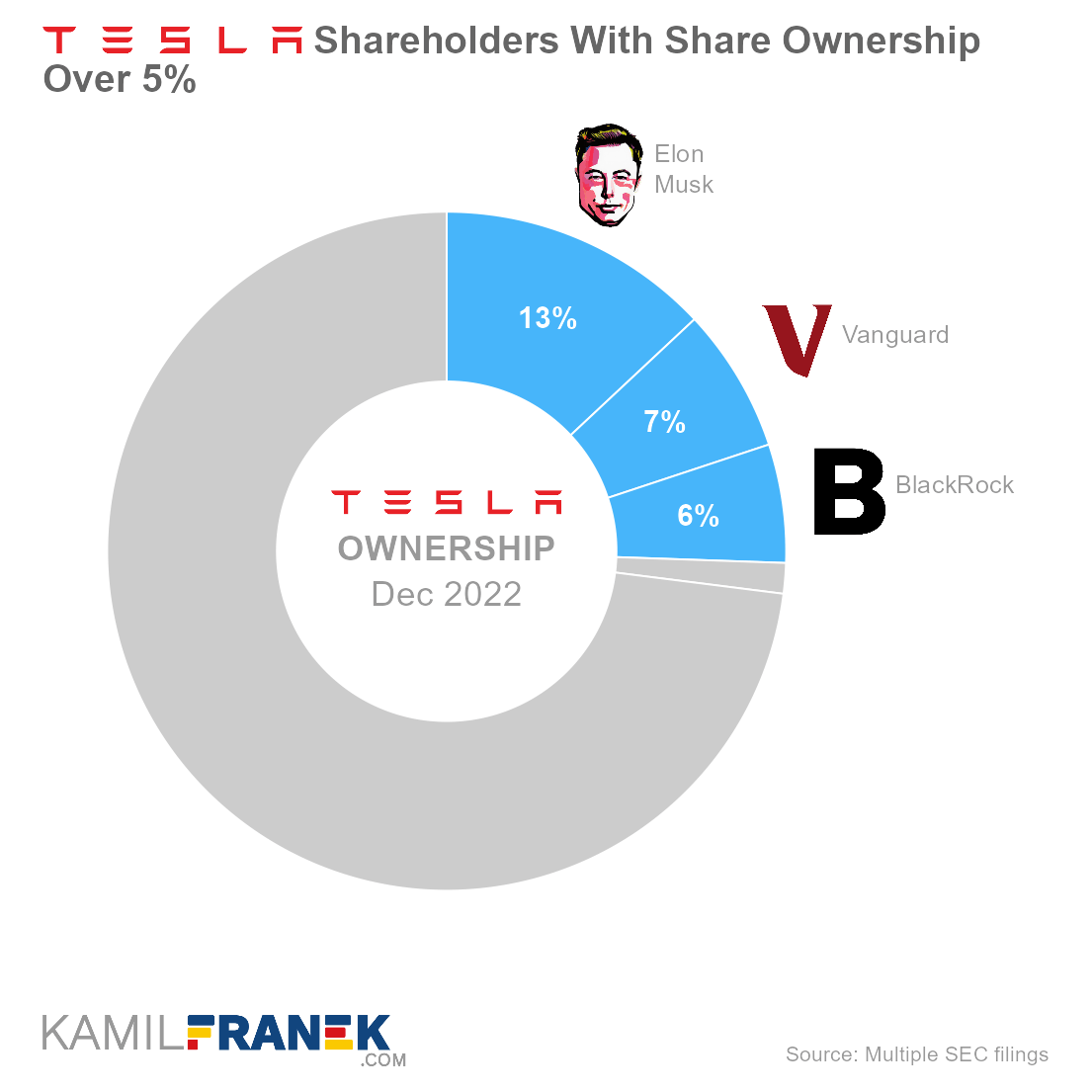
The largest institutional shareholders of Tesla are Vanguard Group and BlackRock, Inc. Their ownership is not necessarily a “bet” on Elon Musk, but rather a reflection of Tesla’s dominance in the financial markets. Because Tesla is a major component of the S&P 500 and the Nasdaq-100, any index fund tracking these benchmarks must own Tesla stock in proportion to its market capitalization.
Vanguard typically holds around 7% to 8% of Tesla, while BlackRock follows closely with approximately 5% to 6%. For the individual investor, this provides a level of institutional “floor” to the stock price. These firms rarely sell their shares based on quarterly whims; they hold as long as Tesla remains in the index. This institutional stability is vital for a stock as volatile as TSLA, providing a counterweight to the rapid-fire trading of retail participants.
Asset Managers and State Street
State Street Corporation and other large asset managers also hold significant positions. These institutions represent the “smart money” that evaluates Tesla based on fundamental financial metrics: free cash flow, price-to-earnings (P/E) ratios, and capital expenditure efficiency. When these institutions increase their holdings, it serves as a bullish signal to the broader financial community that Tesla is maturing from a speculative tech play into a robust industrial powerhouse.
Institutional Influence on Corporate Governance
Institutional owners are no longer silent partners. Through proxy voting, firms like BlackRock and State Street exert immense pressure on Tesla’s board regarding ESG (Environmental, Social, and Governance) standards, executive compensation, and transparency. In recent years, institutional shareholders have become more vocal about Tesla’s board independence. From a financial standpoint, this tension is healthy; it forces a high-growth company to adopt the rigorous financial reporting and oversight standards expected of a blue-chip entity.
The Retail Army: Individual Investors and the Cult of Tesla
One of the most remarkable aspects of Tesla’s ownership structure is the disproportionately high percentage of retail (individual) ownership. Unlike many other trillion-dollar companies where institutions own 70-80% of the float, Tesla has historically seen retail ownership hover between 30% and 40%.
The “Teslanaires” and Long-term Loyalty
The term “Teslanaires” refers to a class of individual investors who bought Tesla stock early—often during its IPO in 2010 or the lean years of 2013-2018—and held through extreme volatility. These investors represent a unique demographic in the financial world: they are often “mission-driven” investors who view their capital not just as a source of return, but as a vote for a sustainable future. This emotional and financial loyalty creates a “HODL” (Hold On for Dear Life) mentality that can protect the stock during market downturns.
Social Media and Market Sentiment
Tesla’s retail ownership is heavily influenced by digital platforms. Finance-focused YouTube channels, X accounts, and Reddit forums like r/TeslaInvestorsClub act as decentralized research hubs. This democratization of financial analysis has allowed retail investors to move in aggregate, sometimes rivaling the impact of institutional trades. For the broader market, this means Tesla often trades on “sentiment” as much as it does on “spreadsheets,” a factor that every serious investor must account for when valuing the company.
The Impact of Share Splits on Ownership
Tesla has utilized multiple stock splits (such as the 5-for-1 split in 2020 and the 3-for-1 split in 2022) specifically to make ownership more accessible to retail investors. By lowering the price per share, Tesla ensures that individual investors with smaller capital bases can continue to participate in the company’s growth. From a business finance perspective, this broadens the shareholder base and reduces the concentration of power, while simultaneously fostering a global community of “brand ambassadors” who are also owners.
Corporate Governance and the Financial Future of Tesla
Understanding who owns Tesla is only half the battle; the other half is understanding how that ownership translates into corporate action. The intersection of Musk’s vision, institutional requirements, and retail enthusiasm creates a unique governance environment.
The 2024 Re-domestication and Proxy Battles
A major turning point in Tesla’s financial history was the 2024 move to re-incorporate the company in Texas, moving away from Delaware. This move was directly tied to ownership rights and the board’s ability to honor shareholder-approved compensation plans. The overwhelming support from retail investors played a decisive role in this transition, highlighting how the “Money” in Tesla is increasingly democratized. Retail shareholders voted in droves to support Musk’s pay package, countering the recommendations of some institutional proxy advisory firms.
Capital Allocation and Share Buybacks
As Tesla’s cash reserves grow, the ownership base is beginning to shift its focus toward capital allocation. Institutional investors are increasingly calling for share buybacks—a financial maneuver where the company uses its cash to buy its own shares, thereby increasing the value of remaining shares. While Musk has historically preferred reinvesting every dollar into R&D and Gigafactories, the maturing ownership structure of Tesla may eventually force a shift toward returning capital to shareholders, a classic hallmark of a stable, profitable corporation.
Succession Planning and the Ownership Transition
The final frontier for Tesla’s ownership is the question of succession. If Elon Musk were to reduce his stake or step down, the ownership vacuum would likely be filled by institutional investors. This would transition Tesla from a “founder-led” growth company to a “professionally managed” value company. For investors, this transition represents the ultimate financial risk and opportunity. Who owns Tesla tomorrow may look very different from who owns it today, and that shift will dictate the company’s valuation for the next decade.
In conclusion, Tesla is not owned by a single entity or a small group of insiders. It is a shared asset between a visionary founder, the world’s largest financial institutions, and a global army of individual believers. This diverse ownership structure is the engine behind its massive valuation, providing the capital necessary to disrupt multiple industries while maintaining a level of market excitement that remains unparalleled in the financial world.
aViewFromTheCave is a participant in the Amazon Services LLC Associates Program, an affiliate advertising program designed to provide a means for sites to earn advertising fees by advertising and linking to Amazon.com. Amazon, the Amazon logo, AmazonSupply, and the AmazonSupply logo are trademarks of Amazon.com, Inc. or its affiliates. As an Amazon Associate we earn affiliate commissions from qualifying purchases.