
In an era defined by instant information and seamless digital interaction, virtual assistants have become an indispensable part of our daily lives. From setting alarms and checking the weather to sending messages and playing music, these intelligent agents streamline countless tasks with a simple voice command. Among them, Siri stands as a pioneering and widely recognized figure, integrated deeply into the Apple ecosystem. Yet, despite its ubiquitous presence across iPhones, iPads, Macs, and Apple Watches, the question “who owns Siri?” often arises, prompting a deeper dive into its technological origins and evolution under one of the world’s most influential tech companies. The answer, while seemingly straightforward today, tells a compelling story of innovation, acquisition, and strategic integration that profoundly shaped the landscape of artificial intelligence and user interface design.

The Genesis of Siri: From Startup Innovation to Apple Acquisition
The journey of Siri is a testament to the dynamic nature of technological innovation, where groundbreaking ideas often emerge from agile startups before being adopted and scaled by industry giants. Siri’s story began not within the Cupertino walls, but in the vibrant world of independent tech development, with a vision to create a truly intelligent personal assistant.
Early Development and Vision
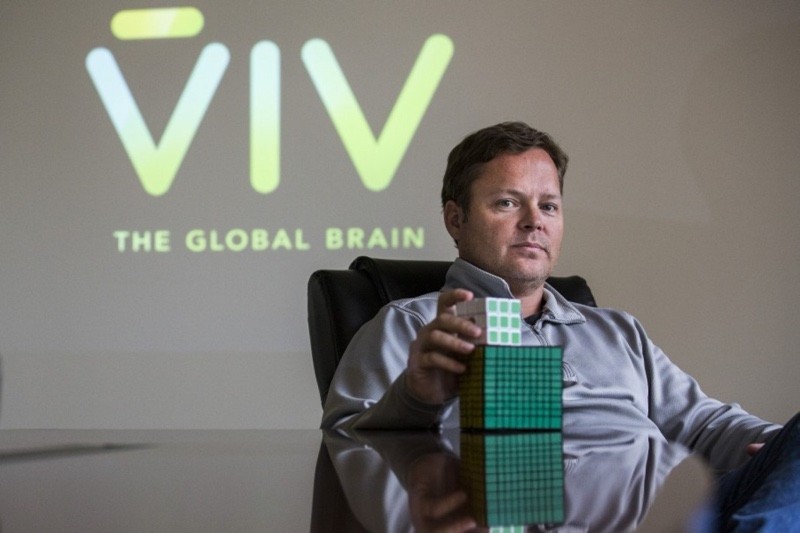
Siri Inc. was founded in 2007 by Dag Kittlaus, Adam Cheyer, and Tom Gruber, backed by venture capitalists. The company spun out of SRI International’s Artificial Intelligence Center, leveraging years of government-funded research aimed at developing cognitive assistants. The initial concept for Siri was far-reaching: to create an intelligent interface that could interact with various web services to accomplish tasks on behalf of the user, essentially acting as a “do-engine.” It was designed to understand natural language, learn user preferences, and proactively offer assistance across a wide range of domains.
Siri’s early demonstrations showcased its remarkable capability to process complex queries and execute multi-step commands, such as finding a restaurant, making a reservation, and even purchasing movie tickets – all through conversational interaction. Before its acquisition, Siri was launched as a standalone application for iOS in February 2010. This app quickly garnered attention for its intuitive interface and impressive natural language understanding, offering a glimpse into a future where technology would be more accessible and responsive to human interaction. The standalone Siri app could perform tasks that seemed almost magical at the time, bridging the gap between user intent and digital execution in a remarkably fluid manner. Its early success and unique capabilities positioned it as a revolutionary product, ripe for integration into a broader technological platform.
The Strategic Acquisition by Apple
The potential of Siri did not go unnoticed by the titans of the tech industry. Recognizing its transformative power, Apple Inc., under the leadership of Steve Jobs, made a decisive move. In April 2010, just two months after its public launch, Apple acquired Siri Inc. for an undisclosed sum, reportedly around $200 million. This acquisition marked a pivotal moment, not just for Siri, but for the entire mobile technology sector.
Apple’s vision for Siri was clear: to integrate this groundbreaking AI directly into its flagship iPhone, elevating the user experience to an unprecedented level. The acquisition was not merely about owning a popular app; it was a strategic maneuver to incorporate a sophisticated conversational AI into the core operating system, fundamentally changing how users would interact with their devices. By embedding Siri into iOS, Apple aimed to differentiate its products significantly from competitors, offering a seamless, hands-free way to operate a smartphone. The integration also aligned perfectly with Apple’s philosophy of creating intuitive and user-friendly technology. When Siri debuted as a built-in feature with the iPhone 4S in October 2011, it instantly transformed the device from a mere tool into a personal digital assistant, ushering in a new era of human-computer interaction defined by voice. This strategic move solidified Apple’s ownership of Siri and its future development trajectory, anchoring it firmly within the Apple ecosystem.
Siri Under Apple’s Aegis: Evolution and Integration
Since its acquisition and subsequent launch as an integrated feature, Siri has been an integral part of Apple’s product strategy, continually evolving and expanding its reach across the company’s diverse hardware and software ecosystem. Apple’s ownership has dictated its development path, focusing on deep integration and user experience.
Deep Integration into Apple Ecosystem
Under Apple’s stewardship, Siri transitioned from a singular app to a pervasive presence across nearly every major Apple platform. Its initial integration into iOS laid the groundwork, but its functionality quickly expanded to macOS, allowing users to control their Macs with voice commands. It became a core feature of watchOS on the Apple Watch, enabling hands-free interaction on a wearable device, and later extended to tvOS, bringing voice control to the Apple TV. Most significantly, Siri is the intelligent backbone of the HomePod, Apple’s smart speaker, designed to be a central hub for home automation and media consumption, all activated through voice.
This deep integration reflects Apple’s holistic approach to technology, where different devices and services work together seamlessly. Siri acts as a unifying interface, allowing users to move between devices while maintaining a consistent and familiar interaction method. For instance, a user might ask Siri on their iPhone to add an item to a reminder list, and that list is then accessible via Siri on their Mac or Apple Watch. This level of cross-device functionality enhances the overall user experience, making Apple’s ecosystem more cohesive and convenient, and cementing Siri’s role as a fundamental component of Apple’s technological identity.
Technological Advancements and Challenges
Siri’s development under Apple has been a continuous process of refinement, addressing both its strengths and areas for improvement. Technologically, Apple has invested heavily in enhancing Siri’s natural language processing (NLP), understanding of context, and voice synthesis capabilities. Early versions of Siri, while revolutionary, sometimes struggled with nuanced commands or unfamiliar accents. Over time, advancements in machine learning and neural networks have led to more accurate transcription, better comprehension of complex queries, and more natural-sounding responses. The introduction of neural text-to-speech technology, for example, made Siri’s voice less robotic and more expressive, significantly improving the user’s perception of its intelligence.

Despite these advancements, Siri has faced its share of criticisms. Competitors like Google Assistant and Amazon Alexa have often been perceived as more capable in certain areas, particularly regarding vast knowledge bases and third-party integrations. Apple’s stringent focus on user privacy, while a significant differentiator and benefit, sometimes means Siri has less access to user data compared to rivals, which can occasionally limit its proactive capabilities or personalization. Furthermore, the challenge of maintaining conversational flow and handling ambiguous requests remains a complex area for all virtual assistants, and Siri is no exception. Apple continues to iterate, pushing updates that expand Siri’s domain knowledge, improve its ability to string together commands, and deepen its understanding of personal context through on-device intelligence, aiming to strike a balance between powerful functionality and robust privacy.
Siri’s Place in the AI Landscape: Competition and Future Directions
The advent of Siri sparked a revolution, prompting a full-blown “voice assistant arms race” among tech giants. Its ownership by Apple has shaped its unique position within this competitive landscape, emphasizing particular strengths and guiding its future trajectory in the broader field of artificial intelligence.
The Voice Assistant Arms Race
Siri’s success ignited a scramble among other major technology companies to develop their own conversational AIs. Google launched Google Assistant, Amazon introduced Alexa, and Microsoft developed Cortana, each aiming to capture a significant share of the burgeoning voice-activated market. This competition has been fierce, driving rapid innovation across the board.
From a technological standpoint, each assistant brings its own set of strengths. Google Assistant, benefiting from Google’s vast search engine capabilities, often excels at answering complex factual questions and understanding long, multi-part queries. Amazon Alexa, with its “skills” ecosystem, has established a dominant presence in smart home control and e-commerce integration. Microsoft Cortana, while having a smaller market share, leverages its integration with Windows and enterprise tools. Siri, under Apple’s ownership, distinguishes itself primarily through its deep integration into the Apple ecosystem and its unwavering commitment to user privacy. While it may not always win in pure breadth of knowledge or third-party integrations compared to some rivals, its seamless operation across Apple devices and its privacy-first design ethos are significant differentiators. Apple has consistently positioned Siri as a private, personalized assistant that enhances the experience within its walled garden, rather than an open platform for all services. This strategic focus ensures that Siri remains a core value proposition for Apple users, contributing to the stickiness of its ecosystem.
Enhancing Privacy and Intelligence
Apple’s approach to Siri’s development is heavily influenced by its overarching philosophy of user privacy. Unlike some competitors that rely on extensive cloud-based data collection to improve their AI, Apple emphasizes on-device processing and differential privacy techniques to minimize data exposure. This commitment means that much of Siri’s learning and personalization happens directly on the user’s device, ensuring that personal data remains private and secure. This design choice is a key selling point for Apple users who prioritize data security in an increasingly data-hungry digital world.
Looking ahead, the future of Siri will likely see continued advancements in both intelligence and privacy-preserving capabilities. Expect further enhancements in proactive assistance, where Siri anticipates user needs based on learned patterns and contextual cues, all while maintaining strict privacy protocols. Deeper integration with third-party apps, potentially through more sophisticated “Siri Shortcuts” or similar frameworks, will expand its utility without compromising security. Apple is also expected to push the boundaries of multimodal interaction, combining voice with visual cues and haptic feedback to create more intuitive and natural user experiences. The goal is to make Siri even more conversational, context-aware, and personalized, transforming it from a simple command-response interface into a truly intelligent and indispensable companion, all within Apple’s carefully constructed privacy-centric ecosystem.
The Broader Impact of Siri’s Ownership on Tech Innovation
Apple’s acquisition and subsequent development of Siri did more than just enhance the iPhone; it sent ripples across the entire technology industry, influencing how products are designed, how users interact with their devices, and how companies approach AI research. Siri’s story is not just about who owns it, but about the profound legacy of that ownership on the broader landscape of innovation.
Influence on User Interface Design
Before Siri, interacting with technology primarily involved tapping, swiping, and typing. While graphical user interfaces (GUIs) had revolutionized computing decades prior, Siri introduced a powerful new paradigm: the conversational user interface (CUI). By making voice a primary mode of interaction, Siri fundamentally changed user expectations. Suddenly, users anticipated being able to simply speak to their devices, and for those devices to understand and respond intelligently. This shift moved technology closer to natural human communication, lowering the barrier to entry for many and making devices feel more intuitive and personal.
This influence is evident in the proliferation of voice commands across countless apps and devices today, from smart home gadgets to car infotainment systems. Designers and developers now routinely consider voice as a crucial input method, designing interfaces that accommodate both touch and voice. Siri demonstrated the power of a hands-free, eyes-free interaction model, particularly valuable in situations like driving or multitasking, forcing the industry to rethink traditional screen-centric designs and embrace a more multimodal future. Apple’s early and prominent integration of Siri normalized this interaction, paving the way for ubiquitous voice control and influencing an entire generation of UI/UX design principles.
Driving AI and Machine Learning Research
Apple’s significant investment in Siri and its continuous development has been a major catalyst for advancements in artificial intelligence and machine learning. Developing a voice assistant that can accurately understand natural language, interpret intent, and generate human-like responses requires cutting-edge research in several complex fields, including natural language processing (NLP), speech recognition, machine learning, and neural networks. By committing substantial resources to Siri, Apple has not only pushed its internal R&D capabilities but has also contributed to the broader academic and industrial progress in these areas.
The challenges of making Siri more intelligent, faster, and more private have driven Apple to attract top talent in AI and machine learning, fostering a competitive environment for innovation. Research breakthroughs made for Siri, even if proprietary, often contribute to the general understanding of AI problems and solutions. Moreover, the sheer scale of Siri’s user base provides an immense dataset (processed with privacy safeguards) for continuous improvement and refinement of its underlying AI models. Apple’s ownership of Siri has solidified its position as a major player in the AI landscape, influencing the direction of machine learning research towards more human-centric, privacy-aware, and integrated AI solutions, ultimately benefiting the entire tech industry by raising the bar for what an intelligent assistant can be.
The question of “who owns Siri” is unequivocally answered by Apple Inc., but the implications of that ownership extend far beyond a simple corporate designation. From its origins as an independent AI startup to its current status as a cornerstone of the Apple ecosystem, Siri’s journey reflects Apple’s strategic vision for integrating advanced technology to enhance user experience. Under Apple’s aegis, Siri has evolved, navigated the intense competition of the AI landscape, and championed a privacy-first approach to intelligent assistance. Its existence has not only transformed how we interact with our devices but has also significantly influenced the broader trajectory of user interface design and AI research, solidifying its place as a pivotal innovation in the history of technology. As AI continues to advance, Siri, firmly rooted in Apple’s technological prowess, will undoubtedly continue its evolution, shaping the future of human-computer interaction for years to come.
aViewFromTheCave is a participant in the Amazon Services LLC Associates Program, an affiliate advertising program designed to provide a means for sites to earn advertising fees by advertising and linking to Amazon.com. Amazon, the Amazon logo, AmazonSupply, and the AmazonSupply logo are trademarks of Amazon.com, Inc. or its affiliates. As an Amazon Associate we earn affiliate commissions from qualifying purchases.