
The cruise industry is one of the most capital-intensive sectors in the global economy, characterized by multi-billion dollar assets, complex international tax structures, and high-stakes competition. At the center of this industry sits Norwegian Cruise Line (NCL), a brand synonymous with “Freestyle Cruising.” However, for the savvy investor or business enthusiast, the question “Who owns Norwegian Cruise Line?” extends far beyond the name on the hull of the ships.
To understand the ownership of Norwegian Cruise Line, one must look at its parent company, Norwegian Cruise Line Holdings Ltd. (NCLH). As a publicly traded entity on the New York Stock Exchange, its ownership is a mosaic of institutional investors, private equity legacies, and individual shareholders. This article explores the financial architecture of NCLH, the major players holding the purse strings, and the investment outlook for this hospitality giant.

The Publicly Traded Powerhouse: Understanding Norwegian Cruise Line Holdings Ltd. (NCLH)
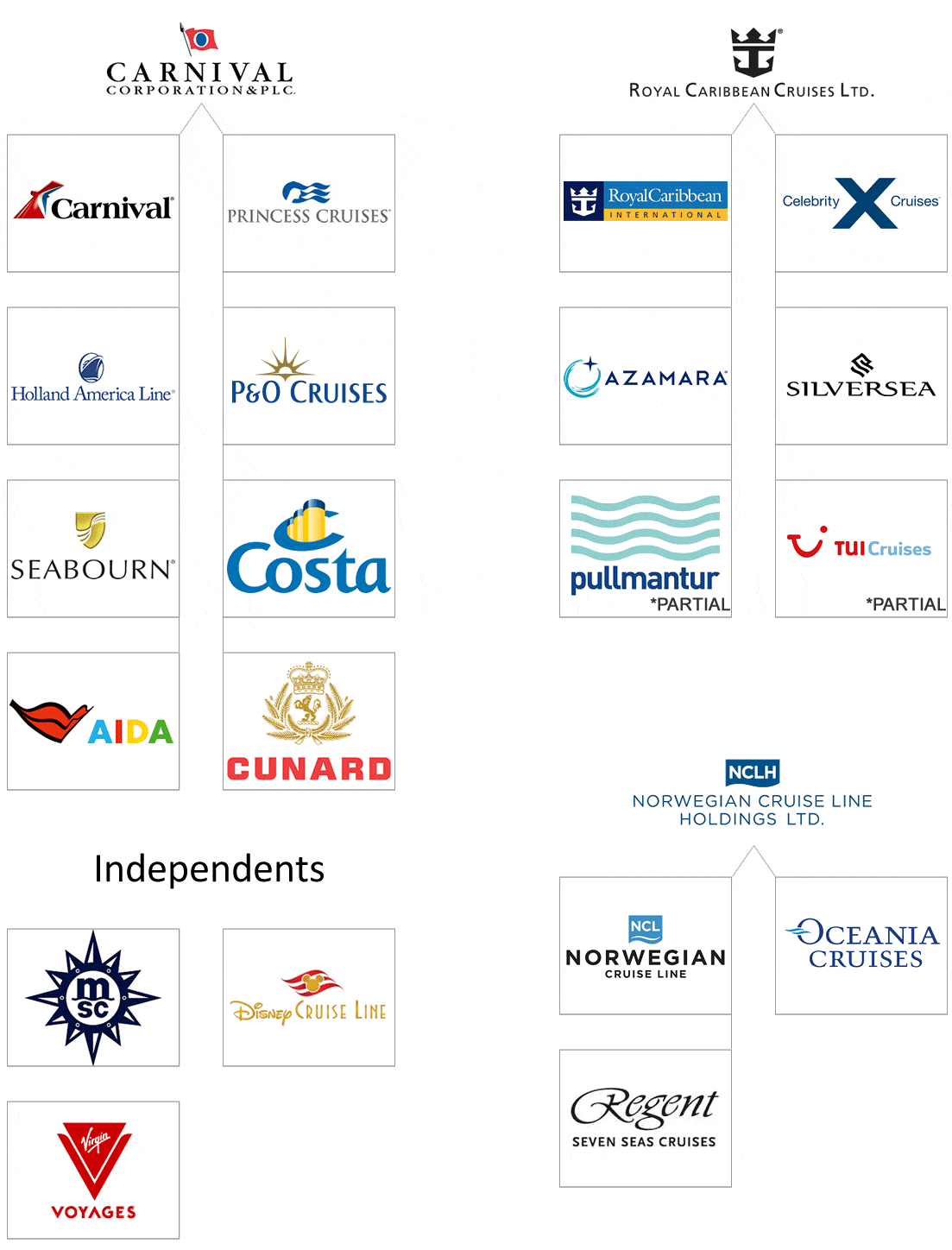
Norwegian Cruise Line is not a standalone private company; it is the primary brand under the umbrella of Norwegian Cruise Line Holdings Ltd. (NYSE: NCLH). Headquartered in Bermuda and with operational offices in Miami, NCLH serves as the parent corporation for three distinct brands: Norwegian Cruise Line, Oceania Cruises, and Regent Seven Seas Cruises.
The Transition from Private to Public
The ownership history of NCL is a masterclass in corporate evolution. For decades, the company went through various hands, including Kloster Cruises and later Star Cruises (a subsidiary of the Genting Group). A pivotal moment in its financial history occurred in 2013 when the company launched its Initial Public Offering (IPO). This move shifted the ownership from a concentrated group of private equity firms and conglomerates to a diversified pool of public investors.
Before the IPO, the company was largely controlled by Apollo Global Management and TPG Capital. These private equity giants saw the untapped value in NCL’s “Freestyle” model and infused the capital necessary to modernize the fleet. Today, while those private equity firms have largely exited their positions to realize profits, the corporate discipline they instilled remains a hallmark of the company’s financial strategy.
The Portfolio Strategy: Oceania and Regent Seven Seas
In the world of business finance, diversification is key to mitigating risk. NCLH’s ownership structure is bolstered by its 2014 acquisition of Prestige Cruises International. This $3.02 billion deal brought Oceania Cruises and Regent Seven Seas Cruises into the fold. By owning these brands, NCLH effectively diversified its revenue streams across different market segments: NCL targets the contemporary mass market, Oceania serves the upper-premium segment, and Regent Seven Seas dominates the luxury all-inclusive sector. From an investment perspective, this tiered ownership allows the parent company to capture high-margin revenue from affluent travelers while maintaining high-volume traffic through the core NCL brand.
Institutional Investors: The Real Power Behind the Scenes
As a publicly traded corporation, the “owners” of Norwegian Cruise Line are the shareholders. However, the vast majority of these shares are not held by individuals, but by institutional investors—massive financial entities that manage money on behalf of millions of people through pension funds, 401(k)s, and ETFs.
The Role of Asset Management Giants
When examining the most recent SEC filings, the names at the top of the NCLH shareholder list are familiar titans of the financial world. Companies like Vanguard Group, BlackRock, and State Street Corporation consistently hold the largest stakes.
These institutional investors play a crucial role in the company’s governance. Because they hold significant percentages of the voting stock (often 5% to 10% each), they have a substantial say in board elections and major corporate decisions. For a “Money” niche perspective, this means that if you own an S&P 500 index fund or a total market ETF, you likely own a small piece of Norwegian Cruise Line yourself.
How Institutional Ownership Stabilizes the Stock
High institutional ownership is generally viewed as a sign of corporate maturity. For NCLH, having “smart money” at the table provides a level of price stability. These institutions typically take long-term positions based on rigorous fundamental analysis rather than reacting to short-term market noise. When institutional investors maintain or increase their stakes, it signals confidence in the company’s management and its ability to generate long-term shareholder value.
Individual Shareholders and the Retail Investment Landscape
While institutions dominate the cap table, individual (retail) investors and company insiders also play a role in the ownership structure. This segment of ownership reflects the market’s sentiment toward the travel and leisure sector.
Insider Ownership and Board Governance
Insider ownership refers to shares held by the company’s executive officers and board members. In the case of NCLH, the CEO and other high-ranking executives hold a portion of their compensation in the form of stock and options. This “skin in the game” aligns the interests of the management team with those of the shareholders. If the company thrives and the stock price rises, the executives profit alongside the investors.
Monitoring insider buying and selling is a common strategy for investors. When insiders buy shares with their own money, it is often interpreted as a bullish signal that the company’s internal leadership believes the stock is undervalued.
Shareholder Benefits: A Perk for the Money-Savvy
One unique aspect of owning a piece of Norwegian Cruise Line is the Shareholder Benefit Program. In an effort to encourage loyalty among its investors, NCLH offers on-board credits to shareholders who hold a minimum of 100 shares. This creates a fascinating intersection between “consumer” and “owner.” From a personal finance perspective, this perk effectively increases the “yield” of the investment for those who already plan on cruising with the brand, making it a popular choice for retail investors who are fans of the product.
The Financial Health and Valuation of Norwegian Cruise Line
To understand the value of what these owners hold, one must analyze the financial health of NCLH. The cruise industry faced an unprecedented existential crisis during the 2020-2022 period, which fundamentally altered the company’s balance sheet and ownership dynamics.
Revenue Streams and Profitability Metrics
NCLH generates revenue through two primary channels: ticket sales (passenger ticket revenue) and on-board spending (on-board and other revenue). The latter includes everything from specialty dining and shore excursions to casino gaming and spa services.
For investors, the key metric to watch is the “Net Yield,” which measures revenue per capacity day. NCLH has historically outperformed many of its peers in this area due to its aggressive focus on the “Freestyle” concept, which encourages guests to spend more on personalized experiences. Analyzing the ownership of NCL requires an understanding of how effectively the company converts these high-revenue guests into net income for shareholders.
Debt Management in a Post-Pandemic Economy
One cannot discuss the ownership of NCL without addressing its debt. To survive the global travel shutdown, NCLH, like its competitors, had to take on significant debt and issue new shares (diluting existing owners). As of the current fiscal years, a major focus for NCLH management is “deleveraging”—using cash flow to pay down the billions in high-interest debt accrued during the hiatus.
For the owners, this means that dividends or share buybacks are likely off the table in the short term. The current “value” of the ownership is tied to the company’s ability to navigate high interest rates and maintain liquidity while continuing to modernize its fleet with new “Prima Class” ships.
Investing in the Cruise Industry: Is NCLH a Viable Option?
When evaluating NCLH as an investment, it is essential to compare it to its primary rivals: Carnival Corporation & plc and Royal Caribbean Group. These three companies control the vast majority of the global cruise market.
Competitive Positioning against Carnival and Royal Caribbean
Norwegian is the smallest of the “Big Three,” which gives it a unique market position. While Carnival competes on scale and price, and Royal Caribbean competes on innovation and massive ship size, Norwegian focuses on a “disciplined capacity growth” strategy. By keeping its fleet relatively smaller and more upscale, NCLH aims for higher margins rather than just high passenger volumes.
From a financial standpoint, NCLH often trades at different valuation multiples than its peers. Investors looking for a “Money” play in this sector must weigh Norwegian’s higher debt-to-equity ratio against its superior ability to generate high per-passenger revenue.

Long-term Growth Outlook and Risks
The future of NCLH ownership looks toward a horizon of “Experience Economy” growth. As Millennials and Gen Xers prioritize travel over material goods, the demand for cruising is projected to reach record highs. However, risks remain. Fuel price volatility, geopolitical instability in key cruise regions (like the Mediterranean or the Baltics), and environmental regulations regarding carbon emissions are all factors that could impact the bottom line.
In conclusion, the ownership of Norwegian Cruise Line is a sophisticated web of public market participants. While the brand is managed by a centralized corporate team in Miami, the true owners are the thousands of institutional and individual investors who provide the capital necessary to keep the fleet afloat. For the investor, NCLH represents a high-leverage bet on the resilience of global tourism and the enduring appeal of the “Freestyle” lifestyle. Understanding who owns this company is the first step in understanding the broader financial currents that move the entire travel industry.
aViewFromTheCave is a participant in the Amazon Services LLC Associates Program, an affiliate advertising program designed to provide a means for sites to earn advertising fees by advertising and linking to Amazon.com. Amazon, the Amazon logo, AmazonSupply, and the AmazonSupply logo are trademarks of Amazon.com, Inc. or its affiliates. As an Amazon Associate we earn affiliate commissions from qualifying purchases.