
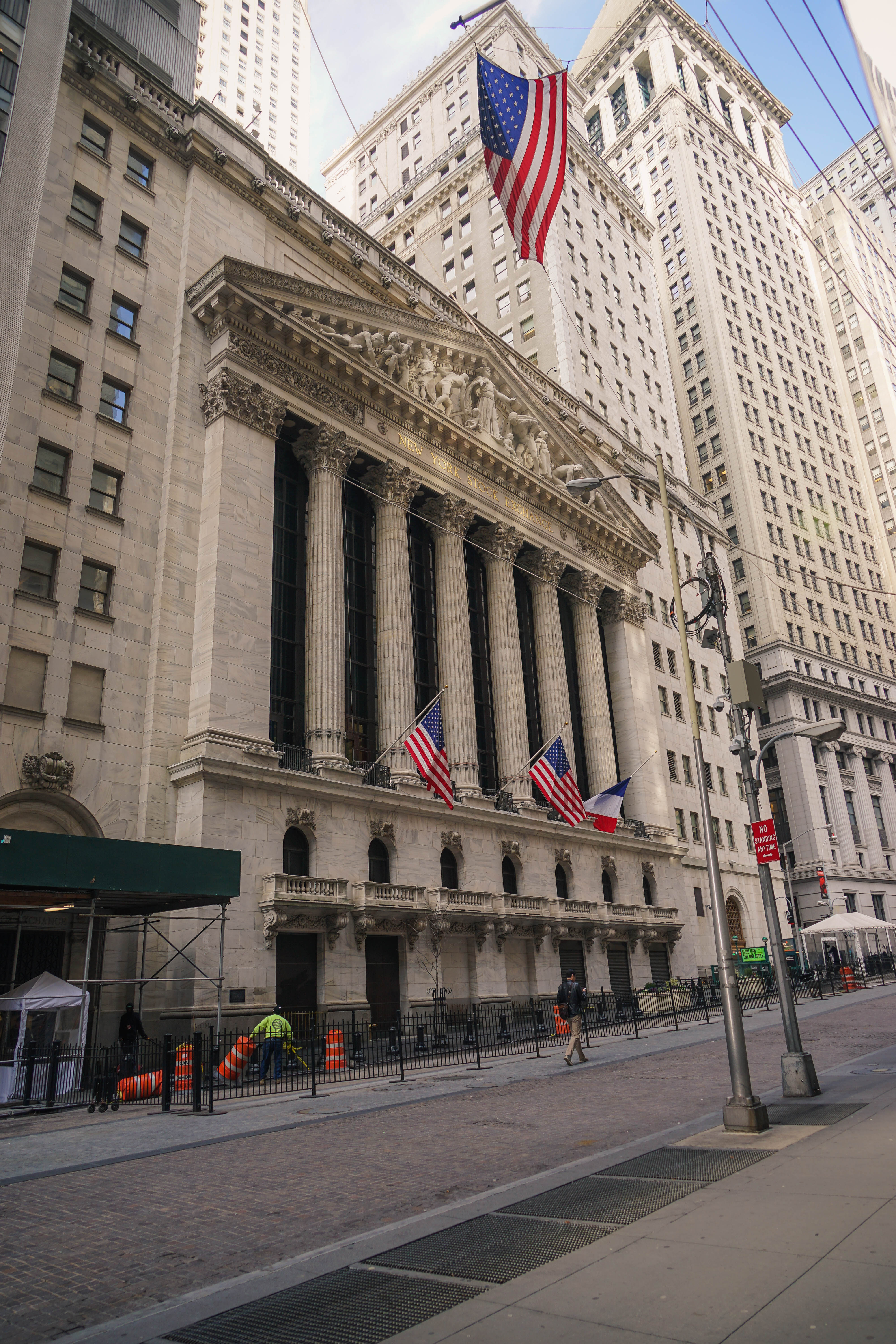
The New York Stock Exchange (NYSE) stands as an enduring symbol of global capitalism, a towering institution often seen as the heartbeat of the financial world. Its iconic trading floor, though increasingly digital, conjures images of frenetic activity and vast wealth creation. For many, the NYSE is an entity unto itself, a powerful, almost mythical force. Yet, like any major business or asset, it has an owner. Understanding this ownership structure is not merely a matter of trivia; it’s critical for grasping the dynamics of modern finance, the evolution of market infrastructure, and the intricate web of business relationships that underpin global capital markets. The journey of the NYSE’s ownership reflects a profound transformation from a member-owned club to a publicly traded, globally diversified financial services powerhouse.
Unraveling the Ownership Structure: From Members to a Megacorp
To answer “who owns the New York Stock Exchange,” one must embark on a journey through its rich history, witnessing a fundamental shift in its organizational and financial model. For much of its existence, the NYSE was not owned in the conventional sense of a corporation with shareholders; it was a mutual organization, owned by its members.
The Early Days: A Member-Owned Foundation
For over two centuries, from its inception in 1792 under the Buttonwood Agreement, the NYSE operated as a not-for-profit, member-owned entity. Its owners were primarily the “seat holders” – individuals or firms who purchased a seat on the exchange, granting them the privilege to trade directly on the floor. The value of these seats could fluctuate wildly, often reaching millions of dollars, representing not just access but a tangible stake in the exchange itself. Decisions were made by these members, and profits (or surpluses) were often reinvested or distributed among them. This structure fostered a strong sense of community and shared interest among its participants, but it also presented limitations for growth, capital raising, and responding to rapid changes in the financial landscape. It was a model deeply rooted in tradition, prioritizing the interests of its direct users over external investors.
Demutualization: A Pivotal Shift in Financial Structure
The late 20th and early 21st centuries saw a widespread trend of “demutualization” among exchanges globally. Driven by increasing competition, the need for greater capital to invest in technology, and the desire for more agile corporate structures, many exchanges transformed from member-owned associations into for-profit, shareholder-owned corporations. The NYSE was no exception.
The catalyst for the NYSE’s demutualization was the need to compete more effectively with electronic communication networks (ECNs) and other global exchanges, which were often publicly traded and thus had easier access to capital for innovation. In 2006, the NYSE merged with Archipelago Holdings, an electronic stock exchange, forming NYSE Group, Inc. This strategic move effectively converted the member-owned organization into a publicly traded company. Seat holders received a combination of cash and stock in the new entity, fundamentally changing their relationship with the exchange from owners of a trading privilege to shareholders in a corporate enterprise. This transition was a watershed moment, marking the NYSE’s entry into the modern era of financial market infrastructure, ready to operate like any other profit-driven corporation with a mandate to deliver shareholder value.
Intercontinental Exchange (ICE): The Modern Proprietor
The story of the NYSE’s ownership doesn’t end with its demutualization and public listing. In a significant industry consolidation move, the NYSE Group was eventually acquired by another financial giant, bringing it under the umbrella of a much larger, globally diversified corporation.
The Acquisition That Reshaped a Legacy
In 2013, the Intercontinental Exchange (ICE), a global network of exchanges and clearing houses, completed its acquisition of NYSE Euronext, which by then included the New York Stock Exchange, Euronext (a collection of European exchanges), and NYSE Arca. The deal, valued at approximately $11 billion, was a momentous event in financial market history. ICE, founded by Jeffrey Sprecher in 2000, had initially focused on energy futures and later expanded rapidly through strategic acquisitions, including the New York Board of Trade and the Winnipeg Commodity Exchange. The acquisition of NYSE Euronext was its most ambitious move yet, solidifying ICE’s position as a dominant force in global financial market infrastructure.
This acquisition meant that the legendary New York Stock Exchange, once a bastion of independent American finance, became a subsidiary of ICE. While the NYSE brand and its operations continue to thrive under its distinct identity, its ultimate ownership and strategic direction are now determined by ICE. This is a common model in modern corporate finance, where iconic brands operate within a larger group structure, benefiting from shared resources, capital, and a broader strategic vision.
ICE’s Diverse Financial Ecosystem
Intercontinental Exchange is far more than just the owner of the NYSE. It operates a vast and diverse financial ecosystem, encompassing numerous exchanges, clearing houses, and data services across multiple asset classes. Its portfolio includes:
- Global Exchanges: Beyond the NYSE, ICE operates other exchanges for futures and options trading (e.g., ICE Futures U.S., ICE Futures Europe), covering commodities like oil, natural gas, coffee, cotton, and sugar, as well as financial futures.
- Clearing Houses: ICE also owns and operates several clearing houses globally, which are vital institutions in financial markets. Clearing houses act as central counterparties, guaranteeing trades and mitigating risk, thereby ensuring the stability and integrity of markets. This vertical integration provides significant financial synergies and risk management capabilities.
- Data Services and Technology: A substantial portion of ICE’s revenue comes from its comprehensive data and analytics offerings, including market data, indices (like the ICE BofA Global Research Index family), and connectivity services. These services are crucial for institutional investors, traders, and financial professionals who rely on real-time information and robust trading technology.
This diversified business model illustrates a sophisticated strategy to capture value across the entire trade lifecycle, from execution to clearing to information dissemination. It ensures that ICE, and by extension its ownership of the NYSE, is well-positioned in the evolving financial landscape, resilient to shifts in specific market segments.
Shareholder Structure of ICE: Investing in the Exchange

Since ICE is a publicly traded company (NYSE: ICE), its ultimate owners are its shareholders. These shareholders include a mix of institutional investors (such as mutual funds, pension funds, and hedge funds), individual investors, and corporate insiders. Major institutional investors often hold significant stakes, and their investment decisions can influence the company’s direction.
As of recent filings, no single entity owns a majority stake in ICE, reflecting a widely dispersed ownership typical of large public corporations. This means that anyone can indirectly “own a piece” of the New York Stock Exchange by purchasing shares of Intercontinental Exchange (ICE) on the stock market. This contrasts sharply with the pre-demutualization era, where ownership was restricted to a select group of members. This public ownership structure provides transparency, liquidity, and accountability to a broad investor base, aligning the company’s financial performance with the interests of a global investing public.
The Financial Significance of NYSE’s Ownership
The ownership structure of a financial institution as pivotal as the NYSE carries profound financial implications, influencing everything from market operations and investor confidence to revenue generation and regulatory oversight.
Market Integrity and Investor Confidence
The ownership by a well-capitalized, diversified entity like ICE provides a robust financial backing for the NYSE. This is crucial for maintaining market integrity and investor confidence. A strong owner can invest in cutting-edge technology, bolster cybersecurity measures, and ensure the resilience of trading systems, all of which are vital for a smooth-functioning market. Investors need assurance that the exchange they trade on is financially stable, technically sound, and capable of handling massive volumes of transactions securely. ICE’s global footprint and diverse revenue streams further enhance this stability, minimizing the risk of disruptions that could impact the broader financial system.
Revenue Streams and Business Models
Under ICE’s ownership, the NYSE’s revenue model has evolved significantly. While traditional trading fees (commissions, listing fees) remain important, ICE leverages its ownership to generate income from various sources:
- Transaction Fees: Fees charged for executing trades, both for equities and other asset classes.
- Listing Fees: Companies pay fees to have their shares listed on the NYSE, gaining prestige and access to a broad investor base.
- Market Data Sales: A significant and growing revenue stream comes from selling real-time and historical market data to institutional investors, hedge funds, and data vendors.
- Connectivity and Access Fees: Charges for direct access to trading platforms and co-location services (housing servers close to the exchange’s matching engines for speed).
- Clearing and Settlement Services: Revenue generated from the post-trade processing and guarantee of transactions within ICE’s broader ecosystem.
This multi-faceted revenue model makes the NYSE, as part of ICE, a highly profitable enterprise. It demonstrates how modern exchange groups have diversified their income beyond mere trading activity, transforming into comprehensive financial technology and data providers.
Regulatory Oversight and Financial Stability
The ownership of a critical financial infrastructure like the NYSE by ICE is subject to extensive regulatory oversight. Agencies such as the U.S. Securities and Exchange Commission (SEC) closely monitor the operations of both the exchange and its parent company to ensure fair and orderly markets, investor protection, and systemic financial stability. Any proposed changes to ownership or significant operational adjustments would require regulatory approval. This oversight is paramount, ensuring that the financial interests of the owner do not compromise the public interest function of the exchange. Moreover, as a globally significant financial entity, ICE’s overall financial health and risk management practices are scrutinized by regulators worldwide, contributing to the stability of the global financial system.
Investing in the Exchange Ecosystem: Beyond Direct Ownership
For individual and institutional investors, the question of “who owns the NYSE” naturally leads to considerations about how one might participate in the financial success of such a vital market infrastructure. While direct ownership of the physical exchange is not possible, investing in its parent company, ICE, offers a proxy for participating in the broader exchange ecosystem.
ICE as an Investment Vehicle
Investing in shares of Intercontinental Exchange (ICE) provides investors with exposure to a diversified financial services company that profits from global trading activity across multiple asset classes, market data sales, and clearing services. As a component of major stock indices, ICE is often considered a core holding for institutional portfolios seeking exposure to the financial infrastructure sector. Its financial performance is tied not just to the volume of trading on the NYSE, but to the health of global financial markets, commodity prices, and the demand for financial data and technology. Shareholders benefit from ICE’s strategic acquisitions, its focus on technological innovation, and its ability to generate consistent revenue streams from essential market functions.
The Broader Exchange Landscape and Financial Market Opportunities
Beyond ICE, the global financial landscape is populated by numerous other publicly traded exchange operators, such as Nasdaq (NDAQ), CME Group (CME), and Deutsche Börse (DB1.DE). These companies offer investors different exposures to various markets (e.g., technology stocks, derivatives, European equities) and business models. An understanding of NYSE’s ownership by ICE thus provides a valuable case study in the consolidation and evolution of market infrastructure providers. These entities are not just venues for trading; they are sophisticated financial enterprises that play a fundamental role in capital formation, price discovery, and risk management globally. Investing in these companies allows individuals to gain exposure to the underlying machinery that powers the world’s financial markets, reflecting an investment strategy focused on the indispensable infrastructure of global commerce.
In conclusion, the question of “who owns the New York Stock Exchange” reveals a complex and dynamic narrative. From its origins as a member-owned club, through its demutualization and public offering, to its current status as a crown jewel within the Intercontinental Exchange’s vast financial empire, the NYSE’s ownership reflects the relentless evolution of global finance. Today, its ultimate owners are the shareholders of ICE, a publicly traded company that has skillfully integrated the iconic exchange into a diversified, technology-driven financial ecosystem, underscoring the shift towards consolidated, globalized financial market infrastructure.
aViewFromTheCave is a participant in the Amazon Services LLC Associates Program, an affiliate advertising program designed to provide a means for sites to earn advertising fees by advertising and linking to Amazon.com. Amazon, the Amazon logo, AmazonSupply, and the AmazonSupply logo are trademarks of Amazon.com, Inc. or its affiliates. As an Amazon Associate we earn affiliate commissions from qualifying purchases.