
In the realm of global finance, transparency is often a luxury. Traditional banking systems and offshore havens frequently obscure the true concentration of wealth. However, Bitcoin, built on a public and immutable ledger known as the blockchain, offers a unique window into the distribution of a digital asset worth over a trillion dollars. With a hard-capped supply of 21 million coins, the question of “who owns most bitcoins” is not merely one of curiosity; it is a critical inquiry into market influence, institutional adoption, and the future of decentralized finance.
As Bitcoin matures from an experimental digital currency into a mainstream financial asset class, the demographics of its holders have shifted. What once belonged almost exclusively to cypherpunks and early tech adopters is now held by sovereign nations, massive public corporations, and institutional investment vehicles. Understanding this landscape is essential for any investor seeking to navigate the volatility and potential of the cryptocurrency market.
The Genesis of Wealth: Satoshi Nakamoto and the Lost Coins
The largest single entity holding Bitcoin remains the most mysterious. Satoshi Nakamoto, the pseudonymous creator of the Bitcoin protocol, is estimated to have mined approximately 1.1 million BTC in the early days of the network’s existence.
The Enigma of the Founder’s Stash
Nakamoto’s holdings are spread across thousands of individual wallets, most of which were used for mining the first blocks on the network. According to research by blockchain analysts like Sergio Demian Lerner, these coins have remained untouched for over a decade. At current market prices, this makes Nakamoto one of the wealthiest individuals on the planet, yet the “keys” to this fortune have never been moved.
Why Nakamoto’s Holdings Matter for Market Stability
For the financial community, Nakamoto’s 1.1 million BTC represents both a “black hole” and a potential systemic risk. If these coins were ever to move, the market would likely perceive it as a massive liquidity event, potentially causing a price crash. However, many in the industry view these coins as “burned” or permanently lost, effectively reducing the circulating supply and increasing the scarcity—and thus the value—of the remaining 20 million coins.
Institutional Giants: The Corporate Treasuries and ETFs
In recent years, the “Money” niche of Bitcoin ownership has been dominated by the entry of institutional players. No longer seen as a fringe asset, Bitcoin is now a legitimate component of corporate balance sheets and professional investment portfolios.
MicroStrategy: The Corporate Forerunner
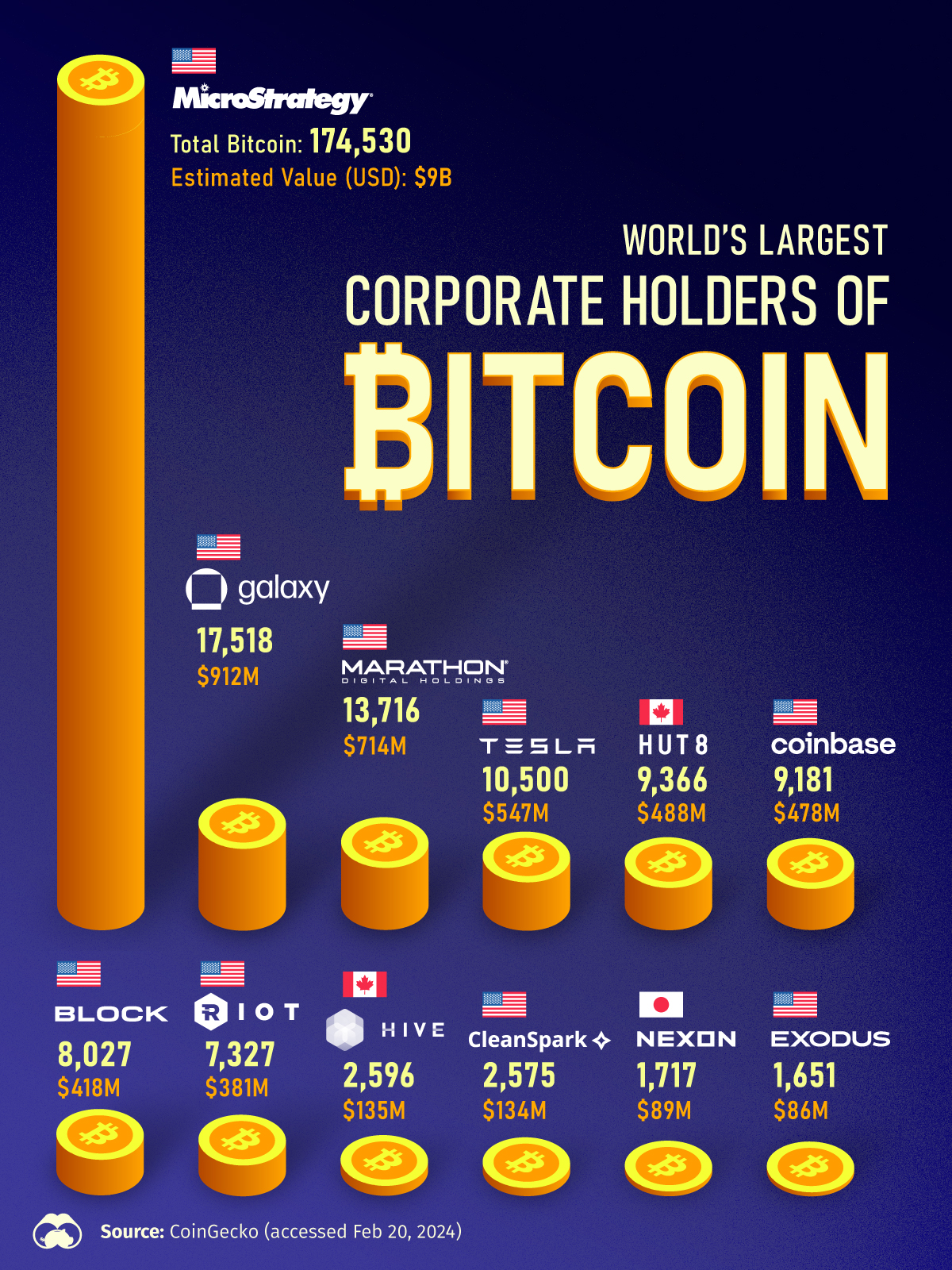
MicroStrategy, a business intelligence firm led by Michael Saylor, has become synonymous with corporate Bitcoin adoption. Unlike other companies that treat Bitcoin as a minor hedge, MicroStrategy has made the acquisition of BTC its primary treasury strategy. As of 2024, the company holds over 200,000 BTC, making it the largest public corporate holder in the world. This strategy has transformed the company into a “Bitcoin proxy” for stock market investors who want exposure to the asset through traditional equity markets.
The Impact of Spot Bitcoin ETFs on Distribution
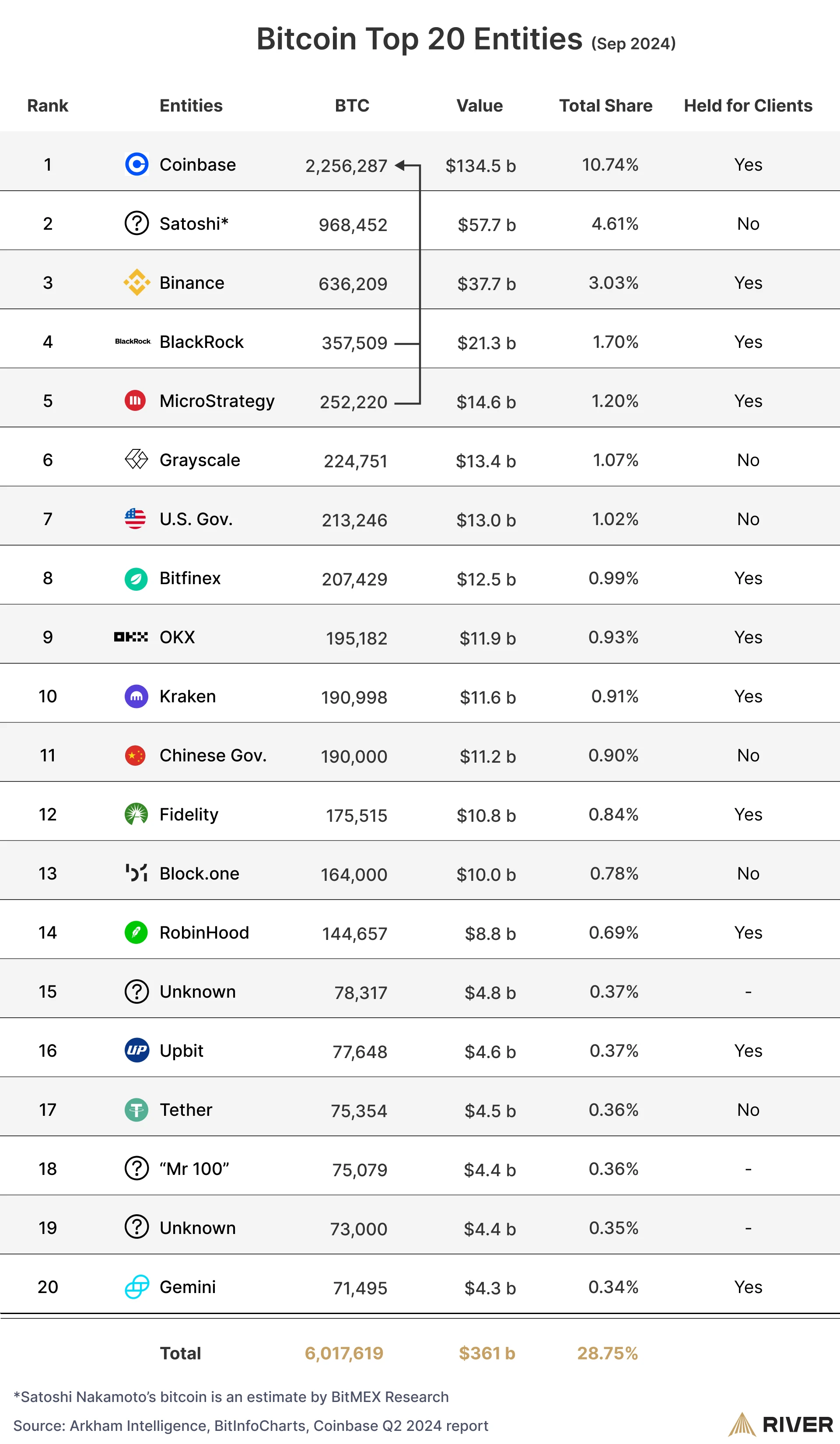
The landscape of ownership changed forever in early 2024 with the approval of Spot Bitcoin ETFs (Exchange-Traded Funds) in the United States. Financial titans like BlackRock (iShares) and Fidelity have quickly accumulated hundreds of thousands of bitcoins on behalf of their clients. These institutions do not “own” the coins in the traditional sense; they act as custodians for retail and institutional investors. However, the sheer volume of BTC held within these funds (over 4% of the total supply) represents a massive shift in how the asset is controlled and priced.
Other Key Corporate Players
Beyond MicroStrategy, companies like Tesla and Block (formerly Square) have also made significant entries into the market. While Tesla famously sold a portion of its holdings, it remains a top-tier holder. These corporate entries signal a shift in business finance, where Bitcoin is increasingly viewed as a “digital gold” that can protect a company’s purchasing power against fiat currency inflation.
Sovereign Holdings: Governments and the Rise of State Ownership
Perhaps the most surprising category of Bitcoin owners is national governments. While many regulatory bodies remain skeptical of decentralized assets, several states have become some of the largest “whales” in the ecosystem, albeit through different means.
The United States’ Seized Fortune
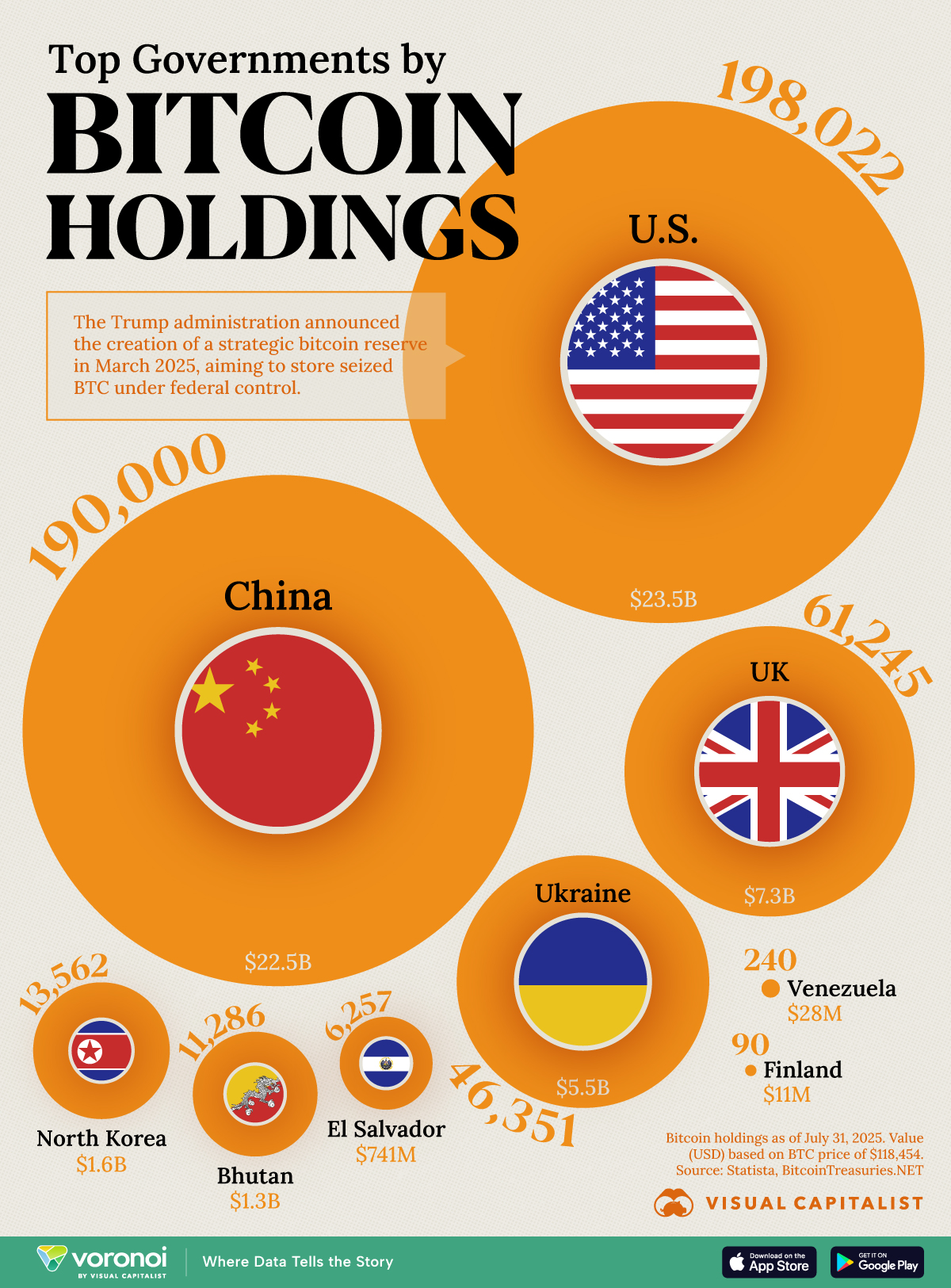
The United States government is consistently one of the largest holders of Bitcoin globally. Unlike MicroStrategy, the U.S. did not buy its Bitcoin as an investment; rather, it acquired it through law enforcement seizures. Major hauls from the Silk Road takedown, the Bitfinex hack recovery, and other cybercrime investigations have left the U.S. Marshals Service in control of upwards of 200,000 BTC. The management of these assets—whether the government auctions them off or holds them as a strategic reserve—is a topic of intense debate in financial circles.
El Salvador: The Bitcoin Nation
In 2021, El Salvador became the first country to adopt Bitcoin as legal tender. Under President Nayib Bukele, the nation has implemented a “dollar-cost averaging” strategy, purchasing one Bitcoin every day. While their total holdings are smaller than those of the U.S. government (estimated at over 5,000 BTC), El Salvador represents a unique case of a sovereign state using Bitcoin as a tool for financial inclusion and national wealth building.
China and Other Silent State Players
While China has famously “banned” crypto trading and mining multiple times, the Chinese government remains a significant holder. Much like the U.S., China has seized massive amounts of digital assets from Ponzi schemes like PlusToken. The presence of these large government-controlled wallets adds a layer of geopolitical complexity to the Bitcoin market, as state-level liquidations could impact global prices.
The Exchange Pools: Custodians for the Masses
When looking at “rich lists” of Bitcoin addresses, the top spots are almost always occupied by cold storage wallets belonging to major cryptocurrency exchanges.
Binance and Coinbase: Managing Global Liquidity
Exchanges like Binance and Coinbase hold hundreds of thousands of bitcoins. It is important to distinguish, however, that these are custodial holdings. They represent the collective wealth of millions of individual retail and institutional users. Coinbase, in particular, serves as the primary custodian for most of the U.S. Spot ETFs, meaning a significant portion of the world’s Bitcoin is physically secured in their vaults, even if they do not own the underlying value.
Distinguishing Between Exchange-Owned and User-Owned Funds
For the savvy investor, monitoring “exchange reserves” is a key metric. When exchange reserves drop, it typically indicates that investors are moving their coins into private storage for long-term holding, reducing selling pressure. Conversely, a spike in exchange-owned wallets often suggests that a sell-off may be imminent. This dynamic underscores the difference between custody and ownership in the financial sense.
The Wealth Distribution Paradox: Whales vs. Retail Investors
A common criticism of Bitcoin is that its wealth is overly concentrated in the hands of a few “whales.” While there is some truth to this, the data reveals a more nuanced story of gradual decentralization.
Understanding Bitcoin Whales
A “whale” is typically defined as an entity holding 1,000 BTC or more. These holders have the power to move markets through large trades. However, many “whale” addresses are actually the exchanges and ETFs mentioned earlier. When you strip away these custodial entities, the number of truly wealthy individual whales is smaller than it appears, yet their influence on market sentiment remains outsized.
The Growing Power of Retail and Small Addresses
On the other side of the spectrum, the “Money” story of Bitcoin is one of increasing retail participation. The number of “shrimp” (addresses holding less than 1 BTC) and “plankton” (even smaller amounts) has grown exponentially over the last decade. This suggests that as the price of Bitcoin rises, the asset is slowly being distributed from early adopters and whales to a broader base of the global population. This democratization of ownership is a key pillar of Bitcoin’s value proposition as a global, neutral reserve currency.
Conclusion: The Evolving Landscape of Digital Ownership
The question of who owns most bitcoins does not have a single answer, but rather a snapshot of a shifting financial landscape. From the untouchable millions of Satoshi Nakamoto to the strategic acquisitions of MicroStrategy and the custodial dominance of BlackRock, Bitcoin ownership has become a microcosm of modern finance.
For the individual investor, this distribution is a signal of maturity. When governments and trillion-dollar asset managers are the primary “whales,” the asset has moved beyond its speculative roots. While the concentration of wealth in any system presents challenges, Bitcoin’s transparent nature ensures that, unlike the legacy financial system, we always know exactly where the coins are. As the remaining supply is mined and the “halving” events continue to squeeze new production, the battle for ownership among corporations, states, and individuals will only intensify, further cementing Bitcoin’s role as the most sought-after financial asset of the digital age.
aViewFromTheCave is a participant in the Amazon Services LLC Associates Program, an affiliate advertising program designed to provide a means for sites to earn advertising fees by advertising and linking to Amazon.com. Amazon, the Amazon logo, AmazonSupply, and the AmazonSupply logo are trademarks of Amazon.com, Inc. or its affiliates. As an Amazon Associate we earn affiliate commissions from qualifying purchases.