
The name Microsoft instantly conjures images of Windows, Office, Xbox, and Azure – ubiquitous technological solutions that have shaped the modern world. As one of the most valuable companies globally, its influence extends far beyond the digital realm, impacting economies, industries, and individual lives. Given its monumental status, a common question often arises: “Who owns Microsoft Corporation?” The answer, while seemingly complex, reveals the democratic and distributed nature of modern corporate finance. Microsoft is not owned by a single individual, a founding family, or a clandestine group; it is a publicly traded company, meaning its ownership is distributed among millions of shareholders worldwide. Understanding this structure is crucial for investors, financial analysts, and anyone interested in the mechanics of global capitalism.
The Publicly Traded Giant: A Shareholder-Owned Enterprise
At its core, Microsoft Corporation (MSFT) is a publicly traded entity, a status it achieved in 1986. This designation fundamentally defines its ownership structure, diverging significantly from privately held companies or sole proprietorships. When a company goes public, it sells shares of its stock to investors, effectively decentralizing ownership. Each share represents a tiny fraction of ownership in the company, granting the holder certain rights and a claim on its assets and earnings.
Understanding Public Ownership
For a company to be publicly traded means its shares are bought and sold on stock exchanges, such as the NASDAQ where Microsoft is listed. This process allows anyone, from large institutional funds to individual retail investors, to become a part-owner of the company. Unlike a private business where ownership is concentrated in a few hands, a publicly traded company’s ownership is dispersed among a vast and ever-changing pool of shareholders. This model not only facilitates capital raising for the company but also provides liquidity for investors, allowing them to buy and sell their stakes with relative ease. The price of these shares fluctuates based on market demand, company performance, economic outlooks, and a myriad of other financial and psychological factors.
The Role of Shareholders
Shareholders are the true owners of Microsoft. This diverse group includes pension funds managing retirement savings, mutual funds pooling money from countless investors, hedge funds seeking aggressive returns, sovereign wealth funds investing on behalf of nations, and millions of individual investors who have purchased shares directly or through brokerage accounts. Each shareholder, regardless of the size of their stake, holds a proportional claim to the company’s profits and assets. Moreover, common shareholders typically have voting rights, enabling them to influence key corporate decisions, such as electing the board of directors, approving mergers, or adopting significant policy changes. This collective ownership, though fragmented, provides a powerful mechanism for oversight and accountability, theoretically aligning the company’s management with the long-term interests of its many owners.
Key Players and Significant Stakes
While Microsoft’s ownership is broadly distributed, some entities and individuals hold more substantial stakes than others, translating into significant financial influence and, in some cases, a louder voice in corporate governance. It’s important to distinguish between “owning” the company outright and holding a significant minority stake that can still exert considerable influence.
Institutional Investors: The Big Movers
The largest portion of Microsoft’s stock is held by institutional investors. These are large organizations that invest on behalf of their clients or members. Major players include:
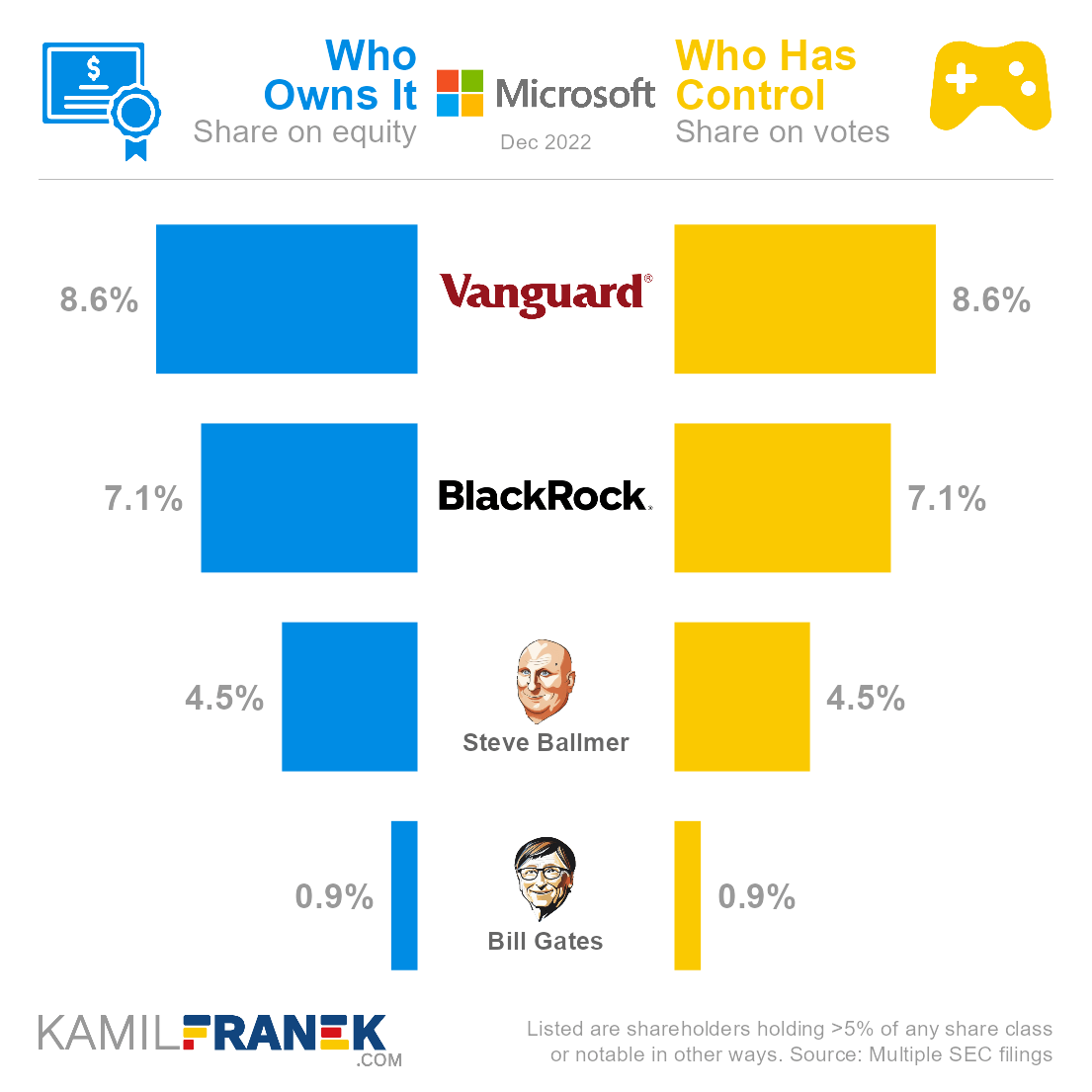
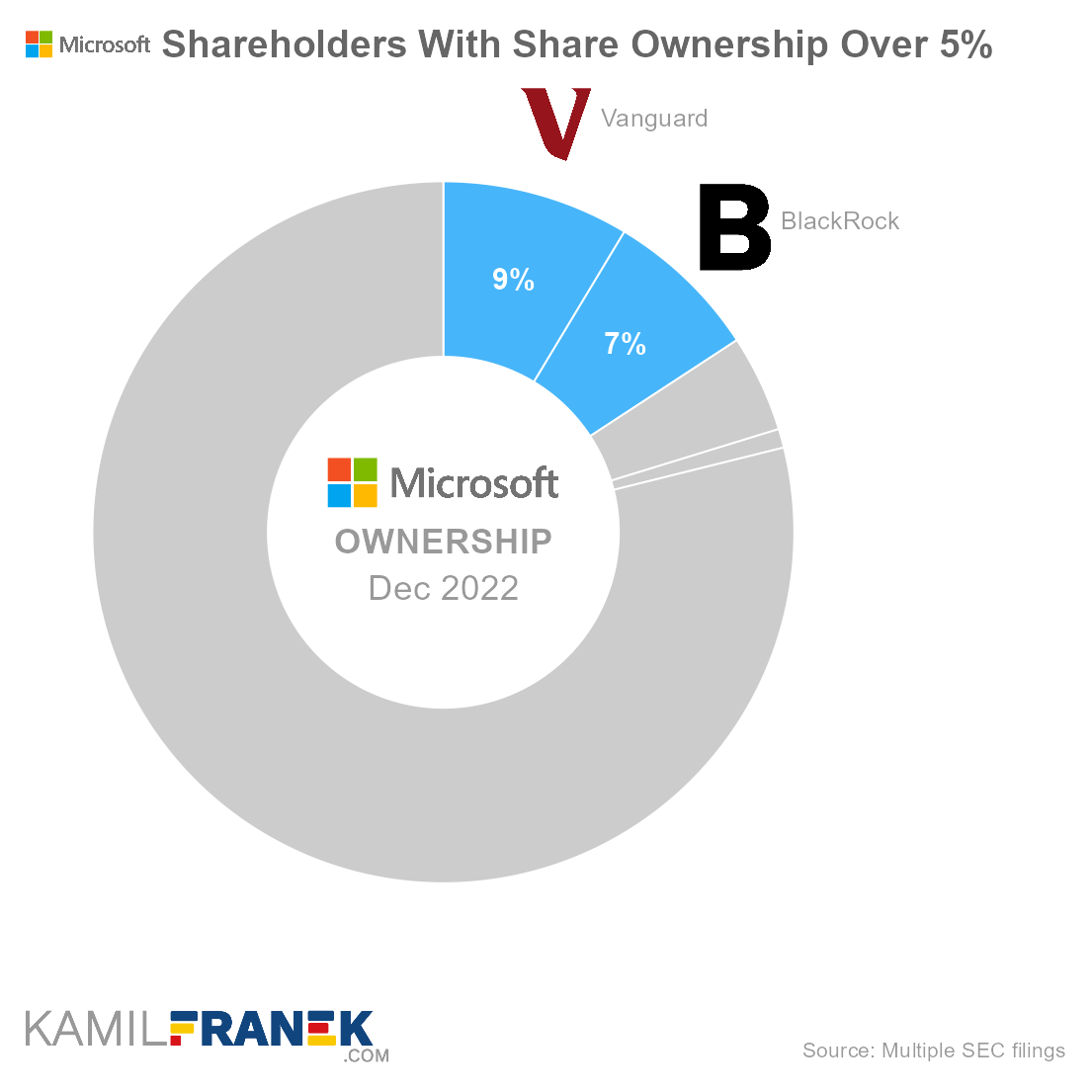
- Mutual Funds: Companies like Vanguard, BlackRock, State Street, and Fidelity manage vast portfolios that often include significant positions in Microsoft. They pool money from individual investors and invest it across a diversified range of stocks, with Microsoft being a common constituent of many growth or large-cap funds.
- Pension Funds: Public and private pension funds, tasked with investing assets to pay future retirees, often hold Microsoft stock as a core, long-term investment due to its stability and growth potential.
- Hedge Funds: While often more dynamic in their trading strategies, many hedge funds also maintain substantial positions in Microsoft, either for long-term appreciation or as part of more complex investment strategies.
- Sovereign Wealth Funds: Government-owned investment funds from countries like Norway, Singapore, or Saudi Arabia often include Microsoft in their diversified global portfolios.
These institutional behemoths collectively own a substantial majority of Microsoft’s outstanding shares. Their investment decisions can significantly impact Microsoft’s stock price and, by extension, its market capitalization. Moreover, their aggregate voting power makes them critical stakeholders in corporate governance, often engaging with management on issues ranging from executive compensation to environmental policies.
Individual Investors: The Collective Power
Beyond the large institutions, millions of individual investors across the globe own Microsoft stock. These are everyday people who buy shares through their brokerage accounts, retirement plans (like 401(k)s or IRAs), or directly through stock purchase programs. While any single individual’s stake might be small in comparison to a BlackRock fund, their collective ownership represents a significant portion of the company. For many, Microsoft is a cornerstone of their investment portfolio, valued for its consistent performance, dividend payments, and long-term growth prospects. These investors contribute to the liquidity of the market and represent the most democratic aspect of corporate ownership.
Founders and Insiders: Enduring Influence
Even decades after its founding, Bill Gates, the co-founder of Microsoft, continues to hold a significant, though diminishing, stake in the company. While he has systematically reduced his holdings over the years to fund his philanthropic endeavors through the Bill & Melinda Gates Foundation, his historical connection and the sheer size of his remaining stake (and the foundation’s stake) still position him as a prominent, albeit non-controlling, individual shareholder.
Similarly, former CEO Steve Ballmer also retains a substantial amount of Microsoft stock, having amassed a large fortune primarily through his ownership in the company. Current executives and board members also own shares, often as part of their compensation packages, aligning their financial interests with those of the broader shareholder base. While these “insider” holdings are a small percentage compared to the institutional and retail investors, their historical and symbolic importance, coupled with their deep understanding of the company, is noteworthy. Their ownership incentivizes them to make decisions that enhance shareholder value, as their personal wealth is directly tied to the company’s financial success.
The Mechanics of Ownership and Value Creation
Understanding who owns Microsoft isn’t just an academic exercise; it reveals critical aspects of how value is created, managed, and distributed in a modern corporation. The dynamic interplay between shareholders, market forces, and corporate governance shapes Microsoft’s financial trajectory.
Stock Exchanges and Market Capitalization
Microsoft’s ownership is actively traded on the NASDAQ stock exchange, one of the world’s largest. The price at which its shares trade, multiplied by the total number of outstanding shares, determines its market capitalization. This figure represents the total market value of the company and is a key metric for investors, reflecting the market’s perception of Microsoft’s worth. As of my last update, Microsoft consistently ranks among the top companies globally by market cap, often vying with Apple for the top spot. This massive valuation underscores the collective financial commitment of its millions of owners and the confidence investors place in its future earnings potential and innovation. The daily ebb and flow of its stock price reflect continuous assessments by shareholders and the broader market about Microsoft’s performance, strategic decisions, and future prospects.
Shareholder Rights and Governance
Being an owner of Microsoft comes with specific rights that are crucial for understanding the financial and governance landscape. Common shareholders typically possess:
- Voting Rights: The ability to vote on matters such as the election of the board of directors, executive compensation plans, and significant corporate actions like mergers or acquisitions. Each share usually entitles the holder to one vote.
- Dividends: A claim on a portion of the company’s profits, which may be distributed as cash payments (dividends). Microsoft has a strong history of paying and increasing its dividends, making it attractive to income-focused investors.
- Preemptive Rights (less common today for public companies but conceptually important): In some cases, the right to purchase new shares issued by the company to maintain their proportional ownership, though this is rare for large public companies like Microsoft.
- Rights to Company Information: Access to financial reports, annual meetings, and other disclosures mandated by regulatory bodies like the SEC, ensuring transparency for investors.
These rights empower shareholders, particularly the large institutional ones, to hold management accountable and ensure the company is run in their collective best interest. The board of directors, elected by shareholders, plays a pivotal role in overseeing management, setting strategic direction, and safeguarding shareholder value.
Financial Implications of Distributed Ownership
The distributed ownership model of Microsoft has profound financial implications, not just for the company itself but for its vast shareholder base and the broader economy. It facilitates capital formation, drives market efficiency, and allows for diversified wealth creation.
Dividends and Shareholder Returns
One of the direct financial benefits of owning Microsoft shares is the potential for dividends. Microsoft has a long-standing practice of returning a portion of its earnings to shareholders through regular dividend payments. For many income-focused investors, these dividends represent a steady stream of income. Furthermore, Microsoft often engages in share buybacks, where it repurchases its own stock from the open market. This reduces the number of outstanding shares, which can increase earnings per share and, in turn, boost the stock price, benefiting remaining shareholders by enhancing the value of their holdings. Both dividends and share buybacks are key mechanisms through which Microsoft creates and returns value to its owners.
Stock Performance and Wealth Creation
For growth-oriented investors, the primary financial implication of owning Microsoft lies in its stock performance. Over decades, Microsoft has been an incredible wealth creator, transforming initial investments into substantial fortunes. Its ability to innovate, adapt to technological shifts, and consistently grow its revenues and profits across diverse business segments (cloud computing, gaming, enterprise software, etc.) has driven its stock price appreciation. For individuals and institutions holding MSFT shares, this long-term capital appreciation is a significant component of their overall investment returns, contributing to retirement savings, educational funds, and other financial goals. The sheer scale of Microsoft’s market capitalization means that even modest percentage gains translate into billions of dollars in added wealth for its owners.
Regulatory Oversight and Transparency
The publicly traded nature of Microsoft subjects it to stringent regulatory oversight from bodies like the U.S. Securities and Exchange Commission (SEC). These regulations mandate comprehensive financial reporting, public disclosure of key business information, and adherence to accounting standards. This transparency is a cornerstone of public ownership, providing investors with the necessary data to make informed decisions and protecting them from fraud or misleading practices. While it imposes compliance costs on the company, it fosters trust and confidence in the financial markets, which is essential for attracting and retaining the diverse shareholder base that owns Microsoft. This regulatory framework is an integral part of the financial ecosystem that governs public corporations.
Why “Who Owns Microsoft” Matters for Your Portfolio
Understanding Microsoft’s ownership structure is not merely an academic exercise; it carries significant practical implications for current and prospective investors, impacting how they view their portfolios, manage risk, and make informed financial decisions.
Diversification and Risk Management
For individual investors, Microsoft often serves as a foundational component of a diversified investment portfolio. Its stability, consistent profitability, and global market leadership help balance higher-risk, higher-reward investments. Knowing that Microsoft is owned by a vast and diverse set of shareholders, including some of the world’s largest and most sophisticated institutional investors, can provide a degree of confidence. This broad ownership base often indicates a robust, well-vetted company with strong corporate governance, which contributes to its perceived lower risk compared to smaller, privately held, or less established entities. Investing in such a widely owned and scrutinized company can be a strategic move to spread risk across various sectors and market segments.
Informed Investment Decisions
For those considering an investment in Microsoft, understanding its ownership structure provides valuable context. It highlights that an investment in MSFT is an investment in a fraction of a highly transparent, well-regulated, and globally influential enterprise, rather than a bet on a single individual or a small group. This insight can help investors assess the long-term viability and governance quality of the company. It encourages a focus on financial fundamentals, management strategy, and market trends, rather than speculating on the whims of a sole proprietor. This knowledge empowers investors to make decisions based on solid financial analysis, rather than misinformation.
The Long-Term Perspective: A Cornerstone Investment
Microsoft’s ownership by millions of long-term investors underscores its status as a cornerstone investment for many. The company’s continued innovation in critical growth areas like cloud computing (Azure), artificial intelligence, and gaming positions it well for sustained future performance. For investors focused on long-term wealth accumulation, Microsoft’s track record, combined with its robust financial health and broad shareholder base, often makes it an attractive candidate for a buy-and-hold strategy. The distributed ownership structure itself is a testament to the enduring appeal and financial strength of the corporation, making it a reliable pillar in many investment portfolios designed to withstand market fluctuations and generate consistent returns over decades.

Conclusion
The question “who owns Microsoft Corporation?” ultimately reveals a testament to modern financial markets: it is owned by millions. From individual retail investors building their retirement savings to colossal institutional funds managing trillions in assets, a global collective holds the reins of this technology giant. Microsoft’s publicly traded status means its ownership is democratic, transparent, and constantly valued by the ebb and flow of the stock market. This distributed ownership model not only provides Microsoft with the capital to innovate and grow but also aligns the interests of its management with a vast and diverse shareholder base, all seeking long-term financial success. For investors, understanding this intricate web of ownership is key to recognizing Microsoft not just as a technology leader, but as a robust and dynamic financial asset capable of generating substantial wealth over time.
aViewFromTheCave is a participant in the Amazon Services LLC Associates Program, an affiliate advertising program designed to provide a means for sites to earn advertising fees by advertising and linking to Amazon.com. Amazon, the Amazon logo, AmazonSupply, and the AmazonSupply logo are trademarks of Amazon.com, Inc. or its affiliates. As an Amazon Associate we earn affiliate commissions from qualifying purchases.