
The question “who owns Microsoft company?” often conjures images of Bill Gates, the visionary co-founder who built the tech titan from the ground up. While his legacy and historical influence are undeniable, the reality of ownership for a company as colossal as Microsoft is far more complex, dynamic, and distributed. As one of the world’s most valuable publicly traded corporations, Microsoft is not “owned” by a single individual or entity in the traditional sense. Instead, its ownership is a intricate mosaic of millions of shareholders, ranging from institutional behemoths managing vast investment portfolios to individual retail investors and even its own employees.
Understanding who truly owns Microsoft means delving into the sophisticated world of corporate finance, investment strategies, and the mechanics of public markets. It’s a story of shared capital, distributed influence, and the collective financial interests that drive one of the globe’s most impactful businesses. This article will dissect Microsoft’s ownership structure, revealing the key players, their financial stakes, and the implications of this multifaceted arrangement on the company’s governance and strategic direction.
The Publicly Traded Paradox: No Single Owner
At the core of Microsoft’s ownership structure is its status as a publicly traded company. This fundamental characteristic means that ownership is fractionalized into millions of shares of stock, which are bought and sold on global stock exchanges. This mechanism fundamentally distinguishes Microsoft from privately held enterprises, where ownership might reside with a small group of founders, families, or private equity firms.
Understanding Public Ownership
When a company goes public through an Initial Public Offering (IPO), it sells portions of its ownership (shares) to the public. Each share represents a tiny sliver of equity in the company. In return for these shares, the company receives capital, which it can use for growth, research, acquisitions, or to pay down debt. For investors, buying these shares means they become partial owners, hoping the company’s value will increase over time, leading to capital gains or dividend payments. This model democratizes ownership, spreading it across a vast and diverse pool of investors, rather than concentrating it in a few hands. This also introduces liquidity, allowing investors to easily buy or sell their stake.
The Role of Shareholders
Every individual or institution holding Microsoft stock is a shareholder, and collectively, these shareholders own the company. However, ownership doesn’t come with direct operational control in day-to-day management. Instead, shareholders typically have voting rights, proportional to the number of shares they own. These rights are exercised primarily to elect the company’s Board of Directors, approve major corporate actions like mergers or significant changes to the corporate charter, and vote on executive compensation. The Board, in turn, is responsible for overseeing the company’s management team and ensuring that the company acts in the best long-term financial interests of its shareholders. It’s a collective form of ownership where influence is directly tied to financial stake.
Why Publicly Trade? The Financial Imperative
Companies like Microsoft choose to go public for several compelling financial reasons. Primarily, it’s a powerful way to raise substantial capital to fund expansion, innovation, and strategic initiatives without incurring debt. For early investors and founders, an IPO provides a pathway to liquidity, allowing them to monetize their initial investments. Public status also enhances a company’s profile and credibility, making it easier to attract talent, secure advantageous financing, and engage in large-scale partnerships. Furthermore, the transparency requirements that come with being publicly traded (regular financial reporting, audits) can foster greater investor confidence, potentially leading to a higher valuation and easier access to future capital markets. For a company of Microsoft’s scale, the ability to tap into global capital markets through public ownership is a cornerstone of its sustained financial dominance.
Major Players: Institutional Investors and Their Influence
While millions of individuals own Microsoft shares, the bulk of the company’s equity, and thus its voting power, resides with institutional investors. These are professional organizations that manage vast pools of money on behalf of others, making them the most significant collective owners and influential stakeholders in the corporate world. Their financial holdings often represent hundreds of billions, sometimes trillions, of dollars.
The Goliaths of Wall Street: Funds and Their Stakes
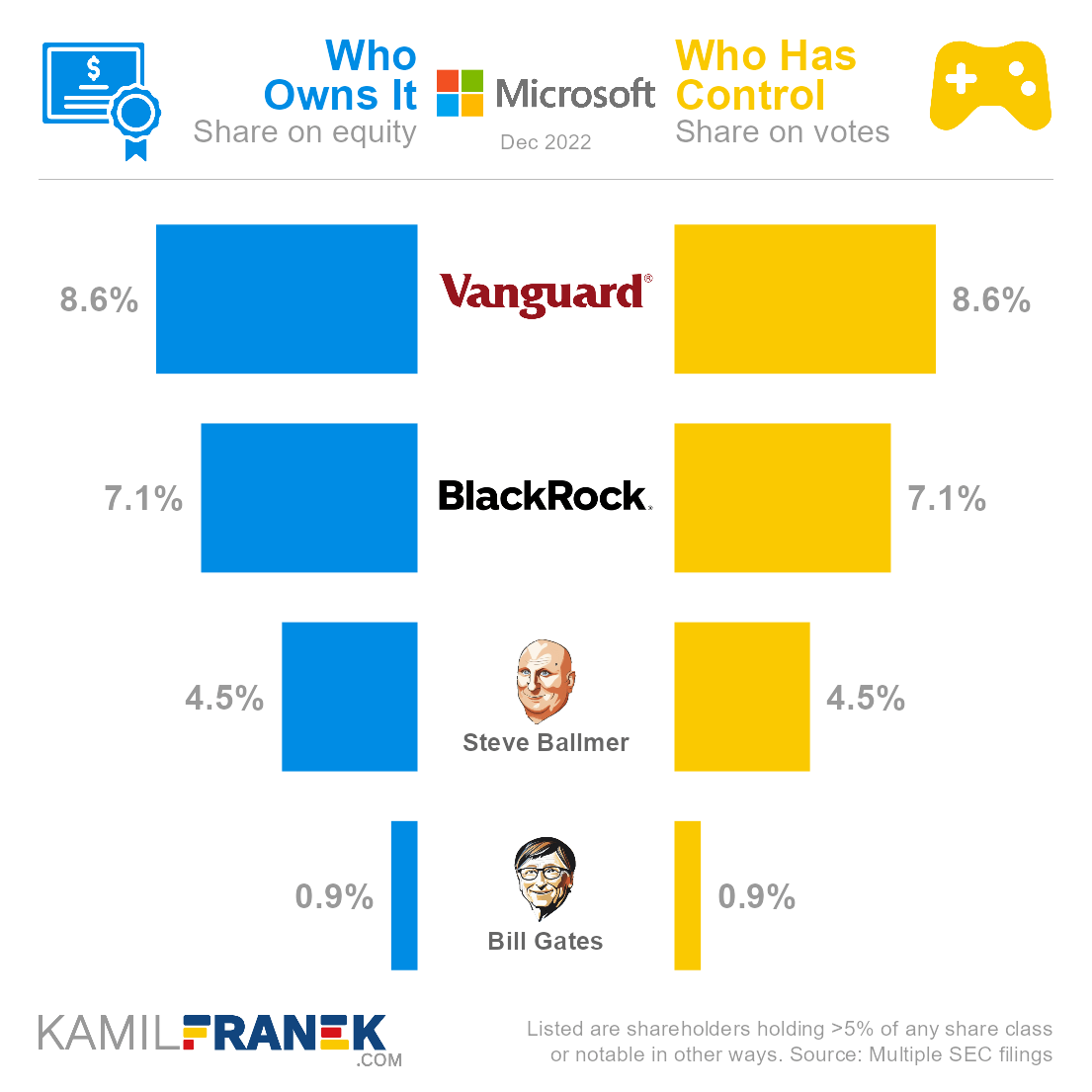
Leading the pack of Microsoft owners are the behemoths of the investment world: mutual funds, exchange-traded funds (ETFs), pension funds, hedge funds, and sovereign wealth funds. Firms like Vanguard Group, BlackRock, State Street Corporation, and Fidelity Investments collectively own massive percentages of Microsoft. These institutions often hold shares in hundreds or even thousands of companies as part of diversified portfolios designed to meet specific investment objectives for their clients (e.g., retirement savings, college endowments). Their holdings are so substantial that even a fractional percentage change in their stake can represent billions of dollars. For instance, it’s common for the top three or four institutional investors to collectively own upwards of 15-20% of a large public company like Microsoft.
Passive vs. Active Investing: Different Paths to Ownership
The approach to institutional investment varies significantly. Passive investors, primarily large index funds managed by firms like Vanguard and BlackRock, aim to replicate the performance of a market index (e.g., S&P 500). Since Microsoft is a significant component of major indices, these funds are compelled to hold a corresponding amount of Microsoft stock. Their ownership is driven by index methodology rather than active stock picking. Active investors, on the other hand, such as hedge funds or actively managed mutual funds, conduct in-depth research to identify undervalued stocks or specific growth opportunities. They actively trade shares based on their market outlook. Both types of investors contribute to Microsoft’s distributed ownership, but their engagement with the company and their reasons for holding its stock differ considerably.
Proxy Voting and Corporate Governance: Shaping the Future
The sheer size of institutional holdings grants these investors considerable sway over Microsoft’s corporate governance. Through proxy voting, they cast votes on critical company matters, including the election of directors, executive compensation packages, and significant strategic proposals. While they rarely interfere with day-to-day operations, their collective voice can strongly influence the composition of the Board of Directors, ensuring that the company’s leadership remains accountable to shareholder interests. Large institutional investors often engage in dialogue with management on issues like environmental, social, and governance (ESG) practices, succession planning, and long-term strategy, leveraging their financial power to shape Microsoft’s trajectory and ensure it maintains a focus on shareholder value.
The Founders’ Legacy: Bill Gates and Steve Ballmer’s Enduring Stake
While institutional investors dominate in aggregate, the founders and early leaders of Microsoft have maintained significant, albeit evolving, personal financial interests in the company. Their holdings represent a historical connection to the company’s origins and a continued belief in its future potential, though their roles have largely shifted from operational management to strategic oversight and philanthropy.
Bill Gates’ Evolving Ownership: From Founder to Philanthropist
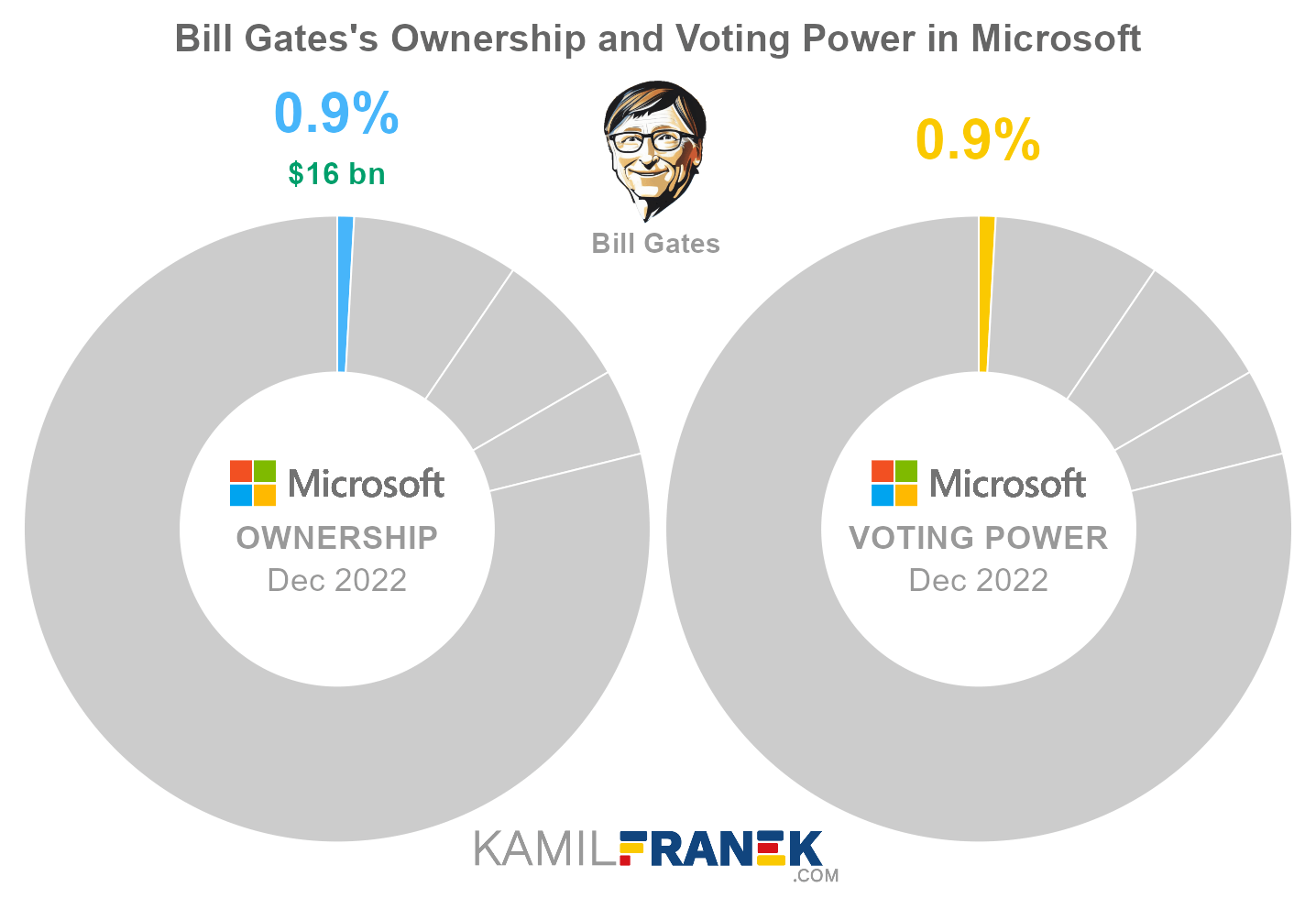
Bill Gates, Microsoft’s co-founder, was once the company’s largest single shareholder. Over the years, however, his direct ownership has significantly decreased as he has diversified his wealth and, more notably, channeled vast sums into the Bill & Melinda Gates Foundation Trust. This trust, a separate legal entity, manages an enormous endowment primarily focused on global health and development. While Bill Gates personally holds a relatively small percentage of Microsoft stock today compared to his peak, the Bill & Melinda Gates Foundation Trust remains a substantial shareholder, often ranking among the top institutional investors. His transition reflects a strategic shift from direct corporate control to leveraging his wealth for philanthropic endeavors, while still maintaining an indirect, significant stake in the company he helped create.
Steve Ballmer’s Substantial Holdings: The Largest Individual Shareholder
Interestingly, former Microsoft CEO Steve Ballmer now stands as the largest individual shareholder of Microsoft stock. Upon his retirement from Microsoft in 2014, Ballmer retained a substantial portion of his equity. Unlike Gates, who significantly divested for philanthropic purposes, Ballmer has largely maintained his financial position in the company, showcasing his continued confidence in its long-term performance. His massive personal wealth is largely tied to his Microsoft shares, making him a profoundly invested stakeholder with a keen interest in the company’s financial success. Ballmer’s ongoing significant stake underscores how former executives can continue to be powerful owners, even after stepping away from active management.
Insider Ownership and Confidence: A Financial Vote of Trust
The sustained, significant ownership by founders and former executives like Gates (through his trust) and Ballmer, as well as current executives and board members, is a powerful signal to the market. This “insider ownership” suggests a deep belief in the company’s future prospects and its ability to generate continued financial returns. When those closest to the company’s operations and strategy invest their own substantial capital, it often instills greater confidence among external investors. It indicates that the leadership’s financial interests are closely aligned with those of all other shareholders, promoting a shared commitment to long-term value creation and robust financial performance.
The Distributed Power: Retail Investors and Employee Stock Plans
Beyond the institutional giants and founding figures, a significant portion of Microsoft’s ownership is distributed among a vast multitude of individual investors and, crucially, its own workforce. This broad base of ownership further decentralizes control and ensures that the company’s success directly benefits a diverse group of people.
The Everyday Shareholder: Power in Numbers
Millions of individual or “retail” investors around the globe hold Microsoft shares. These can range from small investors buying a few shares through their brokerage accounts as part of a personal savings strategy, to long-term holders accumulating shares for retirement or educational funds. While any single retail investor holds a tiny fraction of the company, their collective ownership is substantial. Each time an individual purchases Microsoft stock, they become a partial owner, contributing to the demand for shares and indirectly influencing the company’s market valuation. Their financial decisions, driven by personal investment goals, collectively form a significant component of the overall market sentiment surrounding Microsoft.
Employee Stock Purchase Plans (ESPPs) and Restricted Stock Units (RSUs): Internalizing Ownership
Microsoft, like many leading tech companies, actively encourages employee ownership through various programs. Employee Stock Purchase Plans (ESPPs) allow employees to buy company stock, often at a discount, through payroll deductions. This makes it easier for staff to invest in the company’s future. Additionally, Restricted Stock Units (RSUs) are a common form of compensation, particularly for tech workers. RSUs are grants of company stock that vest over a period of time, meaning employees gain full ownership of the shares after fulfilling certain conditions (e.g., continuous employment for a specified number of years).
These programs are more than just compensation tools; they are powerful mechanisms for aligning employee interests with shareholder interests. When employees own a piece of the company, they have a direct financial incentive to contribute to its success, improve productivity, and ensure its long-term profitability. This internal ownership fosters a culture of shared responsibility and dedication to the company’s financial performance.
Decentralized Influence: A Broad Base of Support
While retail investors and individual employees might not wield the same direct influence as a multi-trillion-dollar institutional fund, their collective presence is vital. Their buying and selling activity contributes significantly to market liquidity and stock price movements. Moreover, their broad base of support for the company, as both customers and owners, reinforces Microsoft’s brand strength and market stability. This highly decentralized ownership means that Microsoft’s fate is tied not just to a few powerful players, but to the collective financial aspirations of a vast and global community.
Implications of Microsoft’s Ownership Structure on its Financial Trajectory
The diverse and distributed ownership model of Microsoft has profound implications for its financial strategy, corporate governance, and long-term sustainability. It shapes how the company allocates capital, makes strategic decisions, and interacts with the financial markets.
Stability and Governance: A Bulwark Against Volatility
Microsoft’s widespread ownership, particularly the large holdings by stable institutional investors, contributes significantly to its corporate stability. Such a diffused structure makes hostile takeovers extremely difficult, providing management with a degree of insulation to pursue long-term strategies without constant fear of immediate external threats to control. The robust governance framework, influenced by a diverse board elected by a broad shareholder base, promotes accountability and ensures that decisions are made with the overarching goal of maximizing long-term shareholder value rather than catering to narrow interests. This financial stability allows Microsoft to invest heavily in R&D, make strategic acquisitions, and navigate economic cycles with greater resilience.
Shareholder Value Focus: Driving Profitability and Returns
Every decision made by Microsoft’s management and Board of Directors is ultimately scrutinized through the lens of shareholder value. This pressure from diverse owners drives a relentless focus on profitability, operational efficiency, and innovation. The company is expected to generate strong earnings per share, deliver consistent revenue growth, and effectively manage its capital. This translates into strategies such as regular dividend payments, share buyback programs (which reduce the number of outstanding shares and can boost EPS), and strategic investments designed to secure future market leadership. The ownership structure thus directly fuels Microsoft’s drive to maintain its position as a financially robust and attractive investment.
Market Capitalization and Valuation: Reflecting Collective Confidence
Microsoft’s ownership structure is inextricably linked to its immense market capitalization, which frequently places it among the most valuable companies in the world. The collective confidence of millions of institutional and individual investors in Microsoft’s business model, its leadership, its innovation pipeline, and its future earning potential is what underpins its multi-trillion-dollar valuation. Each share traded reflects the market’s assessment of Microsoft’s financial health and prospects. This continuous valuation process, driven by the actions of its global shareholder base, is a testament to the power of public ownership and the collective belief in the enduring financial strength of the company.

Conclusion
The question of “who owns Microsoft company?” ultimately reveals a dynamic and broadly distributed ownership structure, characteristic of the world’s largest publicly traded enterprises. It’s not a single entity, nor just Bill Gates or Steve Ballmer, but a vast collective of millions of shareholders. From the institutional investment giants like Vanguard and BlackRock, managing colossal funds on behalf of countless beneficiaries, to the myriad individual retail investors and dedicated employees holding stock, each party owns a piece of Microsoft.
This intricate web of ownership underscores the democratic nature of modern capitalism, where financial success and influence are shared, albeit unequally, across a global spectrum. It ensures that Microsoft’s strategic direction and financial performance are under constant scrutiny, driven by the collective interests of its diverse stakeholders. In essence, Microsoft is owned by the market itself – a testament to its enduring financial appeal and its status as a cornerstone of the global economy.
aViewFromTheCave is a participant in the Amazon Services LLC Associates Program, an affiliate advertising program designed to provide a means for sites to earn advertising fees by advertising and linking to Amazon.com. Amazon, the Amazon logo, AmazonSupply, and the AmazonSupply logo are trademarks of Amazon.com, Inc. or its affiliates. As an Amazon Associate we earn affiliate commissions from qualifying purchases.