
JPMorgan Chase & Co. is not just a bank; it’s a colossal financial institution, a titan of Wall Street with operations spanning investment banking, commercial banking, asset management, and consumer and community banking across the globe. Given its immense size and influence, a natural question arises: “Who actually owns this behemoth?” The answer, far from being a simple name or entity, reveals the intricate mechanics of modern corporate finance. JPMorgan Chase is a publicly traded company, which means its ownership is widely dispersed among millions of shareholders, a model fundamental to understanding how most large corporations operate in today’s global economy. This distributed ownership, while complex, underscores the principles of shareholder capitalism and the constant interplay of market forces, institutional power, and individual investment.
The Publicly Traded Nature of JPMorgan Chase
At its core, JPMorgan Chase operates as a publicly traded company. This status dictates its ownership structure and how it raises capital, distinguishing it from privately held enterprises. Understanding this foundational aspect is crucial to grasping who truly holds the reins.
Distinguishing Public vs. Private Ownership
A company like JPMorgan Chase that is “publicly traded” means its shares are bought and sold on stock exchanges, such as the New York Stock Exchange (NYSE), where JPM is listed. This contrasts sharply with privately held companies, which are owned by a small group of individuals, families, or private equity firms, and whose shares are not available for public trading. The implications of being public are profound:
- Access to Capital: Public companies can raise vast amounts of capital by issuing new shares to investors, fueling growth and expansion.
- Transparency: Public status comes with stringent regulatory requirements, mandating regular disclosure of financial performance, operational details, and corporate governance practices, offering a high degree of transparency to investors and the public.
- Liquidity: Shareholders in public companies can easily buy or sell their shares, providing liquidity for their investments.
- Dispersed Ownership: Critically, ownership is distributed among a multitude of investors, rather than concentrated in a few hands.
Shares and Shareholders: The True Owners
When you buy a share of JPMorgan Chase stock, you are purchasing a tiny fraction of ownership in the company. Each share represents a claim on the company’s assets and earnings, along with certain rights, most notably the right to vote on key corporate matters and to receive a share of profits in the form of dividends. JPMorgan Chase has billions of outstanding shares, meaning its ownership is effectively divided among millions of entities and individuals worldwide. There is no single owner, no one person or family that possesses a majority stake controlling the entire enterprise. Instead, the company is collectively owned by its shareholders, each holding a piece of the pie. This collective ownership model is the bedrock of its corporate governance and financial structure.
The Dominance of Institutional Investors
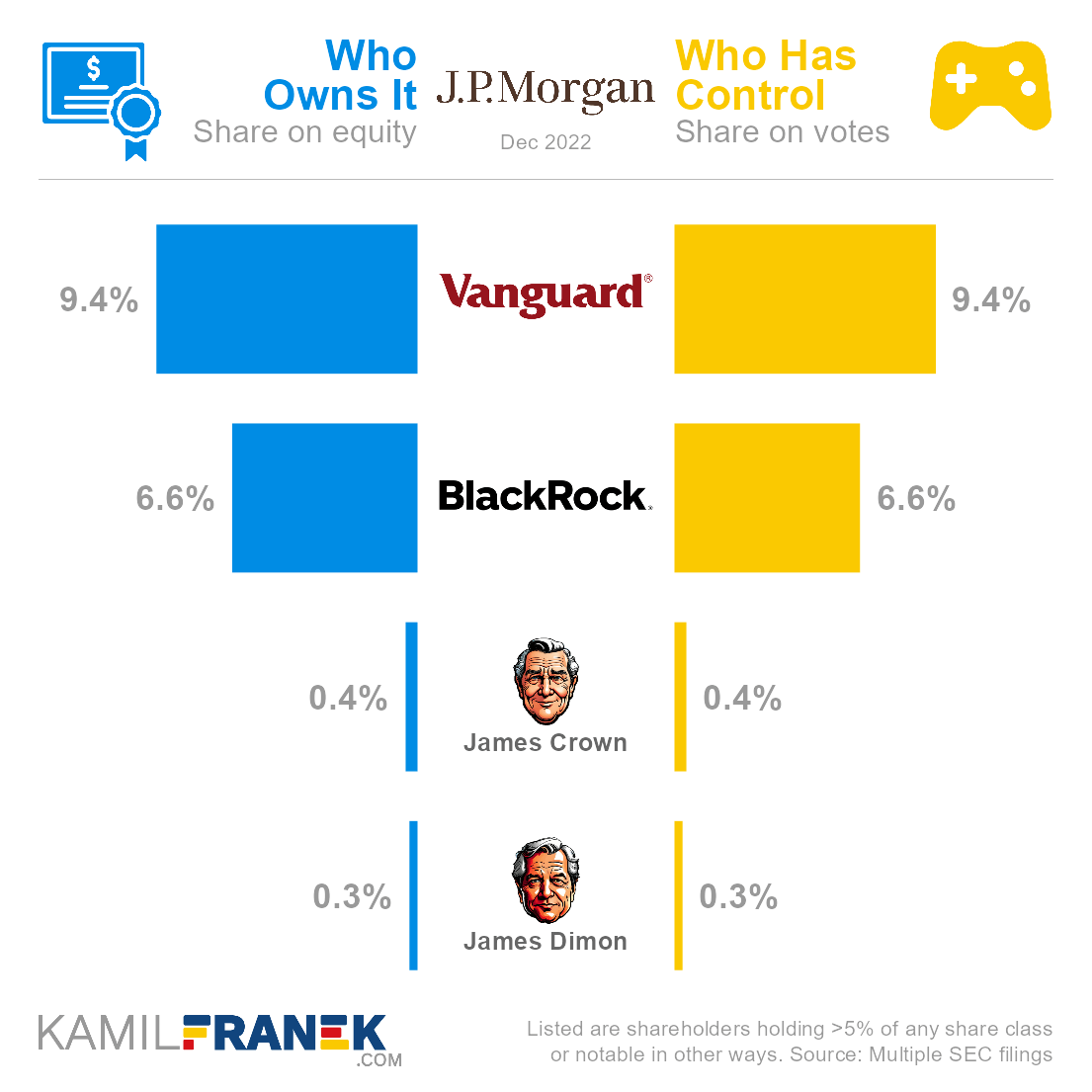
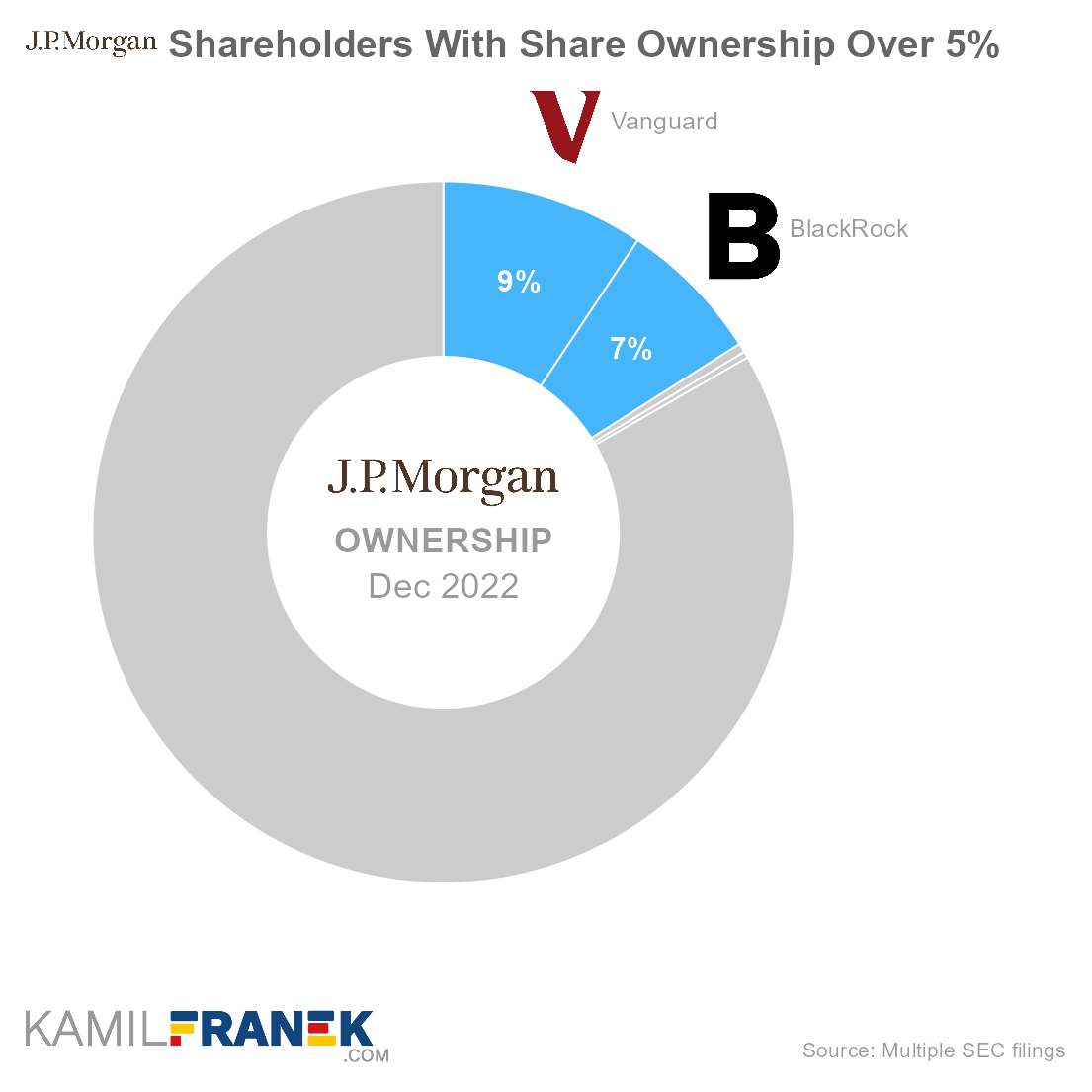
While millions of entities own a piece of JPMorgan Chase, a significant portion of its ownership is concentrated in the hands of large institutional investors. These are not individuals but vast organizations that manage assets on behalf of their own clients or beneficiaries. Their sheer size and investment strategies make them formidable stakeholders in JPM and countless other public companies.
Who Are the Major Institutional Owners?
Institutional investors represent a diverse group of powerful financial entities. In the case of JPMorgan Chase, the largest shareholders are typically:
- Asset Management Firms: Giants like BlackRock, Vanguard Group, State Street Corp., and Capital Research Global Investors are consistently among the top holders. These firms manage vast portfolios for mutual funds, exchange-traded funds (ETFs), and institutional clients, allocating capital across thousands of companies.
- Pension Funds: Public and corporate pension funds invest billions to secure retirement benefits for their members, often holding significant stakes in blue-chip companies like JPM.
- Hedge Funds: While often more active and short-term oriented, some hedge funds also hold substantial long-term positions.
- Sovereign Wealth Funds: Funds managed by governments, particularly from oil-rich nations, also deploy capital into major global corporations.
These institutions don’t buy shares for personal use; they do so on behalf of their millions of clients—from individual investors in a Vanguard mutual fund to government employees in a state pension plan. Their investment decisions are driven by mandates to achieve long-term growth, generate income, and diversify risk across their portfolios.
The Influence of Large Block Holders
The substantial stakes held by these institutional investors translate into considerable influence over JPMorgan Chase. While no single institution typically owns a majority of shares, their combined holdings can represent a significant voting bloc. This influence manifests in several ways:
- Voting Rights: Institutional investors exercise their voting rights on matters such as the election of the board of directors, executive compensation, and significant corporate actions (e.g., mergers, acquisitions, share buybacks). They often have sophisticated governance teams dedicated to analyzing proxy statements and engaging with company management.
- Shareholder Engagement: Large institutions frequently engage directly with company management and the board of directors on issues ranging from environmental, social, and governance (ESG) policies to capital allocation strategies and succession planning.
- Activist Pressure: While less common for a highly diversified company like JPM, activist investors (a subset of institutional investors) might acquire a substantial stake to push for specific changes they believe will unlock shareholder value.
It’s crucial to understand that even with large stakes, these institutions do not “control” JPMorgan Chase in the traditional sense of dictating day-to-day operations or a specific product strategy. Their influence is primarily at the strategic and governance level, ensuring the company is run efficiently and in the best interests of all shareholders.
The Role of Individual Investors and Company Insiders
Beyond the towering presence of institutional investors, millions of individual investors also hold a direct stake in JPMorgan Chase. Moreover, the individuals who lead and manage the company, while not “owners” in the majority sense, play a critical role and often hold significant personal investments in the firm.
Retail Investors: The Everyday Owners
Retail investors are individual investors who buy and sell stocks for their personal portfolios. These can range from a retiree managing their own savings to a young professional investing through a brokerage app. While an individual retail investor typically holds a much smaller percentage of JPM shares compared to, say, BlackRock, their collective ownership is substantial and forms a vital part of the company’s shareholder base.
- Diverse Motivations: Retail investors buy JPM stock for various reasons: long-term capital appreciation, dividend income, or as part of a diversified portfolio seeking exposure to the financial sector.
- Collective Voice: Though individually smaller, retail investors collectively have voting rights, and their sentiment can impact stock performance and company reputation. Modern brokerage platforms and shareholder proxy services make it easier for individuals to exercise these rights.
Management and Board of Directors: Stewardship, Not Ownership
It’s a common misconception that the CEO or the Board of Directors “owns” the company. In a publicly traded corporation like JPMorgan Chase, this is not the case. Individuals like CEO Jamie Dimon and other senior executives, along with members of the Board of Directors, are employees or representatives of the shareholders.
- Fiduciary Duty: Their primary responsibility is a fiduciary duty to manage the company on behalf of, and for the benefit of, the shareholders. They are stewards of the company’s assets and strategy, accountable to the owners.
- Significant Personal Holdings: While not owners in the controlling sense, executives and board members often hold significant amounts of company stock. This is typically part of their compensation package, designed to align their interests with those of the shareholders. When the company performs well, their personal wealth tied to the stock also grows, creating a strong incentive for effective management. These holdings, while large for an individual, still represent a tiny fraction of the total outstanding shares.
Employee Stock Ownership Plans (ESOPs) and Stock Options
Beyond top management, many employees across JPMorgan Chase may also be shareholders through various programs:
- Employee Stock Purchase Plans (ESPPs): Allow employees to buy company stock, often at a discount.
- Stock Options and Restricted Stock Units (RSUs): These are common forms of compensation, particularly for mid-to-senior level employees, giving them the right to purchase or receive company stock, vesting over time. This fosters a sense of ownership and aligns employee performance with shareholder value.
These programs broaden the ownership base further, making a significant portion of the workforce stakeholders in the company’s success.
Why Understanding Ownership Matters for Investors
The complex, dispersed ownership structure of JPMorgan Chase is not merely an academic detail; it has profound implications for corporate governance, accountability, and the dynamics of investing. For any individual or institution considering an investment in JPM, understanding this landscape is crucial.
Corporate Governance and Accountability
The “who owns it” question is intrinsically linked to “who holds it accountable.” In a publicly traded company, accountability flows primarily upwards to the shareholders.
- Board Oversight: The Board of Directors, elected by shareholders, is responsible for overseeing management, setting strategic direction, and ensuring the company operates ethically and effectively. Independent directors (those without direct ties to management) are key to robust governance.
- Shareholder Rights: Shareholders have rights, including the right to vote, attend annual meetings, and access company information. These rights empower them to influence corporate behavior and hold management accountable.
- Regulatory Framework: The financial industry is heavily regulated. Regulators like the Federal Reserve, the OCC, and the SEC oversee banks like JPM, further ensuring sound financial practices and protecting investors and the broader financial system.
Investment Implications
For current and prospective investors, understanding the ownership structure offers valuable insights:
- Stability and Strategy: The presence of large, long-term institutional investors often indicates a degree of stability and confidence in the company’s long-term strategy. These institutions typically perform extensive due diligence.
- Voting Power and Activism: Knowing who the major owners are can inform an investor about potential for shareholder activism, where an investor may push for changes in management, strategy, or financial policies. While JPM is a large, stable company, such pressures can still arise.
- Capital Allocation: The collective influence of shareholders can impact decisions regarding capital allocation, such as dividend policies, share buybacks, and investment in new ventures.
- Market Perception: The ongoing buying and selling by institutional investors can significantly influence the stock price and market perception of the company.

The Dynamic Nature of Ownership
It is essential to remember that the ownership percentages in JPMorgan Chase are not static. Given its status as a publicly traded company, shares are constantly bought and sold on the open market every trading day. This means the list of top shareholders can shift, and the exact distribution of ownership changes continually. Investors move in and out of positions based on market conditions, company performance, broader economic trends, and their own investment strategies. This dynamic nature is a hallmark of efficient public markets, reflecting the continuous valuation and revaluation of the company by millions of market participants.
In conclusion, JPMorgan Chase is not owned by a single individual, family, or even a handful of powerful institutions in an absolute sense. It is a quintessential example of a modern publicly traded corporation, owned by a vast, diverse group of shareholders. While institutional investors, managing immense pools of capital, hold the largest collective stakes and exert significant influence, millions of individual investors also own a piece of this financial giant. This dispersed ownership model is a fundamental characteristic of modern capitalism, distributing both the risks and rewards of corporate success across a broad base of stakeholders, all united by their shared interest in the company’s long-term performance and value creation.
aViewFromTheCave is a participant in the Amazon Services LLC Associates Program, an affiliate advertising program designed to provide a means for sites to earn advertising fees by advertising and linking to Amazon.com. Amazon, the Amazon logo, AmazonSupply, and the AmazonSupply logo are trademarks of Amazon.com, Inc. or its affiliates. As an Amazon Associate we earn affiliate commissions from qualifying purchases.