
In an era where travel aspirations often collide with budget realities, mastering the art of finding affordable flights has become a cornerstone of personal financial planning. For many, the cost of airfare represents one of the largest single expenditures in a travel budget, making every dollar saved a significant victory. The seemingly simple question, “What days are the cheapest to fly?”, opens a Pandora’s box of insights into airline pricing strategies, consumer behavior, and sophisticated financial planning for leisure and business trips alike. This guide delves deep into the mechanics of flight pricing, offering actionable intelligence to help you consistently secure the best deals and stretch your travel dollar further.

Understanding the ebb and flow of flight prices isn’t just about luck; it’s about applying a systematic approach rooted in financial literacy and strategic timing. By demystifying the factors that influence ticket costs, we empower you to move beyond guesswork and towards informed decision-making, transforming you from a passive consumer into an active participant in your own financial well-being. From deciphering the algorithms airlines employ to understanding the psychological triggers behind demand, this exploration will equip you with the knowledge to consistently identify and capitalize on opportunities for significant savings, making your travel dreams more accessible and sustainable.
The Core Principle: Understanding Flight Pricing Dynamics
Before we pinpoint specific days, it’s crucial to grasp the fundamental forces that govern flight prices. Airlines don’t price tickets arbitrarily; they use highly complex algorithms driven by real-time data to maximize revenue. This intricate dance of supply, demand, and strategic forecasting forms the bedrock of every ticket price you encounter. Understanding these underlying mechanics is the first step towards outsmarting the system and saving money.
Supply and Demand: The Invisible Hand of Airfares
At its heart, airline pricing adheres to the economic principle of supply and demand. When demand for seats on a particular route and date is high, prices naturally surge. Conversely, when demand is low, airlines reduce prices to fill seats. This dynamic explains why flights during peak holiday seasons, school breaks, or major events are invariably more expensive. The supply, or the number of available seats, is relatively fixed once a flight is scheduled, meaning fluctuations primarily come from shifts in demand.
- Peak Travel Times: These include major holidays (Christmas, New Year’s, Thanksgiving), spring break, summer vacation months, and long weekends. During these periods, a large number of leisure travelers and families are competing for a limited number of seats, driving prices sky-high.
- Off-Peak Travel Times: Conversely, demand tends to be lower during shoulder seasons (e.g., late January to early March, September to mid-November, excluding holidays). Fewer people are traveling, leading airlines to lower prices to incentivize bookings.
- Business vs. Leisure Travel: Airlines also segment their market. Business travelers often book last-minute and are less price-sensitive, paying higher fares for convenience and flexibility. Leisure travelers, typically more budget-conscious, book further in advance and are more flexible with dates. Airlines strategically price different fare classes to capture both segments.
Airline Revenue Management: A Complex Algorithm at Play
Modern airline pricing is far more sophisticated than simple supply and demand. Airlines employ advanced revenue management systems that dynamically adjust prices based on hundreds of variables. These algorithms predict future demand, analyze competitor pricing, track booking patterns, and even consider the time of day a flight is searched.
- Dynamic Pricing: This means prices can change multiple times a day, even within minutes. Factors like how many seats have been sold, the time remaining until departure, and even the browsing history of a potential customer can influence the displayed price.
- Fare Buckets: Each flight has a finite number of seats allocated to different “fare buckets,” each with a different price point and set of restrictions. As cheaper fare buckets sell out, the system automatically moves to higher-priced ones. This is why two people on the same flight might have paid vastly different prices.
- Competitor Analysis: Airlines constantly monitor each other’s prices and adjust their own to remain competitive while maximizing profit. A sudden drop in a competitor’s fare can trigger a price match, sometimes fleetingly.
The Impact of Business vs. Leisure Travelers
Understanding the distinction between these two primary traveler types is key to identifying cheaper days. Business travelers typically fly out early Monday morning and return late Friday afternoon, making these days and times premium for airlines. Leisure travelers, often looking to maximize weekend breaks, contribute to higher prices on Fridays and Sundays. This behavioral pattern creates predictable peaks and troughs in demand throughout the week.
Identifying the Sweet Spots: Specific Days and Times
While dynamic pricing means there’s no single “cheapest day” set in stone, historical data and behavioral patterns consistently reveal certain days and times of the week that offer better value for money. These are the sweet spots where demand is typically lower, and airlines are more eager to fill seats.
Mid-Week Magic: Tuesday, Wednesday, and Thursday
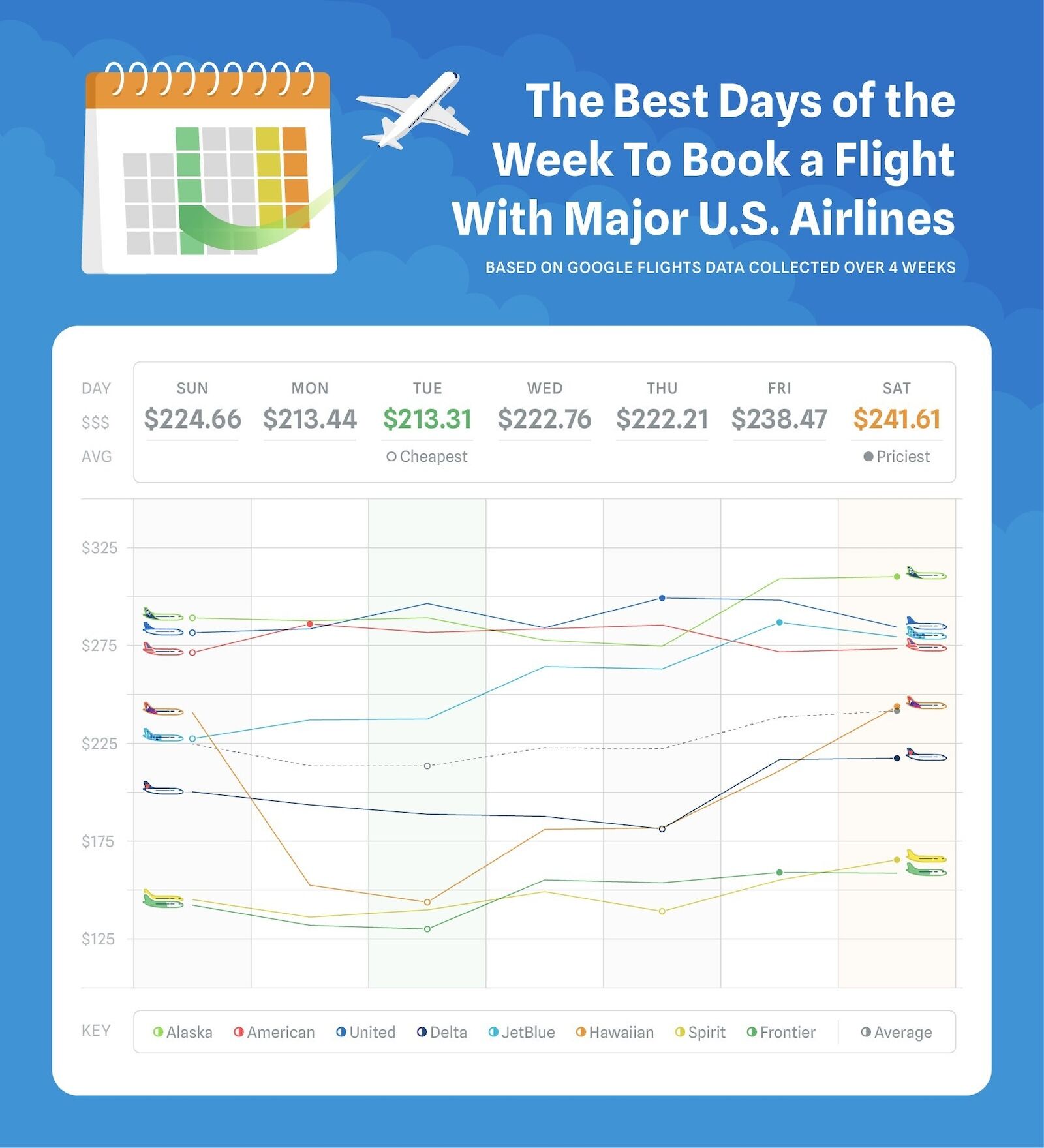
Historically and statistically, Tuesdays, Wednesdays, and Thursdays emerge as the most wallet-friendly days to fly.
- Reduced Business Travel: With most business travelers settled in by Monday evening and not yet heading home for the weekend, mid-week days see a significant dip in demand from this lucrative segment.
- Leisure Traveler Avoidance: Many leisure travelers prefer long weekends, leading them to avoid mid-week departures or returns. This creates an opportunity for those with flexible schedules.
- Airline Price Adjustments: Airlines often use Tuesdays, in particular, to launch new sales or adjust prices downwards after assessing weekend booking data and competitor moves. This has earned Tuesday a reputation as a prime day for price drops.
Early Mornings and Late Nights: Embracing Off-Peak Hours
Beyond the day of the week, the time of day you choose to fly can also yield substantial savings.
- First Flights Out: Very early morning flights (e.g., 5 AM – 7 AM) are often cheaper because most people prefer not to wake up at an ungodly hour to catch a plane. Fewer passengers means less demand and lower prices.
- Red-Eye Flights: Similarly, late-night flights (e.g., after 9 PM or “red-eyes”) are typically less expensive. The inconvenience of arriving at a destination very late or early the next morning deters many travelers, again leading to lower demand.
- Lunchtime Lulls: Flights departing around typical lunch hours (11 AM – 1 PM) can also sometimes be cheaper, as they can disrupt work or other daily routines.
Avoiding Weekend Spikes: The Cost of Convenience
Conversely, understanding when prices are highest is just as important for smart financial planning.
- Fridays and Sundays: These are consistently the most expensive days to fly. Fridays are popular for business travelers heading home and leisure travelers starting their weekend trips. Sundays are peak return days for both segments, leading to inflated prices.
- Saturday Departures/Returns: While Saturdays can sometimes be cheaper than Fridays or Sundays, they are generally still more expensive than mid-week options, especially if part of a weekend trip.
By strategically planning your departure and arrival days to align with mid-week and off-peak hours, you can bypass the surge pricing driven by peak demand and significantly reduce your airfare costs. This flexibility, when possible, is a powerful financial tool.
Beyond the Day of the Week: Other Critical Factors for Saving
While the day of the week is a significant factor, it’s merely one piece of a larger financial puzzle when it comes to securing cheap flights. A truly comprehensive savings strategy integrates several other crucial elements that influence airfare costs.
Booking Window Wisdom: When to Purchase Your Ticket
The timing of your purchase, relative to your departure date, is a critical determinant of price.

- The “Goldilocks Zone”: For domestic flights, the sweet spot for booking is generally considered to be 1-3 months in advance. For international flights, this window extends to 2-8 months out. Booking too early can mean missing out on sales, while booking too late means paying premium last-minute fares.
- Avoiding Last-Minute Bookings: As a general rule for leisure travel, avoid booking within two weeks of departure. Airlines know that last-minute travelers (often business passengers or those with urgent needs) are less price-sensitive and will charge accordingly.
- Early Bird Catches the Worm (Sometimes): While booking too far out (e.g., a year in advance) often means paying higher prices, as airlines initially set higher base fares before dynamic adjustments, there are exceptions. Major holiday travel might require booking further in advance, though still within the “goldilocks” principle.
The Flexibility Factor: Openness to Alternative Dates and Airports
Financial prudence in travel often rewards flexibility. Being rigid about dates and destinations severely limits your options and almost guarantees higher prices.
- Adjusting Dates by a Day or Two: Even shifting your departure or return by a single day can sometimes unlock hundreds of dollars in savings, especially if it moves you from a peak day to a mid-week one.
- Exploring Nearby Airports: Flying into or out of a smaller, secondary airport in the same region can be significantly cheaper than using the primary international hub. Factor in the cost and time of ground transportation, but often the savings outweigh the minor inconvenience.
- Consider Alternative Destinations: If your travel dates are fixed, but your destination is flexible, letting price guide your choice can lead to incredible deals. Many flight search engines offer “everywhere” or “cheapest destinations” features.
The Seasonality Trap: High vs. Low Travel Seasons
Beyond specific days, the overall travel season plays a massive role in pricing.
- High Season: Summer (June-August), major holidays, and school breaks are generally the most expensive times to fly due to high demand.
- Shoulder Season: Spring (April-May) and Fall (September-November) often offer a balance of good weather and moderate prices, making them ideal times for budget-conscious travelers.
- Low Season: Winter (January-March, excluding holidays) typically sees the lowest prices due to less demand. However, weather considerations might be a factor.
Aligning your travel with shoulder or low seasons can yield substantial savings, allowing your budget to stretch further and potentially fund longer or more frequent trips.
Practical Strategies and Tools for Finding Deals
Armed with an understanding of pricing dynamics and the optimal times to fly, the next step is to leverage practical tools and strategies to unearth the best deals. This involves smart searching techniques and knowing which platforms to use.
Leveraging Flight Comparison Websites and Price Alerts
These are indispensable tools for any financially savvy traveler.
- Comparison Engines: Websites like Google Flights, Skyscanner, Kayak, and Momondo aggregate data from numerous airlines and online travel agencies, allowing you to compare prices across different providers quickly. Crucially, they often have “flexible date” options that show prices for an entire month, making it easy to spot the cheapest days.
- Price Alerts: Sign up for price alerts for your desired routes. These services notify you via email when prices drop, allowing you to snatch up a good deal as soon as it appears. This is a passive yet highly effective strategy for saving.
- “Explore” Features: Many comparison sites offer “explore” or “anywhere” features, allowing you to see the cheapest destinations from your departure city for specific dates or an entire month. This is excellent for inspiring budget-friendly trips.
The Power of Incognito Mode and Clearing Cookies
While hotly debated, some travelers report seeing different prices when searching in incognito mode or after clearing their browser cookies.
- Tracking and Dynamic Pricing: The theory is that some airline websites and online travel agencies use cookies to track your search history. If they see you repeatedly searching for the same flight, they might infer high interest and subtly increase the price in subsequent searches.
- Myth or Reality? While the direct impact of this on prices is not definitively proven across all platforms, it’s a simple step to take. Searching in incognito mode (or private browsing) ensures a fresh search session, potentially bypassing any personalized price adjustments. It certainly doesn’t hurt your chances of finding a better deal.
Considering Budget Airlines and Layovers
Sometimes, the cheapest option involves a trade-off in convenience, but the financial savings can be substantial.
- Budget Carriers: Airlines like Spirit, Frontier, Ryanair, and EasyJet often offer significantly lower base fares. However, be mindful of their add-on fees for everything from checked bags to seat selection and even printing your boarding pass. Always calculate the total cost before assuming it’s the cheapest option.
- Layovers: Direct flights are convenient but often more expensive. Opting for flights with one or more layovers can drastically reduce the fare, especially for international travel. Weigh the time cost of the layover against the financial savings.
- “Hidden City” Ticketing (Use with Caution): This advanced strategy involves booking a flight with a layover in your actual desired destination, but continuing on to the final destination on the ticket. You then simply get off at the layover city. This can sometimes be cheaper than a direct flight to the layover city. However, airlines often prohibit this practice in their terms and conditions, and it comes with risks (e.g., inability to check bags through, potential for the airline to cancel subsequent legs if you miss one). It’s a strategy best understood and used with extreme caution, if at all.
Loyalty Programs and Credit Card Perks
For frequent travelers, leveraging loyalty programs and travel-focused credit cards can unlock significant savings over time, representing a savvy long-term financial strategy.
- Airline Loyalty Programs: Accumulating miles or points can lead to free flights, upgrades, or discounts. Even if you don’t fly one airline exclusively, consolidating points with alliance partners can be beneficial.
- Travel Credit Cards: Many credit cards offer generous sign-up bonuses in points/miles, often enough for a free domestic flight or a significant discount on international travel. They also provide ongoing rewards on travel spending, travel insurance, and other perks that can save money and enhance your travel experience. Always ensure you can pay off your credit card balance in full to avoid interest charges, which would negate any travel savings.
Cultivating a Mindset for Perpetual Travel Savings
Ultimately, consistently finding the cheapest days to fly and the best deals isn’t a one-time event; it’s an ongoing practice that integrates into a broader approach to personal financial management. It requires a mindset of continuous learning, strategic planning, and patience.
Research as Your Best Friend: Continuous Learning
The travel landscape, like financial markets, is constantly evolving. New routes emerge, airlines change their pricing models, and consumer trends shift. Staying informed through travel blogs, newsletters, and regular use of comparison tools will keep your knowledge current and your strategies sharp. Treat finding cheap flights like an investment research project.
Patience and Persistence: Waiting for the Right Deal
Not every search will yield a fantastic deal immediately. Sometimes, the best strategy is to set price alerts and wait. The market is dynamic, and a price drop can happen at any moment. Developing patience and resisting the urge to book out of fear of missing out (FOMO) can lead to significant long-term savings.
The Long-Term Financial Benefits of Smart Travel Planning
Every dollar saved on airfare is a dollar that can be redirected elsewhere – towards accommodation, experiences, or even savings for your next trip. By consistently applying these strategies, you’re not just getting a cheaper flight; you’re building a habit of financially astute decision-making that benefits your overall budget and enhances your quality of life through more accessible and frequent travel. Smart travel planning is, at its core, smart personal finance. It allows you to maximize your experiences without compromising your financial goals, proving that responsible money management can indeed open up the world.
aViewFromTheCave is a participant in the Amazon Services LLC Associates Program, an affiliate advertising program designed to provide a means for sites to earn advertising fees by advertising and linking to Amazon.com. Amazon, the Amazon logo, AmazonSupply, and the AmazonSupply logo are trademarks of Amazon.com, Inc. or its affiliates. As an Amazon Associate we earn affiliate commissions from qualifying purchases.