
In the traditional financial world, ownership is usually easy to trace. You can look up the majority shareholders of a public company, identify the owners of a real estate deed, or see which central bank holds a nation’s gold reserves. Bitcoin, however, operates on a fundamentally different logic. As a decentralized, peer-to-peer electronic cash system, no single entity “owns” the Bitcoin network. Yet, the question of who owns the circulating supply of its native currency (BTC) is a matter of intense interest for investors, economists, and policymakers.
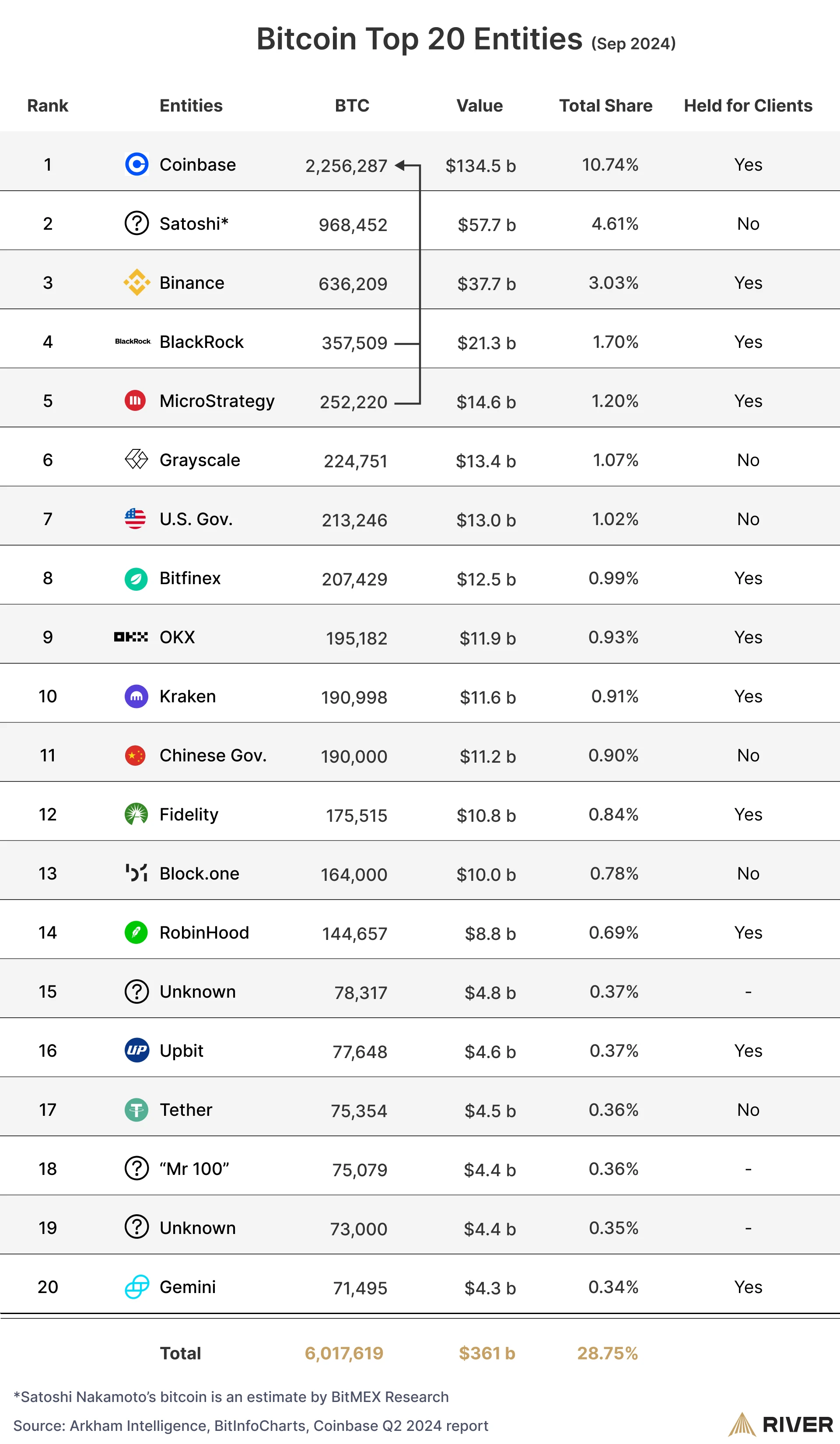
Understanding the distribution of Bitcoin ownership is crucial for assessing its maturity as an asset class. From the mysterious founder who started it all to the massive institutional influx of the 2020s, the landscape of Bitcoin ownership has shifted from a niche hobby for “cypherpunks” to a strategic reserve asset for global corporations and nation-states.
The Genesis of Ownership: Satoshi Nakamoto and the Early Adopters
The story of Bitcoin ownership begins with its pseudonymous creator, Satoshi Nakamoto. Between the launch of the network in January 2009 and Nakamoto’s disappearance from the public eye in 2011, the creator mined an estimated 1.1 million BTC. At today’s market valuations, this makes Satoshi one of the wealthiest entities on the planet, yet these coins have remained untouched for over a decade.
The Legend of Satoshi’s Stash
Nakamoto’s ownership is spread across thousands of individual wallets, each containing the 50 BTC block reward common in the early days of the network. Because these coins have never moved, they represent a unique phenomenon in the financial world: a massive “lost” or dormant supply. For investors, Satoshi’s stash is a double-edged sword. While it represents a significant portion of the total 21 million supply, the fact that it remains unspent provides a level of scarcity-driven confidence. If these coins were ever to move, the market impact would be seismic, but as time passes, many assume they are permanently out of circulation.
The Era of the Early Miners
Following Satoshi, ownership was concentrated among a small group of early enthusiasts, developers, and miners who supported the network when BTC had no market value. Figures like Hal Finney, the recipient of the first Bitcoin transaction, and other early pioneers held significant amounts. This period was characterized by “concentrated retail” ownership. Over time, as the price rose from cents to dollars and eventually to thousands, much of this original supply was liquidated, fueling the first wave of wealth distribution within the ecosystem.
The Institutional Shift: Corporate Treasuries and Public Companies
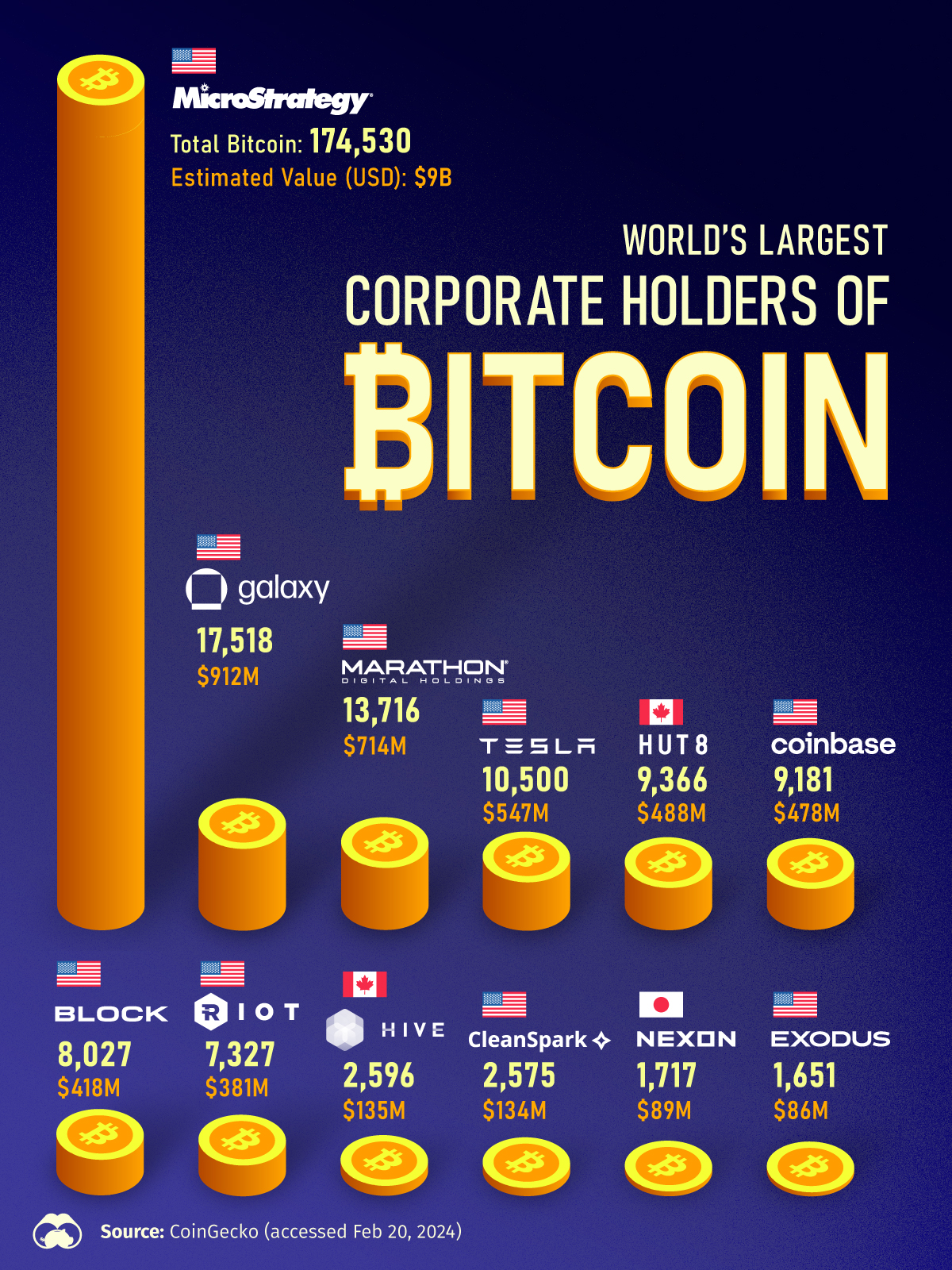
For the first decade of its existence, Bitcoin was largely ignored by Wall Street. That changed in 2020, marking a pivotal shift in the “Money” niche: the birth of the corporate Bitcoin treasury. Led by visionaries who viewed Bitcoin as “digital gold,” public and private companies began replacing cash on their balance sheets with BTC.
MicroStrategy and the Saylor Strategy
MicroStrategy, an enterprise software firm, became the poster child for institutional Bitcoin ownership. Under the leadership of Michael Saylor, the company began aggressively purchasing Bitcoin in August 2020. As of mid-2024, MicroStrategy holds over 226,000 BTC, representing more than 1% of the total supply. Unlike a traditional investment fund, MicroStrategy owns this Bitcoin directly as a treasury reserve asset, making it the largest corporate holder in the world. This strategy has transformed the company from a software firm into a proxy for Bitcoin exposure on the stock market.
The Rise of Spot Bitcoin ETFs
Perhaps the most significant development in Bitcoin ownership history occurred in January 2024 with the approval of Spot Bitcoin Exchange-Traded Funds (ETFs) in the United States. Giant asset managers like BlackRock (iShares), Fidelity, and Ark Invest now hold hundreds of thousands of BTC on behalf of their clients. While the institutional giants manage the custody, the actual “owners” are the millions of retail and institutional investors who buy shares of the ETF. BlackRock’s IBIT fund, for instance, became the fastest-growing ETF in history, signaling that a massive portion of Bitcoin ownership is migrating into traditional brokerage accounts.
Nation-States and Sovereign Ownership
The transition of Bitcoin from an internet curiosity to a geopolitical tool is most evident in its adoption by nation-states. Ownership at the state level adds a layer of complexity to the global financial landscape, as governments begin to view Bitcoin as a hedge against currency debasement or as a tool for financial sovereignty.
El Salvador: The First Bitcoin Nation
In 2021, El Salvador became the first country to adopt Bitcoin as legal tender. Under President Nayib Bukele, the nation began a “1 BTC a day” purchase program. El Salvador currently holds over 5,800 BTC in its national treasury. While this is a small amount compared to corporate giants, it represents a historic shift: a sovereign nation putting its faith—and its capital—into a decentralized digital asset. For El Salvador, ownership is not just about investment; it is about building a new financial infrastructure.
Confiscated Assets and Government Reserves
Interestingly, some of the largest Bitcoin owners in the world are governments that never intended to invest in the asset. The United States, Germany, and the United Kingdom hold significant amounts of Bitcoin—often tens of thousands—primarily seized from criminal investigations. The U.S. government, for example, has historically held upwards of 200,000 BTC recovered from events like the Silk Road shutdown. How these governments manage their ownership—whether they auction it off or hold it as a “strategic reserve”—has become a major point of discussion in international finance.
Retail Distribution: The Whales, the Shrimp, and the Lost Supply
Beyond the headlines of CEOs and Presidents, the vast majority of Bitcoin’s ownership is fragmented across millions of individual wallets. In the crypto community, these owners are often categorized by the size of their holdings, from “Shrimps” (less than 1 BTC) to “Whales” (over 1,000 BTC).
Analyzing the “Whale” Concentration
Wealth concentration is a common critique of Bitcoin, with data often showing that a small percentage of addresses hold a large percentage of the coins. However, this data is frequently misinterpreted. Many of the largest “whale” addresses belong to centralized exchanges like Binance, Coinbase, and Kraken. These addresses do not represent a single wealthy owner but rather the pooled assets of millions of retail users. When adjusted for exchange holdings, the distribution of Bitcoin ownership is arguably more decentralized than that of most traditional stocks or commodities.
The Tragedy of Lost Coins
A unique aspect of Bitcoin ownership is the “zombie supply.” Unlike a bank account, where a lost password can be reset, losing the private keys to a Bitcoin wallet means the ownership is effectively terminated forever. Chainalysis and other data firms estimate that between 3 million and 4 million BTC—roughly 20% of the total supply—are lost forever. These coins belong to people who threw away hard drives in the early days, passed away without sharing their keys, or simply forgot their recovery phrases. While this reduces the circulating supply and increases the value for remaining holders, it serves as a stark reminder of the responsibilities of digital ownership.

The Future of Bitcoin Ownership: A Mature Asset Class
As we look toward the future, the profile of “who owns Bitcoin” continues to evolve. We are moving away from an era of extreme concentration and into an era of mass institutionalization. The “Money” story of Bitcoin is no longer about whether it has value, but about who will control the limited supply that remains.
With the halving cycles continuously reducing the amount of new Bitcoin entering the market, the competition for ownership is intensifying. We are likely to see a continued “supply crunch” as long-term holders (HODLers) refuse to sell, while institutional demand through ETFs and corporate treasuries scales up. In this environment, ownership is shifting from speculative hands to “strong hands”—entities that view Bitcoin as a multi-decade store of value rather than a quick trade.
In conclusion, “who owns Bitcoin” is a dynamic mosaic. It is a mix of a mysterious founder, bold corporate treasurers, sovereign nations, and millions of individual savers. While the network remains decentralized and ownerless, the currency it produces has become one of the most sought-after assets in modern history. Whether held in a hardware wallet by a retail investor or in a high-security vault by an institutional custodian, Bitcoin ownership represents a stake in the first global, digital, and borderless monetary system.
aViewFromTheCave is a participant in the Amazon Services LLC Associates Program, an affiliate advertising program designed to provide a means for sites to earn advertising fees by advertising and linking to Amazon.com. Amazon, the Amazon logo, AmazonSupply, and the AmazonSupply logo are trademarks of Amazon.com, Inc. or its affiliates. As an Amazon Associate we earn affiliate commissions from qualifying purchases.