
In the complex ecosystem of global finance, few figures hold as much weight for the average consumer and business owner as the “prime rate.” While it often stays in the background of financial news, overshadowed by flashy stock market gains or volatile crypto trends, the prime rate is the invisible hand that dictates the cost of borrowing for millions of people. Whether you are looking to buy a home, manage credit card debt, or scale a small business, understanding the current prime rate and how it is calculated is essential for making informed financial decisions.
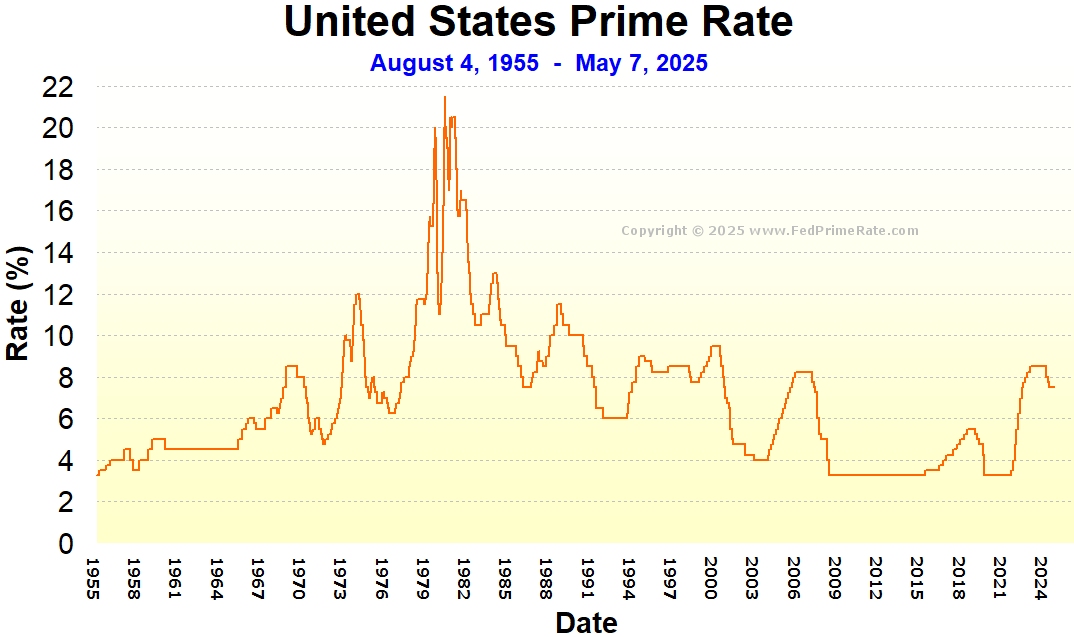
The prime rate serves as a foundational benchmark. It is the interest rate that commercial banks charge their most creditworthy corporate customers. However, its influence extends far beyond the boardroom. It acts as the “base rate” for a vast array of consumer loan products. When the prime rate shifts, the ripples are felt across the entire economy, affecting everything from your monthly credit card statement to the viability of a corporate expansion project.
Decoding the Prime Rate: Definition and Determination
To understand the current prime rate, one must first understand its DNA. The prime rate is not set by a single government decree or a specific law. Instead, it is a reflection of the cost of doing business for financial institutions. In the United States, the most widely cited prime rate is the “Wall Street Journal Prime Rate,” which is determined by a survey of the 30 largest banks in the country. When at least 23 of these 30 banks change their rate, the WSJ updates its published benchmark.
The “3% Rule” and the Federal Funds Rate
While banks have the technical freedom to set their own prime rates, they almost universally follow a specific formula linked to the Federal Reserve’s policy. The prime rate is traditionally calculated as the Federal Funds Target Rate + 3%.
The Federal Funds Rate is the interest rate at which commercial banks lend to each other overnight to maintain their required reserves. When the Federal Open Market Committee (FOMC) decides to raise or lower this target rate to manage the economy, the prime rate follows suit almost immediately. For example, if the Fed sets the target range at 5.25% to 5.50%, the prime rate will typically sit at 8.50%. This 3% spread allows banks to cover their operating costs and manage the risk associated with lending while maintaining a profit margin.
Why It Is Considered a “Benchmark”
The reason the prime rate is so vital is that it provides a standard of transparency. Because it is tied to the Fed’s actions, it is predictable and objective. Lenders use it as a starting point, often quoting interest rates as “Prime + X%.” If you have a credit card with an APR of “Prime + 12%,” and the prime rate is 8.5%, your actual interest rate is 20.5%. Understanding this relationship allows consumers to see exactly why their borrowing costs fluctuate even if their personal credit score remains the same.
The Ripple Effect: How the Prime Rate Impacts Your Wallet
The movement of the prime rate has a direct and often immediate impact on consumer debt. Unlike fixed-rate mortgages, which are locked in at the time of signing, many other forms of credit are “variable,” meaning they are pegged to the prime rate.
Credit Cards and Revolving Debt
The most immediate place a consumer feels a change in the prime rate is on their credit card statement. The vast majority of credit cards carry variable APRs. When the Federal Reserve raises rates to combat inflation, and the prime rate moves upward, credit card companies adjust their rates accordingly—usually within one or two billing cycles.
For a consumer carrying a significant balance, a 0.25% increase in the prime rate might seem negligible. However, in an era of aggressive rate hikes where the prime rate might jump several percentage points in a year, the cumulative effect can add hundreds or even thousands of dollars in interest charges over time. This makes the current prime rate a critical metric for anyone focused on debt reduction or personal cash flow management.
Home Equity Lines of Credit (HELOCs)
For homeowners, the prime rate is the primary driver of the cost of a Home Equity Line of Credit (HELOC). Unlike a traditional second mortgage, which often has a fixed rate, a HELOC is a revolving line of credit. The interest rate on these products is almost always the prime rate plus a margin based on the borrower’s creditworthiness.
When the prime rate is low, HELOCs are an incredibly cheap way to fund home renovations or consolidate high-interest debt. However, in a rising-rate environment, the monthly interest-only payments on a HELOC can skyrocket, potentially straining a household’s budget. Homeowners must keep a close eye on the FOMC’s meetings, as a single policy shift can change the math on their home equity strategy overnight.
Business Loans and Commercial Credit
Small and medium-sized enterprises (SMEs) are particularly sensitive to the prime rate. Many business lines of credit and equipment loans are variable-rate instruments. When the prime rate increases, the cost of capital for these businesses goes up. This can lead to a slowdown in hiring, a reduction in inventory purchases, or the postponement of capital expenditures. For the business owner, the current prime rate is not just a number—it is a factor that determines the “hurdle rate” for every new project or investment.

Why the Prime Rate Changes: Inflation, Growth, and Policy
To understand why the prime rate is currently at its specific level, one must look at the broader macroeconomic landscape. The Federal Reserve adjusts the underlying Federal Funds Rate based on its “dual mandate”: maintaining price stability (low inflation) and promoting maximum sustainable employment.
Fighting the Inflation Fire
The most common reason for a high or rising prime rate is the fight against inflation. When the prices of goods and services rise too quickly, the economy risks overheating. To cool things down, the Federal Reserve raises interest rates. This makes borrowing more expensive, which reduces consumer spending and business investment.
As the Fed raises the cost of money, the prime rate climbs, and the “cooling” effect spreads through the economy. While this is painful for borrowers, it is a necessary tool to prevent the erosion of purchasing power. Therefore, a high prime rate is often a sign that the central bank is prioritizing the stabilization of the dollar over cheap credit.
Economic Stimulus vs. Stability
Conversely, during a recession or a period of economic stagnation, the Fed will lower the Federal Funds Rate to near zero. This brings the prime rate down to its historical floors (often around 3.25%). Low prime rates are designed to stimulate the economy by making it extremely cheap for businesses to expand and for consumers to spend.
However, the “current” prime rate at any given time is a delicate balance. If rates stay too low for too long, they can fuel asset bubbles in housing or stocks. If they are raised too quickly, they can trigger a recession. Investors and financial planners monitor these trends to gauge whether the economy is in a “tightening” cycle or an “easing” cycle.
Strategic Financial Moves in a High-Rate Environment
In a financial landscape where the prime rate is elevated, the strategies that worked during a low-rate era may no longer be effective. Managing personal and business finances requires a shift from aggressive borrowing to defensive optimization.
Prioritizing Debt Repayment
When the prime rate is high, the cost of carrying variable debt becomes a significant drag on net worth. Financial advisors often recommend a “debt avalanche” method in these periods, focusing on paying down the highest-interest variable debt first. Since credit card APRs move in lockstep with the prime rate, eliminating these balances provides a guaranteed “return” equal to the saved interest.
Seeking Fixed-Rate Security
If you are considering a major loan—such as a mortgage or an auto loan—in a rising rate environment, opting for a fixed rate provides a hedge against future prime rate increases. While variable rates might offer a lower initial “teaser” rate, the certainty of a fixed payment protects you from the volatility of the Federal Reserve’s policy shifts. For those already holding variable-rate debt like a HELOC, it may be worth investigating whether that debt can be “locked” or converted into a fixed-rate loan.
Maximizing Interest on Savings
There is a silver lining to a high prime rate: it usually correlates with higher yields on savings accounts, Certificates of Deposit (CDs), and Money Market Accounts. While banks are often quick to raise interest rates on loans when the prime rate goes up, they are sometimes slower to raise rates on savings.
Sophisticated consumers should shop around for High-Yield Savings Accounts (HYSAs) that reflect the current interest rate environment. In a high-prime-rate climate, cash is no longer “trash”; it can actually generate a meaningful return with virtually zero risk, providing a safe haven while the stock or bond markets adjust to the cost of capital.

Conclusion: The Prime Rate as a Financial Compass
The prime rate is more than just a dry statistic found in the financial section of the newspaper. It is a fundamental force that dictates the flow of capital throughout the world. By understanding how the current prime rate is derived from the Federal Reserve’s policies and how it directly affects your credit cards, loans, and savings, you gain a significant advantage in managing your financial future.
Whether the prime rate is climbing to combat inflation or falling to spur growth, your awareness of its movement allows you to pivot your strategy—protecting yourself from rising costs when rates are high and seizing opportunities for expansion when rates are low. In the world of money, knowledge of the prime rate is the ultimate tool for maintaining financial stability in an ever-changing economy.
aViewFromTheCave is a participant in the Amazon Services LLC Associates Program, an affiliate advertising program designed to provide a means for sites to earn advertising fees by advertising and linking to Amazon.com. Amazon, the Amazon logo, AmazonSupply, and the AmazonSupply logo are trademarks of Amazon.com, Inc. or its affiliates. As an Amazon Associate we earn affiliate commissions from qualifying purchases.