
When we ask the question, “Who owns Apple Inc.?” the answer is far more complex than a single name or a founding figure. Unlike its early days when Steve Jobs and Steve Wozniak held the reins, today’s Apple is a global financial titan—a publicly traded corporation with a market capitalization that has frequently crossed the $3 trillion threshold. In the world of high-stakes finance, Apple is not just a company that manufactures hardware; it is one of the most significant assets in the global economy.
For investors, understanding Apple’s ownership structure is crucial. It reveals the forces that drive the company’s stock price ($AAPL), its dividend policies, and its long-term strategic decisions. To understand who owns Apple is to understand the landscape of modern institutional investing and the democratization of the stock market.
1. The Institutional Powerhouse: Who Really Controls the Shares?
As a publicly traded company, Apple’s ownership is divided into billions of shares of common stock. However, these shares are not distributed evenly across the globe. The vast majority of Apple Inc. is owned by institutional investors—large organizations such as mutual funds, pension funds, and insurance companies that manage money on behalf of millions of individual clients.
The Dominance of the “Big Three” Asset Managers
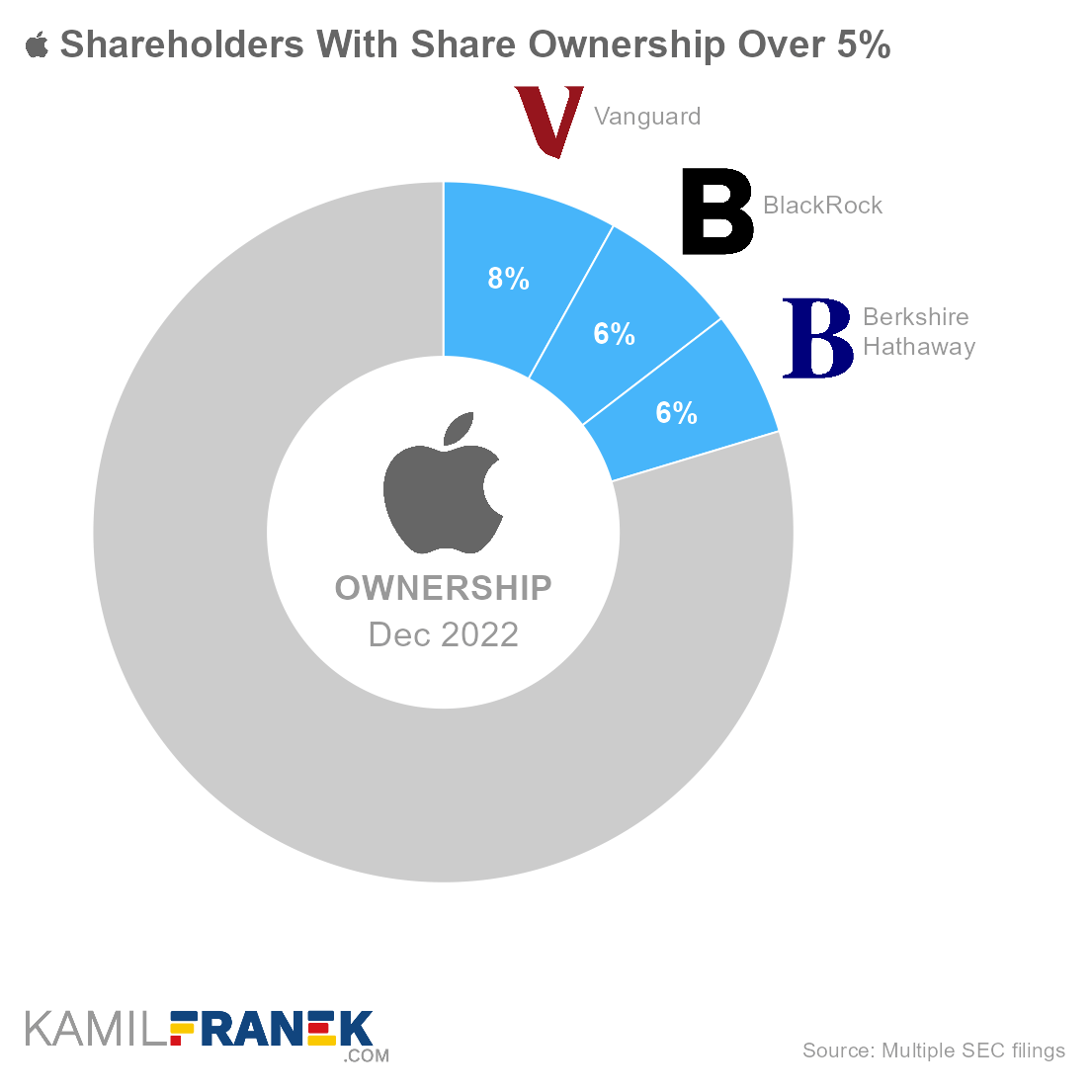
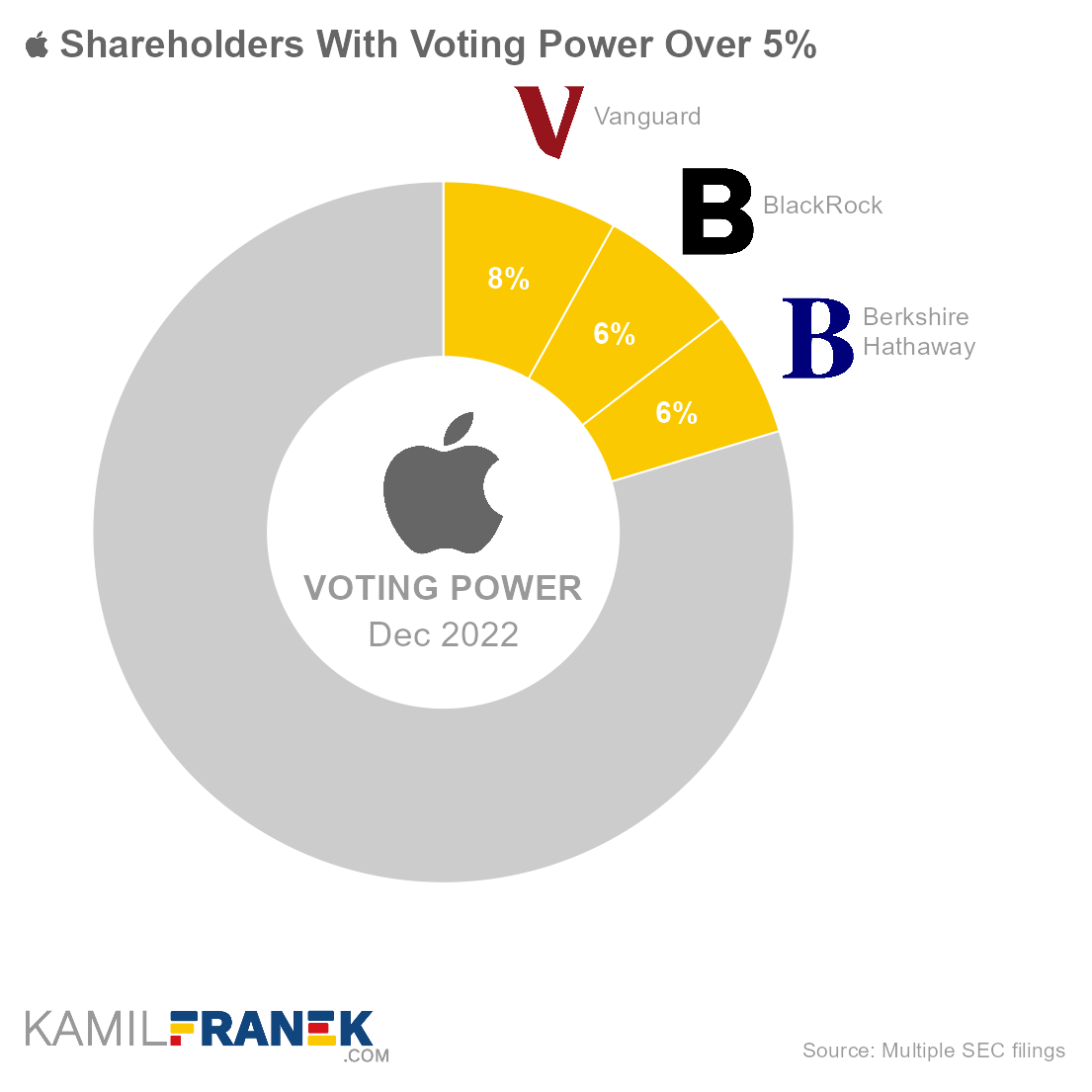
The most significant owners of Apple are Vanguard Group, BlackRock Inc., and State Street Global Advisors. These “Big Three” firms represent the pinnacle of passive and active investment management. Vanguard typically holds the top spot, often owning between 7% and 9% of the company’s total outstanding shares. BlackRock follows closely behind, with State Street rounding out the top tier.
It is important to note that these firms do not “own” Apple in the traditional sense of personal wealth. Instead, they hold these shares in their various mutual funds and Exchange-Traded Funds (ETFs). When a teacher in Ohio contributes to a 401(k) that tracks the S&P 500, or a retiree in London invests in a global technology fund, they are likely owning a small piece of Apple through these institutional giants.
The Role of Passive Investing and Index Funds
The rise of index-based investing has fundamentally changed Apple’s ownership structure. Because Apple is a cornerstone of major indices like the S&P 500, the Nasdaq-100, and the Dow Jones Industrial Average, any fund that tracks these indices is legally required to buy and hold Apple stock. This creates a “sticky” ownership base. These institutional shares are rarely traded on a whim; they are held as long as Apple remains a dominant force in the market, providing the company with a level of financial stability that few other corporations enjoy.
2. Warren Buffett and Berkshire Hathaway: The Largest Single Entity
While the “Big Three” represent collective ownership through funds, the most famous “owner” of Apple is undoubtedly Warren Buffett via his conglomerate, Berkshire Hathaway. Buffett’s relationship with Apple has become legendary in the world of value investing, marking a significant shift in his historically tech-averse investment philosophy.
Why the “Oracle of Omaha” Loves Apple
Berkshire Hathaway owns a massive stake in Apple, often fluctuating between 5% and 6% of the company’s total shares. For Buffett, Apple is not just a technology company; it is a “consumer staples” business with an incredibly deep “moat.” Buffett has frequently praised Apple’s brand loyalty and its “sticky” ecosystem, noting that users are more likely to give up their cars than their iPhones.
From a money perspective, Buffett views Apple as a cash-flow machine. He values the company’s ability to generate tens of billions of dollars in free cash flow annually, which allows for aggressive share buybacks and consistent dividend payments. This alignment between Apple’s financial discipline and Buffett’s investment principles has made $AAPL the largest holding in Berkshire’s equity portfolio.
The Strategic Impact of a Concentrated Stake
Having a shareholder like Berkshire Hathaway provides Apple with a unique form of “investor validation.” When the world’s most famous value investor holds a multibillion-dollar position, it signals to the rest of the market that the company is a safe, long-term bet. However, this also means that the market watches Berkshire’s filings with a magnifying glass. Any slight reduction in Buffett’s stake can lead to temporary volatility as the market tries to decipher if the “Oracle” has changed his mind on the company’s future valuation.

3. Individual Ownership and the Role of Corporate Insiders
Beyond the institutional giants and the conglomerate moguls, a portion of Apple is owned by the individuals who lead the company and those who founded it. While “insider ownership” represents a small percentage of the total shares outstanding, the dollar value of these holdings is astronomical.
Tim Cook and Executive Compensation
Tim Cook, Apple’s CEO, is one of the most prominent individual shareholders. While his ownership percentage is a fraction of 1%, the sheer size of Apple’s market cap makes his holdings worth hundreds of millions (and at times, billions) of dollars. Most of Cook’s ownership comes through Restricted Stock Units (RSUs) granted as part of his compensation package, which are often tied to the company’s performance relative to the S&P 500.
This structure ensures that the interests of Apple’s leadership are directly aligned with the interests of the shareholders. If the stock price rises, the executives’ net worth increases; if the stock underperforms, their compensation is significantly impacted. Other top executives, such as Luca Maestri (CFO) and Jeff Williams (COO), also hold significant stakes, contributing to a management culture focused on shareholder value.
The Evolution from Founders to the Public
In the 1970s and 80s, Steve Jobs and Steve Wozniak were the primary owners. However, through various rounds of funding, the 1980 IPO, and Jobs’ temporary departure (during which he sold most of his shares), the founder-led ownership model dissolved. Today, the “inside” ownership of Apple is relatively low compared to companies like Meta (where Mark Zuckerberg retains significant voting control) or Amazon (where Jeff Bezos remains a massive individual shareholder). Apple is a truly “public” company, governed by a board of directors and owned by a diverse global base.
4. Retail Investors: The Democratization of Apple Ownership
One of the most compelling aspects of Apple’s ownership is the “retail” component. Retail investors—individual people buying shares through brokerage apps like Robinhood, Fidelity, or Schwab—account for a significant portion of the remaining ownership.
The Culture of $AAPL as a “Retail Favorite”
Apple is often the first stock a new investor buys. Its brand recognition and the ubiquity of its products make it an “accessible” investment. For many, owning a piece of the company that makes their phone, watch, and laptop is a logical entry point into the world of personal finance. This creates a loyal base of shareholders who often hold the stock for years, regardless of short-term market fluctuations.
Employee Stock Purchase Plans (ESPP)
A unique segment of individual owners includes Apple’s own employees. Through Employee Stock Purchase Plans, thousands of Apple engineers, retail workers, and corporate staff are able to buy shares at a discount. This turns the workforce into owners, further aligning the company’s internal operational success with its external financial performance. Over decades, many long-term Apple employees have built significant personal wealth simply by holding onto the shares they acquired through their employment.
5. The Financial Significance of Apple’s Ownership Structure
The way Apple is owned directly influences how it handles its money. Because the shareholder base is dominated by institutions and value-oriented investors like Buffett, there is a constant demand for “capital return.”
Share Buybacks: The “Invisible” Owner
Apple is famous for its massive share buyback program. By spending billions of dollars to buy its own stock back from the open market, Apple effectively reduces the total number of shares in circulation. For the remaining owners, this is a massive win. When the “pie” is cut into fewer slices, each slice (share) represents a larger percentage of the company. This financial engineering has been a primary driver of earnings per share (EPS) growth, making the ownership of Apple increasingly valuable even in years when revenue growth might be modest.
Dividends and Income Investing
While Apple was once a “growth” stock that paid no dividends, its current ownership structure demands a more mature financial approach. Today, Apple is a staple for “income investors” who rely on its quarterly dividend payments. While the yield may be lower than some traditional utility stocks, the reliability and growth of Apple’s dividend make it a core holding for pension funds and retirees.
In conclusion, “who owns Apple” is a question with a multi-layered answer. It is owned by the massive index funds that stabilize our global economy, the legendary value investors who seek safety and cash flow, the executives who steer the ship, and the millions of everyday people who believe in the brand’s future. This diverse and robust ownership structure is the bedrock upon which Apple’s financial empire is built, ensuring that as the company grows, the wealth it generates is distributed across the entire spectrum of the global financial system.
aViewFromTheCave is a participant in the Amazon Services LLC Associates Program, an affiliate advertising program designed to provide a means for sites to earn advertising fees by advertising and linking to Amazon.com. Amazon, the Amazon logo, AmazonSupply, and the AmazonSupply logo are trademarks of Amazon.com, Inc. or its affiliates. As an Amazon Associate we earn affiliate commissions from qualifying purchases.