
When you slide a heavy, platinum-coated card across a counter, you are participating in one of the most sophisticated financial ecosystems in the world. American Express, often referred to by its ticker symbol “AXP,” is not merely a credit card company; it is a global financial services corporation with a market capitalization that rivals the GDP of some nations. But who actually owns this financial titan?
Unlike a private family business or a founder-led startup, American Express is a publicly traded company. This means its ownership is distributed across thousands of individual and institutional investors. However, the concentration of that ownership reveals a fascinating story of high-stakes investing, corporate governance, and the endorsement of some of the most successful financial minds in history.

The Institutional Giants: Who Truly Controls the Boardroom?
For a company of American Express’s size, the ownership structure is dominated by institutional investors. These are large organizations—such as pension funds, mutual funds, and insurance companies—that trade securities in quantities large enough to qualify for preferential treatment. Currently, institutional investors own over 80% of American Express, meaning the direction of the company is largely determined by a handful of powerful financial entities.
Berkshire Hathaway: The Warren Buffett Connection
The most significant name on the American Express shareholder list is undoubtedly Berkshire Hathaway, the conglomerate led by the “Oracle of Omaha,” Warren Buffett. As of 2024, Berkshire Hathaway owns roughly 21% of American Express. This is a staggering amount of influence for a single entity to hold in a public company.
Buffett’s history with Amex is legendary in the world of value investing. He first began accumulating shares in the 1960s following the “Salad Oil Scandal,” which had sent the company’s stock tumbling. Buffett recognized that while the company’s finances were temporarily strained, its “moat”—the prestige and trust associated with the brand—remained intact. Today, American Express is one of the “Big Four” pillars of Berkshire Hathaway’s portfolio. From a money management perspective, Buffett views Amex not just as a credit card provider, but as a resilient financial network with a unique “closed-loop” system that captures value at every stage of a transaction.
Vanguard and BlackRock: The Power of Passive Investing
Following Berkshire Hathaway, the next largest owners are the titans of passive investing: The Vanguard Group and BlackRock, Inc. Together, these two firms own approximately 12–15% of the company. Unlike Berkshire Hathaway, which takes an active, concentrated interest in the company’s business model, Vanguard and BlackRock own American Express primarily because it is a staple of major indices like the S&P 500 and the Dow Jones Industrial Average.
For the individual investor, this means that if you own an S&P 500 index fund or a total market ETF, you are technically a partial owner of American Express. These institutional giants provide liquidity and stability to the stock, ensuring that AXP remains a core component of the global financial infrastructure.
State Street and Other Asset Managers
Rounding out the top tier of ownership is State Street Corporation. As one of the world’s largest custody banks, State Street holds shares on behalf of various clients and through its own exchange-traded funds (ETFs). The presence of these major financial institutions indicates a high level of institutional confidence. In the world of business finance, high institutional ownership is often seen as a seal of approval, suggesting that the company’s financial health is robust enough to satisfy the rigorous risk-compliance standards of the world’s largest banks.
The Public Market Dynamics: Individual vs. Institutional Ownership
While the big institutions hold the majority of the cards, American Express remains a “public” company in the truest sense. Thousands of retail investors—individuals managing their own brokerage accounts or IRAs—own a piece of the company.
Understanding the Public Float
The “float” refers to the shares of a company that are available for the public to trade. For American Express, the float is nearly equal to its total shares outstanding, minus the concentrated holdings of insiders and Berkshire Hathaway. This high liquidity makes AXP a favorite for day traders and long-term dividend investors alike.
In the “Money” niche, understanding the float is essential for assessing volatility. Because American Express is so widely held, its price movements are often a reflection of the broader economy. When consumer spending is high and the “premium” demographic is traveling, the stock thrives. Conversely, during periods of high interest rates or recessionary fears, the ownership base reacts to the potential for increased credit defaults.
The Role of Insider Ownership and Corporate Governance
Insider ownership—shares held by the company’s own executives and board members—sits at less than 1%. While this might seem low compared to a tech startup where a founder might own 20%, it is standard for a century-old financial institution.
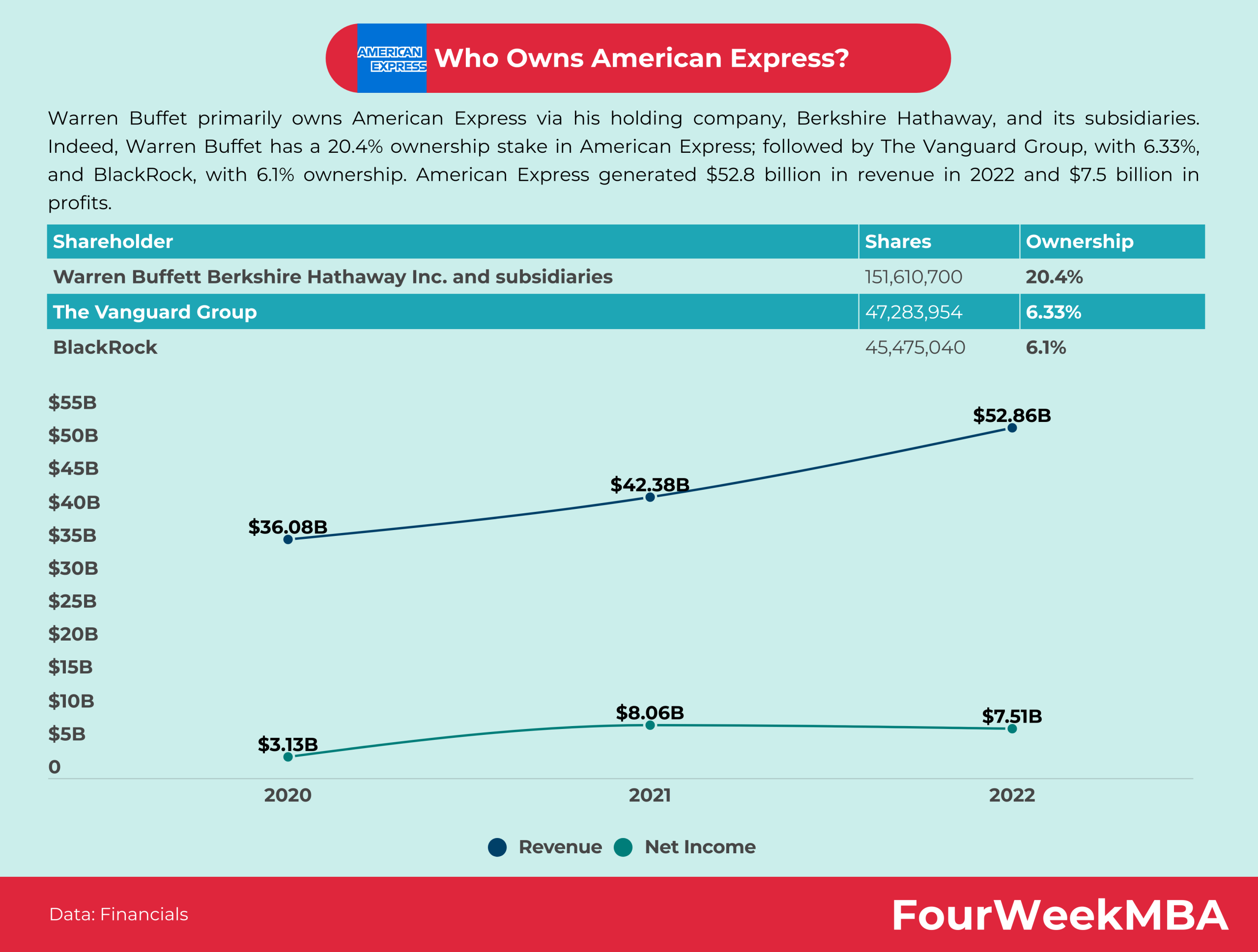
However, “ownership” in a corporate sense also extends to the Board of Directors. These individuals are elected by the shareholders (led by the influence of Berkshire, Vanguard, and BlackRock) to oversee the executive team. The board ensures that the management team, led by CEO Stephen Squeri, acts in the best financial interest of the owners. This governance structure is what allows a decentralized group of owners to maintain control over a massive global operation.
American Express as an Investment Vehicle
To understand who owns American Express, one must also understand why they own it. From a personal finance and investing standpoint, AXP occupies a unique niche that distinguishes it from competitors like Visa or Mastercard.
Revenue Streams and Profitability Models
Unlike Visa and Mastercard, which are primarily payment processors, American Express is both a processor and a lender. This is known as a “closed-loop network.”
- Merchant Fees (Discount Revenue): Every time a card is swiped, Amex takes a cut from the merchant. Because Amex cardholders generally spend more than the average consumer, merchants are willing to pay a higher fee for access to this “premium” customer base.
- Interest Income: Amex earns interest on the balances carried by its cardmembers.
- Card Fees: This is a significant revenue driver. The annual fees for cards like the Platinum or Gold contribute billions to the bottom line, providing a steady stream of “sticky” income that is less dependent on interest rate fluctuations.
Investors own Amex because of this diversified revenue model. It offers the growth potential of a tech-forward payment processor with the stable income of a traditional bank.
Dividend History and Shareholder Value
For those focused on building wealth through passive income, American Express has been a reliable partner. The company has a long history of paying dividends and, perhaps more importantly, aggressive share buybacks. When a company buys back its own shares, the “slice of the pie” owned by remaining shareholders becomes larger.
For an investor like Warren Buffett, these buybacks are a dream. Without spending another dime, Berkshire Hathaway’s percentage of ownership in American Express has grown over the decades simply because the company retired shares from the open market. This strategy is a cornerstone of corporate finance that rewards long-term owners by increasing the earnings per share (EPS).
The Strategic Management: Who Leads the Company?
While the owners provide the capital, the management team provides the vision. In a public company, the line between ownership and management is thin but critical. The executives are the “stewards” of the shareholders’ capital.
The CEO and Executive Leadership
Stephen J. Squeri has served as the Chairman and CEO since 2018. Under his leadership, the company has pivoted to focus heavily on Millennial and Gen Z consumers, a move that has refreshed the brand’s demographic profile and ensured long-term viability. By expanding “lifestyle” benefits—such as airport lounge access, streaming service credits, and dining perks—Squeri has increased the “cardmember value proposition.”
From a business finance perspective, this shift is vital. The “owners” of the company want to see that the customer base is not aging out. By capturing the next generation of high-earners, management is securing the future cash flows that investors rely on.
How Management Aligns with Shareholder Interests
The compensation of top executives at American Express is heavily weighted toward stock-based incentives. This ensures that the people running the company have “skin in the game.” When the stock price rises, the executives’ net worth increases alongside that of the institutional and retail investors. This alignment of interests is a key factor that institutional investors like BlackRock look for when deciding whether to maintain their massive positions in the company.

Conclusion: A Multi-Layered Ownership Model
So, who owns American Express? The answer is a hierarchy of financial power. At the top sits Warren Buffett and Berkshire Hathaway, providing the philosophical and financial backbone of the company’s ownership. Beneath them are the institutional giants like Vanguard and BlackRock, who represent the millions of people invested in the broader market. Finally, there are the individual investors who buy shares because they believe in the company’s unique business model and its ability to generate consistent returns.
American Express is a quintessential example of modern corporate ownership. It is a company owned by the many but influenced by the few, operating as a vital engine in the global “Money” ecosystem. For the savvy investor, understanding this ownership structure is not just a trivia exercise—it is a lesson in how brand loyalty, institutional trust, and strategic management can combine to create one of the most enduring wealth-generation machines in financial history. Whether you are a cardholder or a shareholder, you are part of a legacy of financial prestige that continues to define the way the world spends, saves, and invests.
aViewFromTheCave is a participant in the Amazon Services LLC Associates Program, an affiliate advertising program designed to provide a means for sites to earn advertising fees by advertising and linking to Amazon.com. Amazon, the Amazon logo, AmazonSupply, and the AmazonSupply logo are trademarks of Amazon.com, Inc. or its affiliates. As an Amazon Associate we earn affiliate commissions from qualifying purchases.