
In the world of high finance, the question of ownership typically leads to a familiar list of billionaires, private equity firms, or public shareholders demanding quarterly dividends. However, Vanguard, the Pennsylvania-based investment behemoth with trillions of dollars in assets under management (AUM), operates on a premise that remains an anomaly in the financial services industry. To understand who owns Vanguard is to understand a structural revolution that fundamentally changed the trajectory of personal finance and the wealth-building potential of the average individual.
Unlike its primary competitors—BlackRock, which is a publicly traded corporation (NYSE: BLK), or Fidelity, which is largely controlled by the Johnson family—Vanguard has no outside owners. There are no private venture capitalists, no founding family dynasties, and no Wall Street stockholders to satisfy. Instead, Vanguard is owned by its funds, and those funds are owned by their investors. This “mutual” ownership structure is the engine behind the firm’s low-cost philosophy and its profound impact on the global investing landscape.

The Radical Vision of John C. Bogle
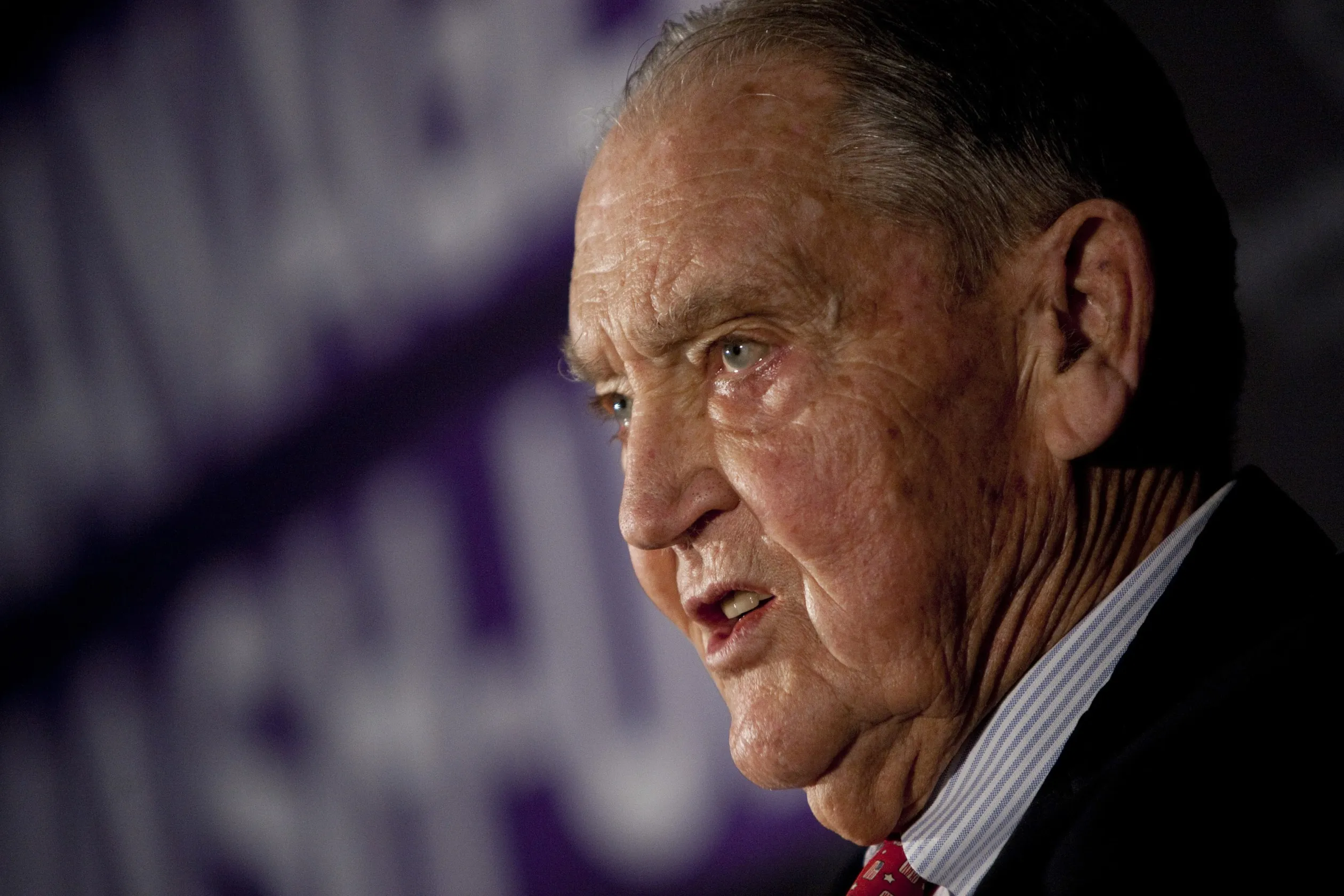
The story of Vanguard’s ownership begins with John C. “Jack” Bogle, a man whose legacy is synonymous with the democratization of the stock market. In 1974, following a tumultuous exit from Wellington Management, Bogle sought to create a new kind of investment company. His vision was a firm that operated solely for the benefit of its clients, eliminating the inherent conflict of interest found in traditional asset management.
The Conflict of Interest in Traditional Finance
In a standard corporate model, an investment management firm faces a “two-master” problem. The firm’s executives must serve the shareholders of the management company by maximizing profits, while simultaneously serving the fund investors by seeking high returns and low costs. Often, these two goals are in direct opposition. Higher management fees increase the profits for the company’s owners but decrease the net returns for the individual investor.
Bogle’s solution was to invert this pyramid. By establishing a structure where the funds own the management company, he ensured that any “profit” generated by Vanguard would be returned to the funds in the form of lower operating expenses. This revolutionary concept meant that the investors in the funds became, in essence, the ultimate owners of the entire enterprise.
The Birth of the Index Fund
The ownership structure provided the perfect soil for the growth of the first retail index fund in 1976. Initially mocked as “Bogle’s Folly,” the idea was to track the S&P 500 rather than try to beat it through expensive active management. Because Vanguard did not have to generate a profit for external owners, it could offer this passive strategy at a fraction of the cost of its competitors. Over the decades, this alignment of ownership and interest proved that lower costs were the most reliable predictor of long-term outperformance in the financial markets.
How the Vanguard Ownership Model Functions
To grasp the mechanics of who owns Vanguard, one must look at the legal relationship between the management company and the mutual funds it oversees. Vanguard is organized as a group of more than 200 different funds. Each of these funds is a separate legal entity. These funds, in turn, own Vanguard Group Inc., which provides the necessary services to the funds—such as investment management, administration, and marketing—at cost.
The Circular Ownership Mechanism
This circularity is what differentiates Vanguard from every other major financial institution. When you buy shares of the Vanguard 500 Index Fund (VFIAX) or the Vanguard Total Stock Market ETF (VTI), you are purchasing a portion of that fund’s underlying assets. Because that fund is a part-owner of the Vanguard Group, you effectively become a stakeholder in the company that manages your money.
There is no “Vanguard” stock to buy on the New York Stock Exchange. There is no private equity group siphoning off a percentage of the management fees. This “at-cost” operation means that as Vanguard grows and gains economies of scale, the savings are passed directly back to the fund shareholders in the form of reduced expense ratios.
Comparing Vanguard to BlackRock and Fidelity
To illustrate the uniqueness of this model, consider the three titans of the industry:
-
BlackRock: As a public company, BlackRock’s primary duty is to its shareholders. It must generate earnings per share (EPS) growth. While it offers low-cost iShares ETFs, it also seeks high-margin business in private equity and technology services (Aladdin) to satisfy its investors.
-
Fidelity: Fidelity is a private, family-controlled company. While it has been a leader in fee compression (even offering zero-expense ratio funds), its profits ultimately build the wealth of the Johnson family and certain employees.
-
Vanguard: Because the owners and the clients are the same people, there is no pressure to increase margins. The goal is to minimize them.
The Financial Impact on Individual Investors
The implications of Vanguard’s ownership structure are not merely theoretical; they are reflected in the wallets of millions of retirees and savers. This structure created what Bogle called the “Virtuous Cycle.” As the firm grew, costs went down; as costs went down, performance improved; as performance improved, more assets flowed in, further reducing costs.
The Compounding Effect of Low Fees
In the world of investing, you get what you don’t pay for. A management fee of 1% might seem small, but over a 30-year horizon, it can consume nearly one-third of a portfolio’s potential growth. Because Vanguard is owned by its investors, it has consistently driven its average expense ratio down. While the industry average for mutual funds often hovers around 0.50% to 1.00%, Vanguard’s average asset-weighted expense ratio is significantly lower, often under 0.10%.
This cost advantage is a direct result of the lack of external owners. Without the need to pay out dividends to a parent company, Vanguard can focus its entire financial strategy on fee compression. This has forced the entire industry to lower prices—a phenomenon known as the “Vanguard Effect.”
Alignment of Incentives and Corporate Governance
Another benefit of the investor-owned model is the alignment of corporate governance. Traditional firms might be tempted to launch “trendy” or high-fee niche products to capture short-term market interest and boost management fees. Vanguard, however, is incentivized to focus on long-term, diversified strategies that serve the best interests of its owner-investors. This has led to a product lineup that is famously conservative, focusing on broad market exposure and disciplined bond indexing.
Vanguard’s Role in the Modern Financial Ecosystem
With over $7 trillion in assets, Vanguard’s ownership structure has given it immense influence over the global economy. Because its funds own significant portions of nearly every publicly traded company, Vanguard (on behalf of its investor-owners) is one of the world’s most powerful corporate monitors.
The Power of Proxy Voting
Since the funds own the companies in the S&P 500, and the investors own the funds, Vanguard’s investment stewardship team votes on thousands of shareholder proposals every year. Their unique structure allows them to take a very long-term view of corporate health. They are not concerned with the next quarter’s earnings as much as they are with the sustainable growth of the companies they hold for decades. This makes them a stabilizing force in corporate governance, focusing on board diversity, executive compensation, and climate risk.
Criticisms and Challenges of the Mutual Model
Despite its success, the Vanguard model is not without its critics. Some argue that because Vanguard doesn’t have a traditional profit motive, it has historically lagged in areas like customer service technology and user interface design compared to “for-profit” firms like Schwab or Fidelity. Without the pressure of shareholders demanding innovation, the pace of technological upgrades can sometimes be slower.
Furthermore, the sheer scale of Vanguard’s ownership has raised concerns about “common ownership.” Critics suggest that if one firm (or a few firms like Vanguard and BlackRock) owns significant stakes in all competitors within an industry (e.g., all major airlines), it might inadvertently reduce the incentive for those companies to compete aggressively, potentially impacting consumer prices. However, Vanguard maintains that its passive role and focus on long-term value creation mitigate these risks.
The Future of Investor Ownership
The question of “who owns Vanguard” is ultimately an answer about the future of wealth management. As the financial industry moves toward zero-commission trading and ultra-low-cost index products, the mutual model looks more prescient than ever.
Scale as a Competitive Moat
Vanguard’s ownership structure creates a “moat” that is nearly impossible for competitors to cross. A for-profit company can lower its fees to match Vanguard’s, but it does so at the expense of its own profit margins. Vanguard can lower its fees because it doesn’t need profit margins in the traditional sense. This makes the firm uniquely resilient in a “race to the bottom” regarding fees.

A Legacy of Ownership
When John Bogle passed away in 2019, he did not leave behind a multi-billion dollar estate comparable to other titans of finance. By choosing to give the company to its clients through the mutual structure, he intentionally forewent one of the greatest fortune-building opportunities in history.
Today, the “owners” of Vanguard are teachers, nurses, engineers, and retirees who hold a few shares of a Target Retirement Fund or a Total Stock Market Index. This collective ownership remains a cornerstone of the modern financial system, ensuring that as the global markets grow, the primary beneficiaries are the people who provide the capital, rather than the intermediaries who manage it. In a financial world often criticized for its complexity and opacity, Vanguard’s ownership remains a remarkably simple and transparent testament to the power of aligned interests.
aViewFromTheCave is a participant in the Amazon Services LLC Associates Program, an affiliate advertising program designed to provide a means for sites to earn advertising fees by advertising and linking to Amazon.com. Amazon, the Amazon logo, AmazonSupply, and the AmazonSupply logo are trademarks of Amazon.com, Inc. or its affiliates. As an Amazon Associate we earn affiliate commissions from qualifying purchases.