
For millions of Americans, Social Security represents a cornerstone of their financial security in retirement, providing a vital income stream that complements savings and pensions. Yet, despite its widespread importance, the precise methodology by which these benefits are determined remains a mystery to many. Understanding this calculation is not merely an academic exercise; it empowers individuals to make informed decisions about their retirement timing, financial planning, and overall economic future. This comprehensive guide will demystify the complex formulas and factors that converge to establish your monthly Social Security benefit, transforming what often seems like an opaque process into a clear and actionable insight.

Understanding the Pillars of Social Security
Before diving into the intricate mathematical formulas, it’s crucial to grasp the foundational concepts upon which Social Security benefits are built. These pillars ensure the system’s fairness and sustainability, tying benefits directly to an individual’s lifetime contributions through work.
The Role of Work Credits
The first and most fundamental requirement for eligibility to receive Social Security benefits is accumulating sufficient “work credits.” These credits are earned through covered employment, where you pay Social Security taxes on your earnings. In 2024, you earn one work credit for every $1,730 of earnings, up to a maximum of four credits per year. To qualify for retirement benefits, most individuals need 40 work credits, which typically translates to 10 years of work. It’s important to note that earning more than four credits in a year does not increase your benefit amount; it merely ensures you meet the eligibility threshold more quickly within that year. These credits establish your insured status, determining whether you qualify for benefits, but not how much you will receive.
Primary Insurance Amount (PIA) Defined
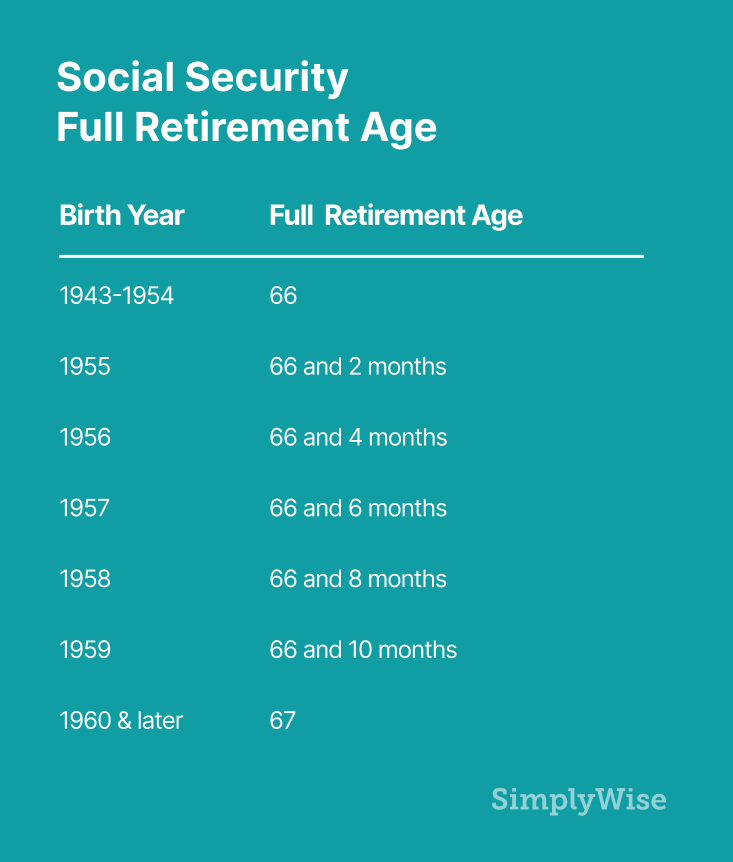
At the heart of your Social Security benefit calculation is your Primary Insurance Amount (PIA). The PIA is the monthly benefit you would receive if you elect to begin receiving benefits exactly at your Full Retirement Age (FRA). Your FRA is determined by your birth year and ranges from 66 for those born between 1943 and 1954, gradually increasing to 67 for those born in 1960 or later. The PIA is the baseline upon which all other adjustments—for early or delayed retirement, spousal benefits, or survivor benefits—are made. Calculating the PIA is the most complex step in the process, involving a multi-stage formula that considers your entire earnings history.
Retirement Age and Benefit Adjustments
While your PIA represents your benefit at full retirement age, very few people claim benefits exactly at this point. Social Security offers flexibility, allowing you to start receiving benefits as early as age 62 or delay them as late as age 70. However, these choices come with significant financial implications. Claiming benefits before your FRA results in a permanent reduction of your monthly payment, as you will receive benefits for a longer period. Conversely, delaying benefits past your FRA, up to age 70, earns you Delayed Retirement Credits, which permanently increase your monthly payment. These adjustments are a critical component of strategic retirement planning and can significantly impact your total lifetime benefits.
The Core Calculation: Average Indexed Monthly Earnings (AIME)
The journey to determining your PIA begins with calculating your Average Indexed Monthly Earnings (AIME). This figure aims to approximate your average lifetime earnings in a way that accounts for inflation and historical wage growth, ensuring that earlier earnings retain their purchasing power in current dollar terms.
Identifying Your Highest Earning Years
The Social Security Administration (SSA) doesn’t simply average all your earnings. Instead, it focuses on your highest earning years. Specifically, the SSA looks at your entire earnings history (up to 35 years) and selects the 35 years in which you had the highest indexed earnings. If you have fewer than 35 years of earnings, the “missing” years are recorded as zeros, which will lower your overall average. This emphasis on peak earning years acknowledges that many individuals experience fluctuations in their careers, with some periods of higher income and others that might be lower due to schooling, family leave, or economic downturns.
Indexing for Inflation
To ensure fairness across different generations and account for the effects of inflation over time, your historical earnings are “indexed.” This means that your past earnings are adjusted upwards to reflect the general increase in wages that has occurred since those earnings were received. For example, $10,000 earned in 1980 had much greater purchasing power than $10,000 in 2024. Indexing converts these past earnings into their approximate value relative to the national average wage index in the year you turn 60. Earnings from the year you turn 60 and subsequent years are not indexed, as they are considered relatively current. This indexing process is vital because it prevents earlier contributions from being devalued by inflation, ensuring that your benefit calculation accurately reflects your lifetime economic contributions in today’s terms.
Calculating the Average
Once your earnings for the 35 highest years have been indexed (and any years with zero earnings accounted for), these indexed amounts are summed up. This total is then divided by the number of months in 35 years (35 years * 12 months/year = 420 months). The result is your Average Indexed Monthly Earnings (AIME). This AIME figure serves as the primary input for the next stage of the calculation: determining your PIA.
From AIME to Primary Insurance Amount (PIA)
With your AIME established, the SSA applies a progressive formula to convert this figure into your Primary Insurance Amount (PIA). This formula uses “bend points” to ensure that lower-income workers receive a higher percentage of their average indexed earnings back as benefits compared to higher-income workers.
The Bend Points Formula
The Social Security benefit formula is deliberately progressive. It uses three “bend points” that change annually. For individuals becoming eligible for retirement benefits in 2024 (i.e., turning 62 in 2024), the formula is:
-
90% of the first $1,174 of AIME
-
32% of AIME between $1,174 and $7,078
-
15% of AIME above $7,078
Let’s illustrate with an example:
If your AIME is $4,000, your PIA would be calculated as:
-
(0.90 * $1,174) + (0.32 * ($4,000 – $1,174)) + (0.15 * ($0))
-
$1,056.60 + (0.32 * $2,826)
-
$1,056.60 + $904.32 = $1,960.92
This sum ($1,960.92) would then be rounded down to the nearest dime. This progressive structure means that the lower your AIME, the higher the percentage of that AIME you will receive as benefits. This design is a core principle of Social Security, aiming to provide a safety net for those with lower lifetime earnings.
Impact of Earnings on PIA
The bend points clearly demonstrate that while higher earnings do lead to higher benefits, the rate at which your benefits increase diminishes significantly after certain thresholds. For instance, an additional dollar of AIME below the first bend point yields 90 cents in PIA, while an additional dollar above the second bend point yields only 15 cents. This progressive indexing helps explain why, for very high earners, their Social Security benefit may represent a smaller percentage of their pre-retirement income compared to lower earners. It also underscores that consistently earning above the taxable maximum for Social Security may not proportionally increase benefits as much as one might expect from gross income figures alone.
The Maximum Benefit Cap
There is an upper limit to the amount of Social Security benefit an individual can receive, regardless of how high their lifetime indexed earnings are. This maximum monthly benefit is determined by applying the bend point formula to a theoretical maximum AIME, which is derived from 35 years of earning at or above the Social Security taxable maximum. For someone reaching Full Retirement Age in 2024, the maximum monthly benefit is $3,822. This cap ensures that the system remains fiscally sustainable and that benefits are distributed fairly across the population.
Factors Influencing Your Actual Benefit Amount
Once your PIA is calculated, several other factors can modify the final monthly check you receive, making your actual benefit different from your PIA.
Early vs. Delayed Retirement Credits
As mentioned earlier, your choice of when to claim benefits significantly alters your monthly payment.
-
Early Retirement: If you claim benefits before your Full Retirement Age (FRA) – as early as age 62 – your PIA is reduced. The reduction is permanent and can be substantial. For example, claiming at age 62 with an FRA of 67 results in a 30% reduction of your PIA. This reduction is roughly 5/9 of 1% for each month before FRA, up to 36 months, and 5/12 of 1% for each additional month.
-
Delayed Retirement: Conversely, if you delay claiming benefits past your FRA, up to age 70, you earn Delayed Retirement Credits. These credits permanently increase your monthly benefit. For those born in 1943 or later, the annual increase is 8% for each year you delay, which translates to a two-thirds of 1% increase per month. This means delaying from age 67 to 70 could result in a 24% increase in your monthly benefit.
The Effect of Continuing to Work While Receiving Benefits
If you claim Social Security benefits before your FRA and continue to work, your benefits may be temporarily reduced if your earnings exceed certain annual limits. For 2024, if you are under FRA for the entire year, $1 in benefits will be withheld for every $2 you earn above $22,320. In the year you reach FRA, the limit is higher ($59,520 in 2024), and $1 in benefits is withheld for every $3 you earn above this limit until the month you reach FRA. Once you reach your FRA, there are no limits on how much you can earn, and your benefits will not be reduced. Any benefits withheld due to exceeding the earnings limit are not lost; they lead to a recalculation of your benefit at your FRA, often increasing your monthly payment slightly to account for the withheld amounts.
Spousal and Survivor Benefits
Social Security is more than just individual retirement benefits; it also provides crucial protections for families.
-
Spousal Benefits: A spouse may be eligible to receive benefits based on their living spouse’s earnings record. This spousal benefit can be up to 50% of the primary earner’s PIA, provided the claiming spouse waits until their own FRA. If they claim early, their spousal benefit is reduced. It’s important to note that a spouse can only claim spousal benefits once the primary earner has filed for their own retirement benefits.
-
Survivor Benefits: If a working spouse or parent dies, their surviving spouse, children, or dependent parents may be eligible for survivor benefits. A surviving spouse can receive up to 100% of the deceased worker’s PIA if they wait until their own FRA. If claimed earlier, it is reduced. Children generally receive 75% of the deceased parent’s PIA. There’s a family maximum benefit limit, which varies but is generally between 150% and 180% of the deceased worker’s PIA.
Taxation of Benefits
It’s a common misconception that Social Security benefits are entirely tax-free. Depending on your “combined income” (which includes your adjusted gross income, tax-exempt interest, and half of your Social Security benefits), a portion of your Social Security benefits may be subject to federal income tax. Up to 50% of your benefits may be taxable if your combined income is between $25,000 and $34,000 for an individual, or $32,000 and $44,000 for a married couple filing jointly. Up to 85% of your benefits may be taxable if your combined income exceeds $34,000 for an individual or $44,000 for a married couple filing jointly. Some states also tax Social Security benefits, so it’s essential to understand the tax implications both federally and at the state level.
Strategic Planning for Your Social Security Future
Understanding the mechanics of Social Security benefit calculation is invaluable, but its true power lies in how it informs your broader financial planning. Proactive engagement with your Social Security outlook can significantly enhance your retirement security.
Accessing Your Social Security Statement
The most direct way to get a personalized estimate of your future Social Security benefits is to regularly review your Social Security Statement. You can create an account and access your statement online at the official SSA website (www.ssa.gov/myaccount). This statement provides a detailed record of your earnings history, an estimate of your retirement benefits at different claiming ages (62, FRA, and 70), and estimates for disability and survivor benefits. It’s crucial to check your earnings record for accuracy, as any errors could impact your future benefits. Identifying and correcting discrepancies early can prevent significant issues down the line.
Consulting with Financial Advisors
Given the complexity and the numerous variables involved, seeking guidance from a qualified financial advisor specializing in retirement planning can be highly beneficial. An advisor can help you integrate your Social Security strategy with your other retirement savings, investments, and income streams. They can model different claiming scenarios based on your health, financial needs, and life expectancy, helping you decide whether to claim early, at FRA, or delay until age 70. This holistic approach ensures that your Social Security decisions align with your overarching financial goals and risk tolerance.

Integrating Social Security into Your Retirement Plan
Social Security should not be viewed in isolation but as one component of a comprehensive retirement income strategy. It acts as a reliable base, but rarely provides sufficient income on its own to maintain a comfortable lifestyle. Therefore, it’s essential to plan for other income sources, such as 401(k)s, IRAs, pensions, and personal savings. Understanding how your Social Security benefits are calculated allows you to accurately project this income stream and determine how much more you need to save to meet your retirement aspirations. By making informed choices about claiming age, managing earnings during early retirement, and understanding tax implications, you can maximize the value of your Social Security benefits and build a more secure financial future.
In conclusion, the calculation of Social Security benefits, while intricate, is a logical system designed to provide progressive income protection based on lifetime contributions. By understanding concepts like work credits, AIME, PIA, bend points, and the various factors that influence your final payment, individuals gain clarity and control over a critical aspect of their financial well-being. This knowledge empowers you to approach retirement with confidence, having strategically optimized your Social Security benefits to serve as a strong foundation for your golden years.
aViewFromTheCave is a participant in the Amazon Services LLC Associates Program, an affiliate advertising program designed to provide a means for sites to earn advertising fees by advertising and linking to Amazon.com. Amazon, the Amazon logo, AmazonSupply, and the AmazonSupply logo are trademarks of Amazon.com, Inc. or its affiliates. As an Amazon Associate we earn affiliate commissions from qualifying purchases.