
In the landscape of modern technology, few foundations are as critical as the movement of electrons. When we discuss the “inventor” of direct current (DC), we are not just looking for a single name on a patent, but rather the architect of a system that changed the trajectory of human civilization. While Alessandro Volta provided the first steady source of DC through his chemical battery, it was Thomas Alva Edison who engineered the technological infrastructure required to harness it for the masses. Today, as we stand on the brink of a new era defined by renewable energy, electric vehicles, and high-speed computing, the technology of direct current is experiencing a profound and necessary renaissance.
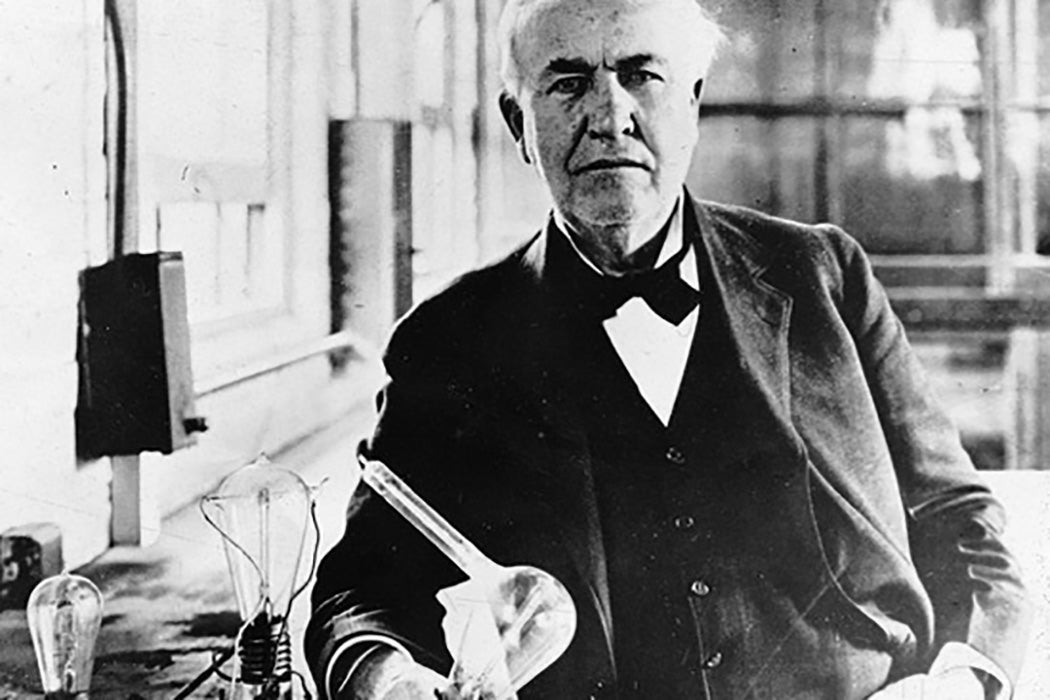
The Origins of Direct Current: From the Voltaic Pile to Edison’s Dynamos
To understand the technological evolution of direct current, one must first distinguish between the discovery of the phenomenon and the invention of the delivery system. Direct current is defined as the unidirectional flow of electric charge. Unlike alternating current (AC), which periodically reverses direction, DC maintains a constant voltage or current polarity.
The first breakthrough in generating a continuous flow of electricity came in 1800 with Alessandro Volta. His “Voltaic Pile”—the world’s first chemical battery—proved that electricity could be generated through chemical reactions rather than just static discharges. However, for most of the 19th century, DC remained a laboratory curiosity or a tool for niche applications like the telegraph.
The Pearl Street Station: Engineering the First Power Grid
The transition from a scientific principle to a global technology trend began in the late 1870s. Thomas Edison, already famous for his improvements to the incandescent light bulb, realized that the bulb was useless without a reliable system to power it. In 1882, Edison opened the Pearl Street Station in New York City. This was the world’s first central power plant, and it utilized direct current.
Edison’s “Jumbo” dynamos were marvels of 19th-century engineering. They converted mechanical energy into electrical energy with unprecedented efficiency for the time. This technological leap allowed for the electrification of lower Manhattan, providing a steady 110-volt DC supply to dozens of customers. This established the “Edison System” as the first viable commercial standard for electrical distribution, effectively making Edison the father of the DC power industry.
The Physics of DC and Early Technical Constraints
The technical allure of DC in its early days was its simplicity. It was compatible with batteries, making it possible to store energy for use when dynamos were offline. Furthermore, early electric motors ran more smoothly on DC. However, Edison’s technology faced a significant hurdle: voltage drop. Because DC could not be easily stepped up to higher voltages at the time, it could not be transmitted over long distances without massive energy loss due to resistance in the wires. This meant that power plants had to be located within a mile of the end-user, a limitation that would eventually spark one of the greatest tech rivalries in history.
The War of Currents: A Pivotal Era for Electrical Standards
As the demand for electricity scaled, the technological limitations of DC became a point of contention. This led to the famous “War of Currents” in the late 1880s and early 1890s, pitting Thomas Edison’s direct current against the alternating current system championed by Nikola Tesla and George Westinghouse.
Edison vs. Tesla: The Battle for Infrastructure
The core of the conflict was technical scalability. Tesla’s AC system utilized transformers, which could “step up” electricity to extremely high voltages for long-distance transmission and “step down” the voltage for safe home use. Edison, heavily invested in DC patents and infrastructure, launched a massive marketing and legal campaign to discredit AC as dangerous.
From a branding and strategy perspective, Edison’s defense of DC was a masterclass in corporate protectionism. However, from a technology standpoint, AC offered an undeniable advantage for the centralized, continental-scale grids that were being envisioned. In 1893, when Westinghouse won the contract to light the Chicago World’s Fair and subsequently the contract for the Niagara Falls power project, the era of DC as the primary backbone for national grids seemed to come to an end.

The Technical Legacy of the Conflict
While AC won the battle for long-distance distribution, DC never truly disappeared. It remained the preferred technology for urban subways, certain industrial processes, and early telecommunications. More importantly, the rivalry established a rigorous framework for electrical safety standards and spurred rapid innovation in insulation, circuit breakers, and meter technology—innovations that still underpin our modern digital security and infrastructure.
The Modern Tech Renaissance: Why DC is the Future of Gadgets and AI
While the 20th century belonged to AC, the 21st century is witnessing a massive shift back toward direct current. This technological pivot is driven by the very nature of modern electronics. Every semiconductor, every smartphone, and every AI-driven server runs on DC.
Portable Electronics and the DC Requirement
The hardware that defines our current era—laptops, tablets, and mobile devices—requires a precise, low-voltage DC supply. When you plug your laptop into a wall outlet, you are using a rectifier (a power brick) to convert the grid’s AC into the DC your battery and processor need. As device efficiency becomes the primary metric for gadget reviews and consumer demand, the tech industry is increasingly looking for ways to eliminate these conversion losses.
Data Centers and the High-Voltage Direct Current (HVDC) Shift
As we scale AI tools and cloud computing, the energy demands of data centers have reached unprecedented levels. Modern data center architecture is increasingly moving toward “DC distribution.” Instead of converting AC to DC at every individual server rack—which generates significant heat and energy waste—engineers are implementing high-voltage DC systems throughout the facility. This reduces the number of conversion steps, improves cooling efficiency, and significantly lowers the carbon footprint of digital infrastructure.
Renewable Energy and the Native DC Revolution
The global shift toward green technology has provided the strongest impetus for a DC comeback since the days of Thomas Edison. Most renewable energy technologies are inherently DC-based, creating a “native DC” ecosystem that bypasses the traditional AC grid logic.
Solar Photovoltaics and Microgrids
Solar panels generate direct current. In a traditional setup, this DC is converted to AC by an inverter to be fed into the grid or used in a home. However, as “smart home” tech and localized microgrids become more prevalent, there is a growing movement to keep that energy in DC form. DC-coupled storage systems, where solar panels feed directly into batteries, are significantly more efficient than their AC counterparts. This technology trend is paving the way for “DC homes” where lighting, appliances, and HVAC systems run natively on direct current.
Electric Vehicles (EVs) and Battery Storage
The EV revolution is perhaps the most visible application of modern DC technology. An electric vehicle is essentially a massive DC battery on wheels. Fast-charging technology (DC Fast Charging) allows for the direct transfer of energy into the vehicle’s battery, bypassing the slow on-board AC chargers. As we develop “Vehicle-to-Grid” (V2G) technologies, the ability to manage DC power flow between cars and buildings will become a cornerstone of the future energy economy.

The Future of DC Technology in a Hyper-Connected World
Looking ahead, the “inventor” of DC current would likely be astonished by the scale of its modern application. We are seeing the emergence of High-Voltage Direct Current (HVDC) transmission lines that can carry power across thousands of miles—resolving the very distance issue that plagued Edison in the 1880s. These HVDC “superhighways” are now the preferred tech for connecting offshore wind farms to inland cities.
The technological trajectory is clear: as we move away from mechanical systems and toward solid-state electronics, direct current becomes the more logical, efficient, and controllable medium. From the smallest AI chip to the largest transcontinental power link, the legacy of DC is not just a chapter in a history book, but the primary driver of 21st-century innovation. Thomas Edison may have lost the initial “War of Currents,” but in the digital and renewable age, his preferred technology is finally claiming its throne as the standard for a high-tech future.
aViewFromTheCave is a participant in the Amazon Services LLC Associates Program, an affiliate advertising program designed to provide a means for sites to earn advertising fees by advertising and linking to Amazon.com. Amazon, the Amazon logo, AmazonSupply, and the AmazonSupply logo are trademarks of Amazon.com, Inc. or its affiliates. As an Amazon Associate we earn affiliate commissions from qualifying purchases.