
The question of Bitcoin’s inventor stands as one of the most enduring mysteries in the annals of digital technology, a riddle that has captivated technologists, cryptographers, and enthusiasts for over a decade. While the world widely acknowledges Bitcoin as a revolutionary digital currency, the identity of its creator, known only by the pseudonym Satoshi Nakamoto, remains shrouded in an anonymity that is as integral to Bitcoin’s narrative as its underlying blockchain technology. This deliberate concealment is not merely a footnote; it is a fundamental aspect of Bitcoin’s technological design and philosophical ethos, influencing its development and its ultimate decentralized nature.
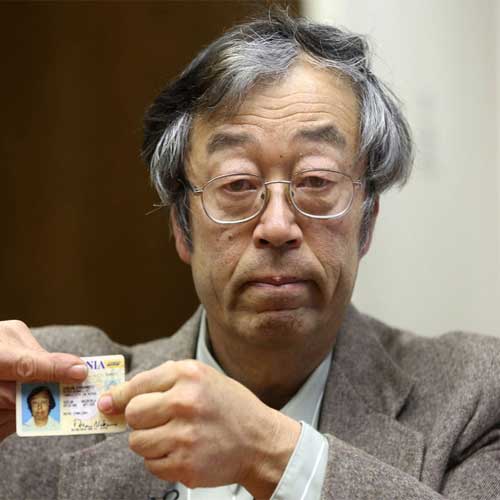
The Enigma of Satoshi Nakamoto: A Digital Ghost
The story of Bitcoin begins not with a public launch by a known entity, but with a series of digital breadcrumbs left by an unknown individual or group operating under the moniker Satoshi Nakamoto. This digital ghost first materialized in late 2008, introducing a concept that would redefine digital finance and distributed systems.
The Whitepaper and Genesis Block
On October 31, 2008, a link to a whitepaper titled “Bitcoin: A Peer-to-Peer Electronic Cash System” was posted to a cryptography mailing list. Authored by “Satoshi Nakamoto,” this nine-page document meticulously detailed a novel solution to a long-standing problem in digital currency: how to create a peer-to-peer electronic cash system without relying on a trusted third party. The whitepaper outlined a system built on cryptographic proof rather than trust, utilizing a chain of cryptographically linked blocks—a “blockchain”—to record transactions.
Just over two months later, on January 3, 2009, Nakamoto mined the genesis block of the Bitcoin network. Embedded within this very first block was a message: “The Times 03/Jan/2009 Chancellor on brink of second bailout for banks.” This timestamp, referencing a headline from the British newspaper The Times, served not just as proof of the block’s creation date but also as a subtle, yet profound, commentary on the very financial system Bitcoin was designed to circumvent and improve upon. It immediately signaled Bitcoin’s radical departure from traditional centralized banking and its genesis in the context of global financial instability.
Communication and Disappearance
Following the launch, Satoshi Nakamoto actively engaged with early developers and collaborators on online forums and via email. They participated in discussions, responded to bug reports, and iteratively refined the Bitcoin software. This period of active involvement lasted for approximately two years. Nakamoto released version 0.1 of the Bitcoin client software, laid the groundwork for the network, and delegated its management to key individuals in the burgeoning community.
However, in late 2010, Nakamoto gradually withdrew from public communication. Their last known public posts were around December 2010, stating that there was “more work to do on denial-of-service prevention” and confirming the latest Bitcoin software release. They then transferred control of the project’s source code repository and alert key to Gavin Andresen, one of the most prominent developers at the time, and disappeared without a trace. This abrupt and complete withdrawal left a vacuum, but also cemented Bitcoin’s independent trajectory, free from the influence of any single figure.
The Philosophical Underpinnings of Anonymity
Satoshi’s anonymity is not merely a curious detail but a critical design choice that deeply reflects the cypherpunk ideals prevalent in the cryptographic communities of the late 20th and early 21st centuries. These ideals prioritized privacy, decentralization, and resistance to censorship through the use of cryptography. By remaining anonymous, Nakamoto ensured that Bitcoin could develop as a truly permissionless and leaderless system, immune to the potential pressures, attacks, or attempts at control that would inevitably target a known founder. The absence of a central figure head prevents legal challenges from focusing on an individual, thereby strengthening Bitcoin’s resilience. It also fosters a sense of collective ownership and development, where the technology itself, rather than its creator, is paramount. This anonymity is a testament to the core principle that the code should speak for itself, and its utility should be independent of who wrote it.
Unraveling the Technological Blueprint: Bitcoin’s Core Innovations
Regardless of who Satoshi Nakamoto is, their invention fundamentally transformed digital security, distributed computing, and cryptography. Bitcoin wasn’t just a new currency; it was a novel technological stack that solved several persistent computer science problems simultaneously.
Cryptographic Foundations and Proof-of-Work
At the heart of Bitcoin’s security and integrity are sophisticated cryptographic principles. Each transaction is digitally signed by the sender using their private key, ensuring authenticity and non-repudiation. These transactions are then bundled into blocks, which are cryptographically linked together using hash functions, forming an immutable chain. Any attempt to alter a past transaction would invalidate all subsequent blocks, making such an attack computationally infeasible.
The ingenuity lies in the “Proof-of-Work” (PoW) consensus mechanism. Instead of relying on a central authority to validate transactions, Bitcoin miners compete to solve a complex computational puzzle. The first miner to find a solution (a “nonce” that, when combined with the block’s data, produces a hash below a target threshold) gets to add the new block to the blockchain and is rewarded with newly minted bitcoins and transaction fees. This PoW mechanism serves multiple critical functions: it secures the network, validates transactions, issues new currency, and makes fraudulent transactions extremely costly to execute, thereby preventing double-spending.
The Decentralized Network Architecture
Before Bitcoin, digital cash systems either relied on a central authority (like banks) or struggled with the “double-spend problem”—the risk that a digital token could be spent more than once, just like copying a digital file. Satoshi’s genius was in creating a decentralized, peer-to-peer network where all participants collectively maintain a shared, public ledger of all transactions.
Nodes in the Bitcoin network constantly communicate, verifying transactions and blocks according to a predefined set of rules. There is no central server, no single point of failure. If one node goes offline, the network continues to operate seamlessly. This architecture not only enhances resilience but also embodies the principle of censorship resistance. No single entity can stop transactions, reverse them, or seize funds from a user’s wallet, as long as the user controls their private keys. This design ensures that the network is robust and capable of operating without interruption, even in the face of adversarial attacks or political pressure.
Solving the Double-Spend Problem
The double-spend problem had been a persistent challenge for digital currencies operating without a central trusted intermediary. Previous attempts often failed because digital information is easily copied. Satoshi Nakamoto’s solution was elegant and groundbreaking: a time-stamped, unchangeable transaction log (the blockchain) secured by the PoW mechanism.
When a transaction is broadcast to the network, miners verify its legitimacy (e.g., sender has sufficient funds, correct signatures). Once included in a block and confirmed by subsequent blocks (usually 6 confirmations are considered robust), the transaction is virtually irreversible. The PoW makes it computationally prohibitive for an attacker to re-write the history of the blockchain and reverse a transaction, especially as more blocks are added on top. This cryptographic certainty, achieved through decentralized consensus, eliminated the need for a trusted third party, giving digital money the same finality as physical cash but with global reach and efficiency.
The Hunt for Satoshi: High-Profile Candidates and Forensic Analysis
The intense public curiosity surrounding Satoshi Nakamoto’s identity has spawned numerous investigations, leading to various theories and alleged revelations. These investigations often delve into technical details, linguistic analysis, and the historical context of cryptography.
Craig Wright: The Self-Proclaimed Satoshi
Perhaps the most prominent and controversial figure to claim the mantle of Satoshi Nakamoto is Australian computer scientist Craig Wright. In 2016, Wright publicly asserted his identity as Bitcoin’s creator, presenting what he claimed was cryptographic proof. While some early Bitcoin developers and media outlets initially lent credence to his claims, skepticism grew rapidly. Wright’s attempts to provide definitive proof were repeatedly found to be lacking or manipulated, failing to satisfy the broader cryptographic community. His claims have been widely disputed and are largely rejected by the majority of Bitcoin developers and researchers due to a lack of verifiable, cryptographic evidence. Despite this, Wright continues to maintain his claim, leading to numerous legal battles and controversies surrounding intellectual property rights related to Bitcoin.
Hal Finney, Nick Szabo, Wei Dai: Early Cypherpunks
Before Craig Wright, and continuing today, speculation often centered on individuals deeply involved in the cypherpunk movement and early digital cash research.
- Hal Finney: A renowned cryptographer and one of the earliest adopters and collaborators on Bitcoin, Finney received the very first Bitcoin transaction from Nakamoto. His close involvement, technical expertise, and an early email exchange with Satoshi led many to believe he could be the inventor. However, Finney consistently denied the claim until his passing in 2014, and there is no definitive proof.
- Nick Szabo: A computer scientist and legal scholar, Szabo designed “Bit Gold,” a decentralized digital currency proposal that predated Bitcoin and shared many conceptual similarities. His deep understanding of cryptography, smart contracts, and decentralized systems made him a strong candidate in the eyes of many. Linguistic analysis by some researchers also suggested a potential link, but Szabo has denied being Nakamoto.
- Wei Dai: The creator of “b-money,” another early proposal for a decentralized electronic cash system, Dai is another figure whose work influenced Bitcoin’s design. Nakamoto even referenced b-money in the Bitcoin whitepaper. Like others, Dai is a brilliant cryptographer but has denied being Satoshi.
Linguistic Fingerprints and Code Analysis
Forensic analysis has extended beyond individual candidates to the digital footprint left by Nakamoto. Researchers have analyzed the writing style in Nakamoto’s emails and forum posts, looking for unique linguistic patterns, grammatical quirks, and vocabulary choices that might point to a specific individual or group. Similarly, the Bitcoin code itself has been scrutinized for coding style, development patterns, and even specific technical decisions that could reveal a developer’s identity. These analyses have yielded intriguing correlations but no conclusive evidence to definitively unmask the creator. The meticulous and careful communication style, coupled with the precision of the code, suggests a highly skilled individual or a small, cohesive group, but not a clear identification.
The Enduring Legacy of Anonymity in Technology
The unwavering anonymity of Satoshi Nakamoto has become more than just a mystery; it has evolved into a foundational element of Bitcoin’s enduring success and a powerful example within the broader technological landscape. The inventor’s disappearance was not a flaw but a feature, shaping the future trajectory of decentralized technologies.
Fostering Open-Source Collaboration
By stepping away, Satoshi ensured that Bitcoin truly became an open-source project driven by a community rather than a benevolent dictator. No single individual dictates the protocol’s evolution. Instead, changes are proposed, debated, and implemented through a rough consensus process among developers, miners, and users. This model of decentralized governance has proven remarkably resilient and adaptable. It allows for continuous innovation and improvement while maintaining the core principles of the network. This community-driven approach is now a hallmark of many successful blockchain and decentralized technology projects, all of which owe a debt to Satoshi’s pioneering example.
Protecting the Network from Centralized Control
A known inventor would inevitably attract scrutiny, legal pressure, and even attempts at coercion from governments or powerful financial institutions. By remaining anonymous, Nakamoto effectively inoculated Bitcoin against the risk of its creator being pressured to compromise the network’s integrity, alter its supply, or introduce backdoors. This lack of a central figure or corporation to target has been instrumental in allowing Bitcoin to grow into a global phenomenon, resistant to traditional forms of censorship and control. The technology stands on its own merits, unburdened by the vulnerabilities inherent in human leadership.

The Paradox of Innovation without Attribution
Satoshi Nakamoto’s enduring anonymity presents a fascinating paradox: one of the most significant technological innovations of the 21st century was brought into existence by an unknown individual who sought no personal fame or fortune. The estimated value of Nakamoto’s early Bitcoin holdings, believed to be around one million BTC, makes them one of the wealthiest individuals in the world, yet these funds remain untouched, adding another layer to the enigma. This act of self-effacement underscores the core philosophy of Bitcoin: the idea and the technology are more important than the individual who conceived them. It champions the power of an idea to spread and take root independently, driven by its utility and inherent design, rather than by the reputation or marketing prowess of its founder. This model continues to inspire new generations of technologists building decentralized systems where trust is placed in cryptographic proof, not in individuals or institutions. The question of “who is the inventor of Bitcoin” may never be fully answered, but the technological principles and the ethos forged by that anonymity will continue to shape the digital world for decades to come.
aViewFromTheCave is a participant in the Amazon Services LLC Associates Program, an affiliate advertising program designed to provide a means for sites to earn advertising fees by advertising and linking to Amazon.com. Amazon, the Amazon logo, AmazonSupply, and the AmazonSupply logo are trademarks of Amazon.com, Inc. or its affiliates. As an Amazon Associate we earn affiliate commissions from qualifying purchases.