
In the modern global economy, an airline is no longer just a transportation company; it is a massive financial entity that manages complex loyalty ecosystems. For American Airlines, partnerships represent the bedrock of its revenue strategy. Whether through the Oneworld alliance, domestic codeshare agreements, or multi-billion dollar deals with banking institutions, the network of partners surrounding American Airlines is designed to drive capital, minimize operational costs, and maximize the lifetime value of the consumer. Understanding who is partners with American Airlines is essential for any investor, business traveler, or personal finance enthusiast looking to navigate the intricacies of the travel industry’s financial landscape.

The Oneworld Alliance: A Global Network of Revenue Sharing
At the core of American Airlines’ international strategy is its membership in the Oneworld alliance. Founded in 1999, Oneworld is a premiere global network that allows member airlines to function as a cohesive financial and operational unit across borders. From a business finance perspective, these partnerships are vital because they allow American Airlines to sell tickets to destinations where they do not fly their own aircraft, effectively expanding their market reach without the massive capital expenditure required to purchase new jets or secure landing slots in foreign hubs.
Core Alliance Members
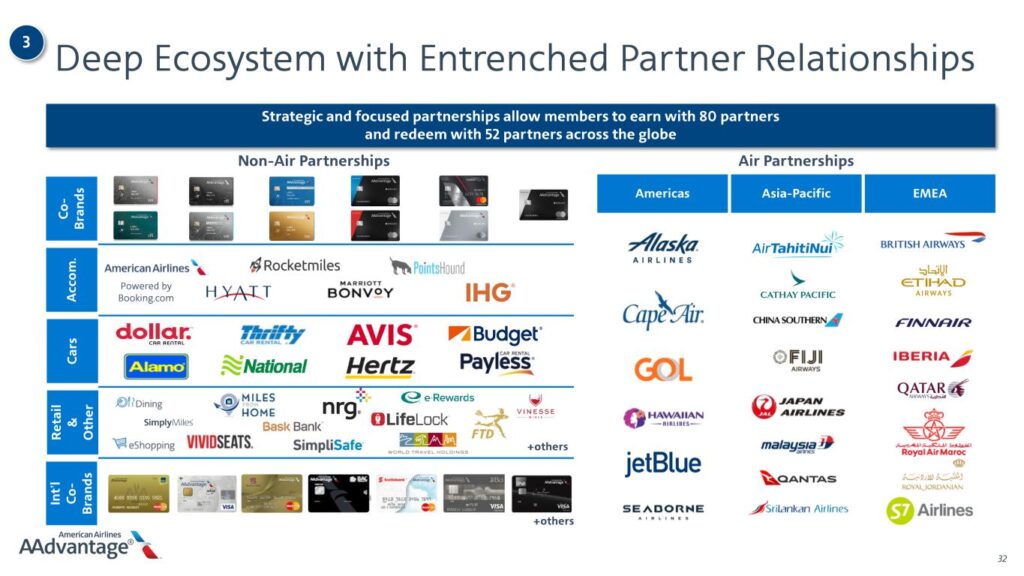
The Oneworld alliance consists of 13 full member airlines, including high-value brands like British Airways, Cathay Pacific, Qantas, Qatar Airways, and Japan Airlines. These partnerships facilitate “interlining,” a process where baggage and passenger manifests are shared seamlessly. More importantly, they enable “joint business ventures” (JBVs). For example, American Airlines’ JBV with British Airways and Iberia on North Atlantic routes allows these companies to share costs and profits, essentially acting as a single entity on specific corridors. This reduces price competition and optimizes profit margins for all parties involved.
Reciprocal Loyalty and Asset Valuation
One of the most significant financial aspects of the Oneworld partnership is the reciprocity of the AAdvantage program. When a traveler flies on a partner like Finnair or Royal Jordanian, they can earn and redeem AAdvantage miles. This creates a “currency” system where airlines settle accounts with one another behind the scenes. These miles are not just marketing perks; they are high-value financial assets. During the economic downturns of the last decade, American Airlines utilized its loyalty program—and the debt-servicing power of its partner network—as collateral for multi-billion dollar loans, proving that these partnerships are a cornerstone of the company’s balance sheet.
Domestic Alliances and Strategic Codeshares
Beyond the formal Oneworld structure, American Airlines maintains specific strategic partnerships to dominate the domestic and regional markets. These partnerships are often scrutinized by regulatory bodies because of their significant impact on market pricing and competitive dynamics.
The Alaska Airlines Connection
While Alaska Airlines is also a member of Oneworld, its relationship with American Airlines is deeper than standard alliance participation. For American, Alaska Airlines serves as a vital “feeder” on the West Coast. This partnership allows American to funnel passengers from its midwestern and eastern hubs into Alaska’s dense network in the Pacific Northwest. Economically, this allows American to compete with Delta and United in regions where it lacks a primary hub (like Seattle), without needing to invest in the infrastructure required to build a standalone presence.
Regional Partners and American Eagle
The financial structure of American’s regional partnerships is unique. Through the “American Eagle” brand, the company partners with regional carriers such as Envoy Air, Piedmont Airlines, and PSA Airlines (which are wholly owned subsidiaries), as well as independent contractors like SkyWest Airlines and Republic Airways. These partners operate on a “fixed-fee” contract basis. American Airlines pays these partners to operate flights, while American retains all the revenue. This model allows the parent company to maintain a leaner cost structure by utilizing the lower labor costs associated with regional operators.
Financial Institutions and the Credit Card Ecosystem
If one were to look at the most profitable segment of American Airlines’ business, it would likely be its partnerships with financial institutions. In many fiscal years, the revenue generated from selling miles to banks exceeds the profit generated from flying passengers. This is the “hidden” economy of the airline industry.
Citi and Barclays: The Primary Banking Partners
American Airlines has a dual-issuer relationship with Citibank and Barclays. This is a rare arrangement in the credit card industry, where most brands stick to a single issuer. Citibank manages the majority of the consumer and business credit card portfolios, while Barclays typically handles cards acquired through “in-flight” applications.
These banks purchase AAdvantage miles from American Airlines in bulk—often billions of dollars worth—to distribute to cardholders as rewards. For the bank, this is a customer acquisition tool; for American Airlines, this is high-margin cash flow that is realized long before a passenger ever boards a plane. This liquidity is crucial for the airline’s day-to-day operations and capital investments.
Transfer Partners and Financial Tools
In the realm of personal finance, the ability to transfer points between systems is a major draw. While American Airlines has traditionally been protective of its miles, it maintains a strategic partnership with Bilt Rewards. This allows renters to earn points on monthly rent payments and transfer them 1:1 to American Airlines. This partnership targets a younger, high-earning demographic that may not yet be loyal to a specific carrier, bringing new capital into the AAdvantage ecosystem.
Non-Airline Partnerships: Diversifying Revenue Streams
To keep consumers engaged with the brand even when they aren’t flying, American Airlines has cultivated a vast network of retail, hospitality, and service partners. These partnerships transform every consumer transaction into an opportunity for American to generate data and revenue.
Hospitality and Car Rentals
The partnership with Hyatt Hotels is one of the most integrated in the industry. Members of both AAdvantage and World of Hyatt can link their accounts to earn “double dip” rewards on both flights and hotel stays. This cross-promotional strategy ensures that a traveler’s entire trip budget—from the flight to the stay—is funneled through a network that benefits American Airlines. Similar agreements exist with car rental giants like Avis and Budget, where the airline receives a commission for every booking made through its platform, paid out in the form of miles or cash.
The AAdvantage Shopping and Dining Portals
The AAdvantage eShopping mall is a digital storefront that partners with thousands of retailers, including Apple, Macy’s, and Walmart. When a consumer uses this portal, the retailer pays American Airlines a referral fee. American then shares a portion of that fee with the consumer in the form of miles. This is essentially a massive affiliate marketing operation that diversifies the airline’s income away from volatile fuel prices and ticket demand, creating a steady stream of “non-passenger revenue.”
The Business Logic of Partnership Expansion
Why does American Airlines pursue such an extensive list of partners? The answer lies in the concept of “network effects” and financial resilience.
Mitigating Economic Volatility
The airline industry is notoriously cyclical, sensitive to fuel prices, geopolitical events, and economic shifts. By diversifying its partnerships—specifically into the financial and retail sectors—American Airlines creates “sticky” revenue. A person might stop flying during a recession, but they will likely continue to pay their rent or buy groceries. By partnering with banks and retailers, American ensures that its loyalty currency remains in circulation regardless of the state of the aviation market.

Data as a Financial Asset
Finally, every partnership is a data-sharing agreement. By seeing where its customers shop, stay, and spend, American Airlines builds a comprehensive financial profile of its user base. This data is incredibly valuable for targeted marketing and for negotiating future contracts with partners. The insight gained from a partner like Shell (for fuel rewards) or Uber (for ground transport) allows American to optimize its offerings and maintain a competitive edge in the “wallet share” of the global traveler.
In summary, the partners of American Airlines form a complex web that spans global aviation alliances, regional contractors, multi-national banks, and everyday retail brands. This ecosystem is not just about travel; it is a sophisticated financial structure designed to maximize liquidity, leverage brand equity, and ensure that American Airlines remains a central fixture in the global flow of capital. For the savvy consumer or business observer, these partnerships are the key to unlocking the true value of the AAdvantage brand.
aViewFromTheCave is a participant in the Amazon Services LLC Associates Program, an affiliate advertising program designed to provide a means for sites to earn advertising fees by advertising and linking to Amazon.com. Amazon, the Amazon logo, AmazonSupply, and the AmazonSupply logo are trademarks of Amazon.com, Inc. or its affiliates. As an Amazon Associate we earn affiliate commissions from qualifying purchases.