
The S&P 500 is one of the most widely recognized and followed stock market indices in the world. Often cited in financial news, market analyses, and investor conversations, it serves as a critical benchmark for the overall health of the U.S. economy and the broader equity market. For many, understanding “who is in the S&P 500” is not just a matter of curiosity, but a fundamental step in comprehending the drivers of market performance, assessing investment opportunities, and making informed financial decisions. This index represents a basket of 500 large-cap U.S. companies selected by S&P Dow Jones Indices, carefully chosen to reflect the sector composition and economic diversity of the American market. It is more than just a list of names; it is a dynamic snapshot of corporate America, constantly evolving to mirror shifts in industries, technology, and economic paradigms.
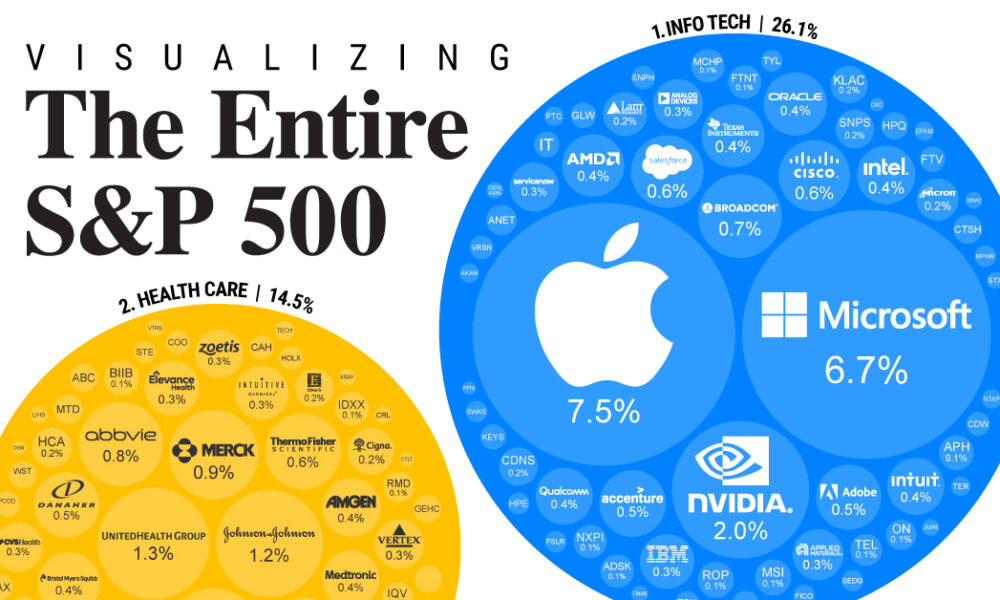
Understanding the S&P 500: More Than Just a Number
At its core, the S&P 500 is a stock market index that tracks the performance of 500 of the largest publicly traded companies in the United States. Established in 1957, it has become the standard by which large-cap U.S. equity performance is measured, and for good reason. Its comprehensive nature and rigorous selection process make it a remarkably accurate barometer of the American economy.
What is the S&P 500?
The S&P 500 is a market-capitalization-weighted index, meaning that companies with larger market values have a greater impact on the index’s overall performance. Unlike simpler indices that might just average stock prices, the S&P 500 reflects the true economic scale of its constituent companies. It is designed to be a leading indicator of U.S. equities and a broad gauge of the U.S. economy. When you hear that “the market is up” or “the market is down,” more often than not, the S&P 500 is the index being referenced. Its significance extends beyond mere financial tracking; it provides a narrative of corporate success, innovation, and resilience within the American economic landscape.
The Role of S&P Dow Jones Indices
The creation and maintenance of the S&P 500 is not a random process but a meticulously managed operation conducted by S&P Dow Jones Indices, a joint venture between S&P Global, CME Group, and News Corp. An independent Index Committee at S&P Dow Jones Indices is responsible for all decisions regarding the index’s composition. This committee applies a robust and transparent methodology to ensure the index remains relevant, representative, and reflective of the target market. Their objective is not to pick winning stocks, but to construct an index that accurately reflects the investable large-cap U.S. equity market. This rigorous oversight is crucial for maintaining the S&P 500’s credibility and its status as a trusted benchmark for global investors.
Why the S&P 500 Matters to Investors
For investors, the S&P 500 holds immense importance. Firstly, it serves as a critical benchmark for portfolio performance. If an active fund manager claims to outperform the market, they are typically comparing their returns against the S&P 500. Secondly, it is the foundation for a vast array of investment products, most notably passively managed index funds and exchange-traded funds (ETFs). These products allow individual and institutional investors to gain diversified exposure to the large-cap U.S. stock market with relatively low costs. Investing in an S&P 500 index fund essentially means owning a tiny slice of 500 prominent American companies, providing instant diversification and reflecting the collective growth of the U.S. economy. Furthermore, the S&P 500’s performance is often seen as an economic indicator, providing insights into investor sentiment and corporate profitability, which can influence broader economic forecasts and policy decisions.
The Selection Criteria: A Rigorous Process
Entry into the S&P 500 is a highly coveted achievement for public companies, signifying their status as an established leader in the U.S. market. It’s not an open invitation; rather, it involves meeting stringent criteria set forth by the S&P Dow Jones Indices committee. This rigorous selection process ensures that the index maintains its integrity as a representation of large-cap U.S. equities.
Eligibility Requirements
To be considered for inclusion in the S&P 500, a company must satisfy several key eligibility requirements. These criteria are designed to ensure that constituent companies are large, liquid, and economically viable.
-
Market Capitalization: A company must meet a minimum unadjusted market capitalization threshold, which is periodically reviewed and adjusted. This ensures that only large-cap companies are included.
-
Liquidity: The company’s stock must be highly liquid, meaning a significant percentage of its shares are publicly available and actively traded. This prevents illiquid stocks from skewing the index.
-
Public Float: At least 50% of the company’s outstanding shares must be available to the public (not closely held by insiders or government entities). This ensures the index reflects the performance of publicly tradable shares.
-
U.S. Domicile: The company must be a U.S. company, with its primary listing on a major U.S. exchange (NYSE or NASDAQ).
-
Financial Viability: A key criterion is financial health. The sum of the company’s most recent four consecutive quarters’ Generally Accepted Accounting Principles (GAAP) earnings must be positive, and its most recent quarter’s GAAP earnings must also be positive. This ensures only profitable companies are included, avoiding speculative or struggling entities.
-
Sector Representation: While not a strict quota, the committee aims for sector balance to ensure the index broadly reflects the U.S. economy, preventing overconcentration in any single industry.
The Committee’s Discretion
While quantitative metrics form the bedrock of the selection process, the S&P Dow Jones Indices Committee also exercises a degree of qualitative discretion. This means that meeting all the numerical criteria does not guarantee inclusion, nor does slightly missing one automatically disqualify a company. The committee considers factors such as a company’s sector representation, its visibility, and the potential impact of its inclusion or exclusion on the index’s representativeness. For example, the committee may choose to exclude a company if its business model is highly speculative or if its inclusion would create an undesirable concentration in a specific niche. This element of discretion allows the index to adapt to evolving market dynamics and unforeseen circumstances, ensuring its long-term relevance and robustness. The committee’s goal is not to predict future stock performance, but to maintain a consistent and reliable measure of the U.S. large-cap market.
How Companies Enter and Exit
The S&P 500 is not static; its composition is dynamic, reflecting the constant evolution of corporate America. The committee reviews the index composition quarterly, but changes can occur at any time due to specific events.
-
Inclusions: Companies primarily enter the S&P 500 when they meet the eligibility criteria and the committee decides they enhance the index’s overall representativeness. This often happens as companies grow in market capitalization, prove sustained profitability, and gain significant public visibility. Being added to the S&P 500 is typically a major catalyst for a company’s stock, as index funds and ETFs are forced to buy its shares.
-
Exclusions: Conversely, companies can be removed from the index for several reasons: if their market capitalization falls significantly below the threshold, if they no longer meet liquidity or profitability requirements, or if they are acquired by another company. Bankruptcies or delistings also necessitate removal. When a company is removed, index funds must sell its shares, which can put downward pressure on its stock price. This constant rebalancing ensures that the S&P 500 remains a current and accurate reflection of the largest and most influential U.S. companies.
A Glimpse into the Current Constituents: Diversity and Dominance
The S&P 500 is a testament to the diversity and innovation within the U.S. economy. While it’s impossible to list all 500 companies, a look at its sectoral representation and top constituents reveals fascinating insights into where economic power currently resides.
Sectoral Representation
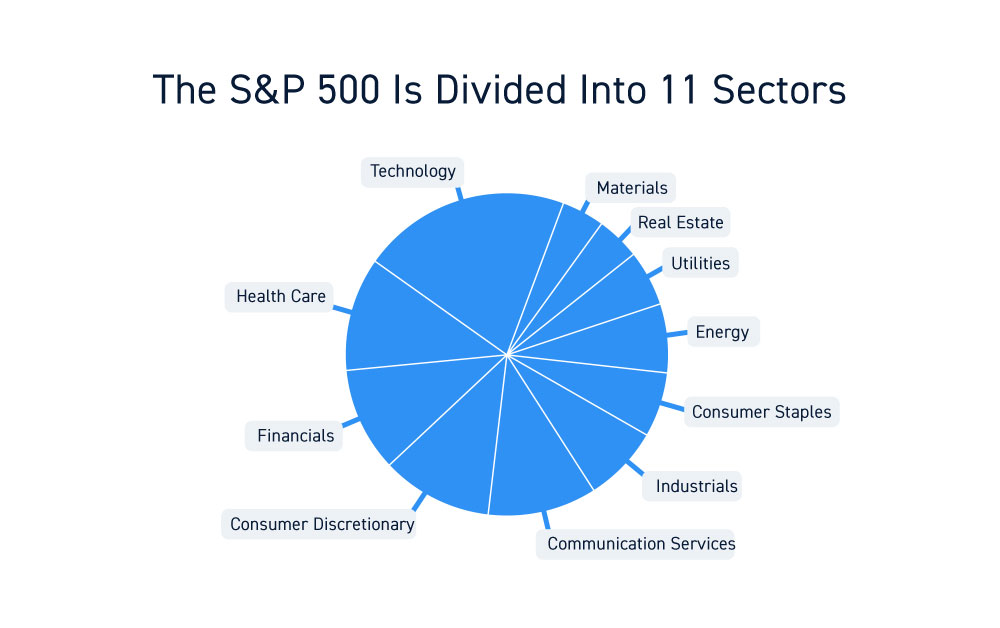
The S&P 500 categorizes its companies into eleven Global Industry Classification Standard (GICS) sectors, providing a structured view of the market. These sectors are:
-
Information Technology: Often the largest sector by market capitalization, it includes giants like Apple, Microsoft, NVIDIA, and Alphabet (Google). This sector’s dominance highlights the immense impact of technology on modern life and the economy.
-
Healthcare: Comprising pharmaceutical companies, biotechnology firms, healthcare providers, and medical device manufacturers (e.g., Johnson & Johnson, UnitedHealth Group, Eli Lilly).
-
Financials: Banks, investment firms, insurance companies, and real estate companies (e.g., JPMorgan Chase, Bank of America, Berkshire Hathaway).
-
Consumer Discretionary: Companies selling non-essential goods and services, often tied to economic cycles (e.g., Amazon, Tesla, Home Depot, McDonald’s).
-
Industrials: Manufacturing, aerospace and defense, transportation, and engineering firms (e.g., Raytheon Technologies, Boeing, Caterpillar).
-
Communication Services: Telecommunications, media, entertainment, and interactive media services (e.g., Meta Platforms, Verizon, Disney).
-
Consumer Staples: Companies providing essential goods and services, less sensitive to economic downturns (e.g., Procter & Gamble, Coca-Cola, Walmart).
-
Energy: Oil & gas exploration, production, refining, and marketing companies (e.g., ExxonMobil, Chevron).
-
Utilities: Electric, gas, and water utilities (e.g., NextEra Energy, Duke Energy).
-
Materials: Mining, chemicals, construction materials, and packaging companies (e.g., Linde plc, Sherwin-Williams).
-
Real Estate: Companies that own, operate, or develop income-producing real estate (e.g., Prologis, American Tower).

The relative weight of these sectors constantly shifts, reflecting broader economic trends, technological advancements, and consumer preferences. For instance, the ascendancy of the Information Technology and Communication Services sectors over the last two decades dramatically illustrates the digital transformation of the global economy.
The Giants Among Us
While the S&P 500 contains 500 companies, a significant portion of its total market capitalization is often concentrated in a handful of mega-cap companies. These “giants” wield substantial influence over the index’s performance due to its market-cap weighting methodology. Companies like Apple, Microsoft, Amazon, Alphabet (Google), NVIDIA, and Meta Platforms frequently top the list of the largest constituents. Their sheer scale, global reach, and innovative capabilities make them pivotal players not just within the S&P 500 but in the global economy at large. Understanding their individual performance and outlook is often key to predicting the direction of the broader index. The growth or decline of these dominant companies can disproportionately affect the S&P 500, leading to discussions about market concentration risk.
Evolving Landscape
The S&P 500 is a living index, constantly adapting to the evolving economic landscape. Companies that were once dominant have faded, replaced by new innovators. Consider the rise of technology companies: in past decades, industrial and financial giants held more sway. Today, software, cloud computing, artificial intelligence, and e-commerce leaders define the index. This evolution reflects dynamic shifts in consumer demand, technological breakthroughs, and global economic forces. The index effectively tells a story of economic transformation, showcasing how industries rise, mature, and sometimes decline, while new ones emerge to take their place at the forefront of American enterprise.
Investing in the S&P 500: Approaches and Benefits
For individual and institutional investors, the S&P 500 is not just a benchmark; it’s a highly accessible investment vehicle. Its broad diversification and historically strong returns make it a cornerstone of many long-term investment strategies.
Passive Investing via ETFs and Mutual Funds
The most common and efficient way to invest in the S&P 500 is through passively managed index funds or exchange-traded funds (ETFs). These investment vehicles aim to replicate the performance of the index by holding the same stocks in the same proportions as the S&P 500 itself.
-
ETFs (Exchange-Traded Funds): These trade like individual stocks on an exchange, offering flexibility in buying and selling throughout the day. Popular S&P 500 ETFs include SPDR S&P 500 ETF Trust (SPY), iShares Core S&P 500 (IVV), and Vanguard S&P 500 ETF (VOO).
-
Mutual Funds: These are typically bought and sold at the end of the trading day based on their Net Asset Value (NAV). Vanguard 500 Index Fund (VFIAX) is a well-known example.
Both options offer instant diversification across 500 large U.S. companies, significantly reducing the company-specific risk associated with investing in individual stocks. They also typically come with very low expense ratios, making them a cost-effective choice for long-term wealth building. This “set it and forget it” approach has been popularized by proponents of passive investing, who argue that few active managers consistently outperform the S&P 500 over extended periods after fees.
Understanding Index Weighting
A crucial aspect for investors to grasp is that the S&P 500 is market-capitalization-weighted. This means that companies with larger market caps (share price multiplied by the number of outstanding shares) have a greater influence on the index’s movement. For example, if Apple, with its trillion-dollar-plus market cap, moves up 1%, it will have a far greater positive impact on the S&P 500’s overall performance than a smaller S&P 500 company moving up by the same percentage.
This weighting methodology has important implications:
-
It inherently biases the index towards larger, more established companies.
-
Periods of strong performance by mega-cap stocks can lead to significant concentration of the index in a few names.
-
Conversely, a downturn in a few large companies can pull the entire index down disproportionately.
While generally seen as an accurate reflection of the market’s value, it’s a characteristic investors should be aware of when assessing the index’s composition and risk profile.
Diversification and Risk Mitigation
One of the primary benefits of investing in the S&P 500 is the inherent diversification it provides. By investing in 500 different companies across numerous sectors, investors significantly mitigate company-specific risk. A single company’s bankruptcy or a steep decline in its stock price will have a minimal impact on the overall S&P 500’s performance, unlike a concentrated portfolio of just a few stocks. This broad market exposure helps smooth out returns over the long term, offering a more stable growth trajectory compared to the volatile swings of individual stock picking. While diversification does not eliminate market risk (the risk that the entire market declines), it effectively manages idiosyncratic risk, making the S&P 500 a cornerstone of a well-balanced, long-term investment portfolio.
The S&P 500 as an Economic Barometer and Future Outlook
Beyond its role as an investment tool, the S&P 500 serves as a powerful economic barometer, reflecting the sentiment and health of corporate America. Its movements are often interpreted as signals about the broader economy, influencing policy decisions and consumer confidence.
Reflecting Economic Health
The S&P 500’s performance is closely intertwined with the U.S. economy. Periods of sustained economic growth, corporate profitability, and consumer spending typically correlate with positive returns for the index. Conversely, economic downturns, recessions, and periods of high inflation or interest rates often manifest as declines in the S&P 500. It’s a forward-looking indicator to some extent, as stock prices often discount future earnings and economic conditions. Thus, a robust S&P 500 can signal investor confidence in future economic prospects, while a declining index might suggest looming challenges. Analysts and economists routinely study the S&P 500’s trends, sector rotations, and underlying company earnings to gain insights into the current and prospective state of the national economy.
Challenges and Criticisms
Despite its widespread acceptance, the S&P 500 is not without its critics or challenges. One common criticism revolves around its market-cap weighting, which can lead to significant concentration risk. When a few mega-cap technology companies dominate the index, their performance can overshadow the movements of hundreds of smaller constituents, potentially misrepresenting the “average” company’s experience. This can lead to periods where the index is largely driven by a handful of names, rather than broad economic participation. Furthermore, while the S&P 500 is broad, it doesn’t include every U.S. company, particularly smaller and mid-sized firms which contribute significantly to innovation and job creation. Thus, while it’s an excellent measure of large-cap performance, it’s not a perfect proxy for the entire U.S. equity market.
Navigating the Future of the Index
Looking ahead, the S&P 500 will continue to evolve, shaped by global trends, technological innovation, and societal shifts. The rise of artificial intelligence, renewable energy, biotechnology, and other emerging industries will undoubtedly influence which companies join and dominate the index in the coming decades. Factors like environmental, social, and governance (ESG) considerations are also gaining prominence, potentially influencing investment decisions and, by extension, the types of companies that thrive and eventually meet the S&P 500’s inclusion criteria. As the economy becomes increasingly globalized, the committee may face ongoing questions about the “U.S. company” domicile criteria and how best to represent cross-border enterprise. For investors, understanding these evolving dynamics is key to anticipating future market trends and ensuring their investment strategies remain aligned with the ever-changing landscape of the S&P 500.
In conclusion, “who is in the S&P 500” is a dynamic and essential question for anyone engaged in the financial markets. It encompasses not just a list of companies, but a profound understanding of market structure, economic trends, and sound investment principles. The S&P 500, with its rigorous selection process and diverse constituents, remains an indispensable tool for gauging market health, diversifying portfolios, and navigating the complexities of modern finance.
aViewFromTheCave is a participant in the Amazon Services LLC Associates Program, an affiliate advertising program designed to provide a means for sites to earn advertising fees by advertising and linking to Amazon.com. Amazon, the Amazon logo, AmazonSupply, and the AmazonSupply logo are trademarks of Amazon.com, Inc. or its affiliates. As an Amazon Associate we earn affiliate commissions from qualifying purchases.