
For decades, the global perception of Houston was tethered strictly to its dominance in the traditional energy sector. However, a tectonic shift is occurring in the “Bayou City.” Today, Houston is rapidly transforming into a premier global technology hub, often referred to as the “Silicon Bayou.” For technology professionals, entrepreneurs, and investors, the city offers a unique ecosystem where legacy industrial expertise meets cutting-edge innovation in artificial intelligence, aerospace, and biotechnology. If you are looking for where to visit in Houston from a technological and industrial perspective, the following destinations represent the heartbeat of the city’s digital and hardware revolution.
The Innovation Corridor: Navigating the Silicon Bayou’s Infrastructure
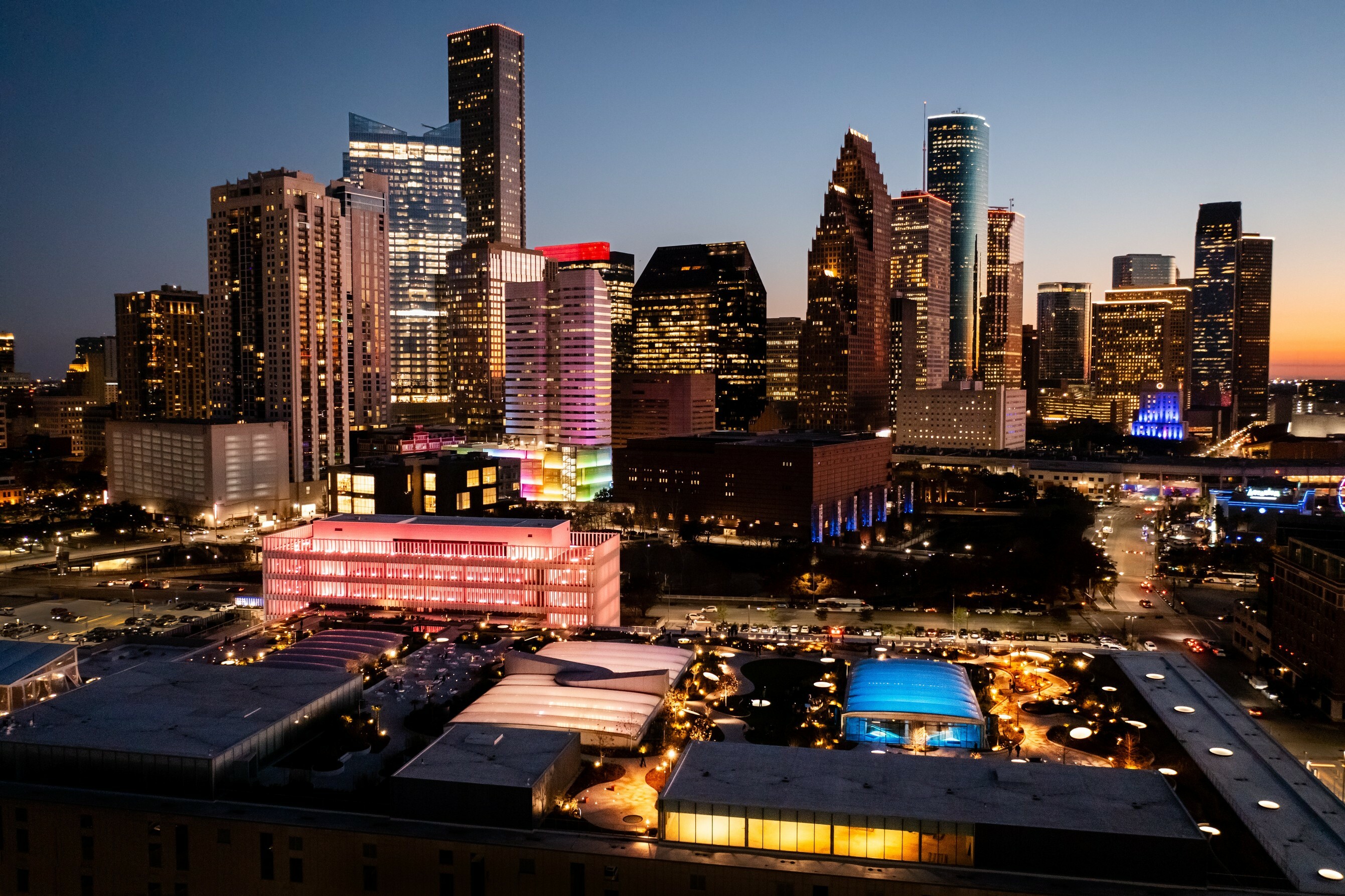
At the center of Houston’s technological pivot is the Innovation Corridor, a four-mile stretch connecting Downtown Houston to the Texas Medical Center. This corridor is designed to foster a “collision of ideas,” where startups, academic institutions, and Fortune 500 companies collaborate on the next generation of software and hardware solutions.
The Ion District
The crown jewel of this corridor is The Ion. Located in a repurposed historic Sears building in Midtown, The Ion is a 266,000-square-foot structure that serves as the nucleus of Houston’s tech ecosystem. Visiting The Ion provides a firsthand look at the integration of corporate innovation and startup agility. It houses accelerators such as Microsoft and Chevron Technology Ventures, alongside Greentown Labs, the largest climatetech incubator in North America.
For the tech-minded visitor, The Ion is not just a coworking space; it is a live laboratory. Here, you can observe the development of carbon-capture software, grid-optimization tools, and industrial IoT devices. The building itself is a marvel of smart-building technology, featuring integrated data systems that manage everything from energy consumption to visitor flow, making it a case study in modern urban tech infrastructure.
TMC³ and the Future of HealthTech
Moving south along the corridor, one arrives at the Texas Medical Center (TMC), the largest medical complex in the world. However, the specific site of interest for technology enthusiasts is TMC³, a massive life sciences campus designed to bridge the gap between clinical research and commercial technology.
TMC³ is the site where biotechnology meets high-performance computing. Visitors interested in AI-driven diagnostics, robotic surgery, and genomic sequencing will find this to be the epicenter of healthtech innovation. The campus facilitates partnerships between top-tier research institutions and global tech giants, focusing on the “bench-to-bedside” pipeline. The infrastructure here supports massive data processing needs, housing some of the most sophisticated server clusters dedicated to biological modeling and pharmaceutical discovery.
Aerospace and Frontier Tech: Pioneering the Future at NASA and Beyond
Houston’s identity is inextricably linked to the stars. While the Johnson Space Center (JSC) is a legendary historical site, its current operations are at the absolute cutting edge of frontier technology. A visit to the tech-focused sectors of Houston’s aerospace scene reveals a shift from government-led exploration to a robust commercial space economy.
NASA Johnson Space Center: The Digital Twin Revolution
While tourists flock to the visitor center, the real technological interest lies in the Mission Control Center and the various robotics laboratories. NASA is currently a leader in the application of “Digital Twin” technology—creating precise virtual replicas of spacecraft to simulate stress tests and mission parameters in a digital environment before physical implementation.
Visiting the engineering facilities provides insight into the development of the Gateway—the lunar-orbiting outpost—and the Orion spacecraft. These projects rely on advanced software architecture for autonomous navigation and life-support systems that must operate with zero-latency issues in the most hostile environments imaginable. The integration of AI in managing these systems is a primary focus of JSC’s current technological roadmap.
The Rise of Commercial Space: Houston Spaceport
Located at Ellington Airport, the Houston Spaceport is the first truly urban spaceport in the United States. This is where the commercialization of space tech is most visible. It is the headquarters for companies like Axiom Space, which is building the world’s first commercial space station, and Intuitive Machines, a leader in autonomous lunar landers.
These facilities are centers for advanced manufacturing, utilizing large-scale 3D printing and carbon-fiber composites to rethink aerospace hardware. For those interested in the intersection of robotics and aerospace, the Spaceport represents the future of orbital logistics and manufacturing. The software stacks being developed here to manage private spaceflight represent a new frontier in complex systems engineering.

The Digital Transformation of Energy: CleanTech and Industrial AI
Houston remains the energy capital of the world, but the definition of “energy” is being rewritten through the lens of digital transformation. The “Energy Corridor” in West Houston is no longer just about pipelines; it is about the software that makes energy smarter, cleaner, and more efficient.
Greentown Labs and the Climatetech Surge
A visit to the Houston branch of Greentown Labs is essential for anyone interested in the transition to “Net Zero.” This incubator focuses on “hardtech” solutions to the climate crisis. The technology housed here ranges from advanced battery chemistry and hydrogen fuel cells to AI-driven software that optimizes the power grid.
The significance of Greentown Labs lies in its collaborative model. It allows hardware startups to access expensive prototyping equipment while providing them with a platform to pitch to traditional energy majors. This cross-pollination is accelerating the deployment of CleanTech at an industrial scale, proving that software-enabled hardware is the key to global decarbonization.
The East End Maker Hub
In the historic East End, the East End Maker Hub serves as an industrial-tech incubator. While software is critical, Houston’s tech scene is unique in its heavy focus on “making.” This 300,000-square-foot facility supports startups that require sophisticated manufacturing tools, such as CNC machines, laser cutters, and industrial-grade 3D printers.
Visitors can see the physical side of tech innovation here, from the development of drone technology for industrial inspections to the fabrication of specialized sensors for deep-sea exploration. The Hub represents the “Industrial 4.0” movement, where traditional manufacturing processes are enhanced by IoT connectivity and real-time data analytics.
Smart City Initiatives and Cybersecurity Hubs
As Houston grows, it is leveraging technology to solve urban challenges, from flood mitigation to traffic management. This has led to the emergence of a vibrant cybersecurity and “Smart City” sector.
Rice University and the Data Science Initiative
The Ken Kennedy Institute at Rice University is a pivotal stop for those interested in the academic foundations of Houston’s tech scene. The institute focuses on high-performance computing, data science, and artificial intelligence. Their research is not theoretical; it is applied directly to the city’s most pressing issues.
For instance, Houston’s “Smart City” initiatives often begin here, with the development of sophisticated hydrological models that use real-time sensor data to predict and manage flooding. The software tools developed at Rice are becoming global standards for urban resilience technology, making the university a vital node in the city’s tech landscape.
Cybersecurity and Data Infrastructure
With the presence of so many critical infrastructure companies, Houston has become a high-value target for cyber threats, which in turn has birthed a massive cybersecurity industry. The city is home to numerous data centers and security operations centers (SOCs) that protect the global energy grid and medical data.
Visiting the tech-heavy commercial districts reveals a high density of firms specializing in industrial control systems (ICS) security. These firms are developing the specialized software necessary to protect physical assets—like power plants and refineries—from digital intrusion. This niche of the tech market is one of Houston’s fastest-growing sectors, driven by the increasing convergence of Information Technology (IT) and Operational Technology (OT).

The Future of the Houston Tech Landscape
The trajectory of technology in Houston is one of convergence. The city is successfully taking its historical strengths in large-scale engineering and applying them to the digital age. When deciding where to visit in Houston, looking past the surface level reveals a city that is building the foundation for the next century of human achievement.
From the AI labs in the Ion to the rocket assembly lines at the Spaceport, Houston is proving that the future of technology is not just found in lines of code, but in how that code interacts with the physical world. For the technologist, Houston offers a glimpse into a future where software, hardware, and industrial expertise merge to solve the most complex problems on—and off—the planet.
aViewFromTheCave is a participant in the Amazon Services LLC Associates Program, an affiliate advertising program designed to provide a means for sites to earn advertising fees by advertising and linking to Amazon.com. Amazon, the Amazon logo, AmazonSupply, and the AmazonSupply logo are trademarks of Amazon.com, Inc. or its affiliates. As an Amazon Associate we earn affiliate commissions from qualifying purchases.