
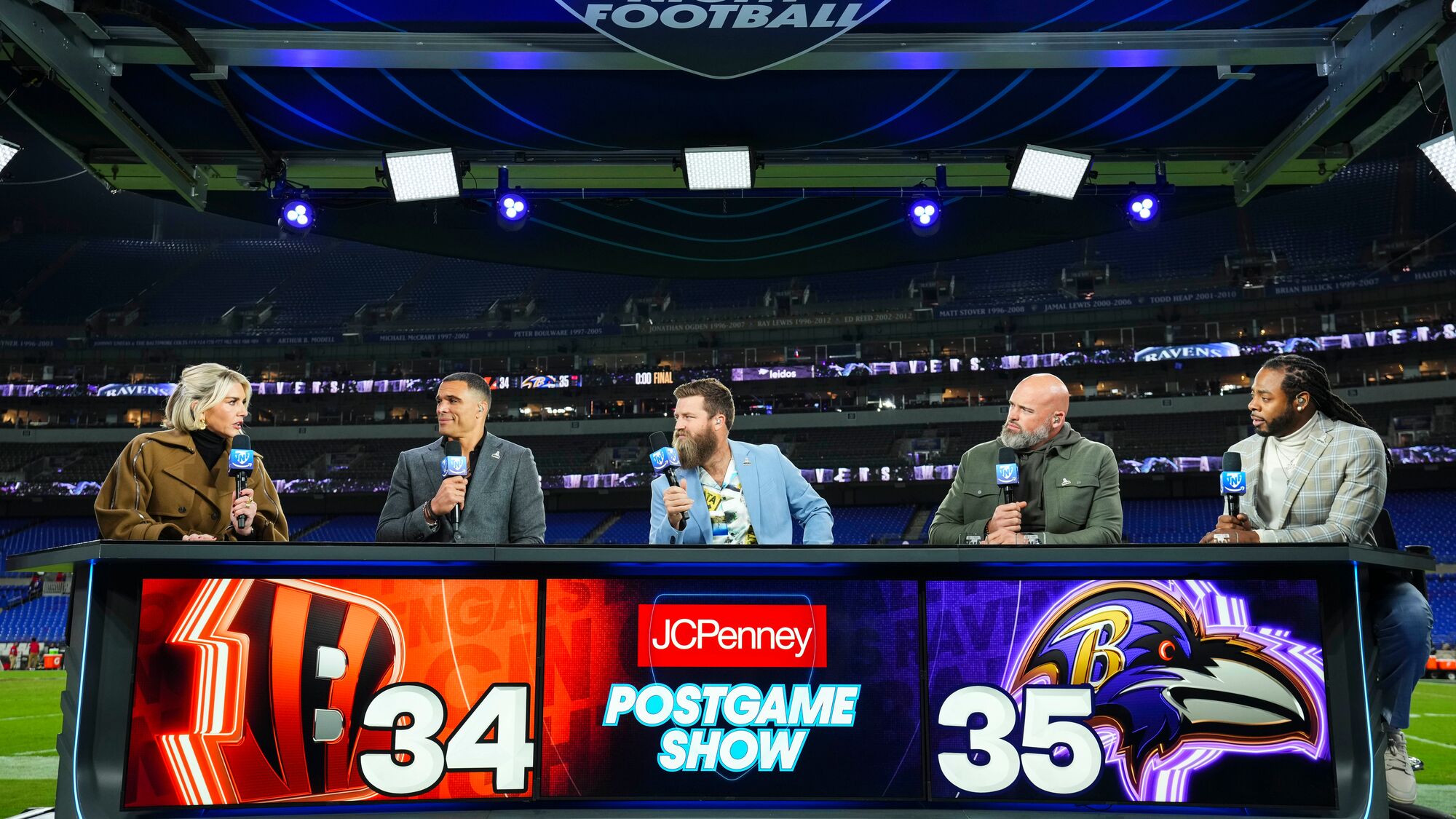
The landscape of sports media underwent a seismic shift when the National Football League (NFL) announced that Thursday Night Football (TNF) would move exclusively to a streaming platform. For decades, the primary concern for fans was simply finding the right channel on a cable box. Today, the question of “who is broadcasting Thursday Night Football” is answered not by a traditional network, but by a technology giant: Amazon Prime Video. This transition marks more than just a change in branding; it represents a massive technological overhaul in how live, high-stakes content is delivered to millions of simultaneous users across the globe.

The technical infrastructure required to broadcast a live NFL game is staggering. Unlike pre-recorded content found on Netflix or Disney+, live sports streaming requires ultra-low latency, high-bandwidth stability, and the ability to scale to tens of millions of concurrent connections within seconds. Amazon’s takeover of TNF is a case study in how cloud computing, edge delivery networks, and sophisticated software engineering are replacing the satellite and coaxial cables of the previous generation.
The Shift to Streaming: Why Amazon Prime Video Owns the Thursday Night Slot
The broadcast rights for Thursday Night Football are currently held by Amazon through its Prime Video service. While local markets still see games broadcast on over-the-air stations to comply with NFL policies, the vast majority of the viewing audience interacts with the game via the Prime Video app. This move from linear television to an Over-the-Top (OTT) model is a testament to the maturity of internet delivery technologies.
The Infrastructure of Global Live Streaming
Broadcasting a game like TNF isn’t as simple as uploading a video file to a server. Amazon utilizes its internal powerhouse, Amazon Web Services (AWS), to handle the heavy lifting. The broadcast signal originates from the stadium, where it is encoded into multiple digital formats. These streams are then pushed to the cloud, where AWS Elemental MediaLive and other media services process the video in real-time.
The core challenge is maintaining “five nines” of availability (99.999% uptime). To achieve this, the tech stack involves redundant ingest points. If one cloud region experiences a flicker, the system automatically fails over to another, ensuring that the viewer sitting at home never sees a buffering wheel. This level of redundancy was previously only available to high-end cable providers, but cloud native broadcasting has democratized—and in many ways improved—this reliability.
Cloud-Native Broadcasting and AWS Integration
By using AWS, Amazon Prime Video can leverage specialized hardware and software optimized for video. This includes high-performance EC2 instances that handle the massive data throughput and S3 storage buckets for instant replay buffering. The integration allows for unique features like “Next Gen Stats,” where data from sensors in players’ pads is processed in the cloud and overlaid on the broadcast with sub-second latency. This intersection of data science and live video is a hallmark of the new era of sports technology.
Technical Performance: Overcoming the Latency Barrier
For years, the biggest argument against streaming live sports was latency. In the world of social media, a 30-second delay can result in a “spoiler” via a phone notification or a text message from a friend watching on a faster medium. When Amazon took over the broadcast, the primary technical goal was to reduce this “glass-to-glass” latency—the time from when the action happens on the field to when it appears on the viewer’s screen.
Low-Latency Protocols and Edge Computing
Traditional streaming uses protocols like HLS (HTTP Live Streaming) or DASH (Dynamic Adaptive Streaming over HTTP), which often result in delays of 20 to 60 seconds because they rely on “chunking” video into small files. To solve this, Amazon and its partners have implemented low-latency versions of these protocols (LL-HLS and LL-DASH).
The secret weapon in this fight is the Content Delivery Network (CDN). By utilizing Amazon CloudFront, the broadcast is cached at the “edge” of the network—physical servers located as close to the end-user as possible. Instead of the data traveling across the country, it might only travel from a data center in the viewer’s metro area. This reduces the number of hops the data packets must take, significantly cutting down on lag and jitter.
Solving the “Spoiler Alert” Problem
The tech team at Prime Video has experimented with proprietary delivery methods to bring latency down to parity with—or even faster than—traditional cable and satellite. This involves fine-tuning the video player software on various devices, from Roku sticks to PlayStation consoles. Because each device has different processing power and memory, the software must be optimized to decode the incoming stream as quickly as the hardware allows. This optimization ensures that when a touchdown is scored, the celebration happens simultaneously across the digital landscape.
The Viewer Experience: Apps, Features, and Interactive Tech
The transition to a tech-first broadcaster has allowed for a level of interactivity that was impossible on linear TV. When you watch Thursday Night Football, you aren’t just watching a video feed; you are interacting with a sophisticated software application.

X-Ray Technology and Real-Time Data Overlays
One of the standout features of the Prime Video broadcast is “X-Ray.” Built on the same technology that allows viewers to see actor biographies in movies, X-Ray for TNF provides real-time access to player stats, play-by-play information, and even “Next Gen Stats” powered by AWS.
This involves a complex data pipeline where RFID chips on the field transmit location data to receivers in the stadium. That data is sent to the cloud, processed by machine learning algorithms to identify routes or sprint speeds, and then rendered as a graphical overlay on the user’s screen. The fact that this happens in real-time while the user is still watching a high-definition video stream is a massive achievement in software orchestration.
Device Compatibility and Software Optimization
The “broadcast” must work on thousands of different devices. This presents a significant challenge in software engineering. The Prime Video app must be performant on high-end 4K Smart TVs, older smartphones, and various gaming consoles. Each of these environments has its own operating system (Tizen, WebOS, Android, iOS, etc.) and hardware limitations.
To manage this, Amazon employs an adaptive bitrate streaming (ABR) algorithm. This software monitors the user’s local internet connection in real-time. If the bandwidth drops, the ABR instantly switches to a lower-resolution stream to prevent buffering. As the connection stabilizes, it scales back up to 1080p or 4K. This “invisible” tech is what makes the modern streaming experience feel seamless, regardless of whether the viewer is on a 5G mobile connection or a fiber-optic home network.
Security and Digital Rights Management in Sports Streaming
High-value content like the NFL is a prime target for digital piracy. Protecting the broadcast while ensuring that legitimate users have frictionless access requires a robust security framework.
DRM and Content Protection
Digital Rights Management (DRM) is the software layer that prevents unauthorized copying and redistribution of the broadcast. Amazon uses multiple DRM systems (such as Widevine, FairPlay, and PlayReady) to ensure compatibility across different browsers and devices. These systems encrypt the video stream at the source, and the decryption keys are only provided to users with a valid Prime subscription. The challenge for engineers is to implement this encryption without adding significant overhead that could increase latency or decrease video quality.
Managing High-Traffic Peaks and DDoS Mitigation
The “who” in the broadcasting equation must also be a “how” regarding security against cyberattacks. A Thursday Night Football game represents a massive spike in traffic that could be mistaken for—or targeted by—a Distributed Denial of Service (DDoS) attack. Amazon’s security infrastructure uses automated traffic scrubbing tools that can distinguish between millions of football fans logging in at 8:15 PM ET and a malicious botnet trying to take down the service. The scalability of the cloud allows the network to “absorb” these traffic surges, ensuring the platform remains stable during the highest-intensity moments of the game.
The Future of Sports Broadcasting Technology
The current model of Thursday Night Football is likely just the beginning. As technology continues to evolve, the way Amazon broadcasts these games will change, moving toward even more immersive and personalized experiences.
AI-Driven Insights and Personalized Feeds
Artificial Intelligence is already playing a role in how games are captured and edited. In the future, we may see AI-driven “director” modes where the software chooses the best camera angle based on the action, or even personalized audio tracks. Imagine a broadcast where the commentary is tailored to your specific level of football knowledge, or where the graphics highlight only the players on your fantasy football team. This level of personalization is only possible through the deep integration of AI and data processing within the streaming platform.
The Road to Consistent 4K and 8K Streaming
While some games are currently available in 1080p with High Dynamic Range (HDR), the push toward consistent 4K and eventually 8K streaming is the next hurdle. The sheer amount of data required for an 8K live stream is enormous, requiring advancements in video codecs like AV1. These codecs provide better compression without sacrificing quality, allowing higher resolutions to be delivered over standard home internet connections. As these technologies mature, the visual fidelity of Thursday Night Football will likely surpass anything possible on traditional cable.
The shift of Thursday Night Football to Amazon Prime Video is a definitive moment in the history of media. It signifies the end of the broadcast era and the beginning of the platform era. When we ask who is broadcasting the game, we are identifying a company that is as much a software and cloud provider as it is a media outlet. The technology behind the stream—from AWS servers to low-latency protocols and real-time data overlays—is what makes the modern NFL experience possible, proving that the future of sports is firmly rooted in the cloud.
aViewFromTheCave is a participant in the Amazon Services LLC Associates Program, an affiliate advertising program designed to provide a means for sites to earn advertising fees by advertising and linking to Amazon.com. Amazon, the Amazon logo, AmazonSupply, and the AmazonSupply logo are trademarks of Amazon.com, Inc. or its affiliates. As an Amazon Associate we earn affiliate commissions from qualifying purchases.