
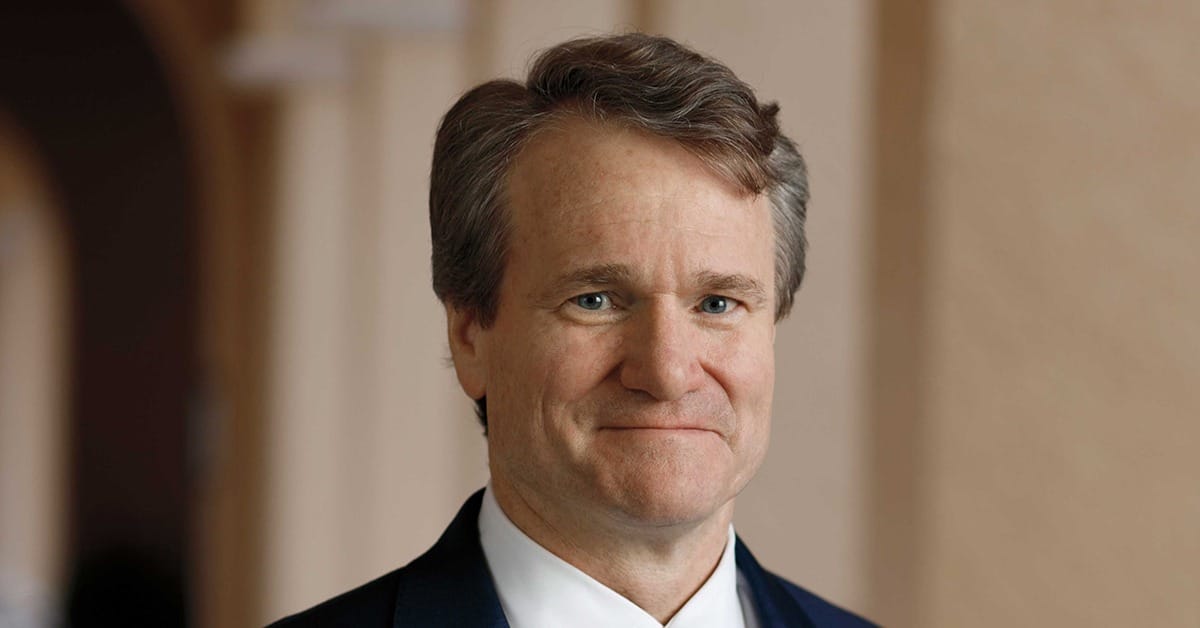
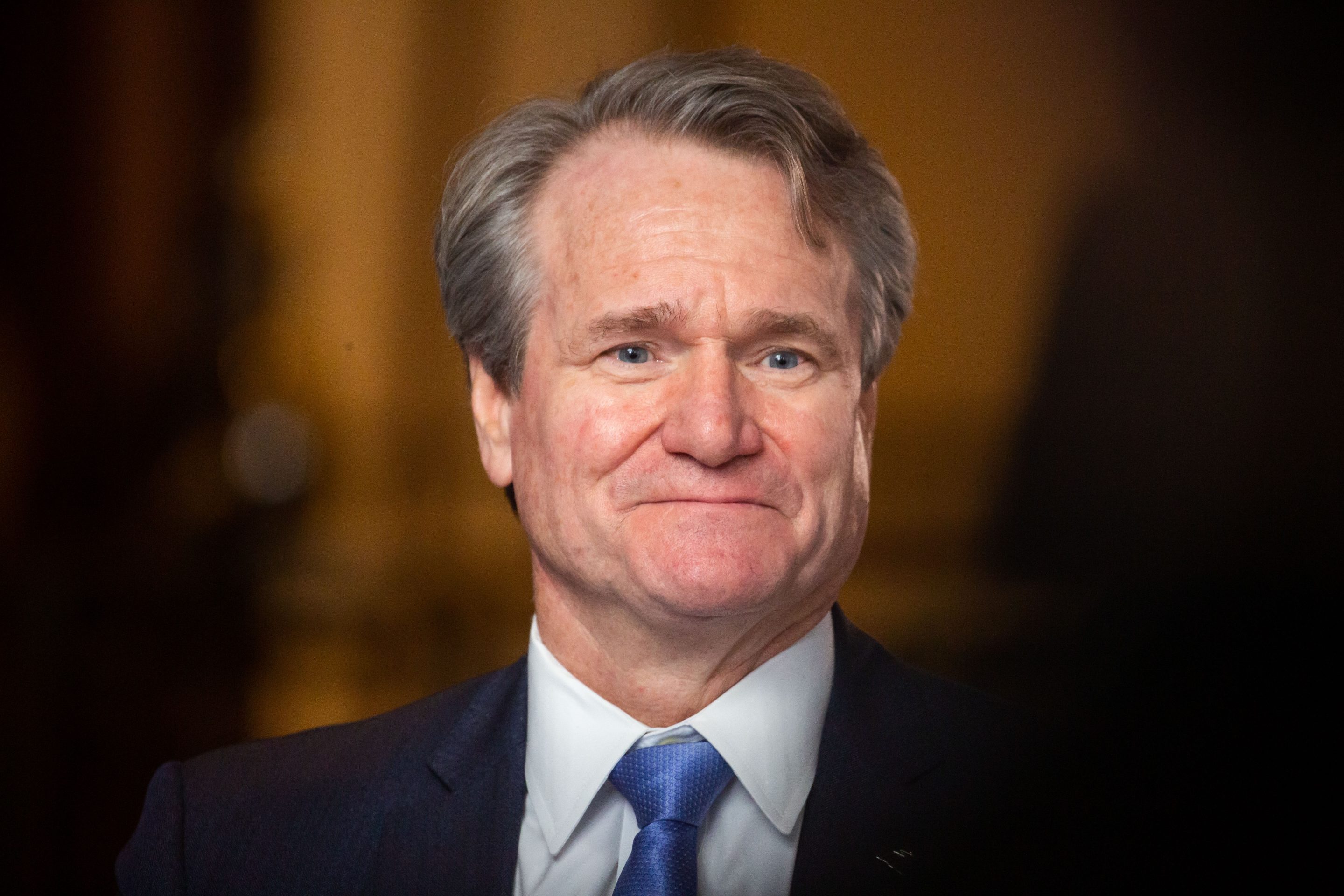
Since 2010, the helm of one of the world’s largest financial institutions has been held by Brian Moynihan. As the Chairman and Chief Executive Officer of Bank of America, Moynihan has overseen a transformative era in American finance, pivoting a bank once synonymous with aggressive acquisition and post-crisis volatility into a fortress of “responsible growth.” To understand who Brian Moynihan is, one must look beyond the title and examine the strategic discipline that has redefined the bank’s identity, its digital evolution, and its role in the global economy.

The Path to the C-Suite: From Legal Counsel to Financial Titan
Brian Moynihan’s journey to the top of the banking world is distinct from many of his Wall Street peers who rose through the ranks of trading floors or investment banking desks. A native of Marietta, Ohio, Moynihan brought a legalistic and highly methodical approach to his career, having earned his undergraduate degree from Brown University and his Juris Doctor from the University of Notre Dame Law School.
His entry into the upper echelons of banking began at FleetBoston Financial, where he served in several executive roles. When Bank of America acquired FleetBoston in 2004, Moynihan transitioned into the larger organization, eventually leading various divisions including Global Wealth and Investment Management, Global Corporate and Investment Banking, and Consumer and Small Business Banking.
This diverse experience across different verticals of the bank provided him with a holistic view of the institution’s mechanics. When he was appointed CEO in the wake of the 2008 financial crisis, succeeding Ken Lewis, he inherited a company reeling from the controversial acquisition of Merrill Lynch and the subprime mortgage fallout associated with Countrywide Financial. His background in law and his deep understanding of the bank’s internal operations became his greatest assets in navigating the legal and regulatory quagmires that defined his early years as CEO.
The Integration of Merrill Lynch
One of Moynihan’s most significant achievements was the eventual stabilization and integration of Merrill Lynch. While the acquisition was initially viewed as a massive liability, Moynihan’s leadership saw the “Thundering Herd” become a cornerstone of Bank of America’s profitability. By aligning the wealth management capabilities of Merrill with the deposit-taking power of the retail bank, he created a cross-selling powerhouse that remains a model for the industry today.
Stepping into the Storm: Leading Bank of America Post-2008
When Moynihan took over in January 2010, Bank of America was under intense scrutiny from regulators, shareholders, and the public. The stock price was depressed, and the bank faced tens of billions of dollars in potential legal settlements. Moynihan’s strategy was not one of rapid expansion, but of radical simplification. He famously initiated “Project New Work,” a massive restructuring effort aimed at cutting costs, divesting non-core assets, and strengthening the balance sheet.
The Philosophy of Responsible Growth
The defining characteristic of Moynihan’s tenure is the concept of “Responsible Growth.” This philosophy rests on four pillars:
-
Growing within the risk appetite: Avoiding the speculative bets that led to the 2008 collapse.
-
Focusing on customer-led growth: Ensuring that products and services are aligned with the actual needs of clients rather than short-term profit motives.
-
Sustainable efficiency: Using technology and process improvement to lower the cost to serve.
-
Being a great place to work: Investing in employees to ensure long-term stability and service quality.
Under this framework, Moynihan transformed Bank of America into a “boring” bank in the best possible sense of the word—predictable, profitable, and safe. He prioritized building a massive capital cushion, which eventually allowed the bank to pass rigorous Federal Reserve stress tests with flying colors and return significant capital to shareholders through dividends and buybacks.
Resolving the Legacy of Countrywide
A major hurdle in Moynihan’s early years was the “mortgage mess.” Bank of America faced a mountain of litigation related to mortgage-backed securities sold during the housing boom. Moynihan oversaw a series of historic settlements, including a landmark $16.65 billion agreement with the Department of Justice in 2014. By aggressively settling these claims rather than letting them linger, he cleared the path for the bank to focus on its future rather than its past.
Transforming Financial Infrastructure: Innovation and Digital Strategy
While Moynihan is often praised for his fiscal conservatism, he has been an aggressive visionary regarding the bank’s digital infrastructure. Recognizing that the future of money was mobile and digital, he authorized an annual technology budget that consistently exceeds $3 billion for new initiatives alone. This investment has positioned Bank of America as a leader in fintech among traditional institutions.
The Rise of Erica and Zelle
Under Moynihan’s leadership, Bank of America launched “Erica,” an AI-driven virtual financial assistant. Erica was one of the first AI tools in the banking sector to gain widespread adoption, helping millions of users track spending, pay bills, and manage their financial health.
Furthermore, Moynihan was a key proponent of the banking industry’s collaborative response to third-party payment apps. Bank of America was a founding member of the consortium that created Zelle, the peer-to-peer payment network. By integrating Zelle directly into the bank’s mobile app, Moynihan ensured that the institution remained central to the daily financial transactions of its customers, successfully defending its turf against silicon valley competitors.
High-Tech, High-Touch Branch Strategy
Moynihan also reimagined the role of the physical bank branch. Instead of seeing branches as mere transaction centers, he transitioned them into “financial centers” focused on high-value advice and relationship building. While the bank reduced its total branch count to improve efficiency, it invested heavily in modernizing the remaining locations, equipping them with advanced ATMs and private spaces for mortgage and investment consultations. This “high-tech, high-touch” strategy has allowed the bank to maintain a massive physical presence while drastically reducing the cost per transaction.
Corporate Governance and the ESG Imperative
In the modern financial landscape, the role of a CEO extends beyond the balance sheet. Brian Moynihan has emerged as a global leader in Environmental, Social, and Governance (ESG) standards. He has been vocal about the necessity of “stakeholder capitalism,” the idea that a corporation must deliver value not just to its shareholders, but also to its employees, customers, and the communities it serves.
Sustainable Finance Commitments
Under Moynihan, Bank of America committed to mobilizing $1.5 trillion in sustainable finance by 2030. This includes funding for renewable energy, clean water, and social justice initiatives. By aligning the bank’s lending power with global climate goals, Moynihan has argued that the transition to a low-carbon economy is not just a moral imperative but one of the greatest commercial opportunities in the history of finance.
Internal Social Responsibility
Moynihan has also focused on internal social metrics, particularly regarding the minimum wage for bank employees. He has consistently raised the bank’s internal minimum wage, aiming for $25 an hour by 2025. His rationale is rooted in business finance: higher wages lead to lower turnover, better customer service, and a more stable workforce, which ultimately drives long-term profitability.
The Legacy of Stability in a Volatile Financial Landscape
As of 2024, Brian Moynihan is one of the longest-tenured CEOs in the global banking sector. His leadership style is often contrasted with the more outspoken nature of peers like Jamie Dimon. Moynihan is known for being measured, data-driven, and focused on the long game. This approach has paid off for Bank of America, which has seen its credit ratings rise and its market capitalization stabilize significantly under his watch.
His tenure has not been without challenges, including navigating the COVID-19 pandemic and the subsequent inflationary environment. However, the “fortress balance sheet” he built in the decade prior allowed the bank to act as a source of stability during these crises, facilitating government-backed loan programs like the Paycheck Protection Program (PPP) while maintaining its own operations without disruption.
A Bellwether for the Economy
Because Bank of America serves approximately 68 million consumer and small business clients, Moynihan’s insights are often viewed as a bellwether for the broader U.S. economy. His regular updates on consumer spending patterns provide critical data to economists and policymakers. He has remained cautiously optimistic about the American consumer, often highlighting the resilience of household balance sheets even during periods of rising interest rates.
Ultimately, Brian Moynihan’s identity as the CEO of Bank of America is defined by the transition from crisis management to sustainable innovation. He took a fragmented, embattled institution and forged it into a unified, technologically advanced financial giant. For the world of money and business finance, Moynihan represents the power of disciplined leadership—proving that in the high-stakes world of global banking, sometimes the most radical thing a leader can do is be consistently responsible.
aViewFromTheCave is a participant in the Amazon Services LLC Associates Program, an affiliate advertising program designed to provide a means for sites to earn advertising fees by advertising and linking to Amazon.com. Amazon, the Amazon logo, AmazonSupply, and the AmazonSupply logo are trademarks of Amazon.com, Inc. or its affiliates. As an Amazon Associate we earn affiliate commissions from qualifying purchases.