
The landscape of wealth creation has shifted significantly over the last decade. While the traditional narrative often celebrates the “scrappy startup” founded in a garage, a more sophisticated financial strategy has emerged as a preferred route for seasoned investors and aspiring entrepreneurs alike: acquisition entrepreneurship. Buying an existing small business allows you to bypass the high-failure rate of the startup phase and step directly into a company with proven cash flow, an established customer base, and a verified track record.
However, the process of buying a small business is a complex financial transaction that requires rigorous due diligence, a deep understanding of valuation metrics, and a clear grasp of acquisition financing. This guide explores the essential steps to navigating a business purchase through the lens of investment and financial management.

Preparation and Financial Qualification
Before browsing listings or engaging with brokers, you must establish your financial “buy box.” Acquisition entrepreneurship is as much about your personal balance sheet as it is about the target company’s profit and loss statement.
Assessing Your Financial Position
Lenders and sellers will require a Personal Financial Statement (PFS) early in the process. You need to identify your liquid capital—cash or equivalents that can be used for a down payment. Typically, an acquisition requires 10% to 25% of the purchase price in liquid equity. Beyond the down payment, you must maintain a “post-closing liquidity” cushion to handle unforeseen working capital needs during the transition period.
Understanding Acquisition Financing
Most small business purchases in the United States are facilitated through SBA 7(a) loans. These government-backed loans are attractive because they offer longer terms (up to 10 years) and lower down payments than traditional commercial loans.
Another critical financial tool is seller financing. This is where the seller agrees to accept a portion of the purchase price (usually 10% to 30%) in the form of a promissory note paid out over several years. Seller financing is a powerful indicator of the seller’s confidence in the business’s future success and aligns their interests with yours during the transition.
Defining Your Investment Criteria
To avoid “analysis paralysis,” define your financial parameters:
-
Target SDE (Seller’s Discretionary Earnings): What is the minimum profit you need to cover the debt service and your personal living expenses?
-
Industry Preference: Focus on “boring” businesses with recurring revenue, such as HVAC, specialized manufacturing, or SaaS platforms with low churn.
-
Geographic Scope: Are you looking for a local operation you can manage in person, or a semi-absentee business that can be run remotely?
Sourcing and Evaluating Potential Deals
Once your finances are in order, the search begins. Finding the right business is a funnel process: you may look at a hundred teasers to get ten Confidential Information Memorandums (CIMs), leading to perhaps one or two Letters of Intent (LOIs).
Where to Find Businesses
The “public” market includes platforms like BizBuySell, Axial, and Empire Flippers. While these sites are excellent for understanding market multiples, the most lucrative deals are often found in the “gray market” through business brokers or via direct outreach to business owners who may be approaching retirement.
Initial Financial Screening
When you receive a CIM, your first task is to normalize the earnings. Small business owners often run personal expenses through the business to minimize tax liability. You must look for “add-backs”—legitimate expenses that a new owner would not incur, such as the owner’s salary, personal travel, or one-time legal fees. This process takes you from the reported Net Income to the Seller’s Discretionary Earnings (SDE), which is the true “owner’s benefit” used to value the company.
The Role of the Business Broker
Brokers act as the intermediaries in the transaction. It is important to remember that, in most cases, the broker represents the seller. Their goal is to close the deal at the highest price possible. As a buyer, you must maintain a professional but skeptical relationship, verifying every financial claim through independent due diligence.
Financial Due Diligence: Protecting Your Investment
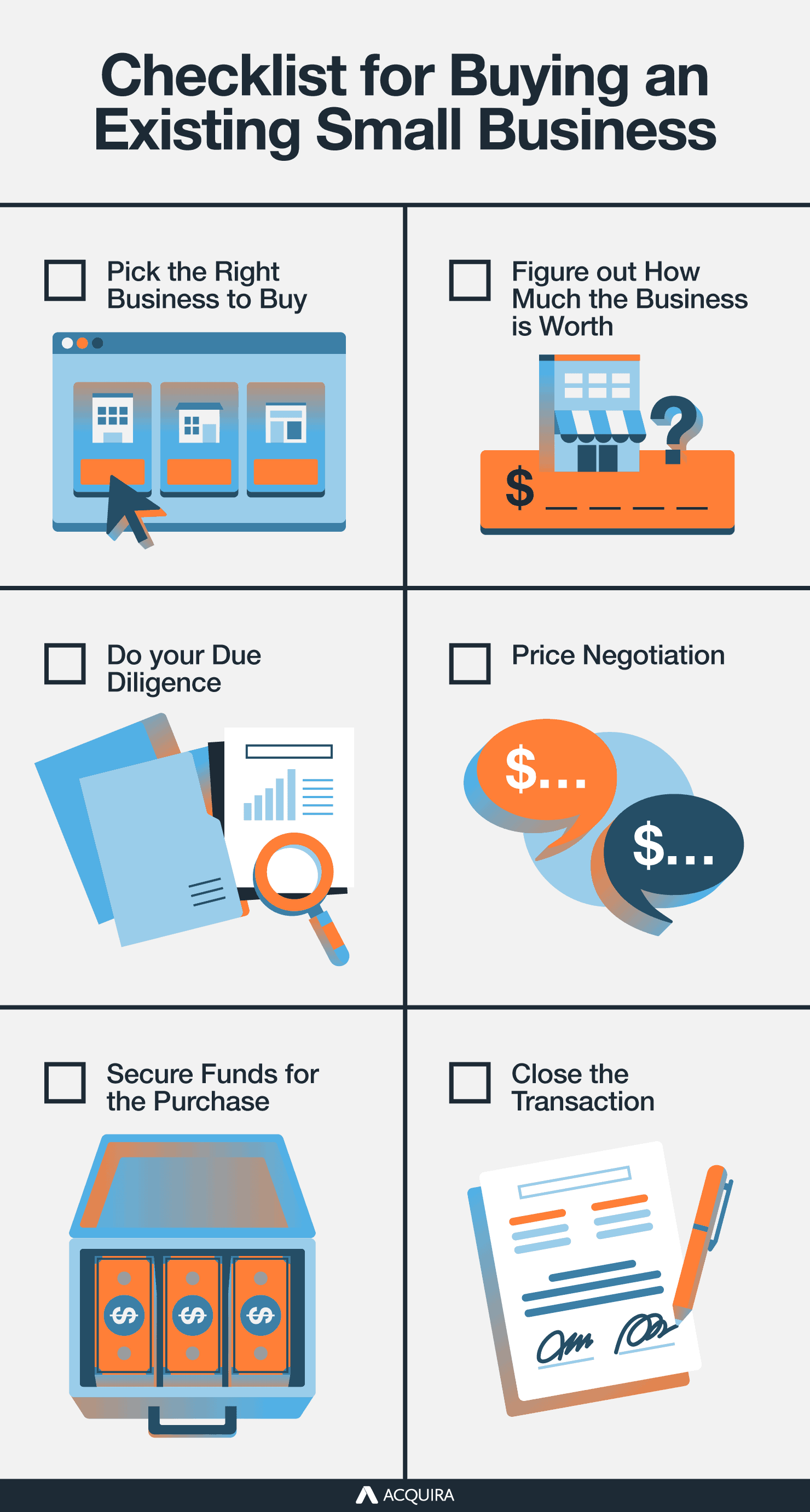
Due diligence is the most critical phase of the acquisition. This is where you move beyond the marketing materials and verify the hard data. If the numbers don’t match the story, you must be prepared to renegotiate or walk away.
Verifying Quality of Earnings
A “Quality of Earnings” (QofE) report is often commissioned to ensure the revenue is sustainable. You should cross-reference the company’s internal Profit and Loss (P&L) statements with their federal tax returns and bank statements. Significant discrepancies between internal books and tax filings are a major red flag.
Key metrics to analyze include:
-
Revenue Concentration: Does a single client account for more than 15-20% of the total revenue? If so, the loss of that one client could jeopardize your ability to service the debt.
-
Customer Churn: In recurring revenue models, what is the attrition rate? High churn requires constant, expensive marketing just to maintain status quo.
-
Profit Margins: Are gross and net margins consistent over the last three to five years? Drastic fluctuations require a detailed explanation.
Assessing Working Capital
Working capital is the lifeblood of a small business. During due diligence, you must calculate the “Working Capital Peg”—the average amount of accounts receivable, inventory, and accounts payable required to run the business daily. Most deals are structured on a “cash-free, debt-free” basis, meaning the seller keeps the cash and pays off all long-term debt, but they must leave enough working capital in the business for the buyer to operate on day one.
Reviewing Physical and Intangible Assets
If the business is asset-heavy (e.g., a trucking company or a machine shop), a professional equipment appraisal is necessary. For digital or service-based businesses, due diligence focuses on “intangible assets” like proprietary software, trademarks, and the strength of the existing employee contracts.
Valuation and Negotiation Strategies
Valuation is more of an art than a science in the small business world. Unlike public stocks, which trade on complex P/E ratios and future growth projections, small businesses typically trade on a multiple of their SDE.
The Multiple Method
Most small businesses (with SDE between $200,000 and $2 million) trade at multiples between 2x and 4x.
-
2x Multiple: Usually reserved for businesses with high owner-dependency, declining industries, or high customer concentration.
-
4x Multiple: Applied to businesses with strong management teams, high recurring revenue, and defensible market positions.
Structuring the Letter of Intent (LOI)
The LOI is a non-binding document that outlines the proposed purchase price, the payment structure, and the timeline for closing. A strong LOI will include:
-
The “Earnout”: A provision where a portion of the purchase price is paid only if the business hits certain financial targets post-acquisition. This mitigates risk for the buyer.
-
Exclusivity Period: A “no-shop” clause that prevents the seller from talking to other buyers while you spend money on legal and accounting fees.
Asset vs. Stock Purchase
From a financial and tax perspective, most small business acquisitions are structured as Asset Purchases. In an asset purchase, the buyer creates a new entity (LLC or Corporation) and buys the individual assets of the business (equipment, customer lists, goodwill). This allows the buyer to “step up” the basis of the assets for depreciation, providing significant tax shields in the first few years. A Stock Purchase, where the buyer takes over the entire legal entity, is rarer in small deals because it forces the buyer to inherit all of the seller’s potential past liabilities.
Closing the Deal and Post-Acquisition Management
The final stage of buying a small business involves legal documentation and the transition of ownership. This phase is about risk mitigation and ensuring that the cash flow you purchased remains stable.
The Closing Process
Closing involves a mountain of paperwork, including the definitive Purchase and Sale Agreement (PSA), non-compete agreements, and the finalization of the loan documents. Funds are usually held in escrow and released only when all closing conditions are met. You will also need to secure insurance policies (General Liability, Workers’ Comp, and Key Man Insurance) to satisfy lender requirements.
The First 90 Days
Your primary financial goal in the first 90 days is “capital preservation.” Do not make radical changes to the business model immediately. Instead, focus on:
-
Relationship Retention: Meeting with top customers and key employees to ensure continuity.
-
Cash Flow Monitoring: Implementing tight financial controls to track every dollar entering and leaving the entity.
-
Process Optimization: Identifying small efficiencies that can increase the margin without disrupting the core service.

Measuring Return on Investment (ROI)
The ultimate success of a small business acquisition is measured by your “Cash-on-Cash” return. If you invested $200,000 of your own capital to buy a business generating $400,000 in SDE, and after debt service, you are left with $150,000 in take-home profit, your first-year cash-on-cash return is 75%. This is a level of return rarely seen in the stock market or real estate, which is why buying a small business remains one of the most effective paths to significant wealth.
Buying a small business is a high-stakes financial maneuver that requires patience, analytical rigor, and a stomach for calculated risk. By treating the process as a disciplined investment—focusing on verified cash flow and protective deal structures—you can transition from a seeker of opportunities to a successful owner of a profitable enterprise.
aViewFromTheCave is a participant in the Amazon Services LLC Associates Program, an affiliate advertising program designed to provide a means for sites to earn advertising fees by advertising and linking to Amazon.com. Amazon, the Amazon logo, AmazonSupply, and the AmazonSupply logo are trademarks of Amazon.com, Inc. or its affiliates. As an Amazon Associate we earn affiliate commissions from qualifying purchases.