
In the annals of technological history, few milestones carry as much weight as April 4, 1975. This was the day two childhood friends, Bill Gates and Paul Allen, officially founded Microsoft (originally hyphenated as Micro-Soft). While the name is now synonymous with a global empire, its origins were rooted in a singular, audacious technical vision: a computer on every desk and in every home, all running Microsoft software. To understand who established Microsoft is to understand the technical synergy between a software visionary and a hardware enthusiast who predicted the microcomputer revolution long before it became a reality.
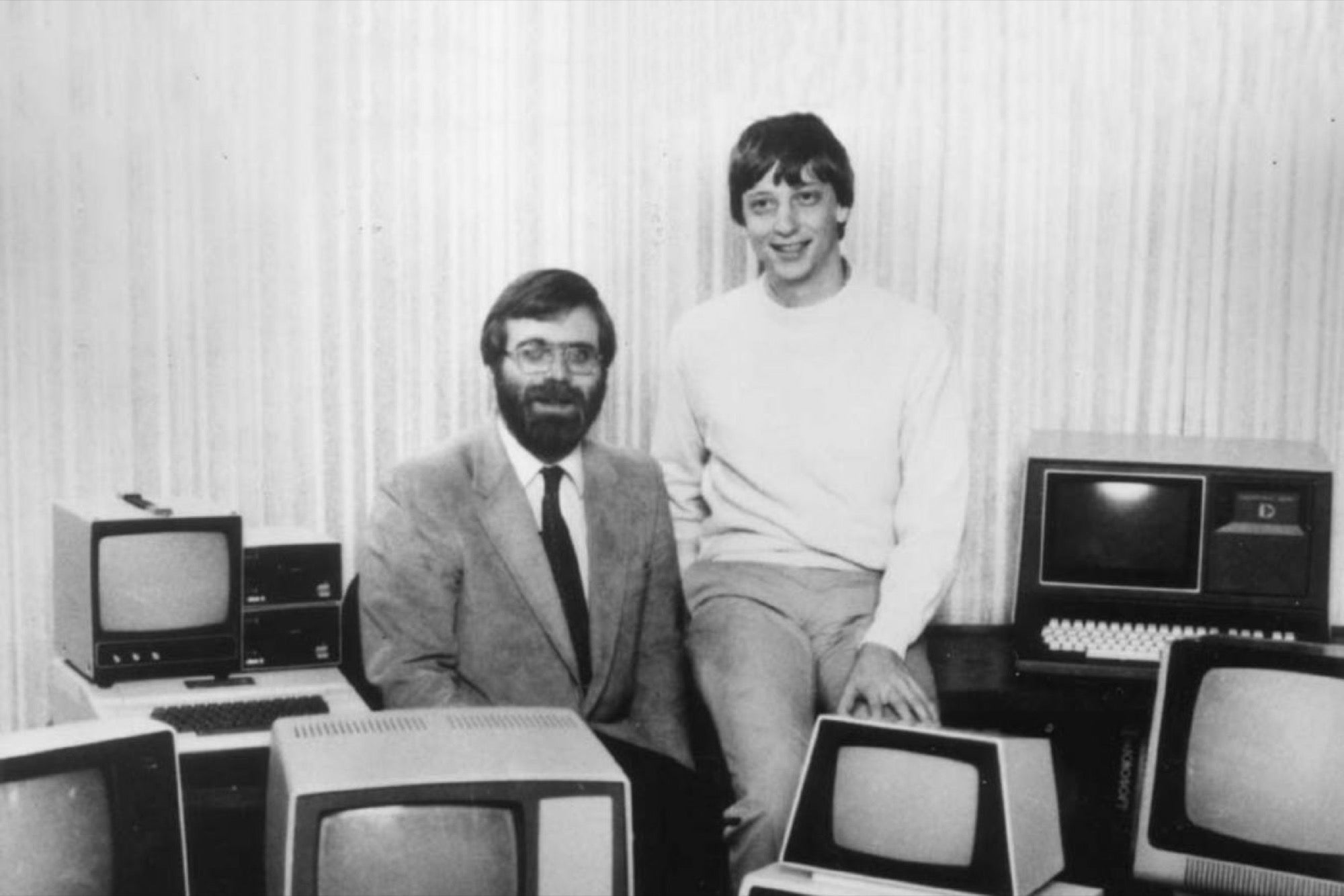
The Technical Synergy of Bill Gates and Paul Allen
The foundation of Microsoft was not a stroke of corporate luck but the result of a deep-seated obsession with the logic of computing. Bill Gates and Paul Allen met at Lakeside School in Seattle, where they spent their formative years hacking into the school’s Teletype machine. This early exposure to the PDP-10 and other mainframe systems allowed them to master the intricacies of software architecture at a time when computers were still the size of refrigerators.
The Lakeside Era and Early Compilers
Before Microsoft was even a concept, Gates and Allen were already refining their technical chops. They formed the “Lakeside Programmers Group,” where they gained hands-on experience debugging code for Computer Center Corporation. Their first professional foray, “Traf-O-Data,” used an Intel 8008 processor to analyze traffic flow data. Although it wasn’t a commercial powerhouse, it proved a crucial technical hypothesis: that small-scale microprocessors could handle complex computational tasks previously reserved for expensive mainframes.
The MITS Altair 8800 Breakthrough
The true spark for Microsoft came in 1975 when Allen saw a cover story in Popular Electronics featuring the Altair 8800, the world’s first successful microcomputer. Allen realized that the hardware was finally ready for a high-level programming language. He convinced Gates that if they didn’t provide a version of BASIC (Beginners’ All-purpose Symbolic Instruction Code) for the Altair, someone else would. Working around the clock in a Harvard computer lab, they developed an interpreter for a machine they didn’t actually own, relying on an emulator Allen wrote for the PDP-10. This feat of “blind” software engineering remains one of the most impressive technical achievements in early computing history.
Building the Standard: The Evolution of Operating Systems
While the Altair BASIC interpreter put Microsoft on the map, it was their strategic pivot toward operating systems that cemented their role as the architects of the PC era. When IBM decided to enter the personal computer market in the early 1980s, they turned to Microsoft to provide the software foundation for their hardware.
The MS-DOS Revolution
The story of MS-DOS (Microsoft Disk Operating System) is a masterclass in technical licensing and system integration. Microsoft did not build DOS from scratch; they acquired QDOS (Quick and Dirty Operating System) from Seattle Computer Products and refined it to meet IBM’s specifications. The brilliance of this move was not just the code itself, but the decision to retain the rights to the software. By licensing MS-DOS to IBM while maintaining the ability to license it to other “clone” manufacturers, Microsoft ensured that their software architecture became the industry standard.
From Command Lines to Graphical User Interfaces
As hardware capabilities evolved, Microsoft recognized the limitations of text-based interfaces. The development of Windows was a response to the need for a more intuitive, visual way to interact with hardware. Windows 1.0, released in 1985, was initially a graphical shell for MS-DOS, but it laid the groundwork for the modern desktop environment. Over the next decade, through versions 3.1, Windows 95, and the NT (New Technology) kernel, Microsoft moved away from the legacy constraints of DOS toward a robust, multi-tasking, 32-bit architecture that could support complex enterprise applications.
Scaling the Software Ecosystem: Productivity and Development Tools

Establishing Microsoft wasn’t just about the operating system; it was about creating a comprehensive ecosystem where software could thrive. Gates and Allen understood that a platform is only as valuable as the applications that run on it. This led to the development of the Microsoft Office suite and a suite of developer tools that defined how software was built for decades.
The Birth of Microsoft Office
In the late 1980s, Microsoft bundled their disparate productivity tools—Word, Excel, and PowerPoint—into a single suite. Technically, this required a high level of integration and a shared codebase that allowed for features like “Object Linking and Embedding” (OLE). This allowed a user to embed a live spreadsheet into a text document, a revolutionary concept at the time. By dominating the productivity space, Microsoft ensured that their software was the “lingua franca” of the global business community.
Empowering Developers with .NET and Visual Studio
To maintain their technical dominance, Microsoft had to win the hearts and minds of software engineers. The introduction of the .NET framework and the Visual Studio Integrated Development Environment (IDE) provided a powerful, unified platform for building Windows applications. By offering a vast library of pre-coded solutions and a multi-language environment (supporting C#, VB.NET, and C++), Microsoft simplified the development lifecycle. This technical infrastructure ensured that the most innovative software was built primarily for the Windows ecosystem.
The Modern Pivot: Cloud Infrastructure and Artificial Intelligence
The Microsoft established by Gates and Allen has undergone a massive technical metamorphosis in the 21st century. Under the leadership of Satya Nadella, the company shifted its focus from “Windows-first” to “Cloud-first, Mobile-first.” This transition represents one of the most successful technical pivots in corporate history.
Azure and the Shift to Distributed Computing
Microsoft Azure, the company’s cloud computing platform, transformed Microsoft from a software vendor into a massive infrastructure provider. Azure utilizes a global network of data centers to provide IaaS (Infrastructure as a Service), PaaS (Platform as a Service), and SaaS (Software as a Service). The technical challenge of managing millions of virtual machines and petabytes of data required a complete reimagining of the Microsoft kernel and networking stack. Today, Azure serves as the backbone for everything from global gaming networks to enterprise-level data analytics.
The Integration of Generative AI
Perhaps the most significant technical frontier for Microsoft today is Artificial Intelligence. Through a strategic and technical partnership with OpenAI, Microsoft has integrated Large Language Models (LLMs) into every layer of its tech stack. From “GitHub Copilot,” which helps developers write code using AI, to “Microsoft 365 Copilot,” which automates content creation, the company is leading the charge in the AI revolution. This shift is not merely an add-on; it is a fundamental re-engineering of how software interacts with users, moving from rigid menus to natural language processing.
The Legacy of Technical Innovation
When we ask “who established Microsoft,” the answer begins with Bill Gates and Paul Allen, but it extends to the thousands of engineers who built the digital world we inhabit today. Their legacy is not just a company, but a fundamental shift in how humanity interacts with technology.
Democratizing Technology
The original goal of a computer on every desk was realized because Microsoft focused on software compatibility across a wide range of hardware. By providing a stable, scalable platform, they lowered the barrier to entry for personal computing. This democratization allowed for the explosion of the internet, the rise of the digital economy, and the global connectivity we take for granted today.
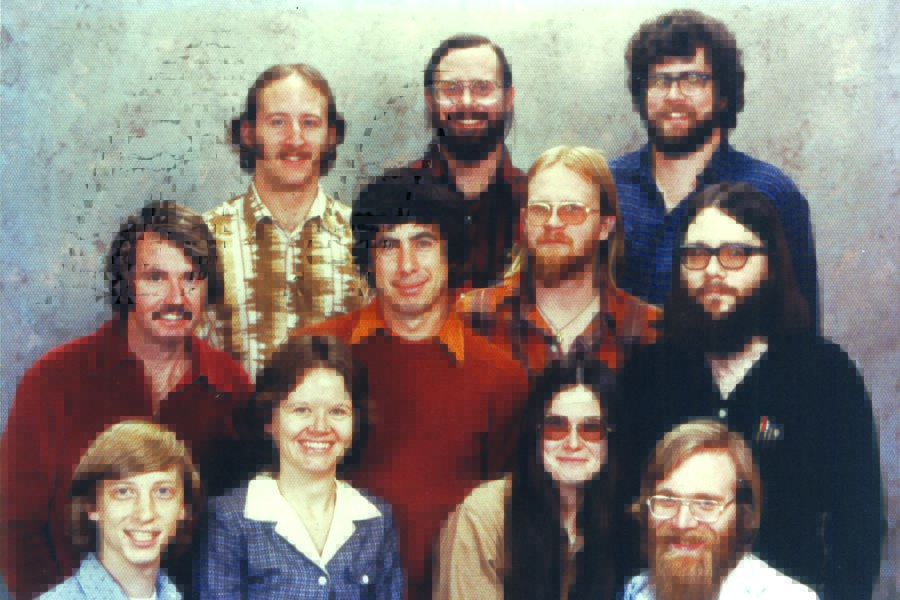
The Continuous Cycle of Reinvention
Microsoft’s history is a testament to the necessity of technical evolution. From the early days of 8-bit BASIC to the modern era of 64-bit cloud architecture and neural networks, the company has consistently anticipated the next wave of computing. Whether it was the transition from desktop to web, or from local storage to the cloud, Microsoft has remained at the center of the tech industry by focusing on the underlying tools that empower others to create.
In conclusion, Microsoft was established by two visionaries who saw code not just as a set of instructions, but as the DNA of a new era. Bill Gates and Paul Allen provided the initial technical spark, but the company’s enduring relevance lies in its ability to adapt its software architecture to the changing needs of the world. As we look toward a future defined by quantum computing and ubiquitous AI, the technical foundation laid by Microsoft in 1975 remains the bedrock upon which the next generation of technology will be built.
aViewFromTheCave is a participant in the Amazon Services LLC Associates Program, an affiliate advertising program designed to provide a means for sites to earn advertising fees by advertising and linking to Amazon.com. Amazon, the Amazon logo, AmazonSupply, and the AmazonSupply logo are trademarks of Amazon.com, Inc. or its affiliates. As an Amazon Associate we earn affiliate commissions from qualifying purchases.