
The seemingly simple question of “who created the first calculator” unveils a rich tapestry of human ingenuity, stretching back centuries before the advent of microchips and digital displays. It’s a journey through the evolution of computational thought, from rudimentary counting aids to complex mechanical marvels that laid the groundwork for modern computing. Far from a single Eureka moment, the invention of the calculator was a gradual, iterative process, marked by the contributions of brilliant minds striving to automate the tedious and error-prone task of arithmetic. This article delves into the origins of these foundational technologies, exploring the key figures, their groundbreaking inventions, and the lasting impact they had on science, commerce, and human progress. Understanding the genesis of the calculator is not merely an exercise in historical trivia; it is an exploration of the fundamental human drive to enhance cognitive abilities through technological innovation, a drive that continues to shape our world today.

The Ancient Roots: Early Aids to Calculation
Before the first mechanical calculator saw the light of day, humanity relied on a variety of ingenious, albeit manual, tools to perform calculations. These early devices, while not automated in the modern sense, represent the initial steps towards externalizing and systematizing arithmetic processes, laying the conceptual groundwork for future advancements.
The Abacus: A Timeless Counting Frame
Perhaps the most enduring and universally recognized early calculating device is the abacus. Originating in Mesopotamia around 2700–2300 BC, and later refined in ancient China, Greece, and Rome, the abacus is a manual aid to calculating that uses movable beads or counters on rods or in grooves. Its brilliance lies in its simplicity and efficiency, allowing for rapid addition, subtraction, multiplication, and division, and even square roots and cube roots in the hands of a skilled operator. The abacus taught generations about place value, carrying, and borrowing—principles that are fundamental to all subsequent forms of calculation, mechanical or digital. It demonstrated that complex operations could be broken down into simpler, repeatable steps, a concept crucial for the development of algorithms.
Napier’s Bones: A Mechanical Multiplication Tool
Fast forward to the early 17th century, a period of burgeoning scientific inquiry and navigational challenges. John Napier, a Scottish mathematician and physicist, is best known for his invention of logarithms, a revolutionary concept that simplified complex calculations by converting multiplication and division into addition and subtraction. However, he also invented a manual calculating device known as “Napier’s Bones” in 1617. This set of rods, etched with numbers, allowed for multiplication and division to be performed through a series of simple additions. By arranging the rods appropriately, users could read off products by adding numbers in diagonal rows. While still requiring manual manipulation and mental addition, Napier’s Bones offered a significant improvement over direct long multiplication, especially for larger numbers, highlighting the ongoing desire to simplify and speed up arithmetic operations. These early tools, though non-mechanical in the fully automated sense, underscored the persistent human quest to master numbers and streamline computational tasks, setting the stage for the true mechanical calculators that would follow.
The Dawn of Automation: Schickard’s Calculating Clock
The true leap towards automated calculation occurred in the early 17th century, catalyzed by the increasing demands of astronomy, navigation, and surveying. The idea of a machine that could perform arithmetic operations without constant human intervention was revolutionary, marking a critical turning point in the history of technology.
Wilhelm Schickard’s Calculating Clock (1623): The Unsung Pioneer
While Blaise Pascal’s Pascaline is often cited as the first mechanical calculator, historical evidence strongly suggests that the true pioneer was Wilhelm Schickard, a German polymath—professor of Hebrew, Oriental languages, mathematics, and astronomy at the University of Tübingen. In 1623, Schickard designed and constructed what he called a “calculating clock” for his friend Johannes Kepler, the famed astronomer, who desperately needed a way to simplify his laborious astronomical calculations.
Schickard’s machine was remarkably sophisticated for its time. It incorporated several key innovations:
- An adding mechanism: Based on a system of geared wheels and ratchets, it could perform addition and subtraction of up to six-digit numbers automatically. When one wheel completed a full rotation (e.g., from 0 to 9), it would automatically carry over a unit to the next wheel, much like an odometer.
- A set of Napier’s Bones: Integrated into the top of the device, these facilitated multiplication and division. The results from the Napier’s Bones section could then be manually entered into the adding mechanism for further processing.
Unfortunately, Schickard’s groundbreaking invention met with tragedy. While a prototype was built, the original machine was destroyed in a fire, and Schickard himself died of the bubonic plague in 1635. His letters to Kepler describing the machine and its operation remained largely unknown for centuries. It wasn’t until the 1950s that his work was rediscovered and verified through detailed analysis of his drawings and correspondence. This revelation established Schickard’s Calculating Clock as arguably the first true mechanical calculator, predating Pascal’s work by nearly two decades. His invention demonstrated the immense potential of mechanical systems to automate complex tasks, laying a critical foundation for the mechanical calculators that would follow and inspiring future generations of inventors to pursue the dream of automated computation.
Pascal and Leibniz: Revolutionizing Mechanical Arithmetic
The mid-17th century witnessed further significant advancements in mechanical calculation, driven by brilliant minds who refined and expanded upon the concept of automated arithmetic. Blaise Pascal and Gottfried Wilhelm Leibniz stand out as pivotal figures, each contributing unique innovations that pushed the boundaries of what these early machines could achieve.
Blaise Pascal’s Pascaline (1642): A Father’s Aid
Inspired by the laborious calculations his father, Étienne Pascal, performed as a tax supervisor, the French prodigy Blaise Pascal began working on a mechanical calculator in 1642, at the tender age of 19. His invention, known as the Pascaline, was designed primarily to perform addition and subtraction.
The Pascaline featured a series of toothed wheels, each representing a decimal digit. Users would dial in numbers using a stylus, and the machine would automatically carry digits over to the next wheel when a wheel completed a full rotation. Subtraction was performed by utilizing a technique known as “nines complement,” which required a slightly more indirect approach. While it greatly eased the burden of addition, its mechanism for subtraction was less intuitive, and it could not perform multiplication or division directly.
Pascal secured a royal privilege for his invention, making him one of the first inventors to obtain a patent for a calculating machine. He built around 50 prototypes, of which about a dozen survive today. The Pascaline was a significant commercial endeavor, though it never achieved widespread financial success due to manufacturing complexities, high cost, and the specialized skill required for repair. Despite its limitations, the Pascaline was a marvel of engineering for its time, demonstrating the practical application of gears and mechanisms to automate arithmetic and directly influencing subsequent designs.
Gottfried Wilhelm Leibniz and the Stepped Reckoner (1673): Towards All Four Operations
Three decades after Pascal, the brilliant German polymath Gottfried Wilhelm Leibniz took up the challenge of mechanical calculation. Dissatisfied with the limitations of the Pascaline, Leibniz set out to create a machine that could perform all four basic arithmetic operations—addition, subtraction, multiplication, and division—more directly and efficiently.
Leibniz’s most significant contribution was the “Stepped Reckoner” (Staffelwalze in German), which he conceptualized around 1672 and developed various prototypes from 1673 onwards. The key innovation in the Stepped Reckoner was the “Leibniz wheel,” a cylinder with nine teeth of varying lengths. When rotated, these teeth would engage with a counting wheel, allowing for variable increments. This ingenious design made direct multiplication possible through repeated addition, and division through repeated subtraction.
The Stepped Reckoner was conceptually more advanced than the Pascaline, offering a true step towards a general-purpose arithmetic machine. However, like many early complex mechanical devices, it was notoriously difficult to build with the precision required by the manufacturing capabilities of the 17th century. The surviving prototypes are complex and beautiful machines, but they were prone to mechanical failures. Despite these practical challenges, Leibniz’s theoretical work and his innovative “Leibniz wheel” principle had a profound and lasting impact. His design became a standard for mechanical calculators for centuries, influencing devices like the arithmometer and contributing significantly to the lineage of computing machinery. Leibniz’s vision underscored the potential for mechanical devices to not just assist but to genuinely automate a broader range of mathematical operations, setting a higher bar for computational innovation.
Towards Modern Computing: Babbage and the Analytical Vision
The trajectory of mechanical calculators continued to evolve, eventually leading to visionary concepts that transcended simple arithmetic and hinted at the very architecture of modern computers. Charles Babbage, often hailed as the “Father of the Computer,” played a crucial role in this transition, even if his most ambitious machines were never fully realized in his lifetime.

Charles Babbage’s Engines: The Analytical Leap
In the 19th century, British mathematician and inventor Charles Babbage embarked on a monumental quest to eliminate human error from mathematical tables, which were critical for navigation, engineering, and scientific research. His work led to the design of two revolutionary machines: the Difference Engine and the Analytical Engine.
-
The Difference Engine (1822): Automating Polynomials
Babbage’s initial design, the Difference Engine, was conceived to tabulate polynomial functions automatically. It worked by calculating successive differences between values, a method that could generate tables for logarithms and trigonometric functions without any human intervention after the initial setup. The design was purely mechanical, relying on gears, levers, and intricate mechanisms to perform its calculations and even print the results directly, eliminating transcription errors. Babbage secured government funding for its construction, and while a large portion of it was built, it was never completed during his lifetime due to funding issues and the extreme precision required for its thousands of components. A working replica of the Difference Engine No. 2 was famously constructed in the 1990s, proving that Babbage’s design was sound and would have worked. -
The Analytical Engine (1837): A General-Purpose Computer
While working on the Difference Engine, Babbage conceived an even more ambitious project: the Analytical Engine. This machine was a conceptual leap of immense proportions, as it was designed to be a general-purpose, programmable computing device. Its architecture bore striking similarities to modern computers, featuring:- A “Mill” (CPU): To perform arithmetic operations.
- A “Store” (Memory): To hold numbers and intermediate results.
- Input/Output devices: Using punched cards (an idea borrowed from the Jacquard loom) for data and program instructions, and for outputting results.
- Conditional branching and loops: Fundamental programming constructs.
The Analytical Engine was a theoretical masterpiece, far ahead of its time. Ada Lovelace, daughter of Lord Byron and a gifted mathematician, famously translated and expanded upon a memoir describing the Analytical Engine, adding extensive notes that included what is considered the world’s first computer program (an algorithm for calculating Bernoulli numbers). Lovelace’s insights into the machine’s potential beyond mere calculation—suggesting it could process symbols and music—were remarkably prescient.
Though the Analytical Engine was never built in Babbage’s lifetime due to technological limitations and funding challenges, its design laid the theoretical foundation for computer science. His work marked the transition from specialized calculators, designed for specific arithmetic tasks, to general-purpose machines capable of executing a sequence of instructions, foreshadowing the digital revolution by more than a century.
From Mechanical to Electronic: The Evolution Continues
The designs of Babbage, while unbuilt, inspired future generations. In the late 19th and early 20th centuries, mechanical calculators evolved significantly. Machines like the arithmometer, based on Leibniz’s wheel, became commercially successful, and later, companies like Monroe, Marchant, and Friden produced increasingly sophisticated desk calculators capable of advanced functions. These mechanical calculators dominated offices and scientific institutions for decades.
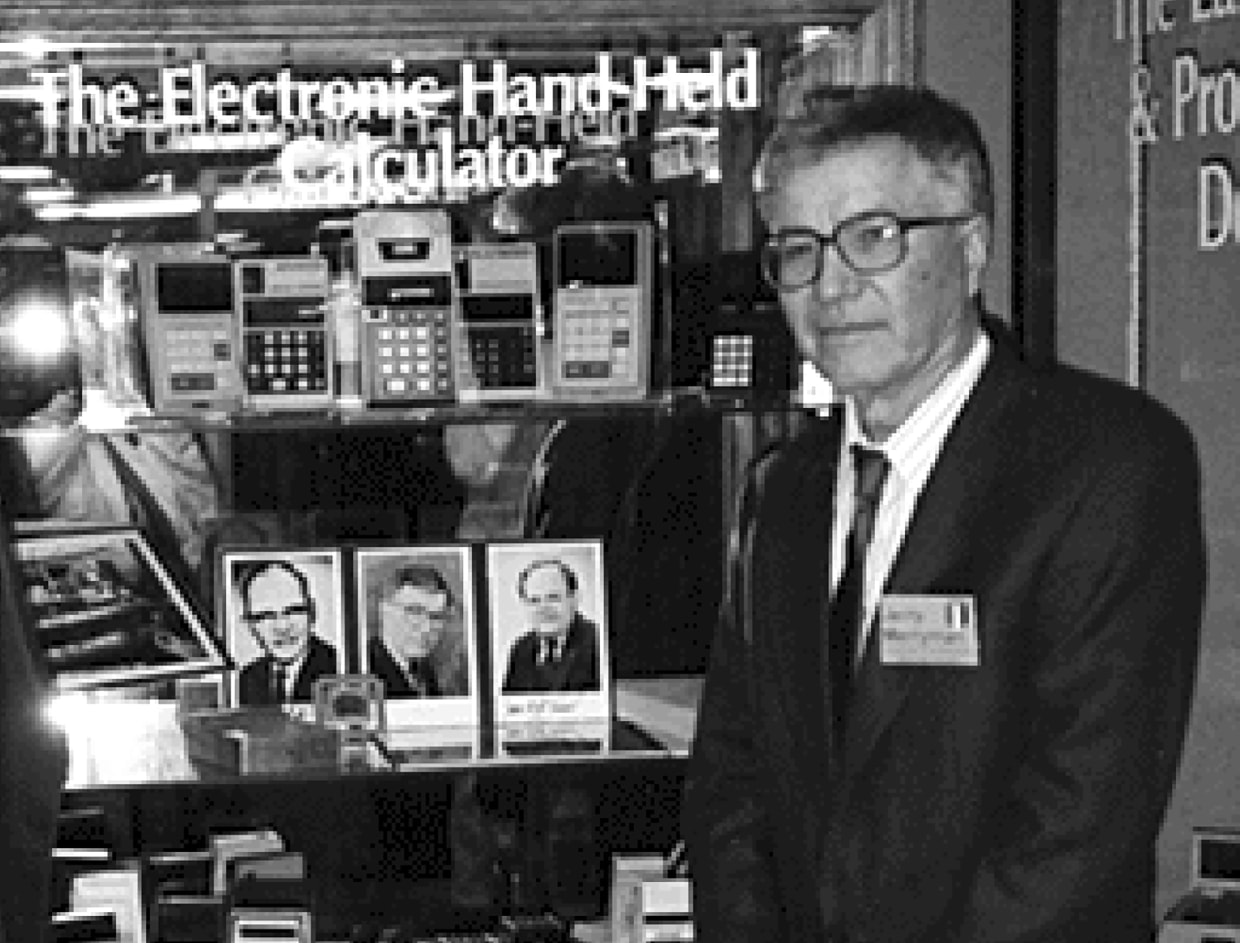
However, the mid-20th century brought about another paradigm shift with the advent of electronics. The development of vacuum tubes, transistors, and eventually integrated circuits paved the way for electronic calculators. Early electronic calculators, like the ANITA MK VII (1961), were bulky and expensive, but they were silent, faster, and more reliable than their mechanical predecessors. The invention of the microprocessor in the early 1970s led to the rapid miniaturization and affordability of calculators, culminating in the ubiquitous handheld devices we know today. This transition from gears and levers to silicon chips represents the culmination of the centuries-long quest initiated by Schickard, Pascal, and Leibniz: to make calculation effortless, immediate, and accessible to all.
Defining “First”: A Nuanced Perspective
The question “who created the first calculator” is more complex than it initially appears, largely because the definition of “calculator” itself has evolved, and the historical record is not always straightforward. Determining the “first” requires careful consideration of what criteria we apply.
The Criteria for Innovation
When evaluating claims for the “first calculator,” several criteria come into play:
- Level of Automation: Does the device perform operations independently, or does it require significant manual input for each step? Early tools like the abacus are aids, while Schickard’s and Pascal’s machines performed carries automatically.
- Scope of Operations: Can it only add and subtract, or can it handle multiplication and division directly? Leibniz’s machine was a significant step in this regard.
- Mechanical vs. Manual: Is it a purely mechanical device, or does it rely on physical manipulation of objects (like rods or beads)? The shift to mechanical gears was a defining moment.
- Practical Realization: Was the device actually built and functional, or was it merely a theoretical design? Babbage’s engines, while revolutionary in design, were mostly unbuilt during his lifetime.
- Historical Documentation and Recognition: How well was the invention documented and how widely known was it at the time? Schickard’s work was lost to history for centuries, while Pascal’s was well-known.
Based on these criteria, if we define a “calculator” as a mechanical device that can automatically perform at least addition and subtraction with carrying, then Wilhelm Schickard’s Calculating Clock (1623) holds the strongest claim as the first documented and constructed mechanical calculator. His machine was a genuine innovation, integrating geared mechanisms for automated arithmetic. Blaise Pascal’s Pascaline (1642) is certainly the most famous early mechanical calculator and was more widely known and influential in its time, making it often cited as the first. Leibniz’s Stepped Reckoner (1673) then pushed the envelope further by enabling all four arithmetic operations directly.
The Collective Genius of Early Inventors
Ultimately, attributing the “first calculator” to a single individual risks oversimplifying a long and incremental process of technological development. Each inventor built upon the ideas and challenges faced by their predecessors, contributing unique insights and engineering solutions.
- The abacus provided the fundamental concept of place value and manipulation for calculation.
- Napier’s Bones offered a clever way to simplify multiplication.
- Schickard conceived and built a functional, geared mechanical adder.
- Pascal refined the mechanical adder and made it commercially viable (albeit limitedly).
- Leibniz revolutionized the design to perform multiplication and division directly.
- Babbage envisioned a programmable, general-purpose computing machine, laying the theoretical groundwork for modern computers.
The story of the first calculator is not just about one inventor, but about the collective human endeavor to conquer numerical complexity. It’s a testament to continuous innovation, where each step, no matter how small, contributed to the grand tapestry of computational technology.
The Enduring Legacy of Computational Pioneers
The early inventors of calculating machines were more than just clever mechanics; they were visionaries who fundamentally altered humanity’s relationship with numbers and laid the groundwork for the digital age. Their contributions resonate deeply in modern technology, shaping everything from the simplest pocket calculator to the most powerful supercomputer.
Impact on Science and Engineering
The immediate beneficiaries of early calculating machines were the scientific and engineering communities. Astronomers like Kepler, facing mountains of data, and navigators, needing precise tables, were among those who desperately sought ways to speed up and error-proof their calculations. The mechanical calculator, even in its rudimentary forms, allowed for:
- Accelerated Research: Scientists could spend less time on tedious calculations and more time on analysis and theoretical development.
- Increased Accuracy: Automated processes reduced the incidence of human error, leading to more reliable data and scientific conclusions.
- Complex Problem Solving: Tasks that were previously too time-consuming or complex to attempt manually became feasible, opening new avenues for scientific inquiry and engineering design.
The very concept of a machine performing intellectual labor was revolutionary, pushing the boundaries of what technology could achieve and fostering an environment where even more complex machines, like Babbage’s Analytical Engine, could be conceived. These early machines were not just tools; they were catalysts for scientific advancement.
Paving the Way for the Digital Age
The mechanical calculators of the 17th to 19th centuries were the direct ancestors of modern computers. The principles established by Schickard, Pascal, Leibniz, and especially Babbage—such as automated carrying, variable incrementing, and the separation of processing from memory—are foundational to digital computing.
- Algorithmic Thinking: The need to break down complex operations into simple, repeatable mechanical steps fostered algorithmic thinking, which is central to programming.
- Machine Architecture: Babbage’s Analytical Engine, with its “mill,” “store,” and input/output, outlined the basic architecture that would later be adopted in electronic computers (CPU, RAM, I/O devices).
- The Pursuit of Automation: The continuous drive to automate and speed up calculations ultimately led to the shift from mechanical to electronic components, and eventually to the development of microprocessors—the heart of all modern computational devices.
From the first clunky gears of Schickard’s calculating clock to the sleek, silent operations of a smartphone’s calculator app, the lineage is clear. These pioneers did not just build machines; they built the intellectual and technological framework for the information age. Their ingenuity in automating arithmetic tasks liberated human minds from computational drudgery, allowing for unprecedented leaps in innovation and understanding, forever changing how we interact with numbers and the world around us. The story of the first calculator is, in essence, the origin story of our technological future.
aViewFromTheCave is a participant in the Amazon Services LLC Associates Program, an affiliate advertising program designed to provide a means for sites to earn advertising fees by advertising and linking to Amazon.com. Amazon, the Amazon logo, AmazonSupply, and the AmazonSupply logo are trademarks of Amazon.com, Inc. or its affiliates. As an Amazon Associate we earn affiliate commissions from qualifying purchases.